Practical Sailor

  • Subscribe
  • Free Waypoints e-letter
  • Customer Service


Forgot Your Password?

  • Home
  • Sailboat Reviews

    Articles

    Boat Review: Marshall 22 Catboat

    Funding the Dream

    New Boat Review: Beneteau Oceanis 41

    Building a New Beneteau

    Sailboat Reviews

    Unbiased, detailed reports on dinghies, daysailers, racer-cruisers, cruising sailboats, and multihulls. Insights into boat construction and design. Solid advice on buying a sailboat.

    Sailboat Reviews - Index

  • Marine Electronics

    Articles

    Lighting the Way

    Useful and Fun Nautical Apps for iPad

    PS Reviews Cheap and Free iPad Nav Apps

    PS Sea-trials the iPad and Nav Apps

    Practical Sailor Reviews Iridium and Inmarsat Satphones

    Marine Electronics

    Extensive tests of GPS chartplotters, fishfinders, VHF radios, radar, AIS, navigation software, and handheld gadgets. Professional guidance on installing and operating high-tech sailing gear.

  • Sails, Rigging & Deck Gear

    Articles

    Of Safety Tethers and Comfy Cockpits

    Anchor Testing and Rode Loads

    DIY Trysail Track Retrofit

    Adding Some Zing To Anchor Testing

    A Practical Look at Sailboat Cockpit Design

    Sails, Rigging & Deck Gear

    Independent tests of halyards, sheets, furlers, anchors, snatch blocks, shackles, ropes, winches, vangs, cleats, booms, masts, and standing rigging. Expert guidance on choosing a mainsail, jib, or spinnaker.

  • Systems & Propulsion

    Articles

    Worthwhile Advice from Hose Manufacturers

    Y-valve Installation Advice and Troubleshooting

    Y-valves Under Pressure

    Marine Sanitation Hose Test

    Installing Hoses Highlights Their Differences

    Systems & Propulsion

    Comprehensive comparisons of pumps, batteries, solar panels, wind generators, inverter-chargers, watermakers, propellers, toilets, engines, and other marine systems. Tips on ship-shape installations.

  • Boat Maintenance

    Articles

    Mailport: April 2012

    Antifouling for Aluminum Boats

    Mailport: May 2012

    Product Updates

    Where Credit is Due: May 2012

    Boat Maintenance

    Bottom paints, topside paints, varnishes, waxes, protectants, cleaners, metal polishes. If it comes in a bottle or can, PS has tested it. Proven methods to protecting your floating investment.

  • Belowdecks & Amenities

    Articles

    Clean Bottom, Fast Bottom

    Grill Griddle Faceoff

    What’s Cooking Now?

    Mailport: March 2012

    Showers

    Belowdecks & Amenities

    Our top picks in galley stoves, cookware, cabin lights, refrigeration, and entertainment systems can help turn your cruising boat into a home. Creative solutions to the challenges of living aboard.

  • Personal Gear & Apparel

    Articles

    PS Tests Padded Sailing Shorts

    Testers Search for an All-star LED Spotlight

    Testers Check Beam Patterns and Illumination

    Personal Gear & Apparel

    Thorough test reports on binoculars, boat shoes, foul weather gear, hand-bearing compasses, sailing knives, flashlights, headlamps, sunglasses boots, and anything else that belongs in a skipper's seabag.

  • Safety & Seamanship

    Articles

    PS Analysis: The 2011 WingNuts Capsize

    Safety at Sea Part III: Rambler 100 capsize

    US Sailing Investigator’s Recommendations

    Lessons learned

    Rambler 100 Recommendations

    Safety & Seamanship

    Our testers evaluate life jackets, flares, life rafts, harnesses, man-overboard strobes, medical kits, seasickness aids, and emergency devices. Tips on marine safety gear, boat-handling, and emergency procedures.

  • Mailport & PS Advisor

    Mailport & PS Advisor

    Insightful letters from sophisticated sailors. Do-it-yourself projects and reader feedback on a wide range of boats, marine manufacturers, and sailing products.

  • Inside Practical
    Sailor Blog

PS Advisor

October 2006 Issue

Story Tools

  • Share |
  • E-Mail to a friend
  • E-Mail to the editor
  • Post a Reader comment
  • Printer Friendly

PS Advisor: 10/06

Change your soundproofing before it crumbles.

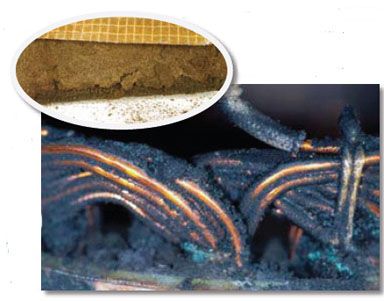
I am sending you this sound-proofing sample to consider for your next report. It was purchased in 1997 from BoatU.S., or possibly from West Marine. I don’t remember the brand. The enclosed sample is unused and was stored in my garage. The sample is what remains of die panels I installed in my Hunter 27 engine compartment. The entire installation was reduced to this disintegrated form. In researching suppliers for replacement panels, I found that different foams are used. Which should I choose for longevity? I cannot use the fiberglass panels because of allergy problems.

Edward Carney Sr.
Sarasota, Fla.

While the exact composition of the foam used on your vessel may be a mystery, its breakdown is a relatively common occurrence, particularly with foam insulation from this era. Incidentally, polyether and polyester are urethanes, which comprise most of the currently available flexible, foam-like engine room insulting materials. Polyester foams are slightly stiffer. Urethanes show poor resistance to, among other things, acetone, most hydrocarbon fuels (diesel and gasoline), chlorine, alcohol, formaldehyde, many acids, turpentine, and boiling water. With repeated exposure to heat, fuel, lubricating oil and coolant vapors and ozone (created by electric motors and alternators), many foams show the signs of disintegration you’ve experienced. Aging also appears to have a significant effect on many varieties of engine room insulation such as the one stored in your garage (inset picture below). Not only is this disintegration unsightly and messy, the sloughed off material can be sucked into alter-nators and engine air intakes, leading to serious mechanical problems. An insulation manufacturer PS spoke with said foam formulas have improved over the past decade, so past performance may not be indicative of what you might expect from today’s products.

Disintegrated insulation blankets a reader’s alternator. He sent us a sample, inset, for review.

Heavier facing material appears to add considerably to a foam’s longevity. These facing materials are available in reinforced, aluminized polyester films, perforated vinyl, urethane film, vinyl im-pregnated cloth, and polypropylene. The non-perforated varieties offer greater liquid resistance. Be sure the foam—usually open cell—is installed so that it terminates well above the highest expected bilgewater level. All exposed foam edges and seams should be sealed with proprietary tape. Avoid insulating aluminum fuel tanks. The slight acoustical advantage is easily offset by the potential for corrosion that exists if the foam were to become wet. Highly hydroscopic materials such as acoustical foam set up the perfect environment for poultice corrosion, which occurs when aluminum remains continuously wet in an oxygen-depleted environment (the stagnant water trapped within the foam is quickly robbed of its dissolved oxygen).

 

Comments (0)

Be the first to comment on this post using the section below.


Add your comments ...

New to Practical Sailor? Register for Free!

Already Registered? Log in

Forgot your password? Click Here.

Advanced Search

Current Issue

Cover Image

May 2012

  • Y-valves Under Pressure
  • Anchor Testing and Rode Loads
  • Funding the Dream
  • Safety at Sea Part III: Rambler 100 capsize

Subscribe Today

Back Issue Archive

Resources

  • Practical Sailor Dinghy Survey Results
  • DIY Boatyard Survey
  • Sailboat Reviews - Index
  • DIY Projects
  • Bookstore
  • Issue Archives
  • Other Resources
  • Customer Service
  • About Us
  • Home
  • Subscribe
  • Give a Gift
  • Renew
  • Products
  • Customer Service
  • Privacy Policy
  • About Us
  • FAQs
  • Contact Us
Practical Sailor

© 2012 Belvoir Media Group, LLC. All rights reserved.