

Home Search
\"cold water\" - search results
If you're not happy with the results, please do another search

Going Overboard in Icy Water
When you get to the surface, focus on floating and stabilizing your breathing. You are not going to be able to swim or do anything productive for several minutes, and as a cold water overboard victim, there is nothing you need to do for a minute or two. Focus on not drowning. If you have a PFD, that will be a huge help. If not, try to tread water with as little effort as possible. Calm down and realize you have some time.

Bargain-priced Sailing Clothes for Cold Weather
The first real winter blast of the year poked south of the 25th parallel this week, as sun-seeking sailors as far south as the Keys poked their head out the companionway and decided, "I'd better put on another layer."
Whether you want to cruise the higher latitudes or extend your sailing season this winter, the right clothing is important. Over the years, Practical Sailor has published a number of tests and reports on the clothing that keep us warm when the wind chill dips toward freezing.
Mailport: Cold Weather Suits
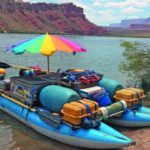
Regarding your recent Inside Practical Sailor blog post Drysuits vs. Survival Suits, I raft the Colorado river in Grand Canyon where water temps are around 50 F, even in the summer. The whitewater down there is furious and sometimes dangerous. I wear a 3 millimeter neoprene wetsuit under a full drysuit. If the drysuit rips, the wetsuit should slow down thermal loss. The problem is heat buildup in the sun. The solution is to jump in the cold water now and then to keep from over heating. On a sailboat that would be harder to do. There have been a few times sailing solo when I wore both garments, but it was pretty clammy inside. There is no perfect solution, just reasonable compromises by which to stay alive. Something to remember is that once a drysuit rips, it will take on hundreds of pounds of water. A high flotation PFD is mandatory, at least 26 pounds I would think.
Float Coats Tested
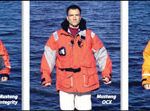
Cool weather sailors looking for something that keeps them warm as well as keeps them afloat if they fall overboard may want to consider a float coat. We look at six coats that cover the range of options available waist-length coats, mid-length coats, inflatable jackets, and foam-filled jackets. For the budget-minded sailor, the Stearns Powerboat Jacket offers good value, while the Mustang Integrity rated as our Best Choice. Two other jackets, the auto-inflating Float Tech jacket and the Stearns Windward Jacket earn our recommendation.
Mailport: January 2021
Mustang Coveralls
With regard to your recently re-posted report “Cold Water Survival” (see Practical Sailor, March 2019), I bought a Mustang Anti-Exposure Coverall many years...
Life Jackets for Active, Racing Sailors
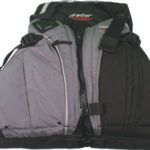
For this test, we rounded up seven flotation aids from four manufacturers: Float Tech, Gill, Spinlock, and Stohlquist. The test field included an inflatable rash guard, foam racing-style life vests, inflatable PFD-harness combinations, and PFDs designed specifically for women. Only the Stohlquist PFDs meet U.S. Coast Guard standards, but all have innovative features and offer increased comfort and mobility over many Type I and Type II PFDs.
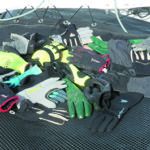
Winter Glove Report
Every ball player has a favorite glove. A deck shoe that sticks to wet gelcoat is highly prized. And when time comes to hoist...

Don’t Be Fooled by Warmer Air Temps
As air temperatures in the northern hemisphere warm enough for sailors to start spending time on the water, boating safety experts are reminding sailors...

Immersion Suit Test
Dominated by polyurethane-coated nylon immersion suits, the selection reflected a clear change in material preference among survival suit manufacturers. The tested immersion suits prices ranged from $260 to $700. Many of these companies also offer higher-grade, more expensive immersion suits that are aimed at commercial and search-and-rescue markets. Testers performed a thorough comparative analysis of the survival suits both in the water and on land. Details that were scrutinized included: weight, material, seam construction, zipper, reflective surface, boot and glove configuration, and air-purge valves. Testers were disappointed to find some of the suits used harnesses that could put sailors at risk.