
Home Search
anchor test - search results
If you're not happy with the results, please do another search
Anchor Testing and Rode Loads
Many published anchor tests focus on holding capacity, and most conclude that newer, concave fluke-design anchors such as the Spade, Rocna, and Manson anchors perform better than older, traditional anchors such as the plow-design CQR, claw anchors like the Bruce, and Danforth-style anchors such as the Fortress. But how useful is this data? Rather than just testing anchors to specific, fixed loads, PSs recent evaluation raises questions about the various wind-induced loads placed on anchors in real-life situations and how future anchor tests should be carried out.
Anchor Tests 2003: Soft Sand Over Hard Sand
In tough testing conditions, and considered by weight, the aluminum Fortress and galvanized West Marine Performance2 do well, along with the Spade Model 80 and the Bulwagga.
Anchor Tests: Bending More Shanks
In the first part of this series on anchor-shank strength, we examined how the shanks of anchors that supposedly met the most stringent industry standards could bend under loads that a typical cruising sailboat could encounter. With this installment, we wanted to demonstrate how that might happen in a fact-finding field test. Based on our previous findings, we concentrated our study on a specific group of anchors and specific type of load. The anchors are regarded as super high holding power (SHHP) anchors, and the load was a sudden, snatch (or dynamic) load applied at a 90-degree angle to the direction each anchor was set.
Adding Some Zing To Anchor Testing
Quantifying anchor loads is tricky business, and our article on the topic, beginning on page 24, gives some insight into the trouble a tester faces when trying to compare the performance of various types of anchors. Apart from the obvious questions about the bottom type and the scope amount to be used for evaluating, testers need to sort out more subtle details, such as how the anchor should be set, how the load should be applied, and what the pull direction should be.
The Science of Stern Anchoring
Sailboats yaw at anchor. In prior reports we discussed how seriously yawing can compromise anchor security, and we talked about how a riding sail...
Checking Rope Strength
We like nylon for docklines, anchor rode and chain snubbers because it stretches, absorbing jolts that would otherwise be transferred to the boat and...
Catalina 250 Used Boat Review
The Catalina 250 is one of a group of relatively lightweight, shallow-draft trailerable cruising boats that appeared in the mid-1990s, utilizing water ballast to provide stability. These boats notably the C-250, the Hunter 26, and the MacGregor 26 all are of very modern design, are relatively inexpensive, and feature workmanship and materials of generally serviceable but by no means superior quality. Their sailing qualities and accommodation plans make them suitable for daysailing and casual overnighting, rather than for serious cruising.
Beneteau First 375 Used Boat Review
A Mexican vacation with her husband had Debbie Bulk dreaming of a better way to see local village life, away from the regular tourist...
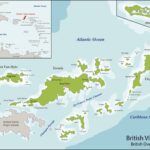
Caribbean Bareboat Chartering Basics: Daily Sail Plan
If you’ve read “Bareboat Chartering Basics” and want to delve deeper into the planning process, read on for our March 2025 sail plan, which...
Repurposing Chain
When a rope is no longer fit for purpose, for example a halyard with a chafed spot, we either keep it for future might-needs...