You’re reading a free preview of Logbook · July 2026Get full access →
Logbook
July 2026 Recap

Inside This Recap

Contents

From the Helm

This month leans into the systems that keep us safe and connected. Stephen Burnage lays out what every sailor should understand about lithium-ion and LFP battery fires before converting; Drew Frye shows a clever way to anchor over coral and snags without wrecking either the bottom or your gear.

We also take Starlink offshore, service a wheel-drive autopilot, walk through a roller-bearing rudder upgrade, compare twenty handheld VHF radios, get back to basics on reefing, and size up the best cameras for capturing life on the water.

The Editors, Practical Sailor

01Systems & Propulsion

Lithium-Ion and LFP Battery Fires: The Real Risks Sailors Face

Lead-acid isn't risk-free either, but lithium-ion and LFP batteries introduce new fire hazards every sailor should understand before switching.
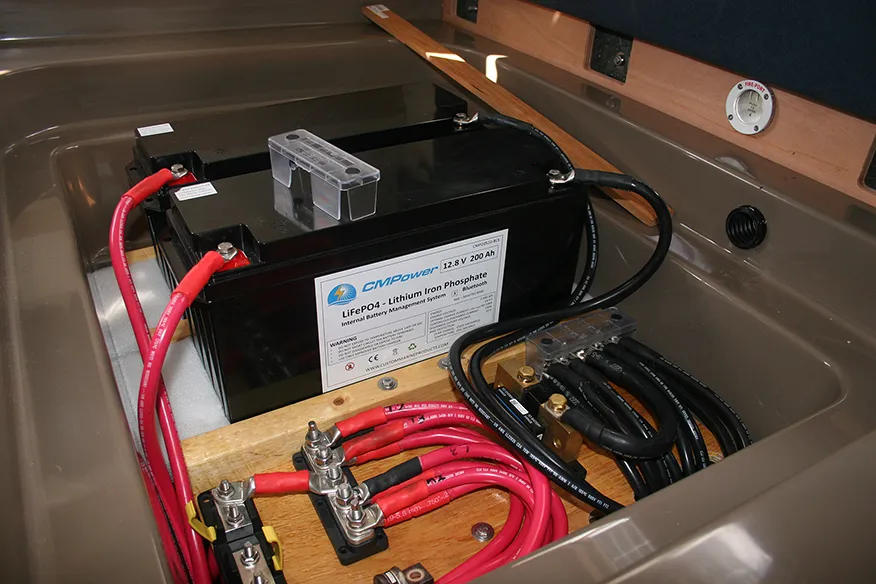
A CMPower LiFePO4 battery, complete with internal BMS and color-coded cable runs, sits secured in its dedicated compartment.
PHOTOGRAPH
A CMPower LiFePO4 battery, complete with internal BMS and color-coded cable runs, sits secured in its dedicated compartment.

Before we consider the safety issues of lithium-ion batteries, we should remember that lead acid batteries are not without risk. Apart from the obvious risk of a sulfuric acid spill or exposure, there are other concerns. Under heavy charge or discharge they can give off heat and gases which can be corrosive, explosive, and poisonous in high enough quantities.

A viewer of a recent Practical Sailor video commented that a hydrogen sulfide discharge from his lead acid battery nearly killed him (his words), while under charge overnight. It was a quality charger, on shore power, but it seemingly delivered an excessive charge (possibly because of a battery fault). Thankfully, the smell woke him and alerted him to the issue.

Members Only
Keep reading with a membership
Unlock the full recap, every past recap, and 4,000+ boat tests, gear reviews and DIY guides — for about $2.83 a month.
02Safety & Seamanship

Floating Your Rode

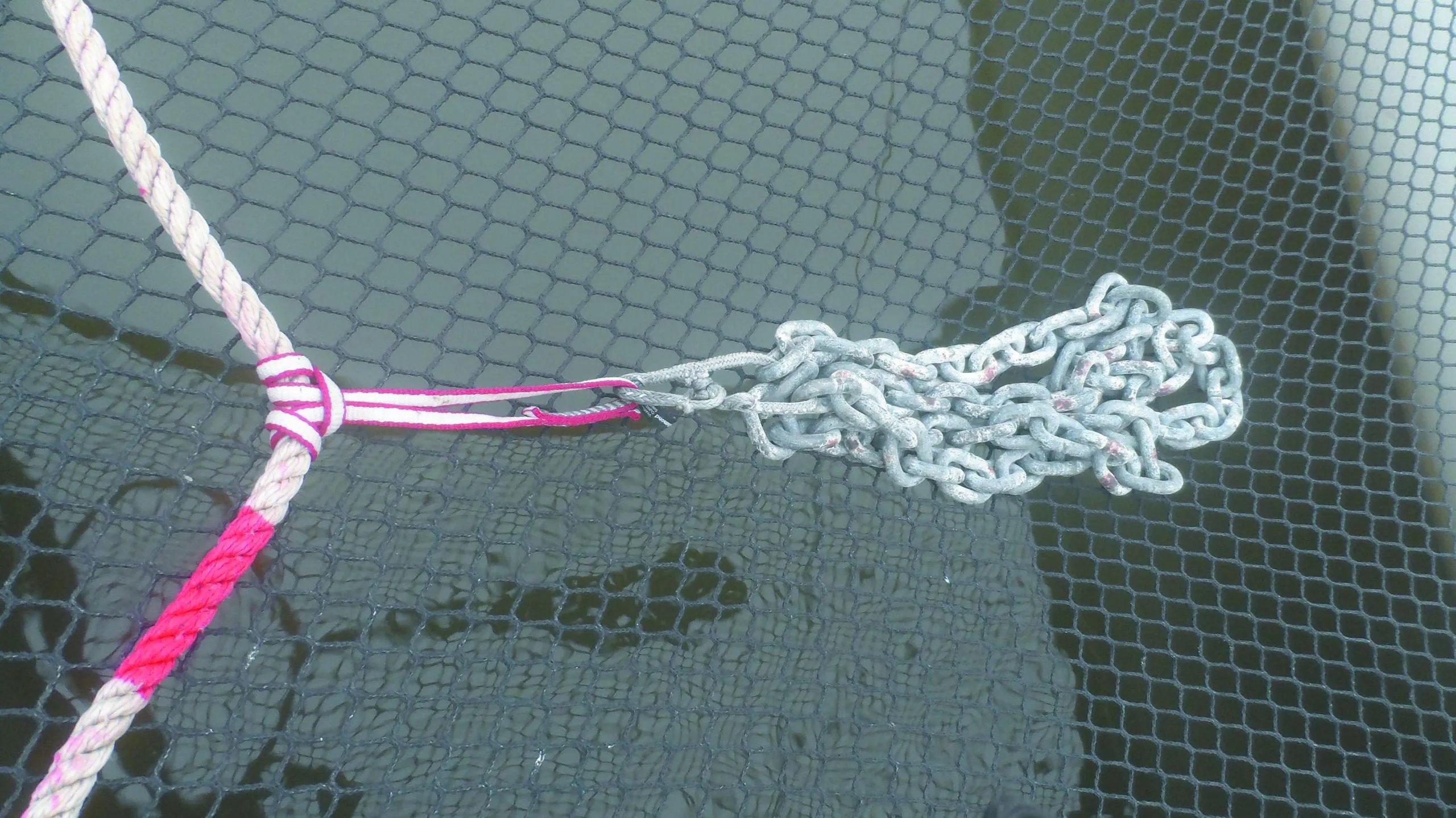
Cruisers anchoring near coral, grass beds, and rocky snags can protect the bottom and their gear by adding buoyant floats to the rode instead of avoiding these areas altogether.

This rigid plastic pearl farm float, about 8 to 12 inches in diameter, provides just enough buoyancy to lift the chain clear of coral heads and snags without overdoing it.
PHOTOGRAPH
This rigid plastic pearl farm float, about 8 to 12 inches in diameter, provides just enough buoyancy to lift the chain clear of coral heads and snags without overdoing it.

Anchoring in clean sand and mud is easy. But cruising takes you places where anchoring isn't easy.

The golden rule with coral, grass beds, jumbled rocks, and snags is to go somewhere else. Chains dragging to and fro do lasting damage to coral and grass beds. The rode can wrap around coral heads or catch under rocks and logs, making anchor recovery nearly impossible. Often, there are sizable patches of good sand or mud between the coral, grass beds, and snags, but not enough for the rode to lie in light winds. The solution, long practiced around coral islands, is to pick a clean spot, lower and lightly set the anchor in the center, and then add floats to the rode as needed to keep it above the surrounding coral heads as the boat swings. The method is also applicable to grass beds and areas with patches of rocks or other snags.

Members Only
Keep reading with a membership
Unlock the full recap, every past recap, and 4,000+ boat tests, gear reviews and DIY guides — for about $2.83 a month.
03Boat Maintenance

Servicing Your Wheel-Drive Autopilot

Regular fresh-water flushing and an annual hands-on inspection of your wheel-drive autopilot unit will keep your steering reliable on passages - and save you from hunting ball bearings across the cabin sole.

A Raymarine TS4000+ Autohelm wheel drive unit installed on wheel. (Photo/ Marc Robic)
PHOTOGRAPH
A Raymarine TS4000+ Autohelm wheel drive unit installed on wheel. (Photo/ Marc Robic)

A reliable autopilot is great to have onboard because it gives you opportunities to rest your arms and/or eat while under way while still keeping an eye on things. So, when something doesn't feel quite right with the auto pilot system, don't wait to fix it. Practicing easy, preventative maintenance on a regular basis will prevent costly autopilot repairs-or replacement-later on.

My auto pilot is a Raymarine TS4000+ Autohelm with SeaTalk links. Although I have a sailboat, the same unit has been a very popular choice for power boats with a wheel type steering, such as large cruisers and trawlers. Other autopilot brands and models use a similar closed, self-contained wheel drive system and require the same care. Some auto pilot models use exposed external drive components, which makes servicing such as rinsing, tensioning and belt replacement much easier.

Members Only
Keep reading with a membership
Unlock the full recap, every past recap, and 4,000+ boat tests, gear reviews and DIY guides — for about $2.83 a month.
04Marine Electronics

Taking Starlink Offshore: What the Gen 2 and Mini Can Really Do

From Pacific crossings to remote anchorages, we look at how Starlink's Gen 2 and Mini stack up for cruisers weighing power consumption, connectivity and cost.

Cariba
PHOTOGRAPH
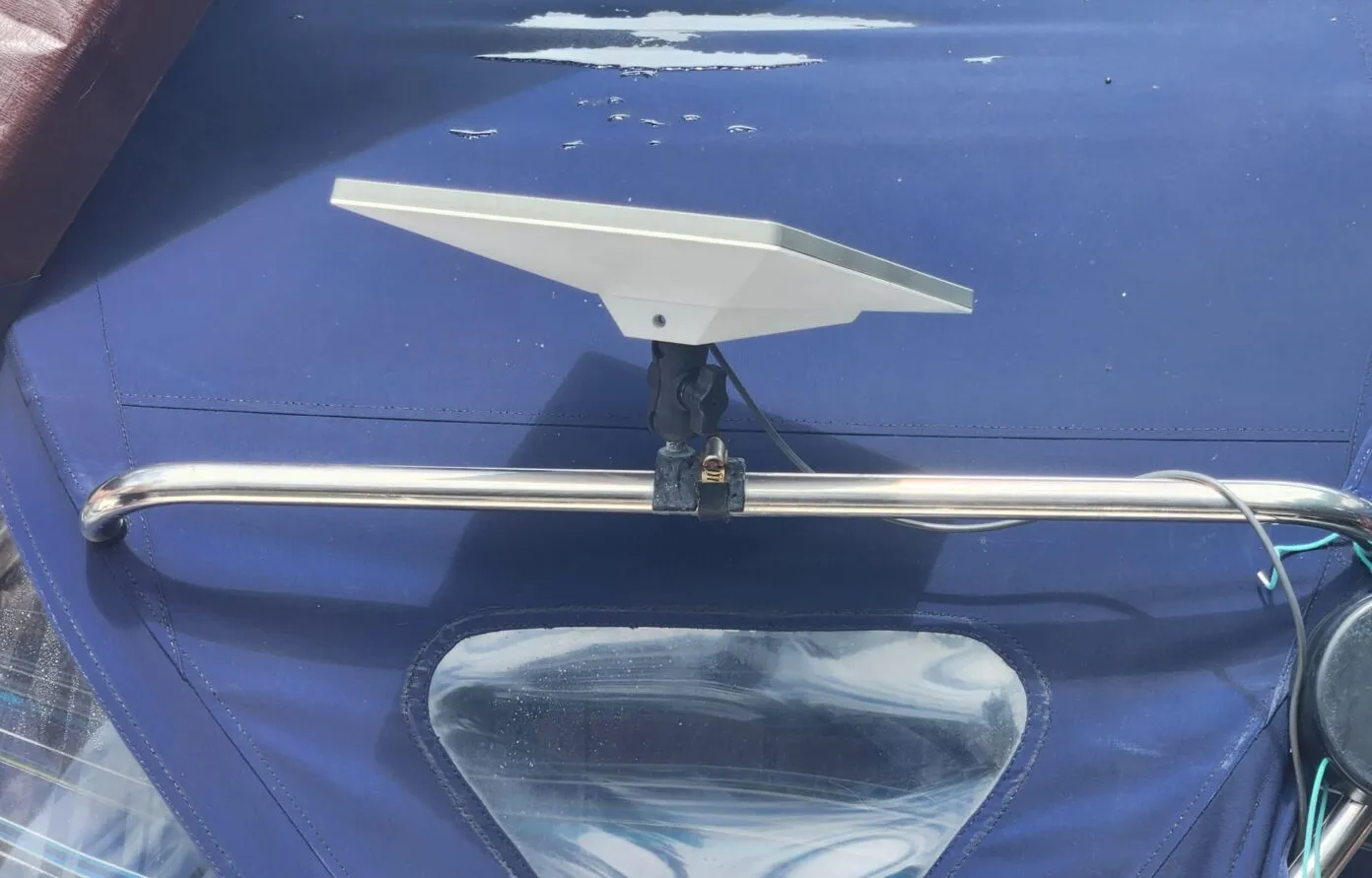
Cariba's Starlink Mini installed. (Photo/ Sue Peck)

Sailing used to mean disconnecting from the everyday-for some, it still does. Days were spent watching the waves roll by, adjusting sails, reading books, and sharing happy hours with fellow cruisers. Anchorages were social places, with sailors zipping around in dinghies searching for weather updates, swapping information, or simply making social calls. Getting online often meant heading ashore in search of Wi-Fi or holding a cellphone at strange angles in hopes of catching a signal.

Starlink changed that almost overnight.

Members Only
Keep reading with a membership
Unlock the full recap, every past recap, and 4,000+ boat tests, gear reviews and DIY guides — for about $2.83 a month.
05Safety & Seamanship

Reefing Basics

Your reefing system - whether single-line, two-line, or in-mast furling - determines how quickly and safely you can reduce sail. Knowing it cold before conditions build is the seamanship standard.

A reefed mainsail and furled/reduced foresail provides great speed performance, as well as crew comfort via less heeling. In addition to increased safety, there is the added benefit of reduced stress on the sails, rigging and the boat.
PHOTOGRAPH
A reefed mainsail and furled/reduced foresail provides great speed performance, as well as crew comfort via less heeling. In addition to increased safety, there is the added benefit of reduced stress on the sails, rigging and the boat.

As the forecast for this season calls for much cooler temps and more frequent higher wind speeds and gusts, thanks to the effects of a Super El Niño, reefing has become a frequent topic. I was somewhat surprised when many sailors at our yacht club confessed they had never reefed their sails and, frankly, were not sure how to on their boat or when. Many claimed they simply furl in-reef-their foresail since it's the easiest and quickest thing to do. However, when asked, they admit to losing a lot of steerage and experience violent sail and gear flogging. For unfamiliar or novice sailors and crew, this can indeed provide for some scary moments.

When to Reef

Before I go any further, let's get one of those questions out of the way first. How do I know it's time to reef? The answer is simple. The minute you even start to ask yourself if you should put in a reef is the time to do so. This is Neptune's way or your spider senses speaking to you. Most times, the thought or feeling comes up long before it's needed, so follow your instincts and reef now, while it's easier to do so and while you're still in full control.

Members Only
Keep reading with a membership
Unlock the full recap, every past recap, and 4,000+ boat tests, gear reviews and DIY guides — for about $2.83 a month.
06Boat Maintenance

Roller Bearing Rudder Upgrade: A DIY Guide for Spade-Rudder Sailboats

Upgrading a spade rudder from nylon bushings to precision roller bearings is a major project, but this step-by-step account from a Cal 40 owner proves it's within reach for any careful DIYer.

CAD model detail showing modified tube end, 3D printed fairing piece and modified PET-P thrust washer. (Illustration/ Tom Egan)
PHOTOGRAPH
CAD model detail showing modified tube end, 3D printed fairing piece and modified PET-P thrust washer. (Illustration/ Tom Egan)

Have you ever been sailing along and thought to yourself, something just doesn't feel right. That is what happened to me with our steering on Misirlou, our ancient but venerable 1964 Cal 40. Like the proverbial frog in the pot of water heating up on the stove, the tightness and hard spots came on gradually, without me noticing at first.

But our rudder and bearings were new! I put them in myself, let's see... (counting on fingers) 25 years ago. Okay, maybe not so new. Dropping the rudder after our end of season haul out revealed what I had expected: The nylon bushings were unevenly worn and out of round. The rudder stock was structurally sound but had surface scoring and pitting in the top and bottom bearing regions. Simply swapping the old bushings for new was not an option, given the surface condition of the rudder stock. An upgrade was needed.

Members Only
Keep reading with a membership
Unlock the full recap, every past recap, and 4,000+ boat tests, gear reviews and DIY guides — for about $2.83 a month.
07Marine Electronics

Handheld VHF Radio Buyer's Guide: 20 Models, from Low-Cost to High-End

Handheld VHF radios offer a bewildering array of specs and features. We categorize 20 models from budget to high-end, plus commercial-grade and survival radios.

Photos not to scale, sourced from ACR, Cobra, Icom, Standard Horizon and Uniden.
PHOTOGRAPH
Photos not to scale, sourced from ACR, Cobra, Icom, Standard Horizon and Uniden.

VHF radios are not included among the minimal safety equipment required on pleasure craft by the US Coast Guard, but they should be. VHF radios can be used to contact nearby vessels, marinas and emergency services. Almost all VHF radios receive weather channels, providing access to forecasts and warnings that are important to the safety of your vessel and crew. In short, they're invaluable tools for routine and emergency communications.

The gold standard for VHF radio transmission is a fixed-mount model offering 25 watts of transmission power from an antenna mounted high atop a mast. That power and antenna height will give line-of-sight VHF radio waves a range of up to about 25 miles, depending on the height of your mast and that of the receiver's antenna (which is why Coast Guard stations have tall towers).

Members Only
Keep reading with a membership
Unlock the full recap, every past recap, and 4,000+ boat tests, gear reviews and DIY guides — for about $2.83 a month.
08Marine Electronics

Camera Gear for Cruisers: A Buyer's Guide

From rugged point-and-shoots to mirrorless rigs, here's how to find the right tool for capturing life on the water.

Taken with a TG-5, a camera well-suited for capturing more rugged cruising adventures. (Photo/ Todd Vorenkamp)
PHOTOGRAPH
Taken with a TG-5, a camera well-suited for capturing more rugged cruising adventures. (Photo/ Todd Vorenkamp)

You love sailing. You love (or like) photography, and you want to share some of the spectacular things you find out on the water with friends or family or social media strangers. What type of camera makes for the best cruising companion?

Before we look at the different options on the market and explore which ones best lend themselves to sailing photography, let's have a brief chat about weatherproofing.

Members Only
Keep reading with a membership
Unlock the full recap, every past recap, and 4,000+ boat tests, gear reviews and DIY guides — for about $2.83 a month.

Additional Reading

More Articles From This Month Free

Defeating Bacteria in Your Diesel FuelBoat MaintenanceDefeating Bacteria in Your Diesel FuelFrom sealed fuel caps to vent filters and biocides, the most effective ways to stop bacteria from turning your diesel into a filter-clogging nightmare.Read more →Bristol Channel Cutter 28: CircumnavigatorSailboat ReviewsBristol Channel Cutter 28: Circumnavigator's ChoiceThis sturdy pocket cruiser has survived vast ocean gales and knockdowns. An inside look at a classic blue-water boat.Read more →Rest Easy with a Riding SailSails, Rigging & Deck GearRest Easy with a Riding SailA simple over-the-boom design compares surprisingly well in testing, taming the yaw that keeps boats sailing at anchor.Read more →Ground Tackle Inspection TipsSails, Rigging & Deck GearGround Tackle Inspection TipsFrom frayed rope splices to corroded chain connectors, how to find the weak links in your ground tackle before they find you.Read more →Catalina 470 Used Boat ReviewSailboat ReviewsCatalina 470 Used Boat ReviewCE-rated for ocean sailing but happiest coastal cruising in comfort, with a great set of liveaboard layout options.Read more →Wood Rot Prevention: 8 Years of Extreme Exposure TestingBoat MaintenanceWood Rot Prevention: 8 Years of Extreme Exposure TestingAfter eight years buried in a homemade rot swamp, our testers found no coating beats naturally rot-resistant wood — but a borate treatment comes close.Read more →In Search of the Ultimate Boat HookSails, Rigging & Deck GearIn Search of the Ultimate Boat HookPlastic hooks snap, crackle, and pop in a test of strength and utility across 15 telescoping and fixed poles.Read more →Tartan 395 Boat ReviewSailboat ReviewsTartan 395 Boat ReviewFrom its self-tacking jib to its beautifully finished interior, the Tartan 395 proves a traditional cruiser can still perform.Read more →The Case of the Painted JibSails, Rigging & Deck GearThe Case of the Painted JibFrom house paint to a New Zealand marine coating, we put six sail paints through field tests as an alternative to sewn UV covers.Read more →Assessing the Anchor KelletSails, Rigging & Deck GearAssessing the Anchor KelletA kellet adds drag at the bow to calm a yawing boat — but the data shows exactly where it helps and where it quits in a real blow.Read more →Synthetic Teak Durability TestBoat MaintenanceSynthetic Teak Durability TestEight years of Florida sun, spilled wine and oil, and a 2,000-psi pressure wash reveal how five synthetic teak decks hold up against the real thing.Read more →

Watch

This Month on YouTube Free

Enjoying the preview? Get the full recap + 4,000+ articles — $34/yrBecome a Member