You’re reading a free preview of Logbook · August 2026Get full access →
Logbook
August 2026 Recap

Inside This Recap

Contents

01Systems & Propulsion

How to Charge Your LFP Battery the Right Way

Understanding how a smart charger talks to your LFP battery can mean the difference between years of service and premature capacity loss.
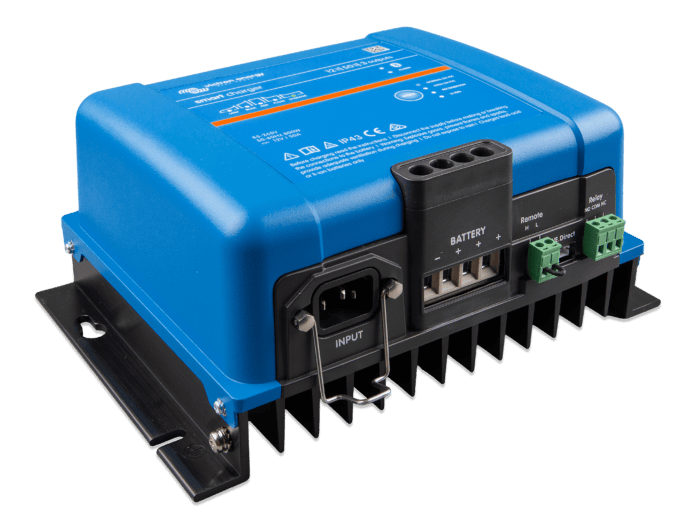
Victron’s Smart IP43 Charger uses an adaptive multi-stage algorithm and a dedicated LFP setting to safely manage the transition from constant current to constant voltage charging. (Image/Victron)
PHOTOGRAPH
Victron’s Smart IP43 Charger uses an adaptive multi-stage algorithm and a dedicated LFP setting to safely manage the transition from constant current to constant voltage charging. (Image/Victron)

If you are thinking of managing a conversion of your own existing, all lead acid system over to one with a Lithium iron phosphate (LFP or LiFePO4), house bank, there are a few things that you need to understand about the charging of LFPs. As we have discussed in previous articles, LFP’s have their own unique characteristics, distinct from both lead acid and other forms of lithium-ion battery. One of the principal distinctions is its charging characteristics.

You do not really need to understand the full chemical process, but a very high-level summary of the LFP charging process is that lithium-ions de-intercalate from the cathode, travel through the electrolyte, and intercalate into the anode. Discharging is the reverse of that process. The goal is to do this as quickly as possible, without at any time triggering anything that might limit how many times this can be repeated, and/or without any long-term loss of capacity, and—most importantly—risking any safety concerns.

Members Only
Keep reading with a membership
Unlock the full recap, every past recap, and 4,000+ boat tests, gear reviews and DIY guides — for about $2.83 a month.
02Safety & Seamanship

VHF Radio Safety: What Every Sailor Needs to Know Before a Mayday

Every boater—from kayaker to yacht captain—should know how to use a VHF radio before an emergency happens.

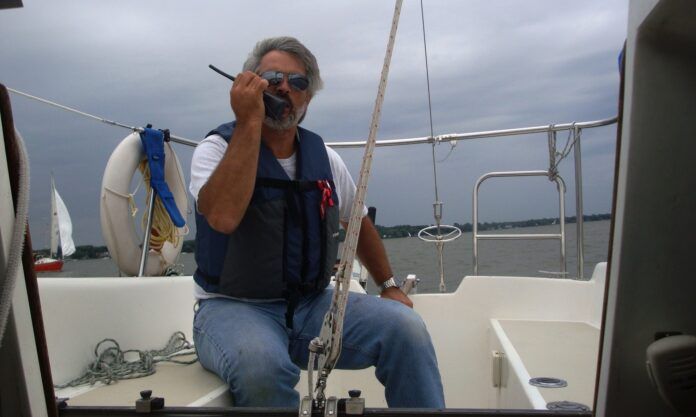
Sailors should always monitor Channel 16 while underway—it’s the frequency most likely to connect a distress call with nearby boaters and rescue teams within minutes. (Photo/ Marc Robic)
PHOTOGRAPH
Sailors should always monitor Channel 16 while underway—it’s the frequency most likely to connect a distress call with nearby boaters and rescue teams within minutes. (Photo/ Marc Robic)

One of the most important rules while out on the water is to always lend a hand if possible—without risking your own crew and boat, of course. It is a kind of Good Samaritan rule. Over the last 40 years, I’ve lent a hand countless times. From a serious situation, where a power boat hit rocks in the dark of night and began sinking with six people on board, to simply towing boats to safe harbor after running out of gas or having engine trouble, to pulling a few boats off rocks, etc.

For all these acts of helpful seamanship I was not out there patrolling the waters looking for people in trouble. All of these opportunities to help fellow boaters arose while I was out on the water enjoying a nice day and I had my VHF radio on channel 16.

Members Only
Keep reading with a membership
Unlock the full recap, every past recap, and 4,000+ boat tests, gear reviews and DIY guides — for about $2.83 a month.
03Voyaging

Running a Sailing Charter Business in British Columbia: One Captain’s Adventures

A veteran liveaboard recounts how she turned her custom steel cutter into a working charter boat—and the seamanship, guest management, and grit that made it succeed.

Driving my dinghy up a scenic channel in the Great Bear Rainforest. (Photo/ Pamela Bendall)
PHOTOGRAPH
Driving my dinghy up a scenic channel in the Great Bear Rainforest. (Photo/ Pamela Bendall)

After nearly three years of sailing the Pacific in the 1980s with my family, land life in British Columbia became a placeholder—by 1999, the ocean was calling again. I decided to custom-build my dream boat on my own—I’d since separated from my husband. The boat could have been named Wish List; every amenity I wanted had been recorded in the back of my Pacific logbook under that heading. She was steel, and precious metals mattered in my business world, so I gave her a name that joined both lives: Precious Metal.

Witnessing Precious Metal come to life was a thrilling experience. Builder Reg Whitman and his team were knowledgeable, competent and wonderful to work with. We became a family united by a shared passion, working side-by-side through every detail until my dream vessel became a reality.

Members Only
Keep reading with a membership
Unlock the full recap, every past recap, and 4,000+ boat tests, gear reviews and DIY guides — for about $2.83 a month.
04Systems & Propulsion

DC-to-DC Converters and Solar Controllers: Are They Smart Enough for LFP?

Not all charging devices deliver the same CC/CV profile as a shore-based smart charger, and knowing the difference could save your LFP battery’s long-term health.

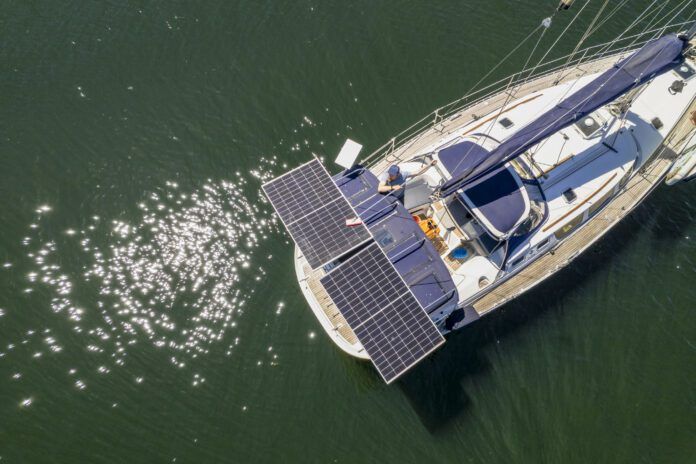
If a small boat never has access to shore power, their primary means of charging is the DC-to-DC converter and/or solar controller. (Photo/ AscentXmedia)
PHOTOGRAPH
If a small boat never has access to shore power, their primary means of charging is the DC-to-DC converter and/or solar controller. (Photo/ AscentXmedia)

In “How to Charge Your LFP Battery the Right Way” we explored the charging needs of LFPs and how smart chargers, fed from shore power, deliver that charge profile.

The reality, however, is that you may be charging your LFP with a different device, such as a DC-to-DC converter or solar controller. Are these devices “smart” and do they deliver the same charge profile? The simple answer is that it depends on technology, cost and quality. It may also depend on when you purchased the device, as specifications change rapidly.

Members Only
Keep reading with a membership
Unlock the full recap, every past recap, and 4,000+ boat tests, gear reviews and DIY guides — for about $2.83 a month.
05Safety & Seamanship

John Campbell’s North Pacific Rescue

When a North Pacific gale rolled April Alice, John Campbell relied on preparation, an inReach SOS, and expert rescue seamanship to stay alive.

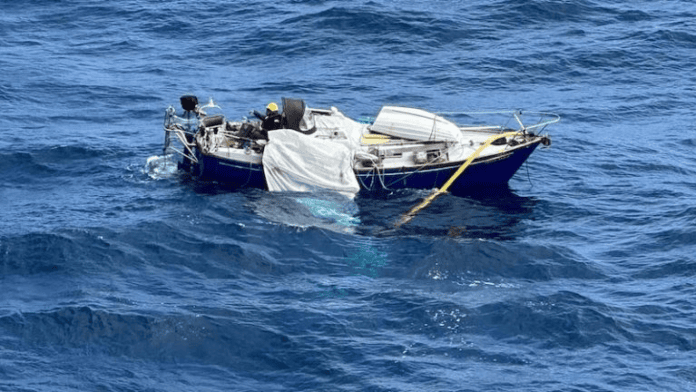
Disabled April Alice. (Photo/ U.S. Coast Guard)
PHOTOGRAPH
Disabled April Alice. (Photo/ U.S. Coast Guard)

Clip on your safety tether. Far out in the North Pacific, solo sailor John Campbell was about to face the kind of ordeal most mariners hope never to encounter. The Vancouver Island, British Columbia sailor was voyaging from Hilo, Hawaii, to Vancouver aboard his Vancouver 27, April Alice, when an otherwise familiar passage became a nightmare. I have heard and read many accounts of survival at sea; few compare with his.

At 73, John was no novice. He had logged roughly 30,000 nautical miles in his lifetime and was making his third ocean passage from Hawaii to Vancouver. Water had shaped his life ashore as well: he built his career as a swimming coach. In our conversations for this article, I was struck by his meticulous approach to seamanship and his deep affection for April Alice. The boat was named for the previous owner’s mother, Alice, who was born in April. Yet this passage pushed both sailor and boat to the brink. Without the coordinated efforts of his brother Clark, the cruise ship Silver Whisper, and the U.S. Coast Guard, the outcome might have been tragic.

Members Only
Keep reading with a membership
Unlock the full recap, every past recap, and 4,000+ boat tests, gear reviews and DIY guides — for about $2.83 a month.
06Sails, Rigging & Deck Gear

Anchor Rode Buyer’s Guide: How to Select the Right Chain or Chain-Line Combination

We look beyond the anchor itself to examine anchor rode “systems”—whether all-chain or line-chain combinations. Here’s how to make the right choice in 10 steps.

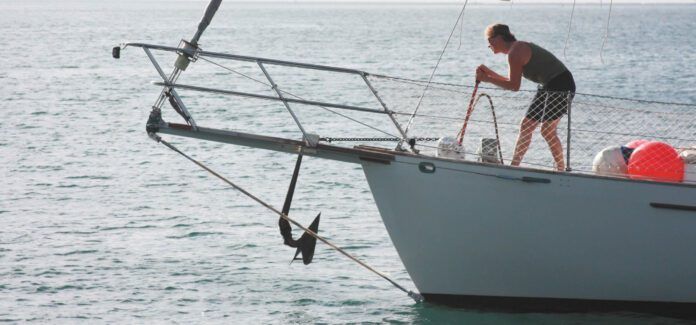
An undersized anchor chain can put your boat on the “rode” to real trouble in a blow. (Photo/ Mahina Expeditions)
PHOTOGRAPH
An undersized anchor chain can put your boat on the “rode” to real trouble in a blow. (Photo/ Mahina Expeditions)

If your anchor chain is too light, your boat is on the rode to perdition. Forgive the pun, but an inadequate anchor rode (whether all-chain or a combination of chain and line) is a sure path to “utter ruin,” the third American Heritage Dictionary definition of “perdition.”

To get the selection right, Practical Sailor has put together this 10-step guide on choosing the right anchor chain or anchor chain-line combination for your anchoring practices and conditions. We include images, diagrams, tables and pros/cons to help you make an informed decision. As we note above, this piece concentrates on the crucial link between anchor and windlass—where a lot can go wrong.

Members Only
Keep reading with a membership
Unlock the full recap, every past recap, and 4,000+ boat tests, gear reviews and DIY guides — for about $2.83 a month.
07Systems & Propulsion

LFP Battery Temperature Limits: What Sailors Need to Know Before Charging

LFP batteries tolerate a wide operating range, but charging below freezing and prolonged heat can sharply reduce performance, life and safety margins.

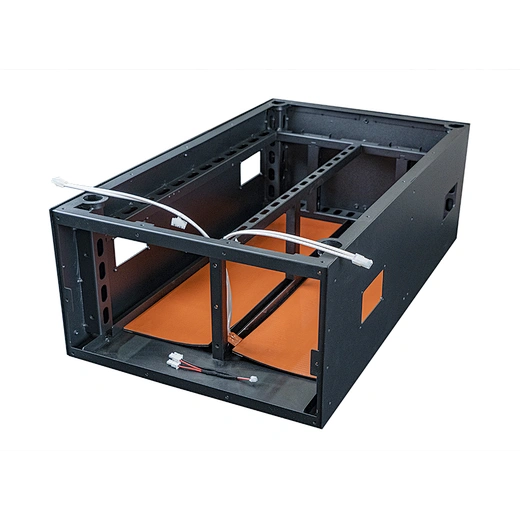
A silicone heating pad lines this stackable Seplos LiFePO4 battery box. This is how internal heaters keep cells above freezing before charging begins. (Photo/ Seplos)
PHOTOGRAPH
A silicone heating pad lines this stackable Seplos LiFePO4 battery box. This is how internal heaters keep cells above freezing before charging begins. (Photo/ Seplos)

A new Lithium Iron Phosphate (LFP) battery is sold as having a stated storage capacity, such as 100-amp hr. In practice, however, there will be a footnote to that figure stating that capacity is measured at an optimum temperature, usually quoted as 25 C (77 F).

Similarly, the manufacturer will quote a figure for how many times the LFP can be recycled (capacity retention over multiple cycles or life cycle longevity). That number is also qualified by a provision that the LFP be operated within specified temperature parameters.

Members Only
Keep reading with a membership
Unlock the full recap, every past recap, and 4,000+ boat tests, gear reviews and DIY guides — for about $2.83 a month.
08Voyaging

East End Journey: Timing the Barriers to Long Island’s Top Destinations

Sailing from the populous western end of the Long Island Sound to The East End is a long haul that ends with a potentially dramatic passage through fast-moving currents off the tip of Long Island’s North Fork.

Sailing from the populous western end of the Long Island Sound to The East End is a long haul that ends with a potentially dramatic passage through fast-moving currents off the tip of Long Island’s North Fork. (Image/ Apple Maps)
PHOTOGRAPH
Sailing from the populous western end of the Long Island Sound to The East End is a long haul that ends with a potentially dramatic passage through fast-moving currents off the tip of Long Island’s North Fork. (Image/ Apple Maps)

The East End of New York’s Long Island shelters within its North and South “forks” popular cruising destinations including Greenport, Shelter Island, Sag Harbor, and Montauk. What keeps many sailors hailing from the populous western end of the Long Island Sound (The Sound) from ever reaching these destinations is the sheer length of this tidal estuary, at nearly 80 nautical miles. Then there’s the psychological and very real nautical challenge of passing through Plum Gut or The Race.

Plum Gut and The Race Jitters

Every six hours and twelve-and-a-half minutes The Sound, estimated to hold some 18 trillion gallons of sea water, shifts from a northwest flood current to a southeast ebb. At peak current, the narrow bottleneck at the western end of The Sound, appropriately named Hellgate, boils with 4-to-5-knot flows into or out of New York City’s East River. The bottlenecks at the eastern end of The Sound, Plum Gut and The Race, aren’t nearly as narrow as Hellgate, but bottom depths abruptly plunge from 35 feet to nearly 200 feet in spots, and these passages routinely see currents of 4 to 5 knots and sometimes as fast as 6 knots.

Members Only
Keep reading with a membership
Unlock the full recap, every past recap, and 4,000+ boat tests, gear reviews and DIY guides — for about $2.83 a month.
09Sails, Rigging & Deck Gear

How to Choose the Right Canvas for Your Sailboat

A well-designed dodger, bimini, or full enclosure can extend your sailing season, protect the crew, and make every hour aboard more comfortable.

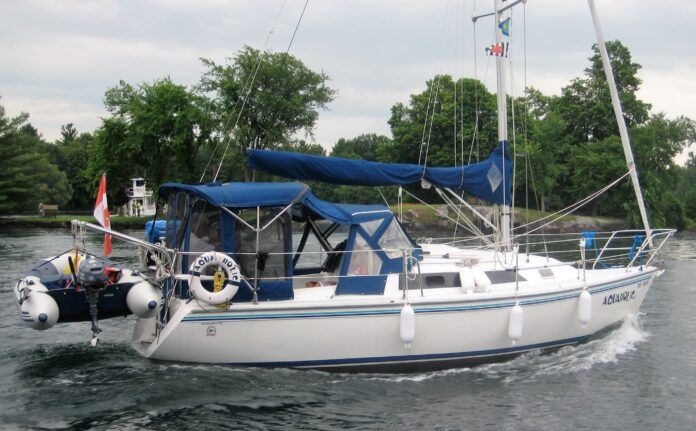
Despite cloudy cooler weather, the crew is kept comfortable and dry thanks to a properly designed canvas set-up. (Photo/ Marc Robic)
PHOTOGRAPH
Despite cloudy cooler weather, the crew is kept comfortable and dry thanks to a properly designed canvas set-up. (Photo/ Marc Robic)

Every season, for as long as I’ve owned my current boat, I’ve had people compliment me on my canvas and inquire about who made it and how it was designed. Luckily for me, the previous owner of my boat was of the same mindset as me. I adhere to a philosophy of not relying on product providers to make something and trust that it will be fully what I need.

Next to new sails or a new engine, choosing the design of your canvas can be one of the most important investments you will make for your boat. And like new sails or a new engine, it is one that you will have to live with—whether you’re happy or not. So, doing your homework before deciding on new canvas can make or break your investment.

Members Only
Keep reading with a membership
Unlock the full recap, every past recap, and 4,000+ boat tests, gear reviews and DIY guides — for about $2.83 a month.
10Marine Electronics

Decoding Your LFP’s BMS: Why It Trips and How to Wake It Up

Understanding how your BMS monitors temperature, voltage, and current can help you avoid and recover from an unexpected LFP shutdown at sea.

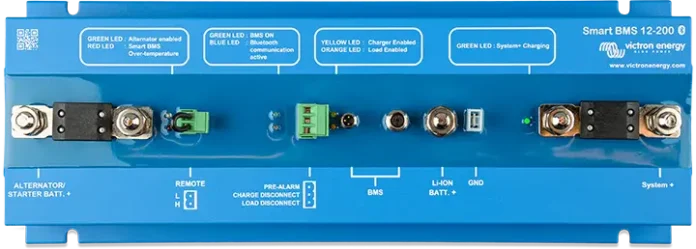
The Victron Smart BMS 12/200 is designed to work with Victron Lithium-Iron-Phosphate (LiFePO4) Smart Batteries in a 12 V system. (Image/ Victron)
PHOTOGRAPH
The Victron Smart BMS 12/200 is designed to work with Victron Lithium-Iron-Phosphate (LiFePO4) Smart Batteries in a 12 V system. (Image/ Victron)

If you are contemplating installing or operating an LFP installation, you will need to become familiar with Battery Management Systems (BMSs), as they will have effective control over your new system. Especially inconvenient are BMS shutdown events, which happen when the LFP is disconnected due to the BMS detecting a condition that it considers to be potentially damaging to the LFP. To avoid these, and potentially recover from such events, it is necessary that you invest some time in understanding how your BMS operates.

We can classify these devices into three broad categories i.e. (i) a simple BMS, internal to a single LFP; (ii) a single LFP internal BMS, with communications capabilities to an external device; (iii) a larger, multi-LFP pack, with external BMS system.

Members Only
Keep reading with a membership
Unlock the full recap, every past recap, and 4,000+ boat tests, gear reviews and DIY guides — for about $2.83 a month.

Additional Reading

More Articles From This Month Free

Endeavour 37 Used Boat ReviewSailboat ReviewsEndeavour 37 Used Boat ReviewHeavily built and comfortable below, the Endeavour 37 trades windward speed for shoal-draft cruising comfort.Read more →The Science of Stern AnchoringSails, Rigging & Deck GearThe Science of Stern AnchoringPractical Sailor anchored two multihulls by the stern to see whether reduced yawing is worth the trade-offs.Read more →Beneteau First 47.7 Used Boat ReviewSailboat ReviewsBeneteau First 47.7 Used Boat ReviewA fast, dual-purpose racer-cruiser from the early 2000s that still rewards owners who want speed without giving up a cruising interior.Read more →Getting the Most Out of Older SailsSails, Rigging & Deck GearGetting the Most Out of Older SailsRevive older polyester sails with a DIY or professional recut to extend the life of a structurally sound sail.Read more →Top-Notch Wind IndicatorsSails, Rigging & Deck GearTop-Notch Wind IndicatorsWe tested nine masthead wind indicators to see which vanes survive real sailing conditions—and which don’t.Read more →Best CARB-Compliant Gas Cans: SureCan vs. ScepterSafety & SeamanshipBest CARB-Compliant Gas Cans: SureCan vs. ScepterSecond-generation CARB gas cans trade the awkward, spill-prone valves of their predecessors for cleaner pours.Read more →Gemini 31/3000 Used Boat ReviewSailboat ReviewsGemini 31/3000 Used Boat ReviewA roomy, affordable cat, the Gemini 31/3000 delivers shoal draft, simple systems, and real liveaboard space.Read more →Practical Steps Toward Eco-Friendly BoatingSystems & PropulsionPractical Steps Toward Eco-Friendly BoatingReal environmental progress means rethinking habits at the dock, in the galley, and at home—not just the boat.Read more →DIY Survey Checklist for Used-Boat BuyingSailboat ReviewsDIY Survey Checklist for Used-Boat BuyingA DIY pre-purchase inspection can catch the costly problems a seller hopes you’ll miss.Read more →Yes, We Are Talking About Boat BidetsSystems & PropulsionYes, We Are Talking About Boat BidetsA cancer diagnosis led one sailor to rethink toilet paper—and discover a surprisingly simple bidet solution.Read more →10 Years Under the Hull: Epoxy Barrier Coat TestBoat Maintenance10 Years Under the Hull: Epoxy Barrier Coat TestAfter 10 years of brutal conditions, two epoxy barrier coats prove their worth against osmotic blistering.Read more →Onward: A Mystery Project Boat StorySailboat ReviewsOnward: A Mystery Project Boat StoryA Nicholson 31 becomes a long restoration shaped by mystery paperwork, structural surprises, and stubborn hope.Read more →Requirements for Pressure-testing Life RaftsSafety & SeamanshipRequirements for Pressure-testing Life RaftsWhat the rules require for servicing and pressure-testing your life raft—and why skipping it is a gamble.Read more →Revised Lifeline Protection PlanSafety & SeamanshipRevised Lifeline Protection PlanA fresh look at lifelines, including Dyneema options, to keep the crew on board when it matters most.Read more →

Watch

This Month on YouTube Free

Enjoying the preview? Get the full recap + 4,000+ articles — $34/yrBecome a Member