
“If I’d known then what I know now,” laughs Matt, “I’d have covered it in petrol and walked away.”
It’s not quite the endorsement you’d expect from someone who’s spent the past seven years restoring a yacht.
Then again, Onward has never been an ordinary restoration.
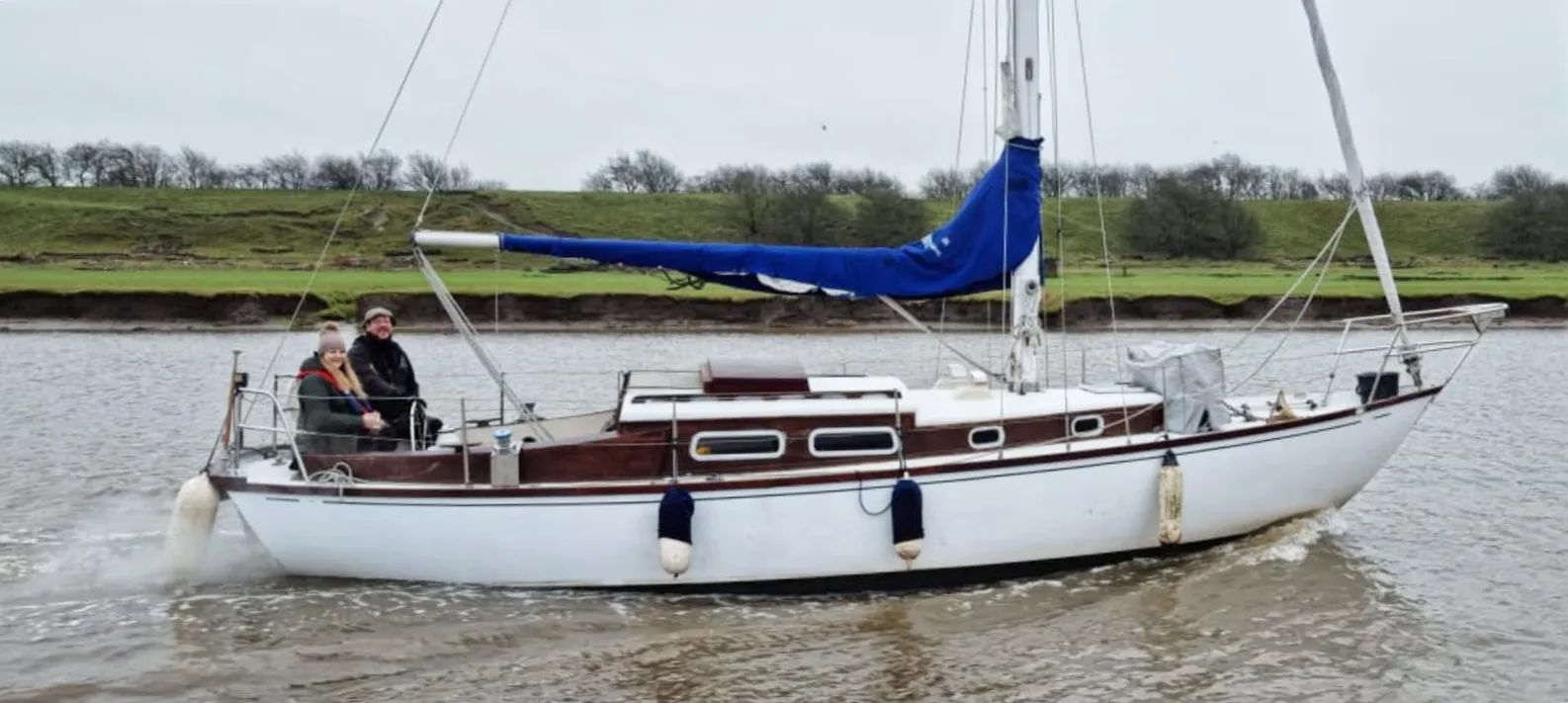
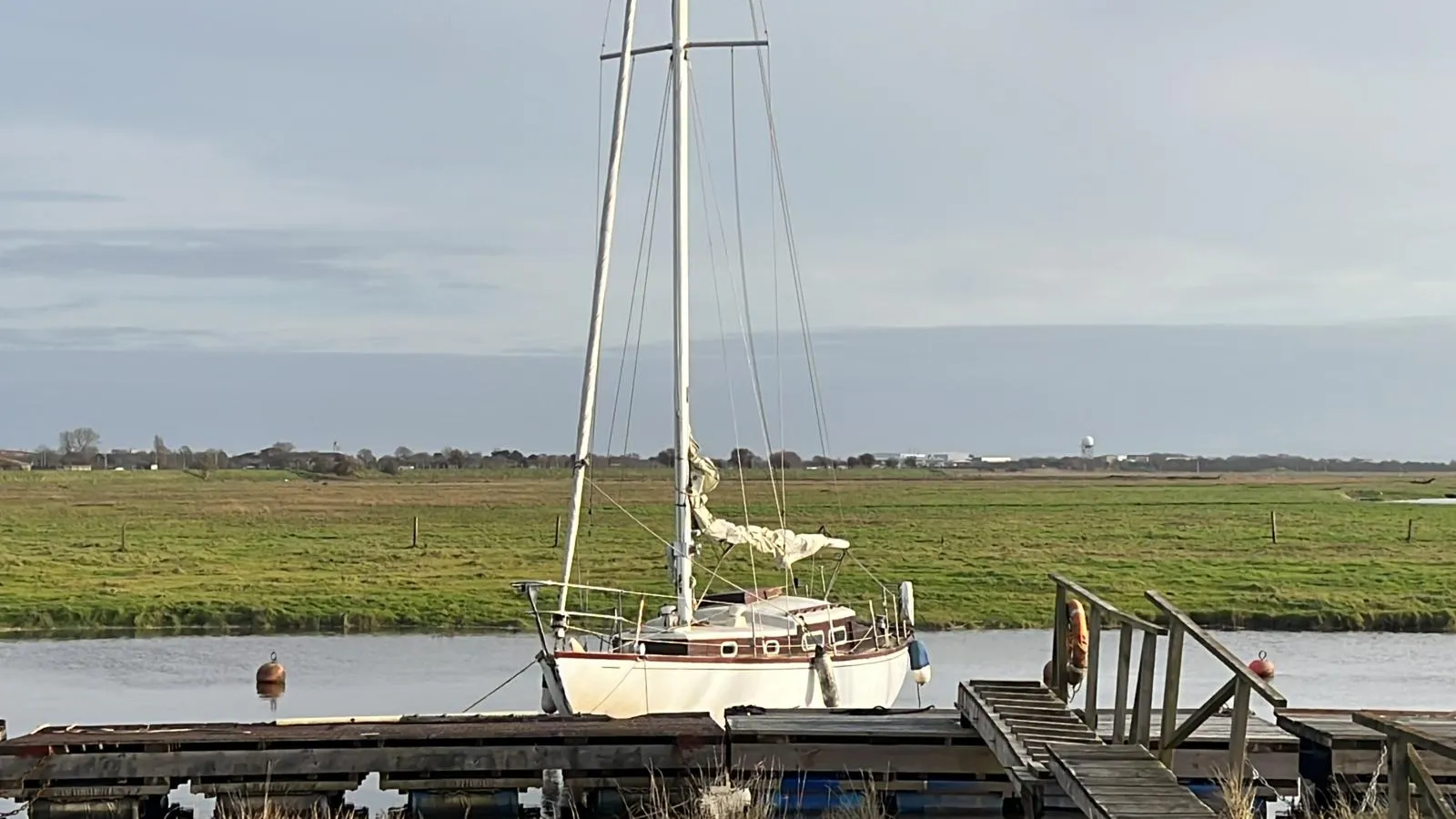
Bought for just £1,500 ($2,046 USD) as a modest project boat, the 31-footer has revealed one surprise after another: a rotten timber keel extension hidden beneath layers of fiberglass, an engine that arrived sitting on a stand instead of in the boat, and a paper trail that raises almost as many questions as it answers.
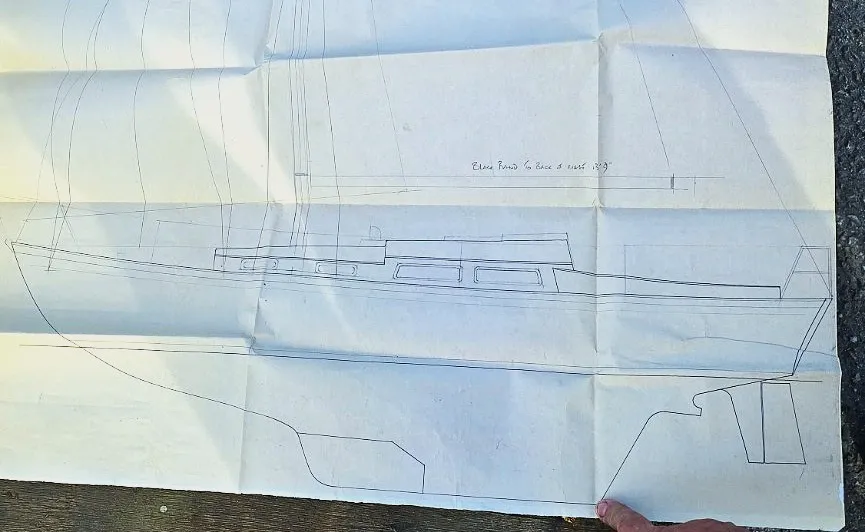
The current evidence suggests Onward began life as Sylfai, a Ray Wall-designed yacht reportedly built by John Barber in 1970. Yet commissioning survey documents from 1987 state that she had never previously been launched. Original drawings survive, as do later insurance surveys, but somewhere in the seventeen years between hull and commissioning, much of her story has disappeared.
Matt, however, was never particularly interested in the mystery.
“I decided I wanted a project boat,” he says. “I like tinkering with things. I work away a lot, so when I’m home I like having a project… I had no idea of the scale of the project I was taking on. To be honest, if I’d known then what I know now, I’d have covered it in petrol and walked away.”
Yet seven years later, despite everything, he isn’t planning to sell her: “I’ve just paid another year’s mooring,” he says. “I think we’ll keep her another year.”
Jump to:
- Specifications
- History and Mystery
- Design Heritage
- The Restoration
- Under Sail
- Accommodation and Practicality
- Living With Onward
- Future Plans
- Verdict
Specifications
Designer: Raymond Wall*
Builder: John Barber*
Construction: GRP hull and deck with timber trim
LOA: 30 ft. 8 in. (9.35m)
Beam: 9 ft. 10 in. (3.00m)
Draft: 4 ft. 11 in. (1.50m)
Keel: Long keel
Rig: Masthead sloop (GRP mast)
Engine: Yanmar 3GM30 (27 hp)
*Based on a 1993 insurance survey. Earlier records leave aspects of the boat’s history unresolved.
History and Mystery
Among the documents that accompanied the boat is a 1993 insurance survey describing Onward as a 31-foot offshore cruising yacht designed by Raymond Wall for Camper & Nicholsons and built by John Barber in 1970.
However, a commissioning survey dated July 1987 raises questions.
Rather than surveying a yacht nearing the end of two decades of service, it describes a new boat preparing to enter the water for the first time. The mast had yet to be stepped, commissioning defects were identified, and a follow-up inspection confirmed the work had been completed before launch.
The documents leave a 17-year gap that remains largely unexplained.
Current owner Matt believes the answer lies somewhere in the boat’s earliest history: “I’ve got the original survey saying it was molded, then not fitted out and just left somewhere for a very, very long time,” he says. “Then it changed hands a couple of times, then got fitted out.”
“I think only two of the owners actually sailed it,” he says. “The first one had the hull rather than a finished boat. I think I’m the fourth owner.”
If that’s correct, it would explain why a boat built in 1970 wasn’t commissioned until 1987.
At the time of writing, no surviving documentation has been found to bridge that gap, and enquiries with maritime historians and Camper & Nicholsons remain ongoing.
Design Heritage
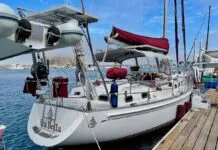
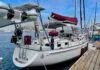
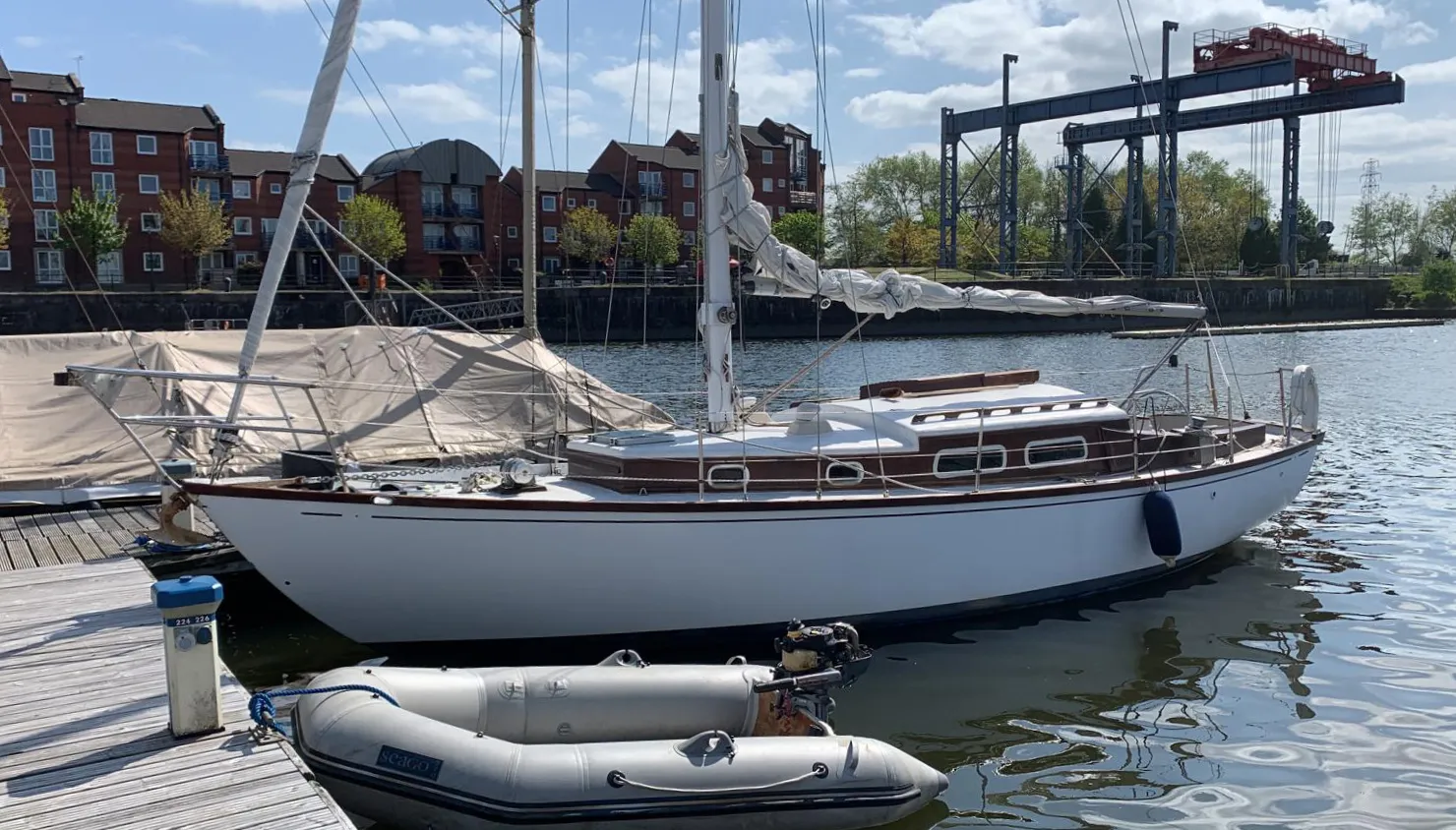
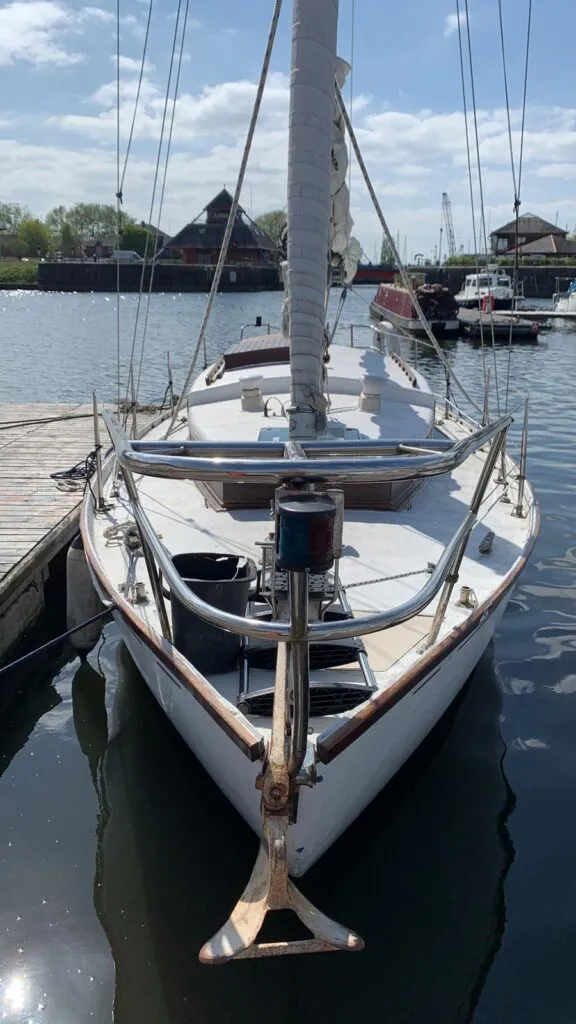
At first glance, Onward looks exactly as a British cruising yacht of the late 1960s and early 1970s should. The sheer is modest, the coachroof low enough to avoid looking bulky, and the long keel promises direction rather than excitement: a yacht drawn for passagemaking.
The 1993 survey attributes the design to Raymond Wall, who joined Camper & Nicholsons as Head Designer in 1967. According to Peter Nicholson, then chairman of Camper & Nicholsons, Wall “had design flair,” and was known for designing “some very attractive boats.”
When the Nicholson 31 was introduced, it was described as “an unashamedly cruising boat” with the focus placed on comfort and seakindliness rather than outright speed. Half a century later, Matt reaches much the same conclusion, although in fewer words:
“Point and shoot.”
Construction is equally traditional for the period. The hull and deck are GRP, with timber used throughout the interior and trim.
“The hull’s absolutely solid,” says Matt. “That’s never really worried me.”
The challenges have tended to lie in the details added over the years rather than the original molding. Like many older yachts, Onward bears the marks of successive owners, each leaving behind improvements, compromises, and occasional surprises, and Matt has learned that lifting a floorboard or removing a panel rarely reveals exactly what he expects.
The Restoration
When Matt bought Onward in 2019, he wasn’t searching for something ready to cast off the lines. He wanted a project; a boat close to home that he could spend time improving between periods away with work.
Onward initially “looked like it wasn’t too much work.” But this assessment wouldn’t survive long.
The first surprise arrived before the boat had even left the yard.
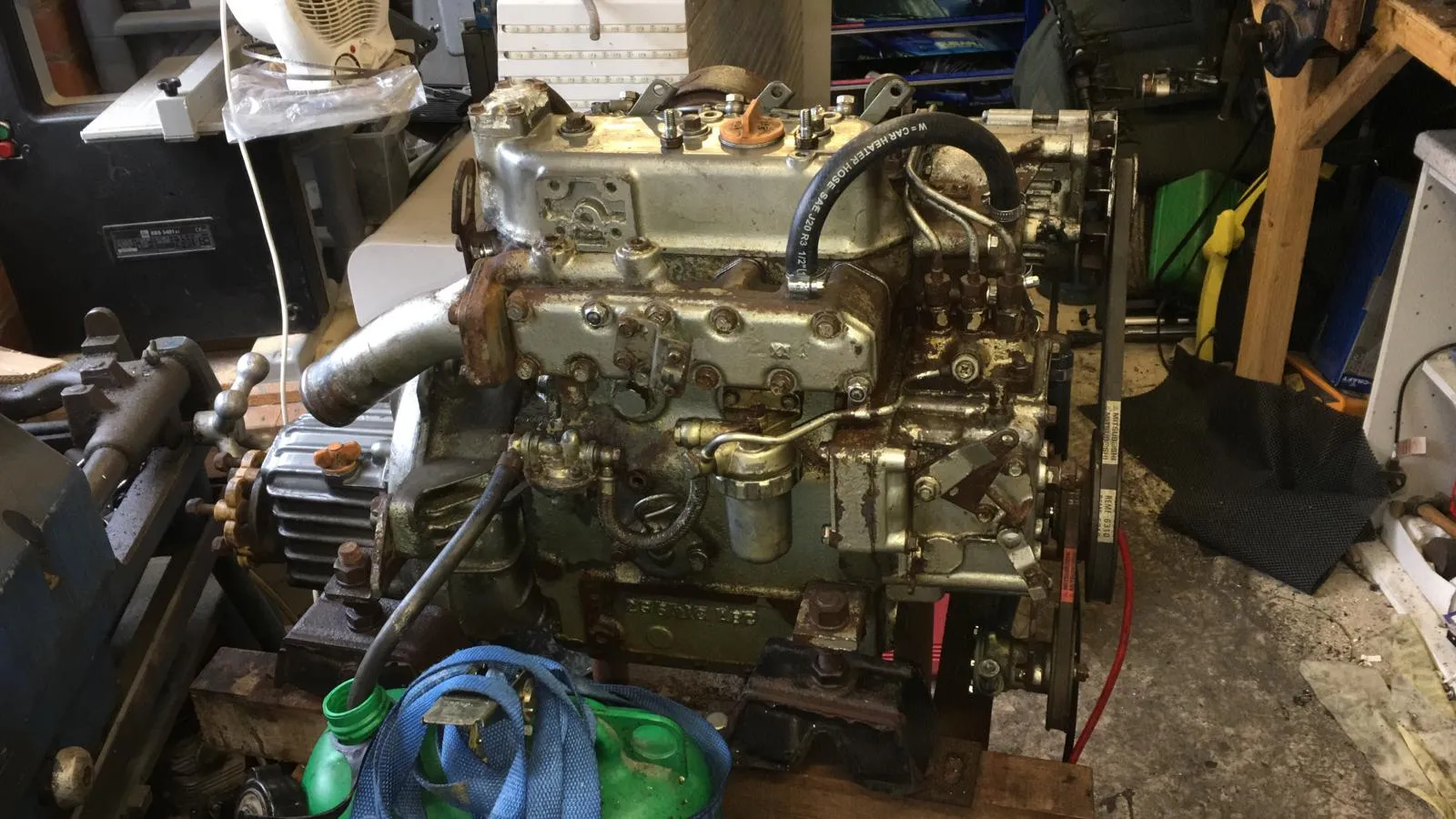
“The engine wasn’t even in the boat,” Matt laughs. “It was on a little stand.”
Fortunately, that proved to be one of the more straightforward jobs. The Yanmar 3GM30 was rebuilt before being lowered back into place, with the cylinder head refurbished, new valve seats fitted, and the top end overhauled. Since then, it has accumulated barely twenty hours, leaving, in Matt’s words, “an absolutely bulletproof” engine.
If only the rest of the project had followed suit.
At some point, long before Matt bought the boat, the original mast was lost and replaced with a taller GRP spar. Rather than shortening the replacement, a previous owner reportedly extended the keel to compensate for the increased sail plan.
“That’s an interesting choice,” I remarked during our conversation.
“Yeah.”
Matt didn’t realize how the keel extension had been constructed until Onward was lifted after arriving in Preston. Beneath the fiberglass lay solid timber, shaped to continue the profile of the keel.
“The thing was rotten all the way through.”
Removing it became less a question of craftsmanship than determination.
“I tried everything,” he says. “I ended up with just a chainsaw.”
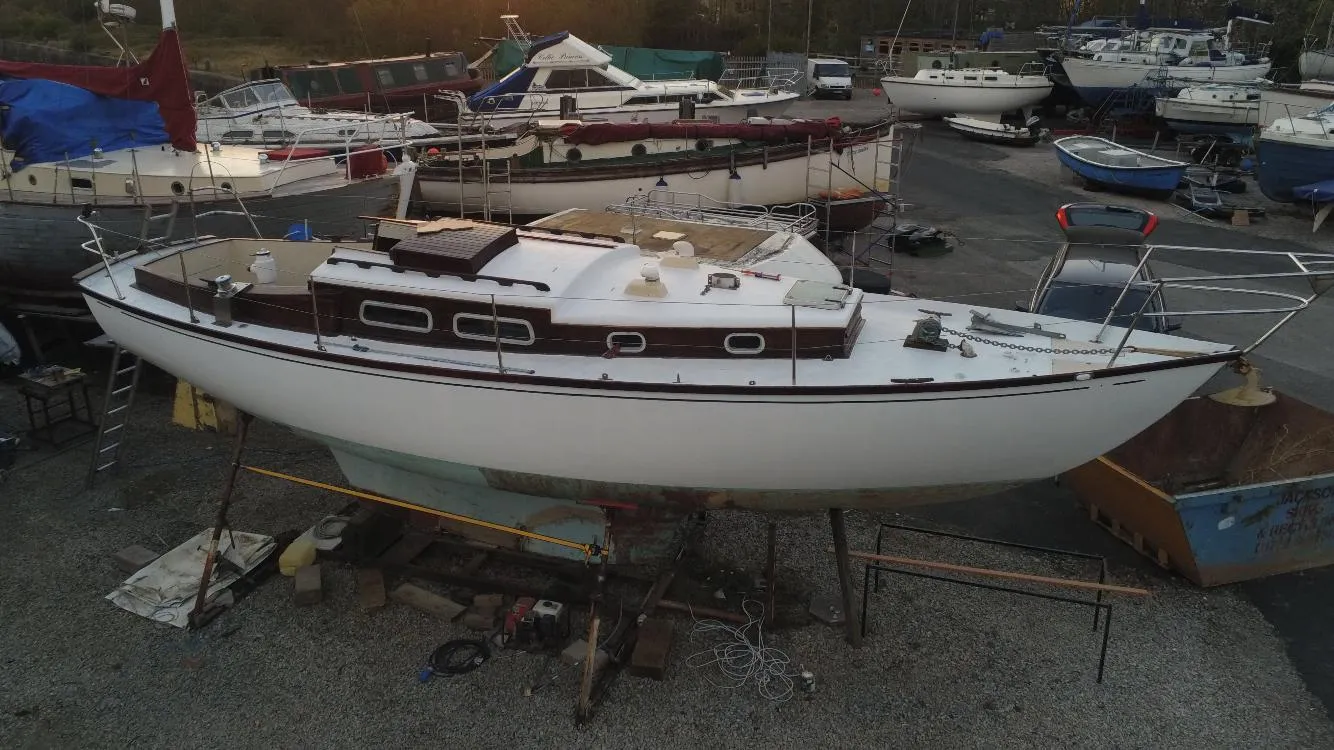
With the rotten timber removed, the keel could finally be rebuilt properly, but the taller mast had created another problem. The replacement boom had been left to match the longer rig, extending well aft of the helm.
“It came about this far past the wheel,” he says, gesturing behind him. The solution this time was considerably simpler: “We just cut about two-and-a-half feet off the boom.”
By this point, it was apparent that the work wasn’t correcting flaws in Raymond Wall’s original design so much as undoing the consequences of later modifications. Every solved problem revealed another decision made years before, each with its own unintended consequences waiting to be discovered.
Then there was the timber.
The handsome teak trim that gives Onward much of her character also demands attention. As Matt explains, the wood expands, contracts, gets wet and, inevitably, finds new ways to let rainwater inside. After spending a month with a hosepipe, he still hasn’t found all the leaks.
Asked about the biggest challenge of the restoration, his answer is immediate.
“The keel.”
Would he buy the same boat again?
“No.”
And he likes the boat. He can’t stop telling me how well she sails and how much he enjoys being aboard. But hindsight is relevant, and after countless hours of frustrating refit work, he’s now learned what to look for and, perhaps more importantly, what questions to ask. See “DIY Survey Checklist for Used-Boat Buying.”
Yet despite everything—the engine sitting on a stand, the improvised keel extension, the chainsaw, the leaks—there’s remarkably little resentment. If anything, there’s affection, tempered by the sort of exasperation that only arrives after years of solving one problem after another.
Strip away the improvised modifications, and the underlying structure has proved remarkably honest. The hull has remained sound, the original design has largely rewarded careful maintenance, and many of the biggest jobs have involved undoing previous alterations rather than correcting fundamental flaws in the yacht herself.
Under Sail
Although the restoration has occupied much of the past seven years, Matt has now spent enough time sailing Onward to form some early impressions. Those impressions, he says, have justified much of the effort.
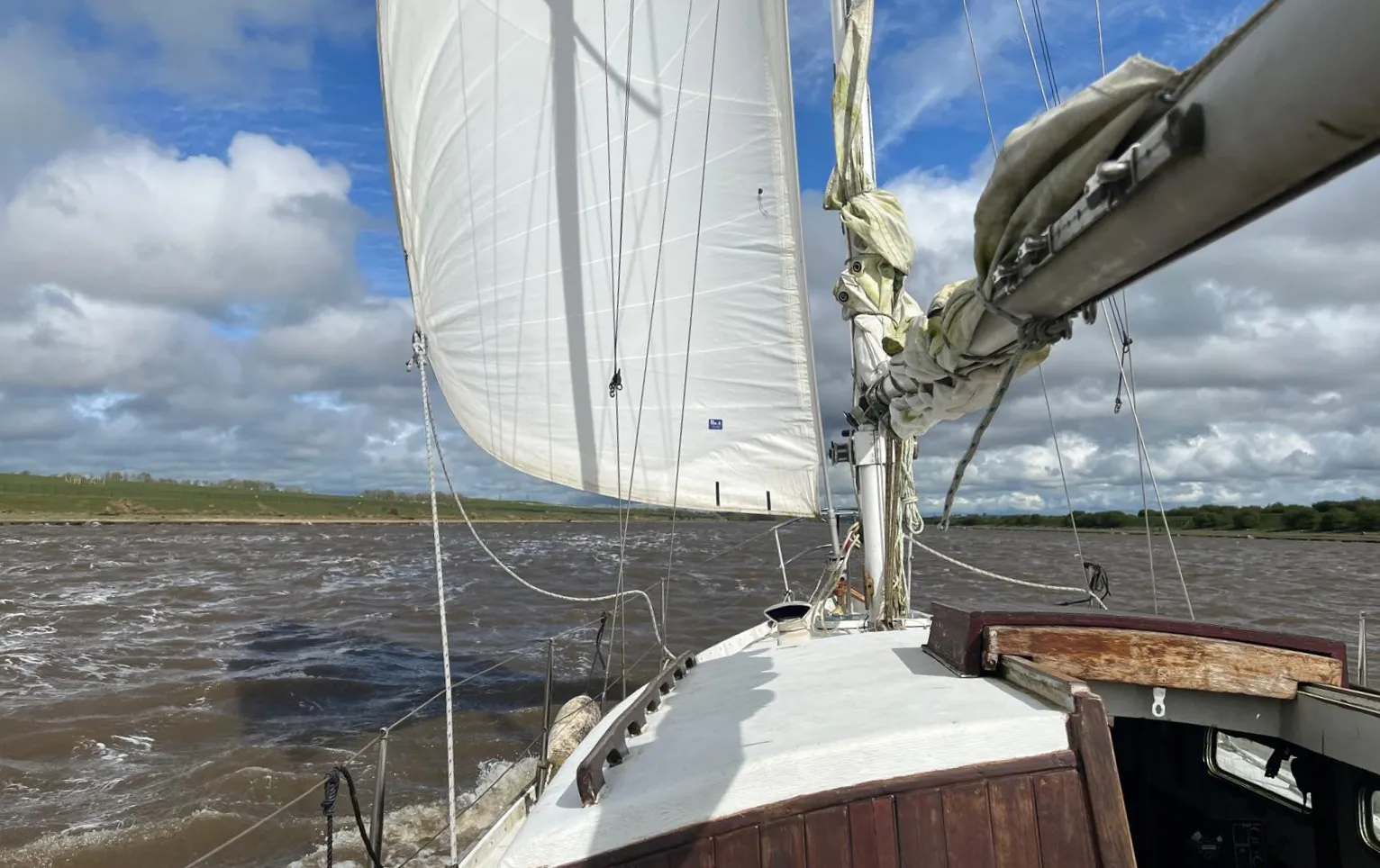
Matt’s assessment of Onward under sail is wonderfully straightforward: “Very easy. Lovely. Just point and shoot.”
It neatly captures what Raymond Wall set out to achieve.
“I think, probably as a beginner’s boat, [she’s] very forgiving, quite easy.”
Not every quirk has disappeared, though.
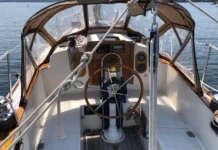
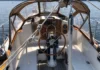
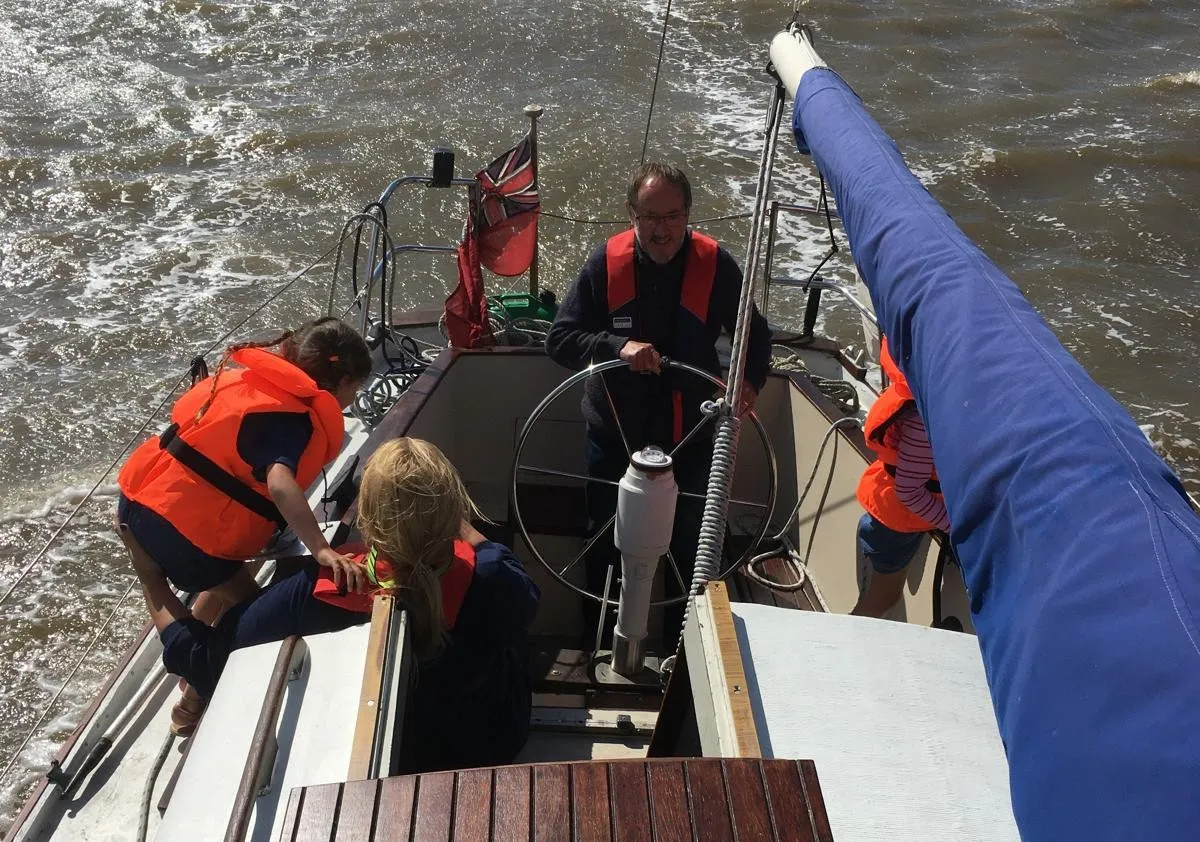
“In terms of ergonomics, from the human perspective, [she’s] the most uncomfortable boat to be at the wheel.”
He explains the seating arrangement behind the wheel leaves the helmsperson either perched awkwardly or leaning against a substantial rail, a situation that is not improved by the too-long boom!
Asked what he’d upgrade next, though, and Matt has no wish list of expensive electronics or performance upgrades. Beyond a chartplotter, depth sounder, and VHF, Onward remains a refreshingly uncomplicated cruising boat. And that’s exactly how he intends to keep her.
“I’d put my money elsewhere and buy a better cushion [for the helm station].”
Accommodation and Practicality
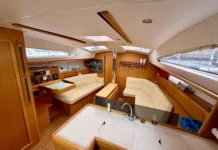
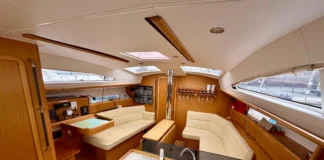
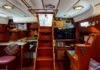
Below decks, Onward reflects the thinking of an earlier generation of cruising yacht. The emphasis is on practicality rather than volume, with a traditional layout that makes sensible use of every inch of her 30-foot hull. Nobody is likely to mistake her for a modern floating apartment, but that was never the brief.
Matt is the first to acknowledge that she’s “not really a liveaboard” in the modern sense.
The accommodation is comfortable enough for weekends and extended cruising, but compact by contemporary standards. The heads are especially snug, and storage is adequate rather than abundant, encouraging a degree of discipline that many owners of classic cruising yachts will recognize.
Where Onward scores highly, however, is in her simplicity. Systems are uncomplicated: a chartplotter, depth sounder, and VHF provide the essentials without cluttering the boat with equipment that Matt neither wants nor needs.
That philosophy extends beyond the electronics. Good engine access proved invaluable during the restoration and beyond, while the stripped-back systems mean most maintenance remains well within the capabilities of a competent owner. As with many yachts of her era, the timber trim requires regular attention, but that’s part of the ownership experience rather than an unexpected burden.
Living With Onward
Seven years is a long time to spend with any boat, especially one that seemed determined to test its owner at every opportunity. Yet somewhere between rebuilding engines, chasing leaks with a hosepipe, and removing a rotten timber keel extension with a chainsaw, Onward stopped being just another restoration project.
Living with her has been an exercise in balancing maintenance with sailing. Like many classic GRP cruisers of her era, she’s happiest when she’s being sailed, but she’s equally capable of reminding her owner that there’s always another job waiting.
Fortunately, the rewards have generally outweighed the frustrations. When Onward first returned to the water after her restoration, Matt found himself making the most of every tide.
“Literally every day the tide was right, I’d leg it down and do a couple of hours sailing. It was great. Really, really good fun.”
The rebuilt Yanmar has proved dependable, the handling predictable, and all the control lines lead aft, making Onward equally well suited to family sailing or short-handed cruising.
One memorable outing demonstrated that perfectly. An enthusiastic member of the local Cruising Club unexpectedly stepped aboard as Matt was leaving the pontoon, apparently assuming he’d join the crew. With Matt’s partner Beth, daughters Scarlett and Jessica, and his father aboard, the boat soon found herself in steep wind-over-tide conditions.
“We were getting huge ups and downs, like a rollercoaster,” Matt recalls. “Beth was holding the two girls in the corner. I was pretending everything was safe and I knew what was going on. This guy was just sat in the corner laughing like a madman.”
The sensible decision was to turn back.
“We’re going back in. We’ll stay alive so we can go another day.”
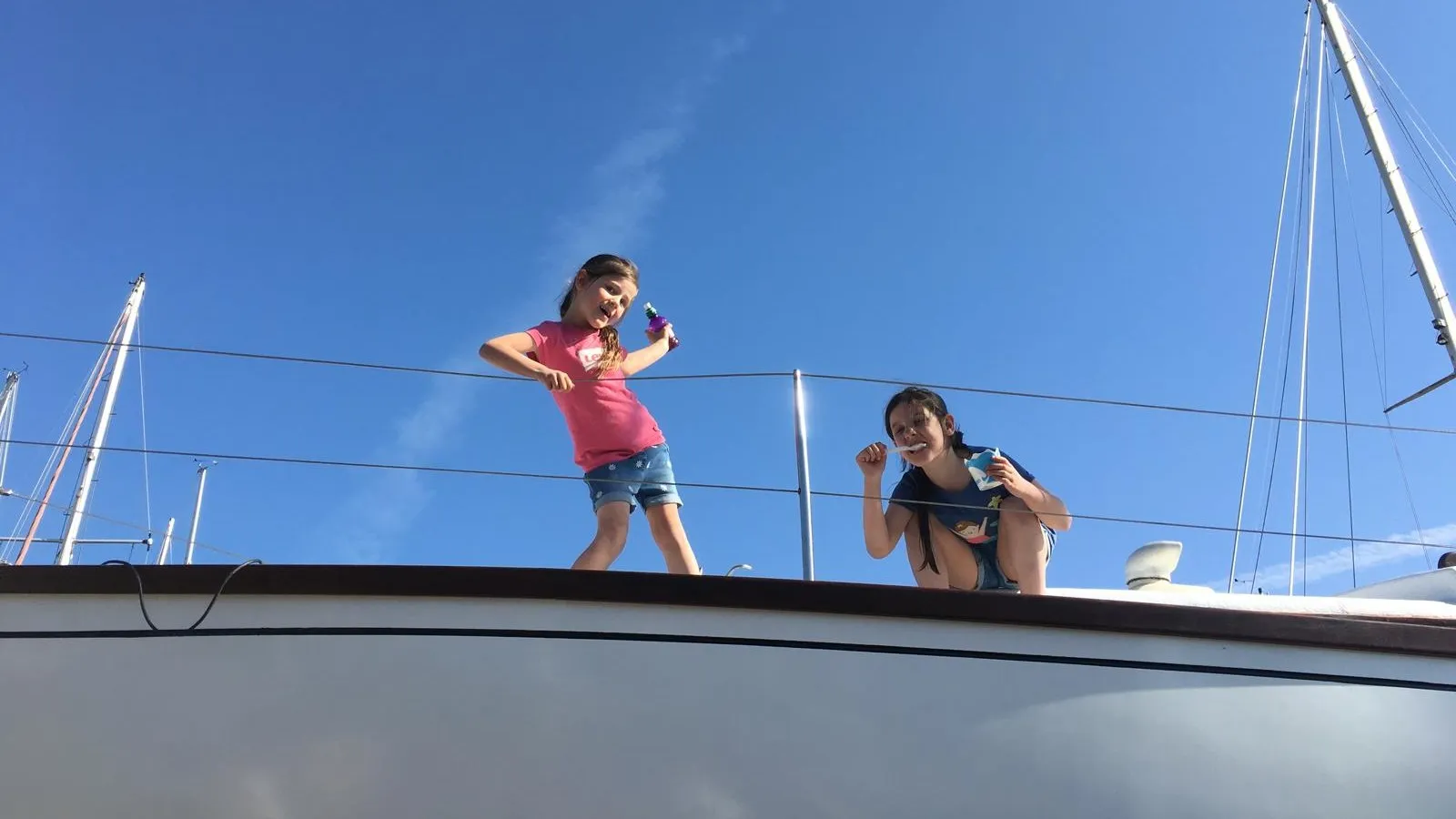
For Scarlett, it’s one of her favorite stories to tell.
“It was really scary… but it was really fun.”
Future Plans
When Matt bought Onward, the intention was always to restore her, enjoy a few seasons afloat and eventually sell her on.
Seven years later, those plans have changed.
The catalyst wasn’t another successful repair or a particularly memorable sail.
It was Scarlett.
At 12, Matt’s daughter Scarlett has started showing an interest in learning to sail, giving the Nicholson a purpose Matt never anticipated when he first handed over £1,500 ($2,046) for what looked like a modest project boat.
It somehow feels fitting. Scarlett was the one who named Onward seven years earlier, long before either of them knew the boat would one day become her classroom.
There will always be jobs to do. There are still leaks to chase, paintwork to refresh, and another list waiting for the next free weekend. But those jobs no longer feel like preparation for selling the boat. They’re simply part of keeping Onward ready for the next generation of adventures.
Verdict
Realistically, Onward isn’t the obvious choice for most boat owners. She certainly won’t appeal to sailors looking for modern comforts, turn-key ownership, or the lowest-maintenance option. But those who enjoy understanding their boat, maintaining it themselves, and value straightforward engineering over modern complexity will find plenty to admire.
Matt admits there is almost certainly “more boat for the money” out there.
Strip away decades of questionable modifications, and what remains is a fundamentally sound Raymond Wall design. Her robust GRP construction, easy handling, and predictable sailing characteristics have endured despite decades of alterations and neglect.
Asked whether he’d buy the same boat again:
“No.”
But he wouldn’t swap the experience, either.
“If you buy something and it just does what it’s meant to do, you never really get to know it. It never has a personality.”
Note: This Market Scan is for the Nicholson 31, which is a later build and design than Onward.
Market Scan Contact
1976 Nicholson 31 Irwin Yachts
£22,500 Contact via website
Belfast Lough, Northern Ireland Appolo Duck
1976 Nicholson 31 Private seller
£23,750 Contact via website
East Cowes UK Apollo Duck
1976 Nicholson 31 Network Yacht Brokers Dublin
€24,000 Contact via website
Dun Laoghaire Ireland Apollo Duck
1982 Nicholson 31 Private seller
€34,500 Contact via website
Kalamata or Athens Greece Apollo Duck