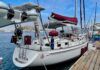

I have a new favorite production cruising boat. For me it’s long been a Jeanneau Sun Odessey 42 DS (Deck Salon) because they’re comfortable, they sail well and can be found at a fairly affordable price. But all this time there was something that’s a little bit better, more suited to what I want out of a sailboat. My new favorite? The Beneteau First 47.7.
I realize that these are production boats. I’d love a full keel battleship made for the North Atlantic as much as the next sailor. But that’s not the kind of sailing I tend to do. I’m a round-the-mark sailor with a bit of a travel bug—and I like warmer climates. I have no interest in crossing the North Atlantic or sailing off to Thailand or some other far away place. It’ll be coastal sailing and island hopping on something that doesn’t trudge along at 5.5 or 6 knots everywhere it goes. I like some speed. I also like comfort and a nice place to live while at anchor. Nothing will ruin cruising faster than an uncomfortable boat.
For a long time, the Jeanneau 42 and 43DS boats were a favorite of mine. Examples of these pretty boats hovered in the $160,000 range. Twin helms, furling everything, with an interior that you could actually live in without complaints from your loved ones. It fits the bill for every Caribbean mile you may want to make, and it’s been my favorite up until now.
Bruce Farr
Then I was reviewing the boats that completed the ARC Rally and stumbled across something else for around the same price bracket. But this something else has the name Farr on the hull. Bruce Kenneth Farr, a sailboat designer from Auckland—a designer of racing and cruising yachts. Farr designed boats that won, challenged for, or placed highly in the Whitbread Round the World Race, America’s Cup, and Sydney to Hobart Race amongst others. Farr Yacht Designs was recognized in the 1990 Queen’s Birthday Honours when he was appointed an Officer of the Order of the British Empire.
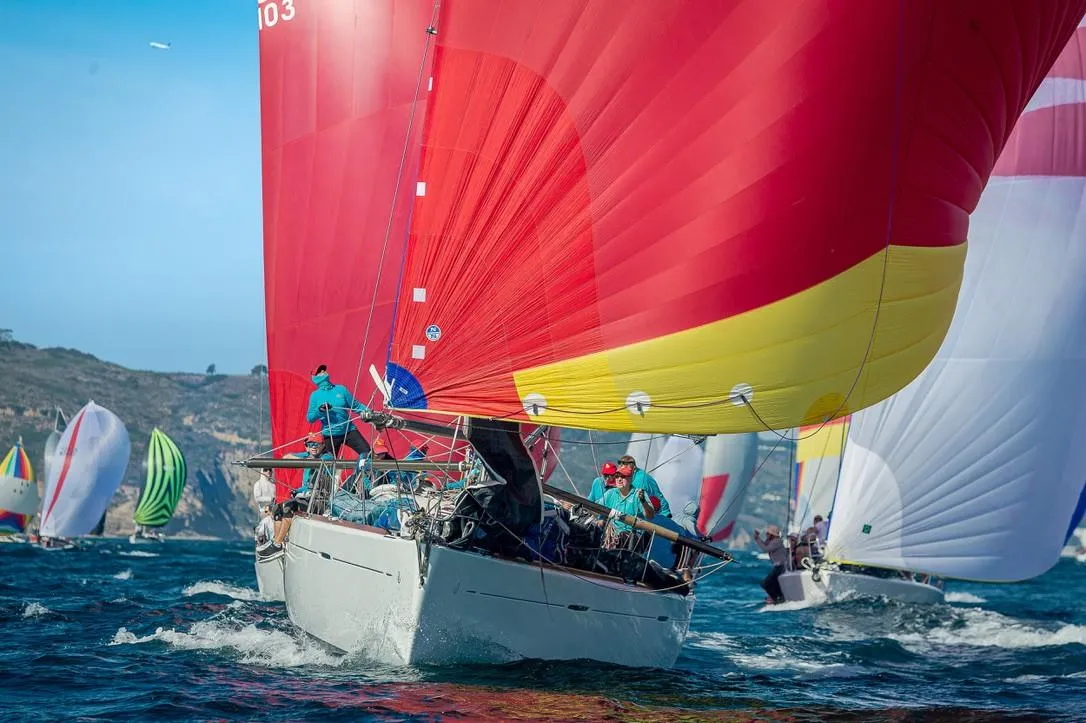
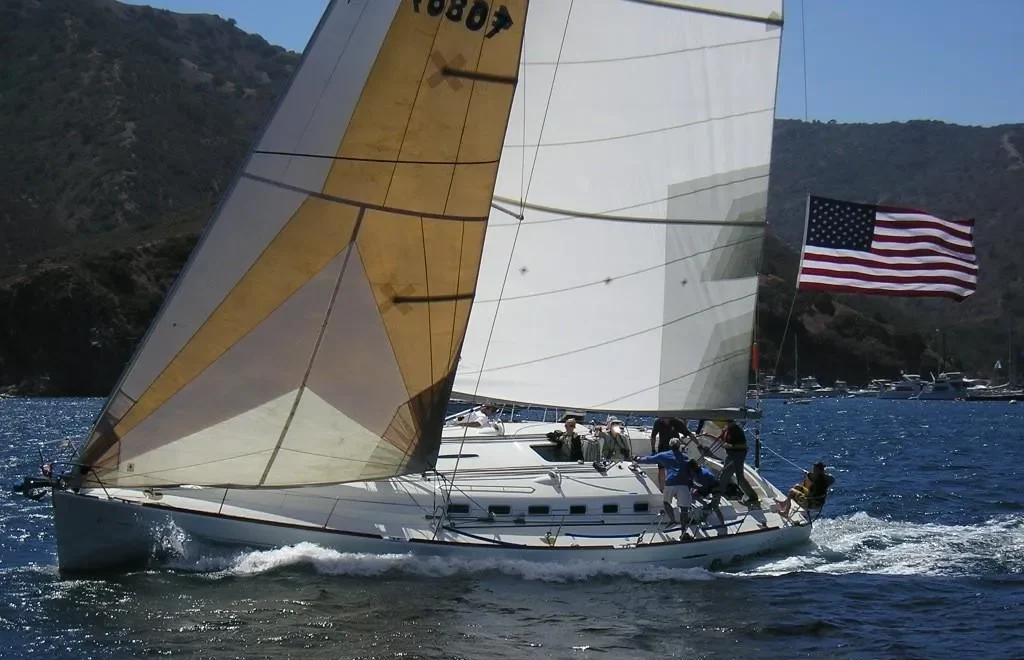
This is the Bruce Farr designed Beneteau First 47.7 and it harkens back to the days of the racer/cruiser where the word racer came first. Beneteau started producing the First 47.7 back in 2000 so they’re getting older and the prices are coming down.
Specifications
It comes in a wide variety of keels, sail plans and interior layouts. The boat weighs in at about 25,000 lb. (11,500 kg) with 8,444 lb. (3,830 kg) in a lead keel. Overall length is 47 ft. (14.33 m), with a 14.74 ft. (4.50 m) beam that narrows nicely at the stern. The deep fin keel with bulb reaches 9.2 ft. (2.31 m) with the shallow draft version reaching 7.5 ft. (2.3 m). Not exactly a boat designed for shallow waters. Mast height tops out at 69 ft. (21 meters)—not an ICW-friendly boat.
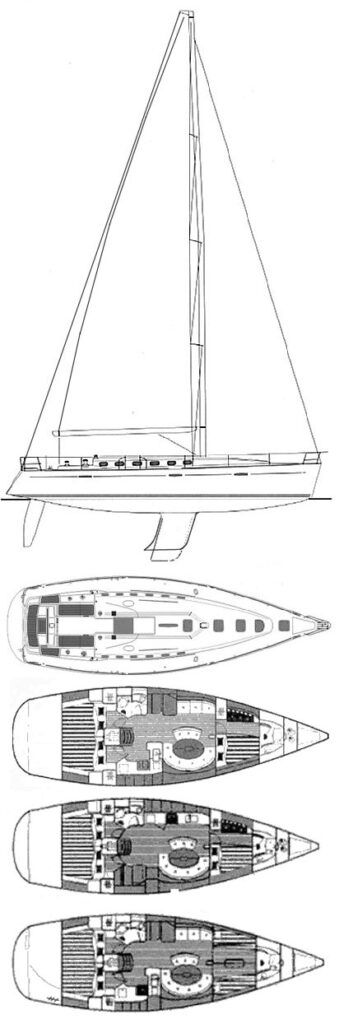
Sailboat Specifications Courtesy of Sailboatdata.com
Hull Type: Fin w/bulb & spade rudder
Rigging Type: Fractional Sloop
LOA: 47.00 ft / 14.33 m
LWL: 41.33 ft / 12.60 m
S.A. (reported): 1,033.00 ft² / 95.97 m²
Beam: 14.75 ft / 4.50 m
Displacement: 25,353.00 lb / 11,500 kg
Ballast: 8,444.00 lb / 3,830 kg
Max Draft: 7.58 ft / 2.31 m
Construction: FG
Ballast Type: Lead
First Built: 2000
Builder: Beneteau
Designer: Bruce Farr
Make: Yanmar
Model: 4JH3TE
Type: Diesel
HP: 75
Fuel: 66 gals / 250 L
Water: 185 gals / 700 L
S.A. / Displ.: 19.23
Bal. / Displ.: 33.31
Disp: / Len: 160.32
Comfort Ratio: 25.28
Capsize Screening Formula: 2.01
S#: 3.52
Hull Speed: 8.61 kn
Pounds/Inch Immersion: 2,178.23 pounds/inch
I: 56.59 ft / 17.25 m
J: 17.06 ft / 5.20 m
P: 52.03 ft / 15.86 m
E: 21.16 ft / 6.45 m
S.A. Fore: 482.71 ft² / 44.85 m²
S.A. Main: 550.48 ft² / 51.14 m²
S.A. Total (100% Fore + Main Triangles): 1,033.19 ft² / 95.99 m²
S.A./Displ. (calc.): 19.23
Est. Forestay Length: 59.11 ft / 18.02 m
Sail area to displacement is a very high 19.23 with a capsize screening of 2.01, just barely above the cut-off for ocean level work. But again, I’m not an ocean crosser. But we did find this boat to be in the top three used in ARC, so she has definitely crossed some oceans. Three of these Beneteau First 47.7s placed second, third and fourth in the overall results in IRC Class 1 at the Hamble Series out of Southhampton, U.K. They turn up in every ocean race environment and club racing, wherever they call home. These boats are fast.
A Yanmar 4J is tucked under the companionway steps with reasonable access to maintenance points behind the companionway steps and removable panels in the aft cabins. 62 gallons (235 liters) of diesel and 164 gallons (620 liters) of water are enough to go coastal cruising.
Cockpit
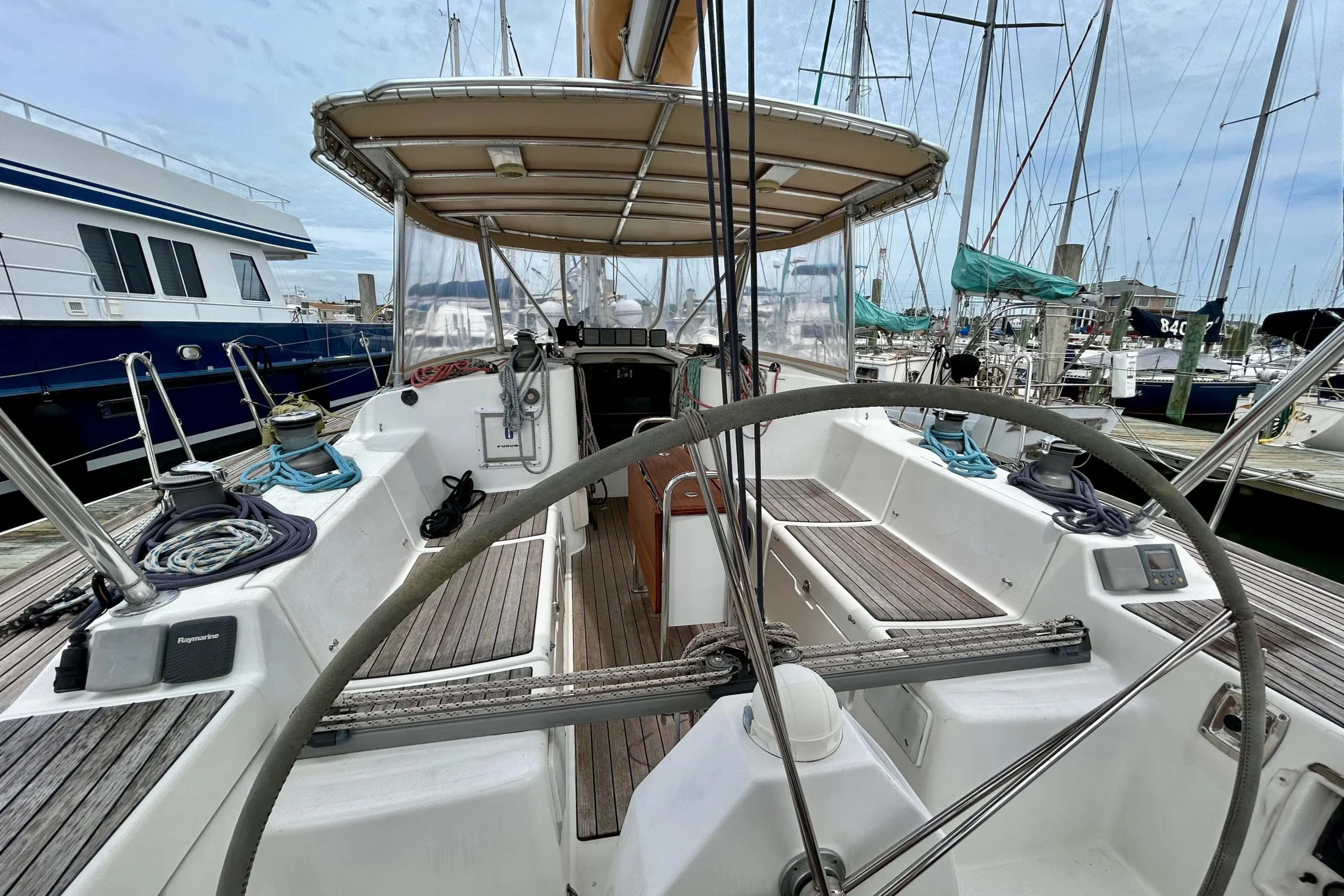
While Jeanneau had twin helms and a big luxury cockpit, the Beneteau First does it with one big wheel in a very standard-sized cockpit. To me that means less things to go wrong, one steering system instead of two. The large wheel does obstruct movement to the aft end of the cockpit and the ability to use the stern gate. A slightly raised helm seat doesn’t serve much of a purpose as the view forward is obstructed by the cabin trunk or dodger.
Engine instruments are low in the footwell to starboard of the wheel, within reach and sight of the helmsperson. Engine controls are high on the starboard side for easy access. The best seat for driving this boat is on the wide cockpit coamings with the wheel right at hand. The primary winches will be out of reach, but it’s not likely anyone will be sailing this boat single handed anyway. Cockpit lockers for sailing gear are everywhere.
Sail Controls
The standard sail control setup includes four Lewmar self-tailing winches on the cockpit coaming for the foresails and two more mounted on the coach roof for halyards and mainsail adjustments. One big compromise with these boats is the mainsheet traveler is right in the cockpit where a racing captain would appreciate it, but where guests would probably not want it. That traveler also makes moving forward for the skipper reaching the coaming winches. But I love having control of the main while I’m helming, it makes me feel like I’m sailing a big Lazer.
The pushpit has a gate for access to the small flip-down boarding platform. With the traveler and oversized wheel in the way I doubt this gate and platform will be used much.
The Rig
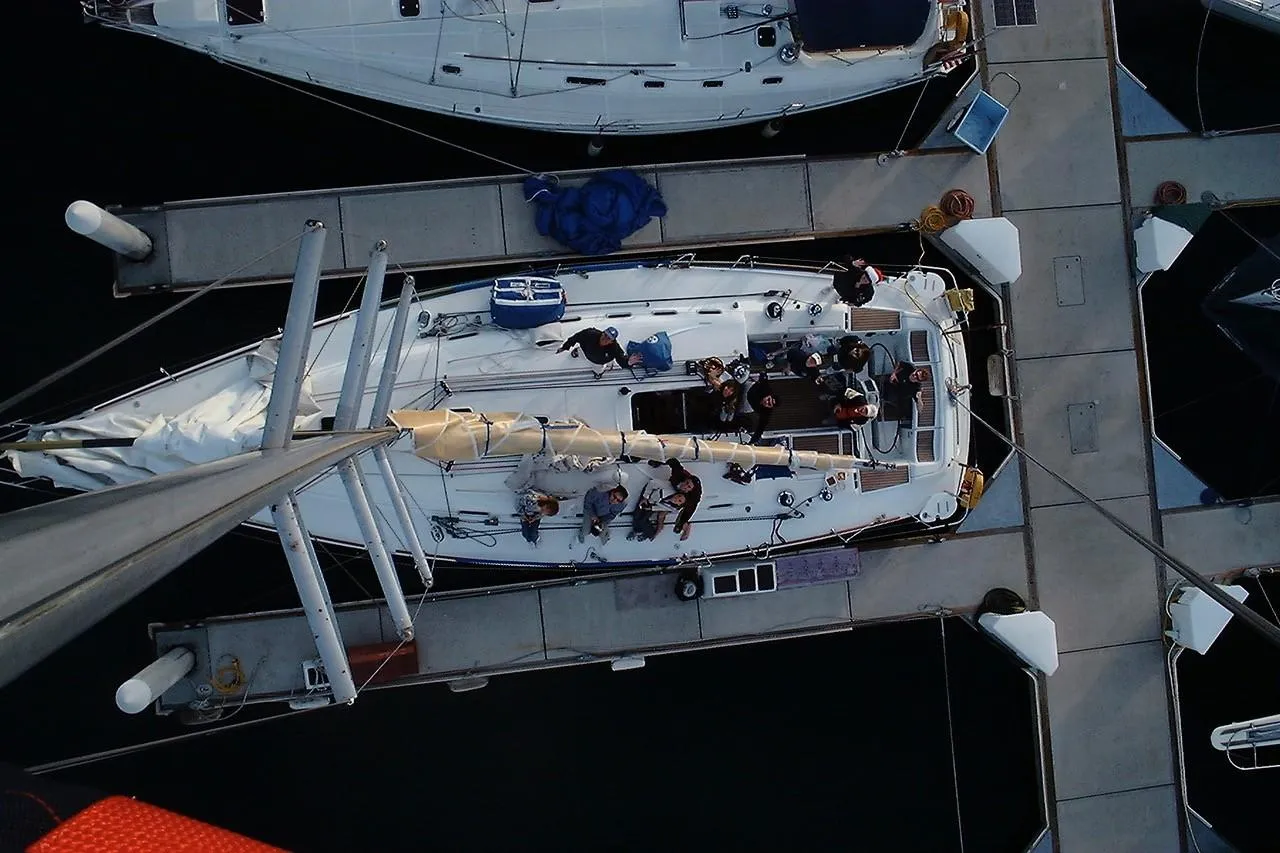
The rig is a 9/10ths fractional rig with three spreaders, carrying slightly more sail area in racing trim with a marginally taller mast. Sail control lines turn from the base of the keel-stepped mast to deck organizers then back to line stoppers and winches at the trailing edge of the coach roof, all displayed on deck and not hidden under fiberglass panels. This set up makes for easy sail adjustments from the safety of the cockpit although they are definitely not within reach of the helm.
On Deck
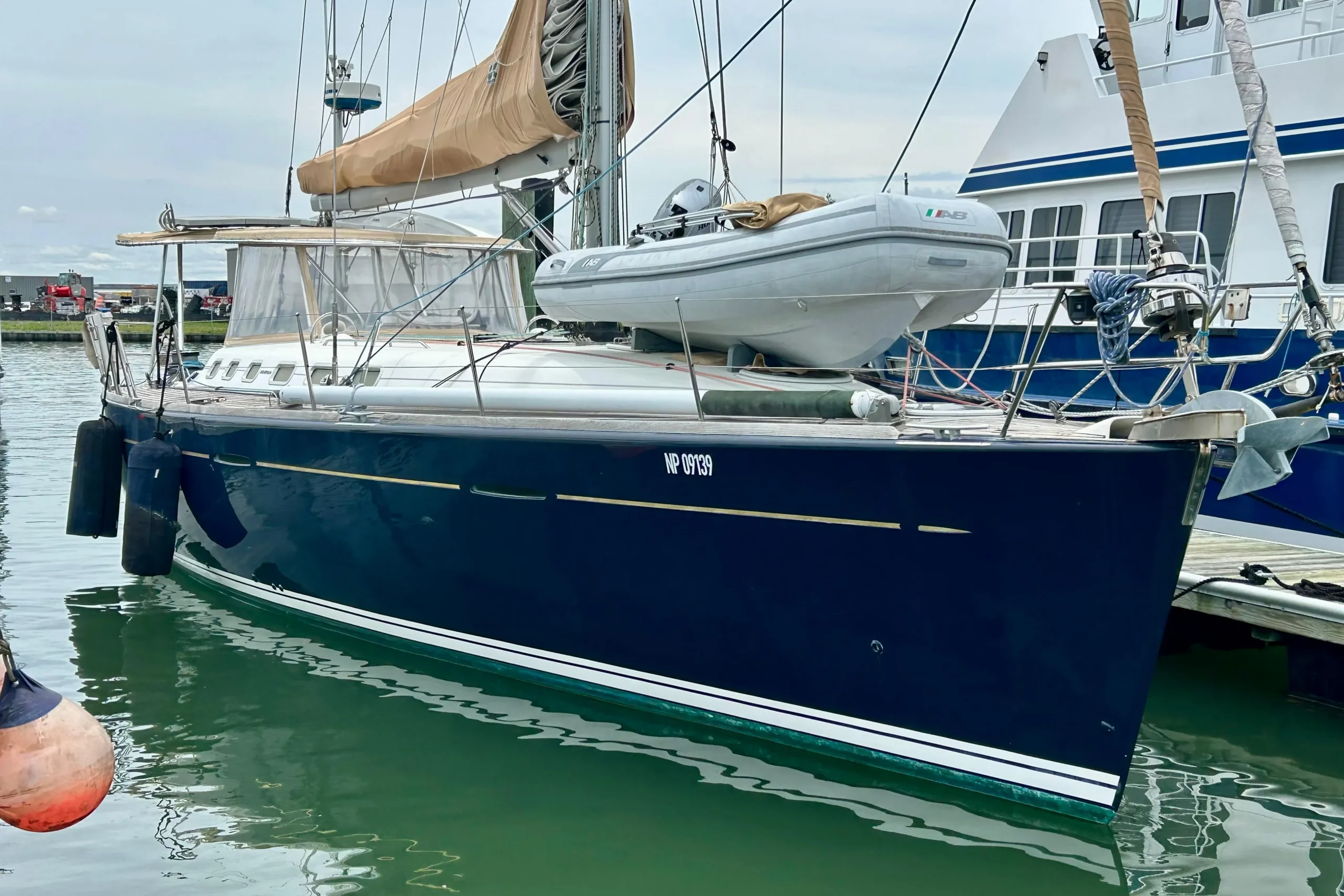
The coach roof and foredeck of the Beneteau 47.7 are generally unobstructed allowing for room to work the decks, as befitting a racing pedigree. Fortunately, or unfortunately, depending on your preference, the 47.7 came with teak decks. As these boats are now 20-plus years of age, the teak decks may be a maintenance issue. The substantial teak toe rails, pretty to look at, will require additional work. A slotted aluminum toe rail may have been more appropriate for a boat deemed to be a racer/cruiser.
Ventilation
Three opening ocean capable hatches on the coach roof forward of the mast provide plenty of light and ventilation to the cabins below. An additional hatch on the foredeck adds to that for the forward head. One opening hatch aft of the mast does the same for the salon. Plastic and aluminum dorade vents at the aft end of the cabin trunk provide ventilation when the weather closes in.
Deck Access
Relatively short stainless-steel handrails are available on the coach roof, not nearly long enough to reach the foredeck. Genoa tracks are against the cabin trunk allowing for close sheeting angles. The stays obstruct the middle of the side decks, which will probably cause some concern when moving forward in a sea. Standard height lifelines have gates just forward of the cockpit. From the factory the boat came with a single bow roller leading back to a locker with a windlass mounted under the lid.
Hull Structure
Since Beneteau was criticized for an inner tray molding for large performance racing boats, things have changed on this boat. The First series now use latticework moldings to provide the structural matrix within the hull. Unlike this boat’s predecessor, these liners have no floors between the longitudinal and transverse members which means each element can be bonded and glassed into the hull. The hull laminate is more sophisticated than previous hulls, with a combination of chopped strand mat and woven roving that provides a solid laminate.
Interior
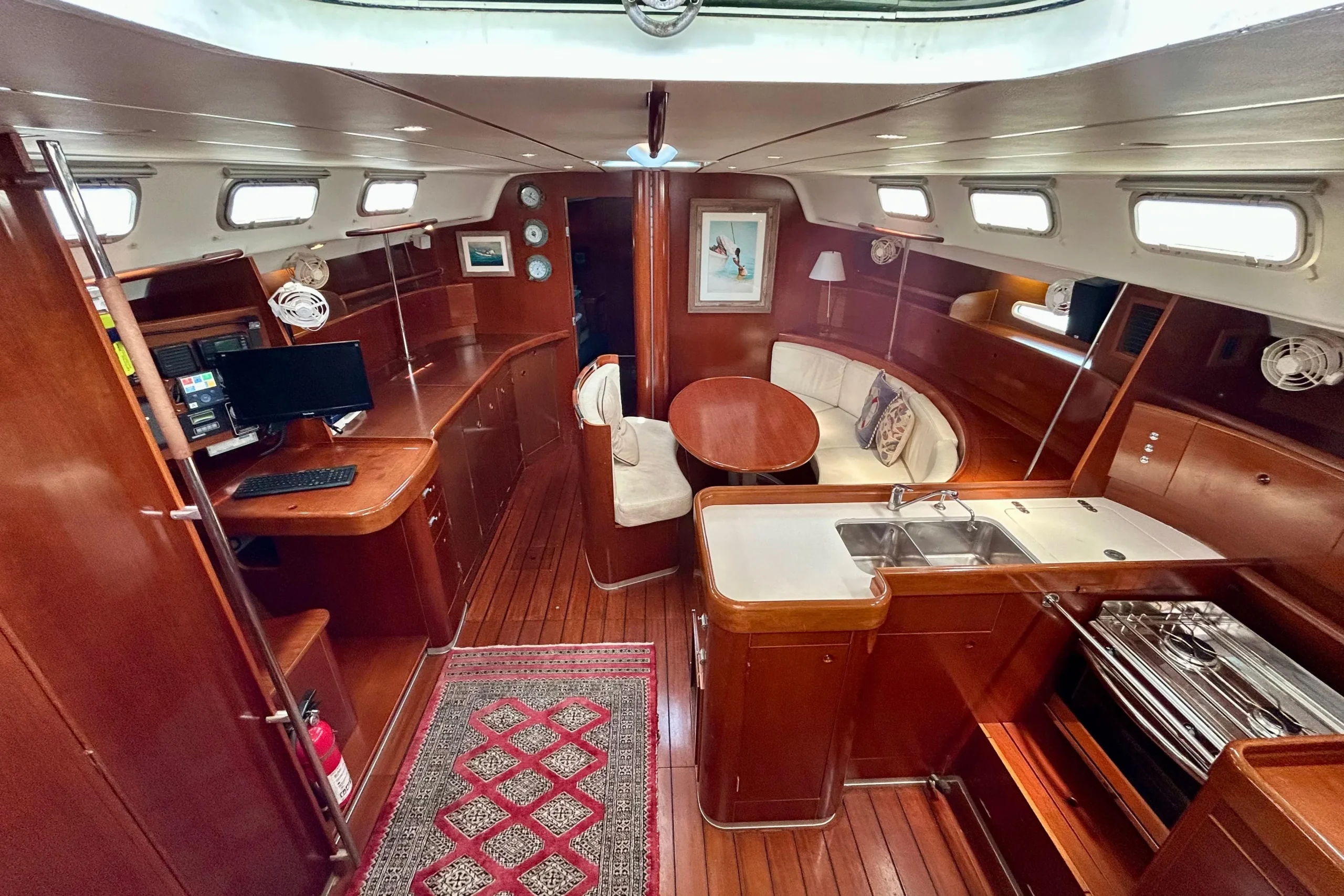
This brings me to the beauty of Beneteau Fast series. The First series has always had fast hulls with powerful sail plans. But at the end of the day, these are still Beneteau. You still get interior comfort that Beneteau has been known to give you. From the factory, Beneteau offered a number of interior configurations to buyers. However, with these boats now only available on the used market, you’d have to find the option that best suits your needs from what is for sale.
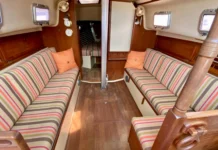
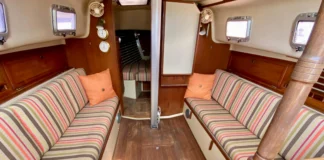
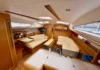
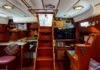
The boat we reviewed for this article has deep cherry wood on white upholstery, which I quite like. But note that the galley stretches along the port side of the boat. Not ideal for cooking while at sea. But then again, I’m not an ocean crosser. Island hopping doesn’t require a U-shaped galley that will hold you in at sea. However, the U-shaped galley design does provide more seating room in the salon. The galley is to starboard at the bottom of the companionway steps.
Windows
Unlike Jeanneau in this size range, Beneteau opted for a series of opening portlights instead of long flowing windows. They admit perhaps less interior light during the day but are much easier to repair should a window get damaged. Narrow hull windows that blend into the outside accent stripe also contribute to interior light. A narrow prismatic deck light mounted on the centerline under the boom adds to the daylight in the cabin.
Nav Station
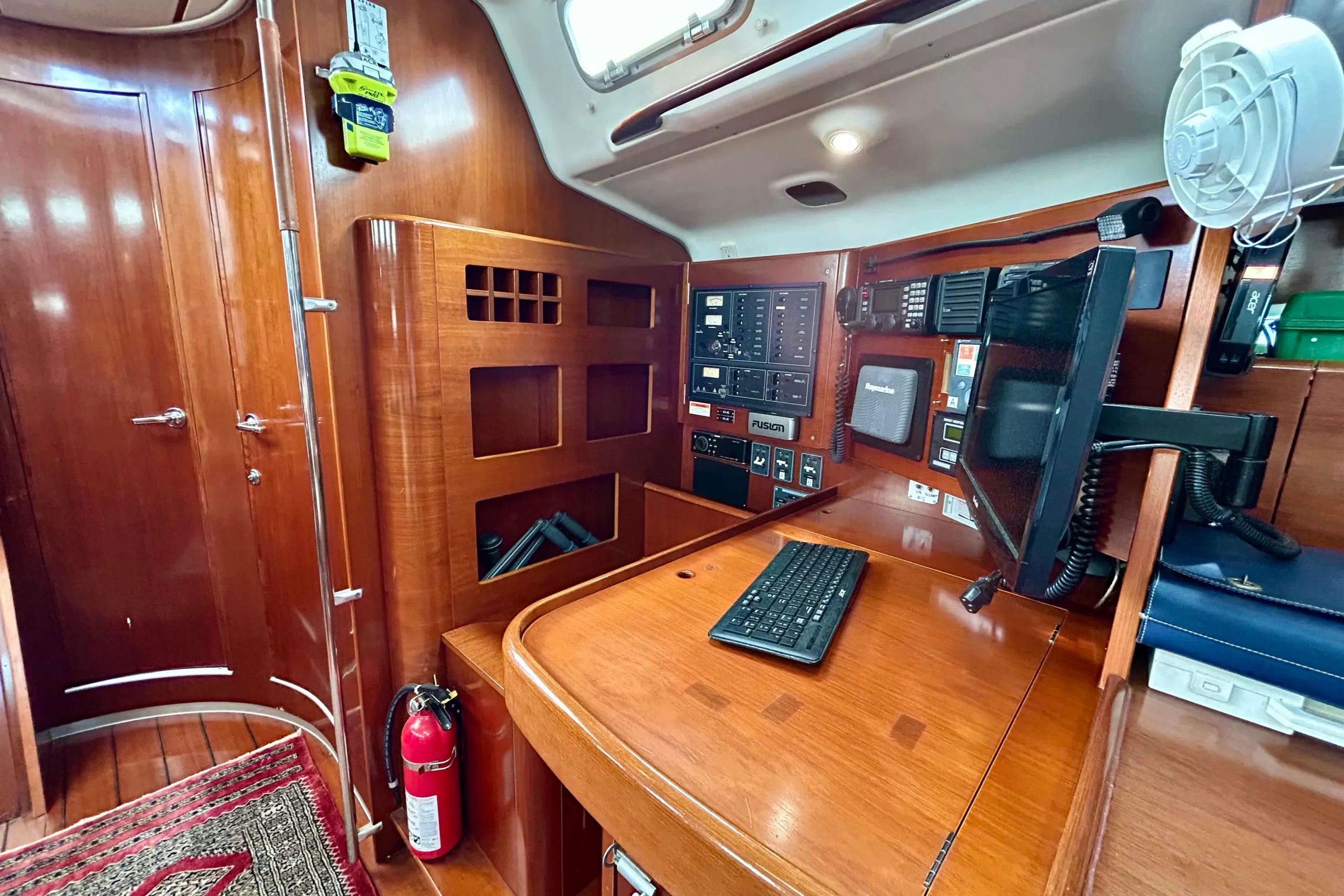
I do love the spacious navigation table on these boats. The tabletop extends forward along the back of the settee allowing for really expanded workspace. I’m inclined to work from home while living on board and this forward-facing desk is a great place to work on my laptop. There is lots of storage space for books and charts and plenty of space for electronics.
Saloon
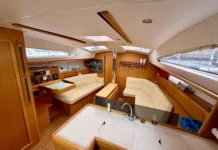
In the saloon, there is a curved settee to starboard and a short, curved seat on the centerline. Both face an oval table that will easily seat six. There is a narrow passage between the centerline settee and the port side galley. The chef will have to move aside if someone needs to go forward. In the configuration with the U-shaped galley there is more room in the center of the saloon with the opposing seating against the port hull. That settee could be made into a sea berth.
Of note in a boat leaning towards a racing style, there are handholds available throughout the main cabin where they are needed, including both sides of the companionway.
Pullman Berth
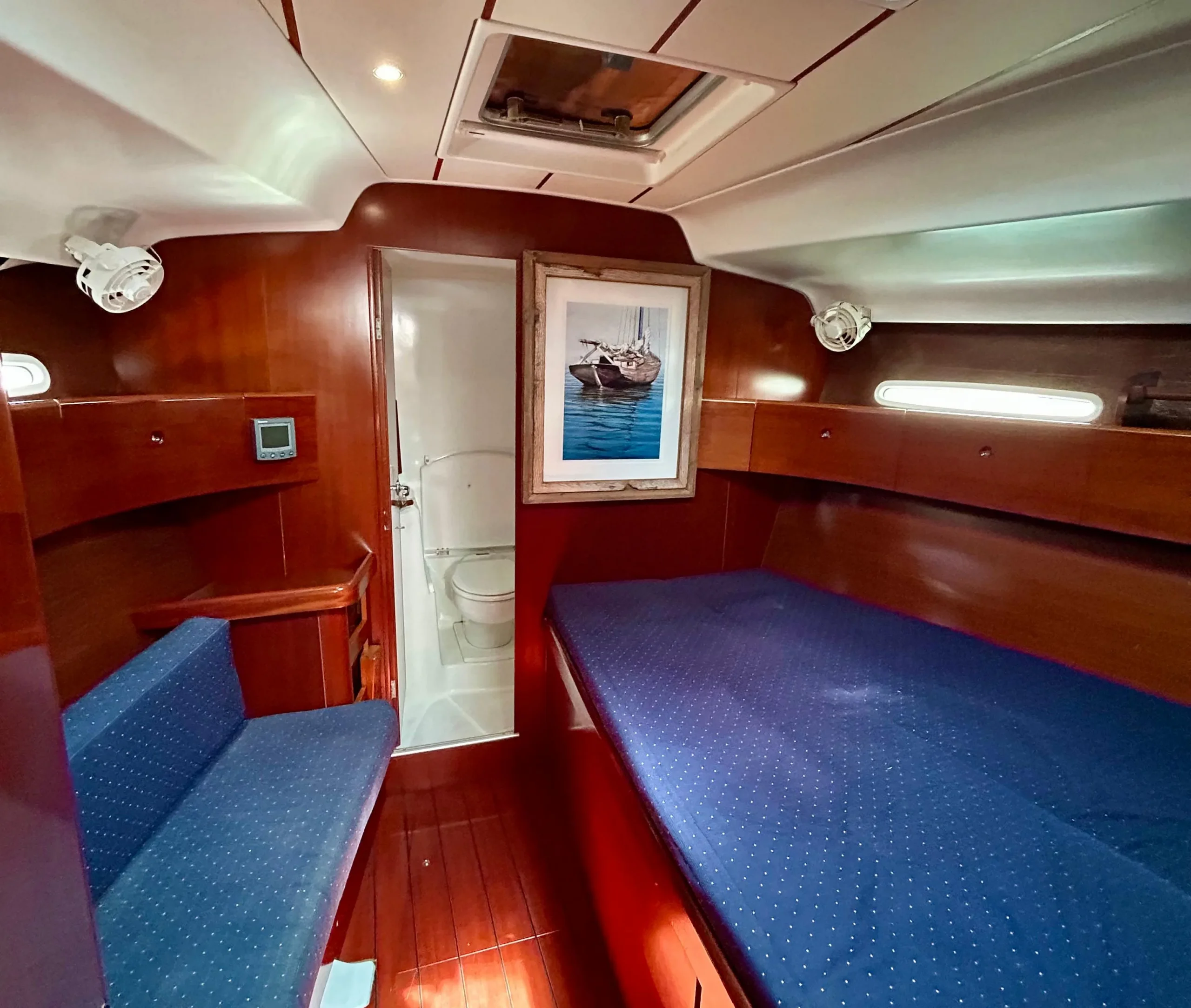
Forward is the pullman-forward cabin, a generous twin mattress to starboard with a settee to port. There are plenty of lockers and drawers for storage. This offers the owner a private space. You slide past the mast, shut the door and you have your own bedroom with attached head compartment complete with shower.
Cruisers like these pullman-style rooms up front because of the degree of privacy and the large head compartment where a V-berth would normally be. I will say that I’m not a fan of sleeping up forward when at anchor in a chop. The berth tends to get bouncy.
Galley
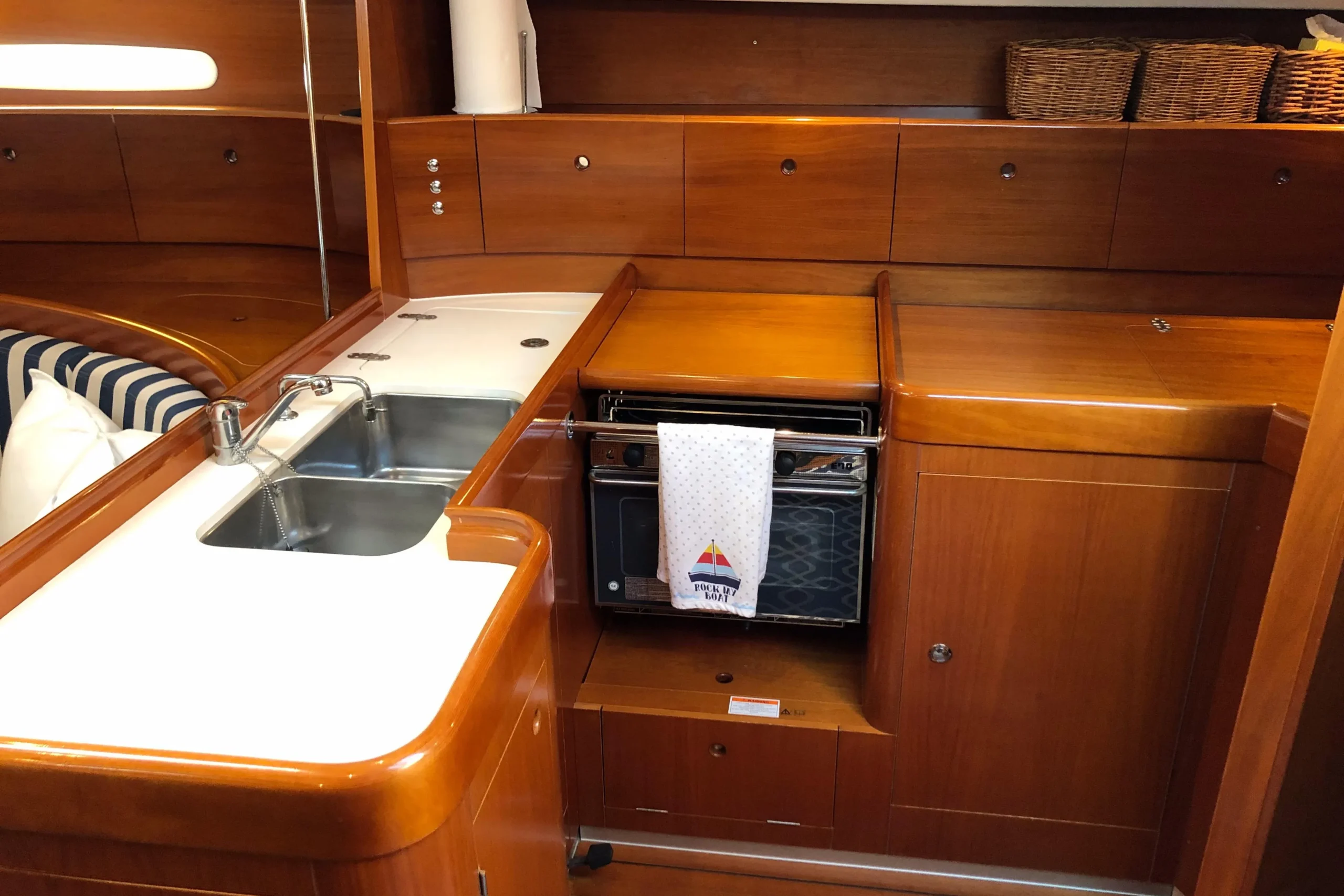
Back through the saloon, note just how much counterspace the galley down one side configuration has. A U-shaped galley would be much better at sea, but at anchor or on a fair-weather sail, this galley makes a lot of sense for whoever is cooking or making drinks. It keeps them as part of the conversation. If people are hanging out in the salon it’s nice to be all in one room.
Aft Cabins
Headed aft, this boat has a day head, or the head used by anyone in the aft cabins, to port at the companionway steps. The three-cabin version has fairly good-sized matching cabins on either side of the companionway. With a small hull window and an opening portlight into the cockpit these will not be the best ventilated cabins in a hot climate. However, the mattresses are large and there is adequate storage for the kids or guests. This may also be a cabin to sleep in yourself if you’re in an anchorage that’s bouncy.
Opinion
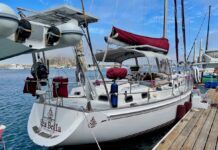
For the boat reviewed in the Practical Sailor YouTube video, I would take steps to make it a bit more livable—like adding a cockpit arch with davits, solar panels and a dodger. These may slow the boat down marginally, but if you do it tastefully, I think the performance hit would be negligible. The compromise here is that this boat is less comfortable and luxurious than the Jeanneau DS, but it’s also a lot faster and more race-oriented.
The First 47.7 suits my personality far better and maybe that’s the lesson here. If you’re like me, you’re not interested in crossing oceans all over the world. You may be more inclined to island hop and perhaps cross an ocean from time to time with an ARC Rally. I just love the art of sailing and adjusting the sails to the second decimal on the knotmeter.
If you’re like-minded, the Bruce Farr-designed Beneteau 47.7 may be right up your alley. But if you’re more comfort-oriented and want twin helms and big windows inside, you’d like the Jeanneau DS better. The beauty of being a coastal sailor is that there are so many different boats for so many different types of sailors. If you look around enough, you’ll find something that suits you.
If you are looking at your first sailboat purchase, check out this helpful article “A Guide to Buying Your First Sailboat”. Writer Andrew Wallace does such a great job of giving us advice and guidance, its definitely a good read.
Market Scan Contact
2001 Beneteau First 47.7 South Coast Yachts
$174,900 +17602272483
San Diego, California Yacht World
2003 Beneteau First 47.7 Bay Harbor Brokerage, Inc.
$129,900 +17576991974
Deltaville, Virginia Yacht World
2005 Beneteau First 47.7 Port Whitby Marine Centre
$142,890 +16474924807
Toronto, Ontario Yacht World
2003 Beneteau First 47.7 36 Degrees
$152,546 +64 9 903 1001
Picton, New Zealand Yacht World