How to Charge Your LFP Battery the Right Way
Understanding how a smart charger talks to your LFP battery can mean the difference between years of service and premature capacity loss.
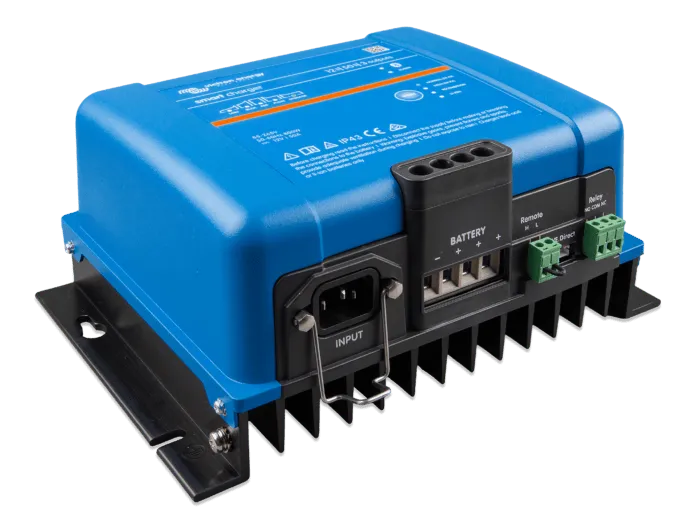
If you are thinking of managing a conversion of your own existing, all lead acid system over to one with a Lithium iron phosphate (LFP or LiFePO4), house bank, there are a few things that you need to understand about the charging of LFPs. As we have discussed in previous articles, LFP’s have their own unique characteristics, distinct from both lead acid and other forms of lithium-ion battery. One of the principal distinctions is its charging characteristics.
You do not really need to understand the full chemical process, but a very high-level summary of the LFP charging process is that lithium-ions de-intercalate from the cathode, travel through the electrolyte, and intercalate into the anode. Discharging is the reverse of that process. The goal is to do this as quickly as possible, without at any time triggering anything that might limit how many times this can be repeated, and/or without any long-term loss of capacity, and—most importantly—risking any safety concerns.