You’re reading a free preview of Logbook · September 2026Get full access →
◆
Logbook
September 2026 Recap

Inside This Recap

Contents

01Sailboat Reviews

Hans Christian 48T Used Boat Review

The Hans Christian 48T is a rare, long-range cruiser whose handsome traditional styling, stout construction, and offshore manners outweigh its slow-light-air performance.
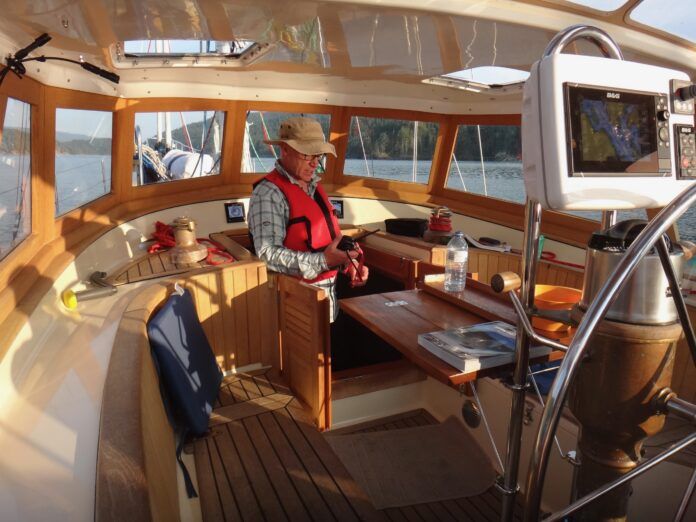
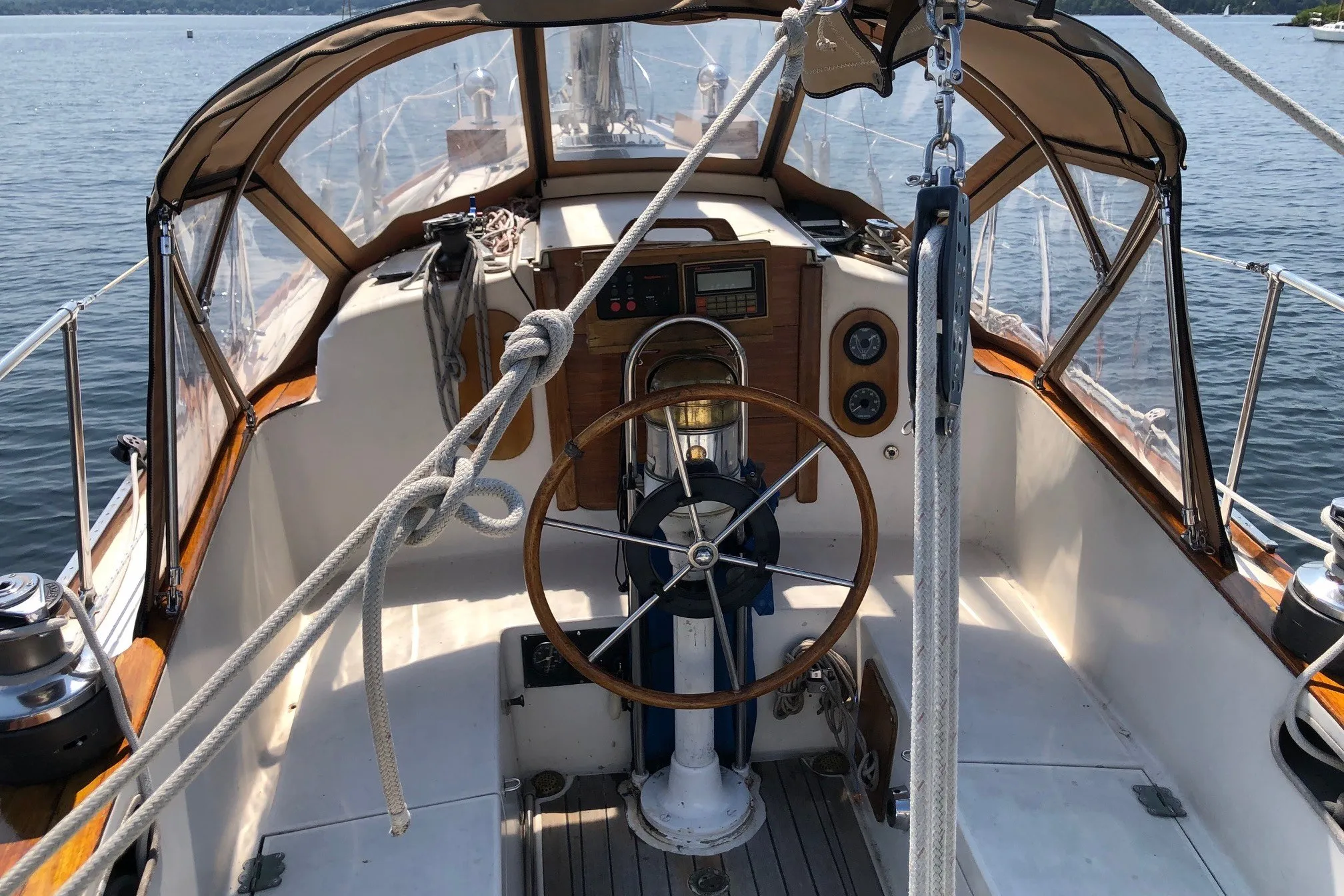
Bear North’s protected center cockpit and hard dodger reflect the Hans Christian 48T’s emphasis on offshore comfort and security. (Photo/ John Kortbeak)
PHOTOGRAPH
Bear North’s protected center cockpit and hard dodger reflect the Hans Christian 48T’s emphasis on offshore comfort and security. (Photo/ John Kortbeak)

The history of Hans Christian Yachts started in 1974 with an idea that heavy, ocean crossing sailboats could be manufactured at a lower cost in Taiwanese boat yards. A review of the HC 34/36 by long-time contributor Darrell Nicholson outlined the convoluted history of Hans Christian Yacht, a history common for sailboat producers in the 1970s and 80s. You can read that here.

The Hans Christian Traditional 48T (traditional) was designed by Scott Sprague, a yacht designer from the Pacific Northwest, who also designed the HC40 Christina (1986), the HC43 Christina (1986) and the HC45 (1985). The HC48T was built at a succession of yards, creating confusion through the years. The molds were shipped from the original builders Shing Fa Boatbuilding in Taiwan, to Thailand during the late 1980s. There are no verified records of how many 48Ts were actually manufactured by these companies, but if hull numbers are anything to go by, up to 25.
Members Only
Keep reading with a membership
Unlock the full recap, every past recap, and 4,000+ boat tests, gear reviews and DIY guides — for about $2.83 a month.
◆
02Sails, Rigging & Deck Gear

Breaking Out the Anchor Without a Bow Roller

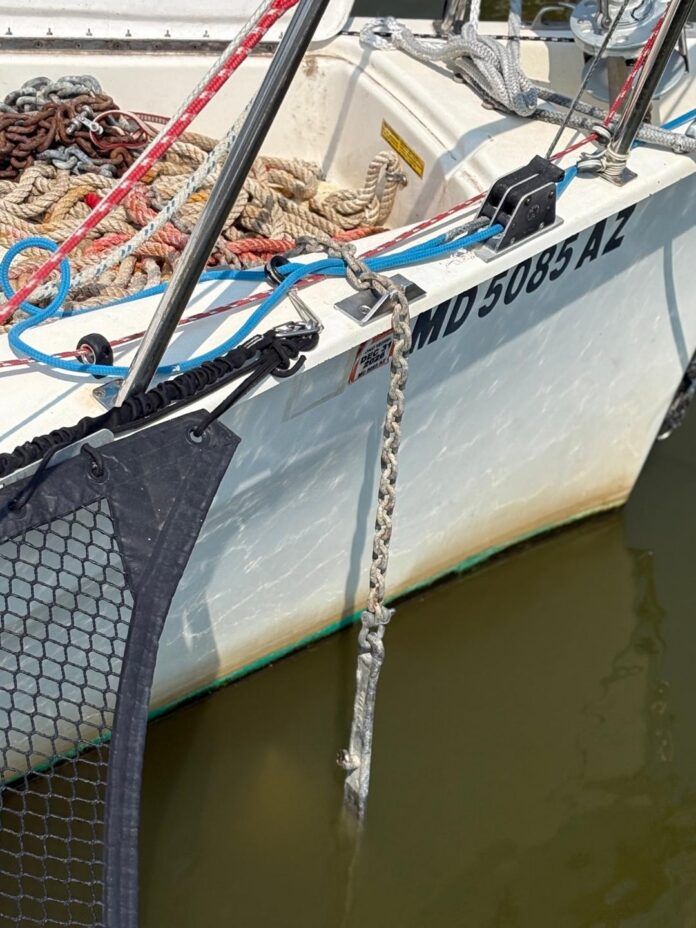
A simple, home-fabricated chain lock lets small-boat sailors break out a deeply set anchor safely—even without a bow roller.

The DIY anchor breakout device on its first day of testing. (Photo/ Drew Frye)
PHOTOGRAPH
The DIY anchor breakout device on its first day of testing. (Photo/ Drew Frye)

One of the challenges we faced when testing the Chesapeake Anchor, even at the 3-pound scale, was that once any anchor is set to 100 times its weight, it becomes a bugger to break loose. If you pull immediately, straight up, the recovery force is commonly 80 percent of the setting force.

Some of the 3-pound anchor tests required 250 pounds of force to break them out, and even my F-24 can put loads up to 700 pounds on the ground tackle in a storm, resulting in a recovery force of over 500 pounds. That's impossible without a windlass, a line run to a winch, or a rigged block and tackle.

Members Only
Keep reading with a membership
Unlock the full recap, every past recap, and 4,000+ boat tests, gear reviews and DIY guides — for about $2.83 a month.
◆
03Systems & Propulsion

LFP Battery Regulations Around the World

Before replacing a sailboat’s lead-acid bank with LiFePO4, understand the standards that affect battery selection, short-circuit protection, certification, and resale.

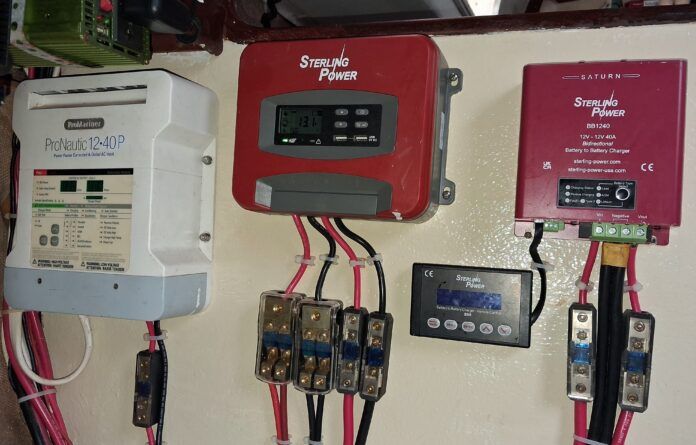
The author’s current setup for LiFePO4 batteries includes a shore-power charger, BMS, battery to battery charger, and individual fuses that are wired into a DC distribution panel. (Photo/ Stephen Burnage)
PHOTOGRAPH
The author’s current setup for LiFePO4 batteries includes a shore-power charger, BMS, battery to battery charger, and individual fuses that are wired into a DC distribution panel. (Photo/ Stephen Burnage)

If you are thinking of converting your sailboat over to lithium iron phosphate batteries (LFP or LiFePO4), whether for propulsion or house needs, there are some laws, standards, regulations, and other requirements that you need to be aware of. Some of these are global, some are regional or national, and others are industry- or user-specific. This article aims to provide a high-level summary of such laws and regulations, as they may affect you.

UN 38.3

Readers will all be familiar with the United Nations (UN) but possibly unaware that a sub-committee publishes a "Manual of Tests and Criteria" for the classification of dangerous goods. Section UN 38.3 of that manual is devoted to the safe transport of various classes of lithium-ion and similar batteries. It is effectively the foundational document for lithium-ion [including lithium iron phosphate (LiFePO4 or LFP)] battery safety.

Members Only
Keep reading with a membership
Unlock the full recap, every past recap, and 4,000+ boat tests, gear reviews and DIY guides — for about $2.83 a month.
◆
04Voyaging

A Hard Lesson on the Way to Barkley Sound

Before GPS, weather apps and modern VHF radios, an O’Day 25’s first trip into the open Pacific showed why careful passage planning, self-sufficiency and a healthy respect for the weather matter.

Hanging out the wet gear to dry in the sun. (Photo/ Bert Vermeer)
PHOTOGRAPH
Hanging out the wet gear to dry in the sun. (Photo/ Bert Vermeer)

As a young family we had been sailing Dreamer, our O'Day 25, for five years, exploring the fabulous cruising grounds of the Canadian Gulf Islands from our home port of Tsawwassen, a community just south of Vancouver, British Columbia. We had crossed Georgia Strait (now referred to as the Salish Sea) in gales and calms, under sparkling blue skies and through driving rain, and enjoyed the tranquility of our favorite anchorages.

The 10-mile-wide crossing between home and the Gulf Islands was our weekend highway. Summer cruises included the northern reaches of the Salish Sea, Desolation Sound and the Discovery Islands. During the long winter months, my wife Carey would join our daughter Nicky and I as we planned our next summer's cruise, with nautical charts, guidebooks and tide tables spread out on the dining room table.

Members Only
Keep reading with a membership
Unlock the full recap, every past recap, and 4,000+ boat tests, gear reviews and DIY guides — for about $2.83 a month.
◆
05Safety & Seamanship

The Quest For the Right Inflatable Dinghy

Roll-up and air floor designs dominate the low end of the inflatable dinghy market. The key questions are, do you want to stow or tow, and how much size and weight can you handle?

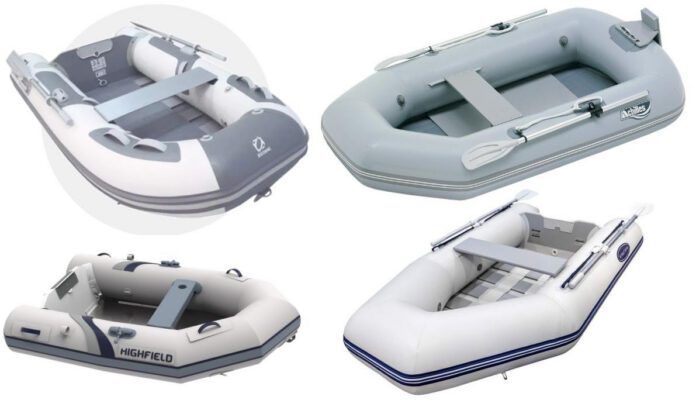
The choice between an air-floor dinghy and a roll-up comes down to a tradeoff: air-floor models offer a V-shaped hull for better tracking and speed, while roll-ups are lighter and compact enough to stow in a cockpit locker instead of towing. (Images/ Zodiac, Achilles, Highfield, West Marine)
PHOTOGRAPH
The choice between an air-floor dinghy and a roll-up comes down to a tradeoff: air-floor models offer a V-shaped hull for better tracking and speed, while roll-ups are lighter and compact enough to stow in a cockpit locker instead of towing. (Images/ Zodiac, Achilles, Highfield, West Marine)

The paradox of my experience with inflatable dinghies is that in trading up to a bigger sailboat, I found myself wanting a smaller support craft for coastal exploration and shore excursions. Needs change and sometimes you discover that less is more.

I've been a sailor for decades, but my ownership experience with inflatables began in 2019 when I purchased a West Marine PHP-310. This model now sells for $1,999, but West Marine seems to put its boats on sale every summer. I purchased during one of these sales back in 2019 and recall paying $1,699.

Members Only
Keep reading with a membership
Unlock the full recap, every past recap, and 4,000+ boat tests, gear reviews and DIY guides — for about $2.83 a month.
◆
06Sailboat Reviews

Antigua 60: Soolaimon

A custom 2007 Antigua 60 with more than 20,000 nm under her keel shows how thoughtful automation, robust construction and a protected center cockpit can put a serious offshore cruiser within reach of a two-person crew.

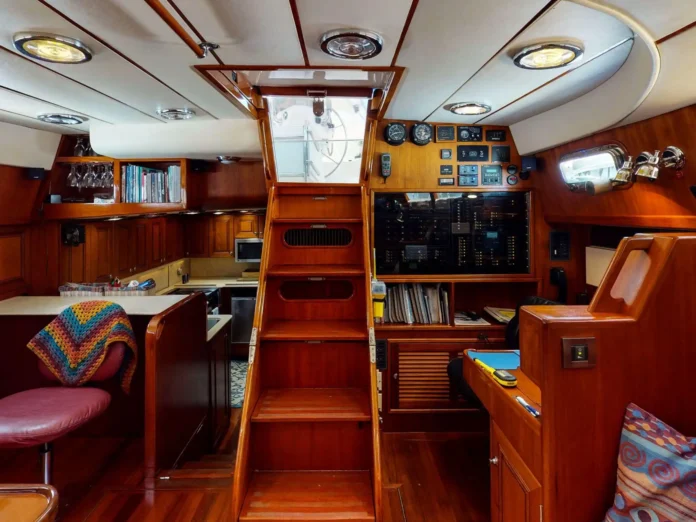
The companionway opens between Soolaimon’s forward-facing navigation station and teak-trimmed saloon, with handholds and equipment kept close at hand. (Photo courtesy of David Walters Yachts)
PHOTOGRAPH
The companionway opens between Soolaimon’s forward-facing navigation station and teak-trimmed saloon, with handholds and equipment kept close at hand. (Photo courtesy of David Walters Yachts)

When couples go cruising they often consider 42 ft (13 m) to be a sort of highwater mark for a cruising boat that two people can handle safely. But what if a boat was bigger—much bigger—but all the systems, including the sail handling and propulsion, were set up and automated with no expense spared? Would it make it easier to handle for just one or two sailors? No expense spared is our theme with this proven world traveller for two—a custom Antigua 60.

Our friends over at Dave Walters Yachts, a luxury yacht broker with offices all along the east coast, treated us to a tour of this incredible yacht. On the list of full-bore ocean cruiser requirements, this Antigua 60 has a lot going for her—center cockpit, cutter rig, and great fuel capacity. The encapsulated keel has 22,000 pounds (10,000 kg) of lead in it, a number that's equal to, near as makes no difference, three Ford F150s poured into the keel of this boat.

Members Only
Keep reading with a membership
Unlock the full recap, every past recap, and 4,000+ boat tests, gear reviews and DIY guides — for about $2.83 a month.
◆
07Safety & Seamanship

Can Reliefband Sport Prevent Sea Sickness? Our On-Water Test

Reliefband is an electronic wearable device that promises relief from motion sickness. Does it work? Our test subject tried it out in moderate conditions.

The author’s friend, Jeff, has always been prone to motion sickness. In a test in 10- to 13-knot winds, a Reliefband Sport wearable device helped our test subject keep sea sickness at bay. (Photo/ Doug Henschen)
PHOTOGRAPH
The author’s friend, Jeff, has always been prone to motion sickness. In a test in 10- to 13-knot winds, a Reliefband Sport wearable device helped our test subject keep sea sickness at bay. (Photo/ Doug Henschen)

Some people are prone to motion sickness while others are not. For those who suffer from this malady, sailing isn't usually their sport of choice, and with good reason. Nausea and vomiting are not fun, and when you're hit with a bout of motion sickness, it can take a day or more to recover.

I myself have the proverbial cast iron stomach, which is a good trait for a sailor. In contrast, my best friend, Jeff, who I've known since our college days, is super prone to motion sickness. He always has to sit in the front seat when riding in a car, and he always cracks the window open to get a blast of fresh air on his face. He's careful about flying, favoring early morning flights that are less likely to encounter thunderstorms, and he either fasts or eats only light meals before the flight. Jeff can even start feeling sick when riding on an elevator or on a crowded subway train.

Members Only
Keep reading with a membership
Unlock the full recap, every past recap, and 4,000+ boat tests, gear reviews and DIY guides — for about $2.83 a month.
◆
08Systems & Propulsion

How to Use a Boat Battery Switch

The familiar 1-BOTH-2-OFF battery switch can still do its job, but modern charging systems and mismatched battery banks make the wrong turn costly. Here’s how to understand your boat’s setup—and avoid flattened batteries or a damaged alternator.

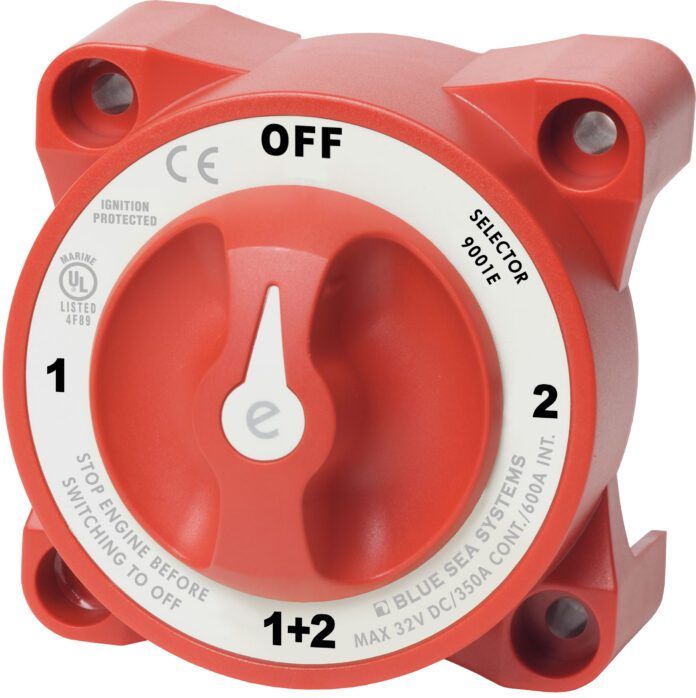
Blue Sea Systems e-Series Selector Battery Switch.
PHOTOGRAPH
Blue Sea Systems e-Series Selector Battery Switch.

This little red switch was invented for a much simpler boat than most of us own today. Fifty years ago, a boat might have two ordinary lead-acid batteries, a modest alternator on the diesel or Atomic Four gas engine, a few incandescent lights, perhaps even a refrigeration system, but no solar panels or a secondary way to charge the batteries. Certainly, they wouldn't have lithium banks or automatic charging relays (ACR).

This simple switch made perfect sense in that world. But as boat manufacturers and owners added more batteries, larger house banks, new charging equipment, and batteries of different chemistries, the same simple switch became a surprisingly easy way to flatten every battery in the system and damage the alternator. It connects two banks that should never have been connected in the first place and can inadvertently go through OFF instead of BOTH.

Members Only
Keep reading with a membership
Unlock the full recap, every past recap, and 4,000+ boat tests, gear reviews and DIY guides — for about $2.83 a month.
◆
09Boat Maintenance

DIY Outboard Shift-Lever Extension

A short length of heat-formed PVC puts an awkwardly placed outboard shift lever within easy reach for smoother, safer docking.

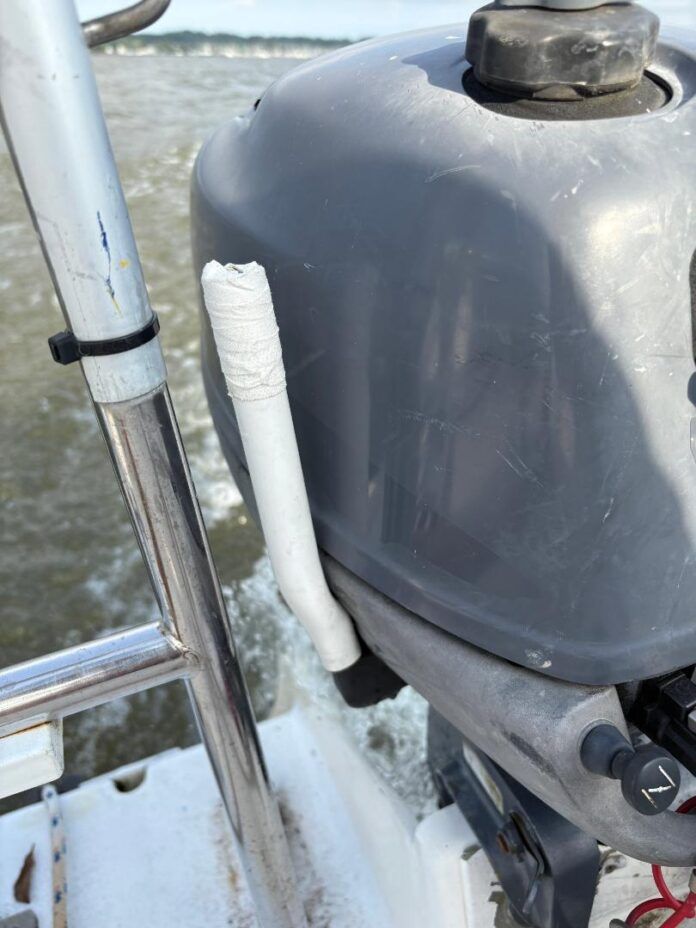
The finished shift-lever extension on the author’s 4-hp Yamaha. (Photo/ Drew Frye)
PHOTOGRAPH
The finished shift-lever extension on the author’s 4-hp Yamaha. (Photo/ Drew Frye)

The gear shift on smaller outboards is typically a stubby little 3-inch lever tucked away on the starboard side. On a tender or skiff, it's easy enough to reach around and shift. You helm the boat from starboard and it's right in front of you. But on many trailer sailers, you helm from port because the reach across the cockpit is too great from starboard. You must reach through, around, or over the stern rail. The outboard may also be considerably below your seating position. All of this may not be too bad when backing out of the slip, but when returning, shifting into reverse at just the right moment, and then back into neutral, it can be a challenge.

There are motor-specific kits to move the shift inboard or to put it on the tiller. If the problem is severe, they have a lot going for them. Our PDQ cruising cat was powered by twin outboards in wells, and both throttle and shifting were handled by a twin Morse controller at the helm. But that's overkill for small boats. We found a 15-minute solution we liked better—you might even like it on your tender.

Members Only
Keep reading with a membership
Unlock the full recap, every past recap, and 4,000+ boat tests, gear reviews and DIY guides — for about $2.83 a month.
◆
10Sailboat Reviews

Jeanneau Sun Odyssey 42 DS Used Boat Review

The Jeanneau Sun Odyssey 42 DS delivers a bright interior, generous accommodations and manageable sailing at an attractive used-boat price. But the buyer’s job is to separate depreciation from deferred maintenance to ensure it is a smart buy.

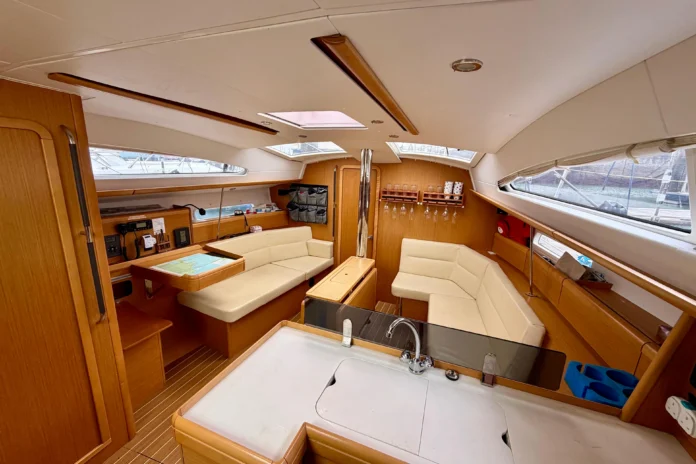
The raised deck-salon windows flood the saloon with natural light, while the U-shaped dinette provides comfortable seating for six. (Photo courtesy of YachtWorld.com)
PHOTOGRAPH
The raised deck-salon windows flood the saloon with natural light, while the U-shaped dinette provides comfortable seating for six. (Photo courtesy of YachtWorld.com)

This boat is dangerous for one simple reason—it looks like the answer. It's big enough, pretty enough, modern enough, and suddenly, somehow, almost affordable enough. That's the moment a sailor's brain starts doing bar-napkin math. Before you let the dream take the wheel, let's take a look at what this boat really is.

The Jeanneau 42 DS is, admittedly, one of my personal favorites. Not because it's perfect—it isn't. Not because it's one of the toughest offshore boats ever built—because it's definitely not that. I like it because it represents one of the most interesting bargains in the used, cruising boat market. It is a big, comfortable, modern-feeling 42-ft. monohull that gives you a lot of the dream boat experience without all that dream boat price.

Members Only
Keep reading with a membership
Unlock the full recap, every past recap, and 4,000+ boat tests, gear reviews and DIY guides — for about $2.83 a month.
◆

Additional Reading

More Articles From This Month Free

Can Diesel Damage Fuel Lines?Boat MaintenanceCan Diesel Damage Fuel Lines?If you only use a little fuel and spot sludge in your tank, don’t be too quick to blame the diesel itself.Read more →Stuck Like Glue: Epoxy Resin Mechanical Performance TestingBoat MaintenanceStuck Like Glue: Epoxy Resin Mechanical Performance TestingWe put leading marine epoxy resins head to head on adhesion, strength and flexibility.Read more →Pearson 35 Used Boat ReviewSailboat ReviewsPearson 35 Used Boat ReviewBill Shaw’s centerboard classic pairs shoal draft with a roomy cockpit and interior—a forgiving family cruiser.Read more →Marine Fuel Filters: What a Cut-Open Test RevealsSystems & PropulsionMarine Fuel Filters: What a Cut-Open Test RevealsDry fuel and the right micron rating matter more than premium filter construction for keeping a diesel running.Read more →Making Underwater Hull RepairsBoat MaintenanceMaking Underwater Hull RepairsPre-wetted fiberglass, peel ply and careful prep can turn a temporary underwater patch into a lasting repair.Read more →Steering Equipment InspectionSystems & PropulsionSteering Equipment InspectionA neglected cable, corroded fitting or worn sheave can disable steering when it matters most.Read more →Boat Repair in the Age of PlexusBoat MaintenanceBoat Repair in the Age of PlexusHow do methyl methacrylate (MMA) adhesives stack up against epoxies and other marine glues?Read more →Anchoring Basics: Choosing Gear and Setting the HookSails, Rigging & Deck GearAnchoring Basics: Choosing Gear and Setting the HookProperly sized ground tackle, adequate scope and a proven setting routine take the guesswork out of anchoring.Read more →Brewer 12.8/44 Used Boat ReviewSailboat ReviewsBrewer 12.8/44 Used Boat ReviewBuilding on the venerable Whitby 42, the Brewer 12.8/44 delivers balanced sailing and solid bluewater bones.Read more →How to Prevent Diesel Fuel ContaminationSystems & PropulsionHow to Prevent Diesel Fuel ContaminationSmart fueling, filtration and tank maintenance keep water, sludge and microbes out of your diesel.Read more →Securing Sailboat Hatches and Locker LidsSails, Rigging & Deck GearSecuring Sailboat Hatches and Locker LidsFrom bungees to draw latches, practical ways to keep hatches and locker lids secure in a seaway.Read more →

Watch

This Month on YouTube Free

Enjoying the preview? Get the full recap + 4,000+ articles — $34/yrBecome a Member