
They were off the coast of Bequia in the Grenadines, near the end of a breezy passage on a 34-ft. cruising sloop. Just as the boat reached past a rocky point, trouble struck. The steering wheel suddenly turned freely in the skipper’s hand.
The skipper dashed below to check. The steering cable had parted. He returned on deck, rummaged through the lazarette and found the emergency tiller, but couldn’t get it to fit. A beam sea pushed the boat toward the shore. The keel bounced along the bottom. A wave hurled the boat onto the rocks.
Leaping one at a time from the boat to shore, the skipper and three crew were able to escape. The boat, wedged between two rocks with its hull cracked, would probably never sail again.
Months later, one of the crew members who had tried to help as the skipper frantically worked to fix the steering told me, “It was plain that cable hadn’t been checked in a while.”
Emergency Steering Options
We’ve addressed the importance of emergency rudders (see “The Hunt is on for a Well-placed Emergency Rudder“). And we’ve looked at ways to steer the boat using a drogue should the steering fail (see “Sailing Without a Rudder“). And we’ve taken a broad look at the various types of steering systems (see “Steady at the Helm“).
Preventing Steering Failure
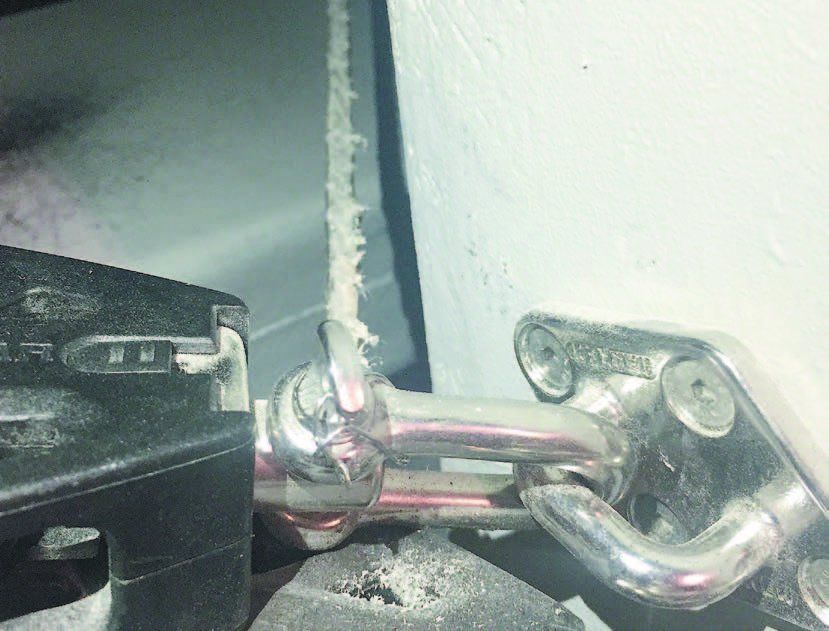
The sensible approach, of course, is to prevent steering failure in the first place. Like rigging, sails, and hull integrity, steering is one of those essential items that needs close monitoring. Here are a few things to consider when inspecting your steering system each season, or before any long passage. Pay especially close attention to clevis pins, cotter pins, and small components that can succumb to corrosion.
Tiller – Stainless steel pintles and gudgeons should be checked carefully for cracks or corrosion, especially at welds.
Rack-and-pinion steering – Check the mounting bracket and fasteners for the pinion gear where the steering loads are carried.
Worm drive steering – Corrosion is the biggest enemy here. Alignment is critical for smooth operation. Any binding is cause for concern.
Pull-pull cable steering – The most common form of steering system is also one of the more problematic—but nearly all of the problems are due to neglect. Check cable tension regularly, before, during and after a long passage. End fittings require close inspection. Check sheaves for corrosion, wear, and proper diameter (20 times the wire diameter).
Push-pull cable steering – Check for any binding or sticking, especially at the exit point from the conduit. At the first sign of any trouble-cracked conduit or corroded wire, replace the entire cable. Remove the cable for inspection at least once a year.
Hydraulic steering – Regularly check for leaks and proper fluid level. Look for chafe on hoses.
This is a very brief view of steering systems. For a more comprehensive look at maintenance, check your owner’s manual. Nigel Calder’s essential “Boatowner’s Mechanical and Electrical Manual” also covers the topic as well.
If you have a steering story to share, let us know in the comments. Remember, any comments that include clickable links will not be published.
This article was published on November 19, 2018, and has been updated.