

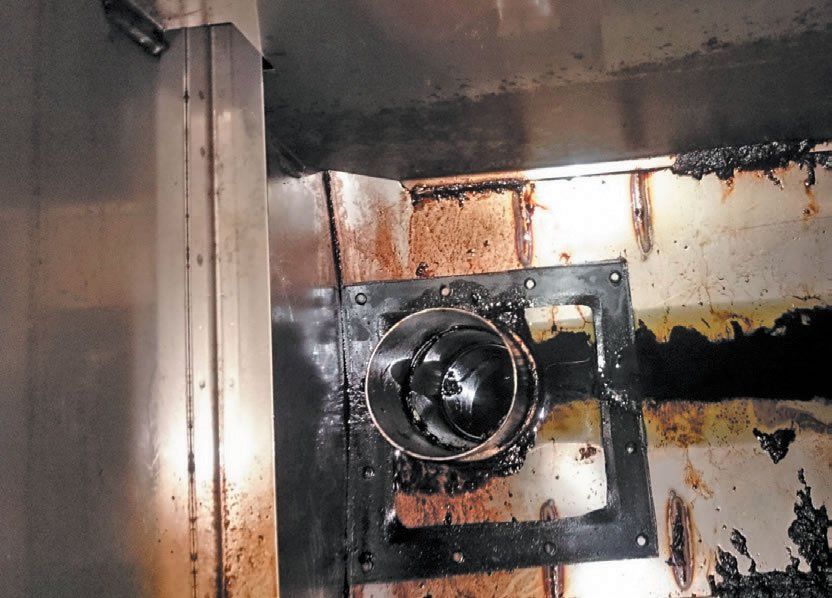
Diesel problems usually begin at the tank. Most fuel tanks more than 5 to 10 years old have accumulated a mix of water, live, or dead bacteria and algae, rust, etc. in the bottom. If possible, use up most of the fuel in your tank, remove the inspection port and visually inspect the bottom of the tank. You may be surprised. If you are confronted by black sludge or water, you’ll need to remove it to ensure you have a clean fuel supply.
Cleaning Your Tank
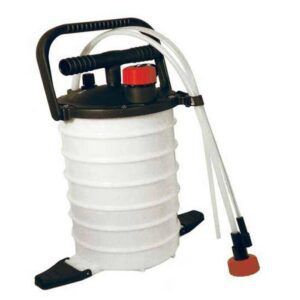
To clean your tank, you must first pump out the remaining fuel. This can be accomplished by using a manual fluid extractor (West Marine and Defender sell several models). You need to have access to the entire bottom of the tank so you might have to add additional inspection ports. Using gloves, old sponges, rags and oil-absorbent pads, soak up as much of the sludge as possible, then wipe up the remaining residue.
After the tank is clean, either you or a fuel polishing company should pump your old fuel through multiple filters before returning it to the tank. Or you can take it to a fuel recycling center
Fuel Tank Sump
The key to checking fuel quality is a manual fuel sump pumps. Each time after fueling I wait ten minutes, then pump whatever has collected in the fuel tank sump into a clear plastic container to check for contaminants. If you need to add a sump pump, a simple alternative is to install brass pipe to the lowest corner of the tank.
Where to Purchase Fuel
A busy fuel dock that pumps a lot of fuel generally has better fuel quality than a quiet backwater fuel supplier. Don’t hesitate to ask the fuel dock attendant when they last drained their water trap and replaced their fuel filter cartridge. If you’re in doubt about the quality of fuel, and if you have the time, purchase a couple liters in a clear container, then let it sit for 10-15 minutes and visually check for contaminants before filling your tanks. If contaminants are visible, run the fuel through a fuel funnel filter at your tank filler.
Filtering Fuel
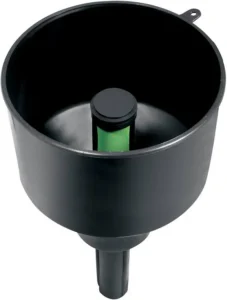
When I was commuting via Cessna, we used a Mr. Funnel Filter to filter fuel at the fill pipe. It works equally well with any type of fuel. To enable faster fueling I recommend you purchase the largest, highest volume funnel filter you can find.
Fuel Additive
Practical Sailor has done extensive testing of fuel additives, and my take-away was that Biobor JF does a thorough job—even better when mixed with StarTron Enzyme for Diesel, see “Diesel Additives.” It’s the only additive I’ve used worldwide for 40 years and 25,000 engine hours, and I’ve yet to experience any contamination issues.
Extra Fuel
If you’re departing on a long passage where you expect to motor a considerable amount, consider purchasing non-marine plastic containers, which are larger, less expensive and frequently more readily available than marine jerry jugs. These can be stowed in deck lockers or on deck lashed to your mast pulpits, mast or shrouds but can be a hazard in heavy weather.
Additional Pointers
To transfer from a jug to the fill pipe you’ll need sufficient hose. We like clear vinyl to observe flow. You’ll need enough hose to reach from the bottom of the container to your deck fill. Another option is an outboard fuel line with a squeeze bulb. Make sure your O-ring is intact. If it’s dried or cracked, water can get in your fuel tank, depending on where your deck fill is located. Keep your fuel tanks full, if possible, especially when leaving your boat in storage. Follow your maker’s filter replacement cycle.
From 1994 to 2021 Amanda Swan (Neal) and John Neal jointly ran Mahina Expeditions. Amanda and John spent seven months at sea per year sailing 10,000 miles while leading sailing training expeditions.
This article was published on April 16, 2018, and has been updated.













Good article!
As a former refinery guy, I extend a warning NOT to use a wet-dry vac, even for diesel. I saw the aftermath of a shop incident where a wet-dry vac was used to pump a diesel tank. The vacuuming process can generate a mist that is combustible, and sparks from the commutator can set it off, which they did. No serious injuries, but the vacuum was splattered all over the shop, and the operator had some cuts.
If you need to pump water from the bottom of a phase-separated gasoline tank, again, an oil extractor is one of the few safe ways to do this.
—
Diesel fuel can generally go into the used oil collection tank. The refining process will separate it from the lubricating fraction and both will be covered (I have designed re-refining systems). Check the labeling on the tank, since company policies can vary.