You’re reading a free preview of Logbook · October 2026Get full access →
◆
Logbook
October 2026 Recap

Inside This Recap

Contents

01Boat Maintenance

One Year With Flexiteek on High-Wear Transom Steps

After 12 months in one of the boat's toughest traffic zones, we assess how Flexiteek holds up—and whether the results justify replacing old teak with synthetic decking.
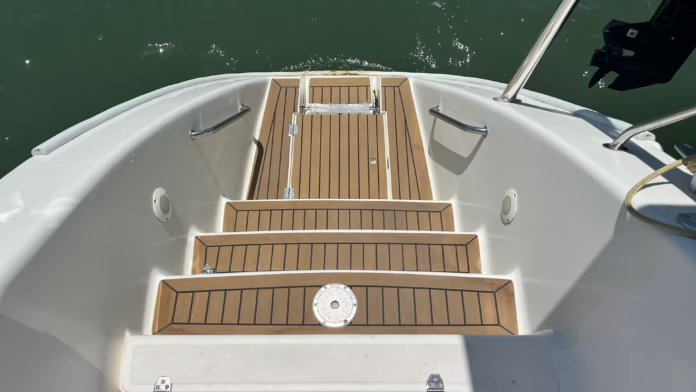
Flexiteek after a year of abuse. (Photo/ Adam Morris)
PHOTOGRAPH
Flexiteek after a year of abuse. (Photo/ Adam Morris)

When we decided to replace the worn-out, real teak on our transom sugar scoops, we thought it might be best to look into synthetics. After a number of boat shows and testing out samples of nearly everything on the market, we chose Flexiteek. And, so far, we are very glad we did.

Note: I/we are not sponsored by any companies mentioned in this article. We cruise full time on our test boat, Confianza, and we enjoy sharing our tests and opinions to give back to the community.

Members Only
Keep reading with a membership
Unlock the full recap, every past recap, and 4,000+ boat tests, gear reviews and DIY guides — for about $2.83 a month.
◆
02Sailboat Reviews

Bayfield 32 Used Boat Review

Built for steady cruising rather than windward speed, the Bayfield 32 rewards buyers with a seaworthy full keel, traditional accommodations and access to shallow water.

The Bayfield 32
PHOTOGRAPH
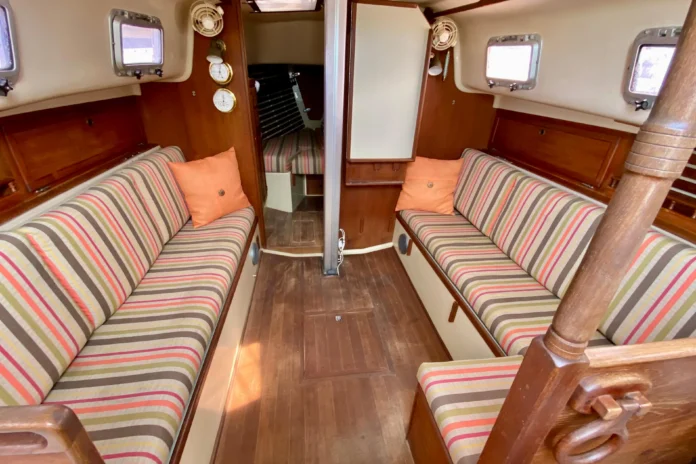
The Bayfield 32's traditional saloon pairs long, sea-berth-capable settees with plentiful teak trim and a practical centerline drop-leaf table. (Photo courtesy of YachtWorld.com)

At first glance, the Bayfield 32 looks less like a fiberglass production boat from the 1980s and more like somebody shrank a traditional sailing ship until it would fit in a normal marina slip. It has a clipper bow, a bowsprit, carved teak trail boards, a sweeping sheer, and enough exterior teak to make her intentions very clear. This was not designed to look modern, and it was clearly not designed to win round-the-buoy club races.

But this little Canadian cruiser has crossed the Atlantic, explored the Caribbean, and spent decades carrying families much further afield. The Bayfield 32 is an unusual veteran cruiser that still has a lot going for it, and it deserves a place on your shopping list.

Members Only
Keep reading with a membership
Unlock the full recap, every past recap, and 4,000+ boat tests, gear reviews and DIY guides — for about $2.83 a month.
◆
03Systems & Propulsion

Will the Latest Electric Outboards Win More Gas Converts?

ePropulsion's Spirit2 and Momentum's U2 deliver 2-kilowatt-plus power. Will next-generation electric outboards challenge gas models for dinghy and small-sailboat supremacy?

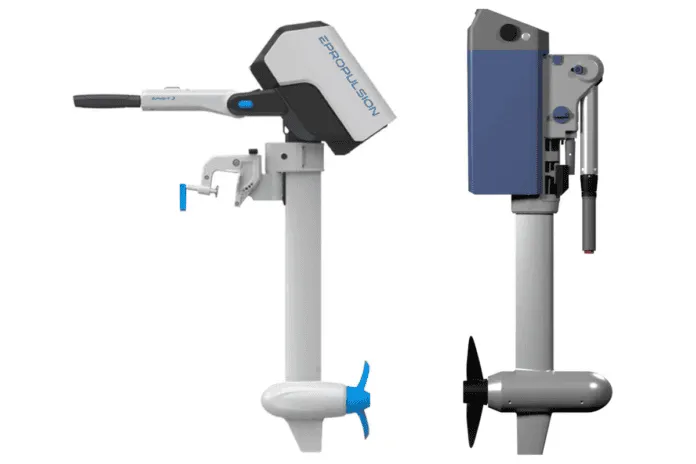
While more powerful electric outboards like the ePropulsion Spirit 2 and Momentum U2 are expanding the options for dinghies and small sailboats, gas models still have the edge on price and range.
PHOTOGRAPH
While more powerful electric outboards like the ePropulsion Spirit 2 and Momentum U2 are expanding the options for dinghies and small sailboats, gas models still have the edge on price and range.

Electric outboards have steadily gained sales in the market to power light dinghies and small sailboats. What has stopped them from gaining even more market share has been the lack of power compared to gas models, but that might be changing.

The breakthrough over the last year has been the ePropulsion Spirit 2, an electric outboard with an integral battery that delivers 2 kilowatts (kW) of power. It also offers a "Sport Mode" that delivers 60-second bursts of 3 kW power—enough to get some soft-bottom inflatables (with one passenger) up on plane. As detailed in our coverage of new products seen at the 2026 Miami Boat Show, the Spirit 2's Sport Mode is also enough to help small and light-displacement sailboats punch through headwinds and challenging currents.

Members Only
Keep reading with a membership
Unlock the full recap, every past recap, and 4,000+ boat tests, gear reviews and DIY guides — for about $2.83 a month.
◆
04Voyaging

What's the Shortcut to Sailing Vancouver Island's West Coast?

Learn how to plan the passage through Juan de Fuca Strait to Barkley Sound, using tides, weather windows and well-timed stops to reach Vancouver Island's rugged west coast.

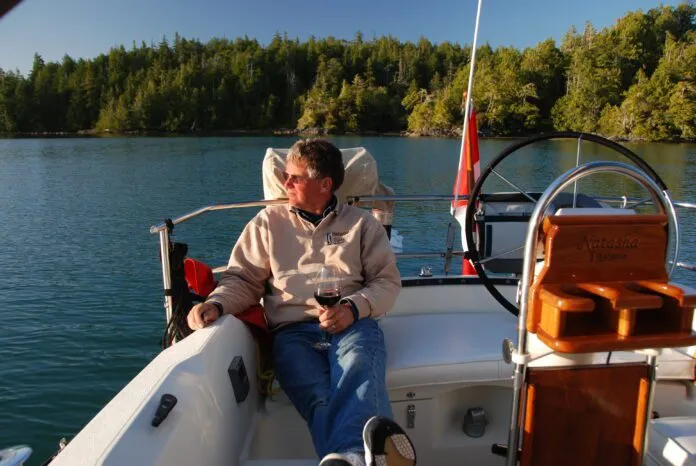
Enjoying a favorite, tranquil anchorage in Turtle Island, Barkley Sound. (Photo/ Bert Vermeer)
PHOTOGRAPH
Enjoying a favorite, tranquil anchorage in Turtle Island, Barkley Sound. (Photo/ Bert Vermeer)

Any skipper who has ever sailed the Pacific Northwest knows that there are a myriad of islands, anchorages and marinas to explore in the protected waters of Puget Sound and all points north along the Salish Sea. Compared to the exposed shoreline of Washington State, Oregon and California, the Pacific Northwest is a sailors' paradise. There are no swells to contend with, no offshore fog rolling in without notice to obscure everything, and blissful summer weather to ensure even non-sailing friends can enjoy the experience.

But if you're a sailor with a bit more experience, a well-founded boat and a desire to explore further afield. Where to go?

Members Only
Keep reading with a membership
Unlock the full recap, every past recap, and 4,000+ boat tests, gear reviews and DIY guides — for about $2.83 a month.
◆
05Sails, Rigging & Deck Gear

What Makes an Anchor Fluke Set and Hold?

Fluke geometry can make or break a set; our tests reveal which designs dig, hold and reset in different bottoms.

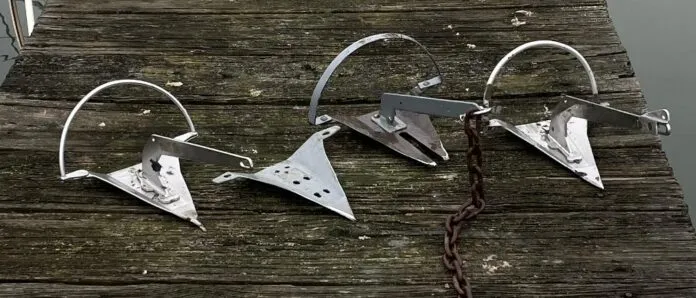
2.5 pound anchors during testing. Left to right: Mantus with tooth, fore-aft curve, split-toe, Mantus. (Photo/ Drew Frye)
PHOTOGRAPH
2.5 pound anchors during testing. Left to right: Mantus with tooth, fore-aft curve, split-toe, Mantus. (Photo/ Drew Frye)

An anchor's fluke does the real work—it bites, buries and holds. But small differences in its angle, shape and leading edge can determine whether it sets promptly—or merely drags across the bottom.

In this first article of a series on anchor design, we used interchangeable scale-model components based on the Mantus Dinghy anchor, then tested them in sand and layered Chesapeake Bay mud. We'll examine how fluke design affects penetration, holding and resetting, and later turn to shanks, roll bars, bottom conditions and the practical compromises behind every anchor design.

Members Only
Keep reading with a membership
Unlock the full recap, every past recap, and 4,000+ boat tests, gear reviews and DIY guides — for about $2.83 a month.
◆
06Marine Electronics

What Cameras Can See Inside and Under Your Boat?

Affordable borescopes and underwater cameras expose leaks, damage and other trouble hiding behind bulkheads and below the waterline.

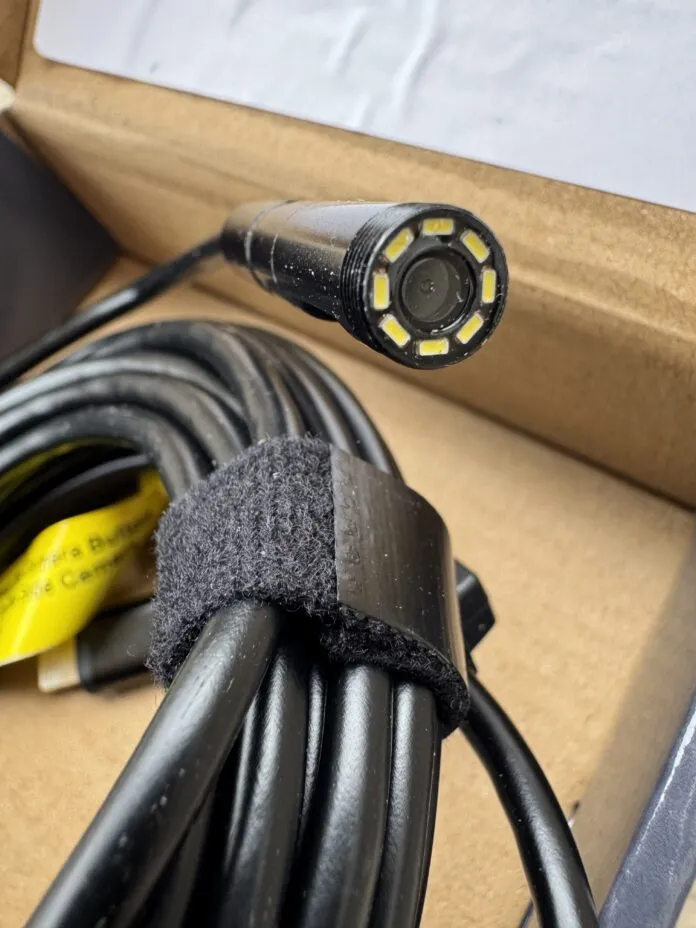
The Mugeasy endoscope will not take up a lot of room on board. (Photo/ Todd Vorenkamp)
PHOTOGRAPH
The Mugeasy endoscope will not take up a lot of room on board. (Photo/ Todd Vorenkamp)

Whether it is inspecting your hull before entering a foreign port to ensure you are not bringing invasive undersea life into an environment, or trying to find the source of a leak behind a bulkhead, inspection cameras are here to help.

Endoscopes

The endoscope is a camera and light source mounted on the end of a flexible, semi-rigid, or rigid tube. Once an expensive and specialized medical device, the endoscope has entered the mainstream imaging world as microelectronics, LEDs, and tiny digital camera sensors have become commonplace. While medical endoscopes can cost tens of thousands of dollars, you can grab a useful borescope online now for less than $30.

Members Only
Keep reading with a membership
Unlock the full recap, every past recap, and 4,000+ boat tests, gear reviews and DIY guides — for about $2.83 a month.
◆
07Sailboat Reviews

Learning by Doing on a $5,000 Catalina 30 Mk II

A $5,000 Catalina 30 Mk II gives two new Florida sailors a hands-on education in boat repairs, refit costs and what it takes to reach the Bahamas.

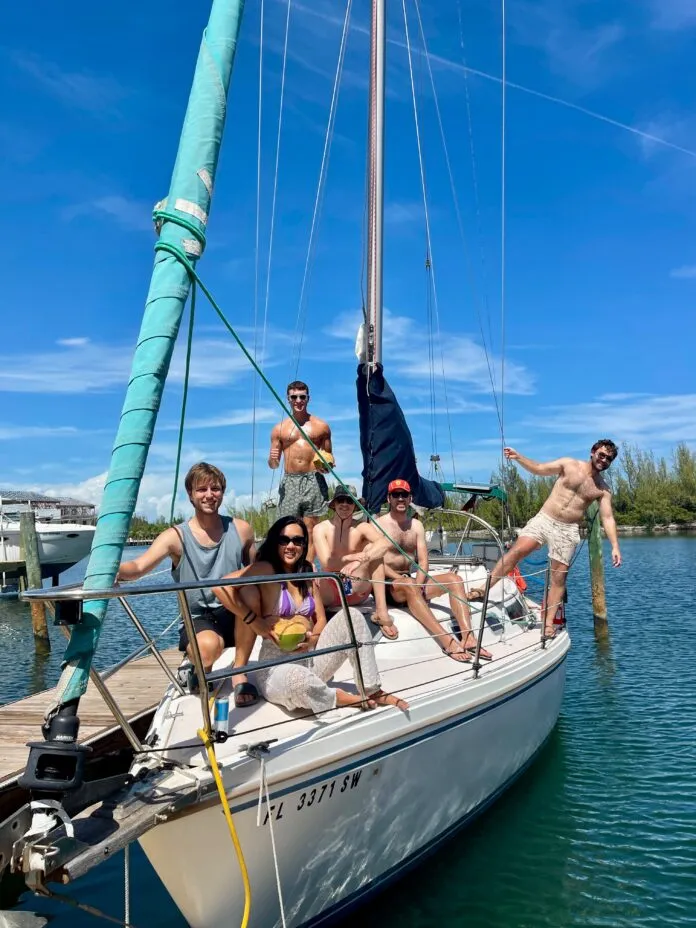
Six people aboard a Catalina 30 is doable, but it
PHOTOGRAPH
Six people aboard a Catalina 30 is doable, but it's a tight squeeze. Four makes for a much more comfortable passage. (Photo/ Davis-PS Copywriting)

When Davis's mother started talking about wanting to do something "big" for retirement, Davis and Gloria half-jokingly threw out an idea that seemed suitably ambitious: Why not buy a sailboat? That throwaway idea started taking on a life of its own when Davis and his mom, Kimmy, took an ASA 101 course. But it wasn't until Davis and Gloria saw their friend Lukas buy his first sailboat and set about restoring it that the idea started to seem realistic for them, too.

"If he can do it, I think we can probably do it too, especially now having him as a resource," Davis remembers thinking. Two years later, Davis and Gloria are engaged, living in Florida, and spending their free time aboard Odisea, the 1991 Catalina 30 Mk II they bought for $5,000.

Members Only
Keep reading with a membership
Unlock the full recap, every past recap, and 4,000+ boat tests, gear reviews and DIY guides — for about $2.83 a month.
◆
08Safety & Seamanship

Anchoring Basics: How To Leave an Anchorage Properly

Plan your exit, coordinate your crew and keep control of the boat while raising anchor—whether you're motoring out or leaving under sail.

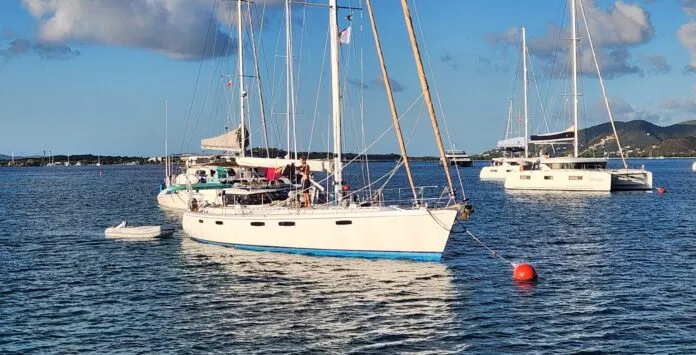
Before leaving a busy anchorage such as Cane Garden Bay, Tortola, assess the wind, nearby boats and your departure route before raising anchor. (Photo/ Marc Robic)
PHOTOGRAPH
Before leaving a busy anchorage such as Cane Garden Bay, Tortola, assess the wind, nearby boats and your departure route before raising anchor. (Photo/ Marc Robic)

In "Anchoring Basics: Choosing Gear and Setting the Hook," I reviewed the basic anchoring gear and techniques used to properly drop and secure the anchor. Besides safety, the objective was to provide sailors who hesitate or avoid anchoring simply due to lack of confidence the info needed to anchor successfully. After a great day of sailing, anchoring in a quiet anchorage, whether for the night or just a few hours, can really augment the total enjoyment of the whole boating experience.

With the hook properly and securely set, and hopefully after a good night's sleep, now comes the time to raise the anchor. There are many prechecks to do prior to raising the anchor tackle:

Members Only
Keep reading with a membership
Unlock the full recap, every past recap, and 4,000+ boat tests, gear reviews and DIY guides — for about $2.83 a month.
◆
09Systems & Propulsion

How Much Solar Does Your Boat Need? Lessons From Seven Years Afloat

Before adding more solar panels, weigh your daily energy use, battery capacity and seasonal sunlight to find the right balance between generating power and storing it.

Life aboard Sudana taught us a lot about solar power—including how much we really need. (Photo/ Pippa Shaw)
PHOTOGRAPH
Life aboard Sudana taught us a lot about solar power—including how much we really need. (Photo/ Pippa Shaw)

When we first moved aboard Sudana, our 29-ft. Thames Mirage fiberglass sailboat, our electrical demands were pretty modest. We had a fridge, laptops and phones, lights, navigation equipment, and a VHF. We installed two 100W solar panels, giving us 200W of solar generation, and a 120 amp hr LiFePO4 battery. Over time, we added a television and, much later, a diesel heater. It sounds like a fairly small system, and it is. But for how we used the boat, it turned out surprisingly capable.

My partner, David, is the technical one in our relationship, and he has led most of the electrical work on both our boats. Our experience aboard Sudana over the past seven-plus years has now fed directly into the electrical system we're building for Avatar, our custom 45-ft. aluminum sailing yacht designed by Gary Mull. We're fitting considerably more solar, but we're also planning to use considerably more electricity. And, importantly, we haven't lived aboard Avatar yet, so we're still making some educated guesses about what we'll eventually need.

Members Only
Keep reading with a membership
Unlock the full recap, every past recap, and 4,000+ boat tests, gear reviews and DIY guides — for about $2.83 a month.
◆
10Boat Maintenance

DIY Wrench For 6- and 8-Inch Screw-Out Plastic Deck Plates

A homemade wooden wrench gives you a snug fit and better leverage on stubborn plastic deck plates—and floats if it slips overboard.

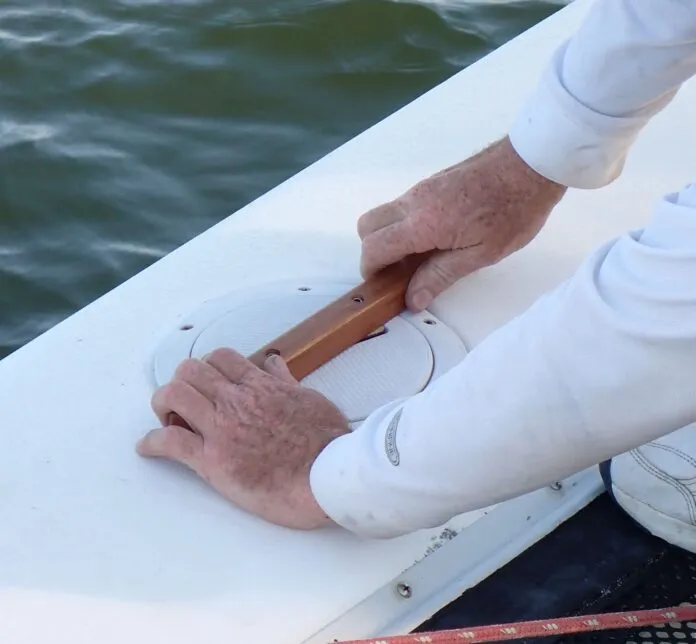
The DIY wrench in use. (Photo/ Drew Frye)
PHOTOGRAPH
The DIY wrench in use. (Photo/ Drew Frye)

I first experienced stuck deck plates over 40 years ago when I kept a beach cat on the beach. Sand could really weld them shut. When I had a child, I made a DIY wrench so that she could open hatches on our cruising boat (Stiletto 27, at that time). My current boat, a Corsair F-24 MKI, has nine 6-in. screw-in deck plates, six of which must be accessed every few weeks to pump water. I keep them clean and lubed, but if I tighten them enough to keep the water out, now and then, one becomes stuck.

A quick search made it clear that good wrenches for plastic deck plates are hard to find. Beckson makes one that barely works. Portgrip sells an adjustable one that is a little better, but still lacking in leverage and snug fit. The previous owner made one from two wooden stubs connected with a stainless rod; it was wobbly, uncomfortable, and didn't offer much leverage, but the stubs did fit the deck plate indentations well.

Members Only
Keep reading with a membership
Unlock the full recap, every past recap, and 4,000+ boat tests, gear reviews and DIY guides — for about $2.83 a month.
◆
11Sailboat Reviews

Morgan 38/382 Used Boat Review

Charlie Morgan's hurrah becomes Ted Brewer's success story becomes today's pseudo-classic.

Produced between 1977 and 1982, this 38-foot cruising sailboat has quietly built a reputation for being strong, comfortable offshore, and surprisingly capable under sail. (Photo courtesy of YachtWorld.com)
PHOTOGRAPH
Produced between 1977 and 1982, this 38-foot cruising sailboat has quietly built a reputation for being strong, comfortable offshore, and surprisingly capable under sail. (Photo courtesy of YachtWorld.com)

We receive many requests from readers to review certain boats. Almost without exception, the requests come from owners of the boat suggested. Few boats have been the object of more requests than the venerable Morgan 38. At first blush, it is difficult to determine which Morgan 38 we ought to address, as two distinct designs were built since the first one appeared. After some thought, we decided to trace the history of both as best we could, including also the Morgan 382, 383 and 384.

History

The Morgan 38 was designed in 1969 by Charlie Morgan. He founded Morgan Yacht Company in St. Petersburg, Florida, in 1965. The Morgan 34 was his first production model. A hometown boy, he made a name for himself in the 1960 and 1961 Southern Ocean Racing Conference (SORC), winning with a boat of his own design, Paper Tiger. While not a formally trained naval architect, Morgan demonstrated his skill with a variety of designs. Many of these were keel/centerboard models, owing to the shoalness of Florida waters. Seventy-nine were built before production halted in 1971.

Members Only
Keep reading with a membership
Unlock the full recap, every past recap, and 4,000+ boat tests, gear reviews and DIY guides — for about $2.83 a month.
◆

Additional Reading

More Articles From This Month Free

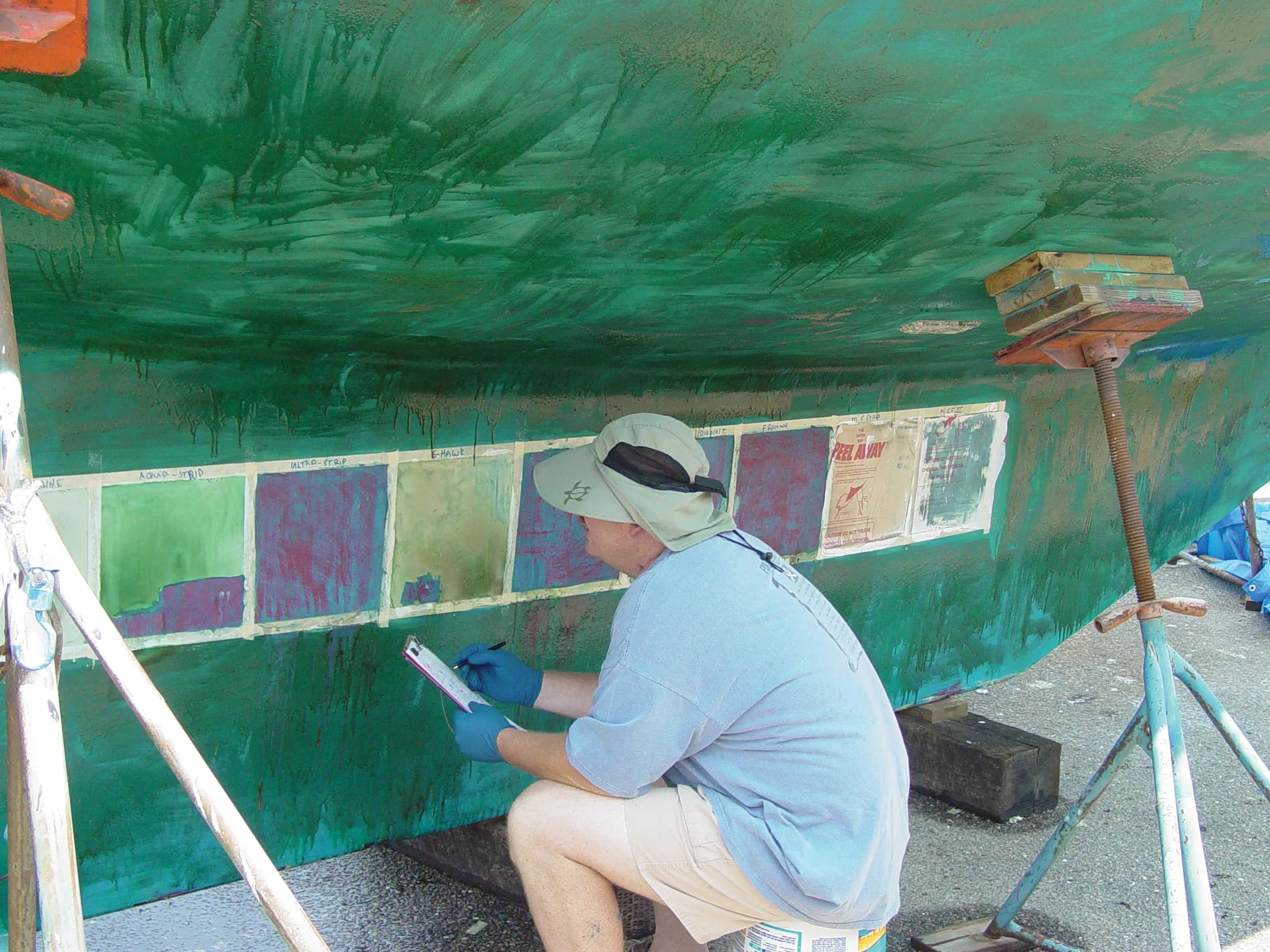
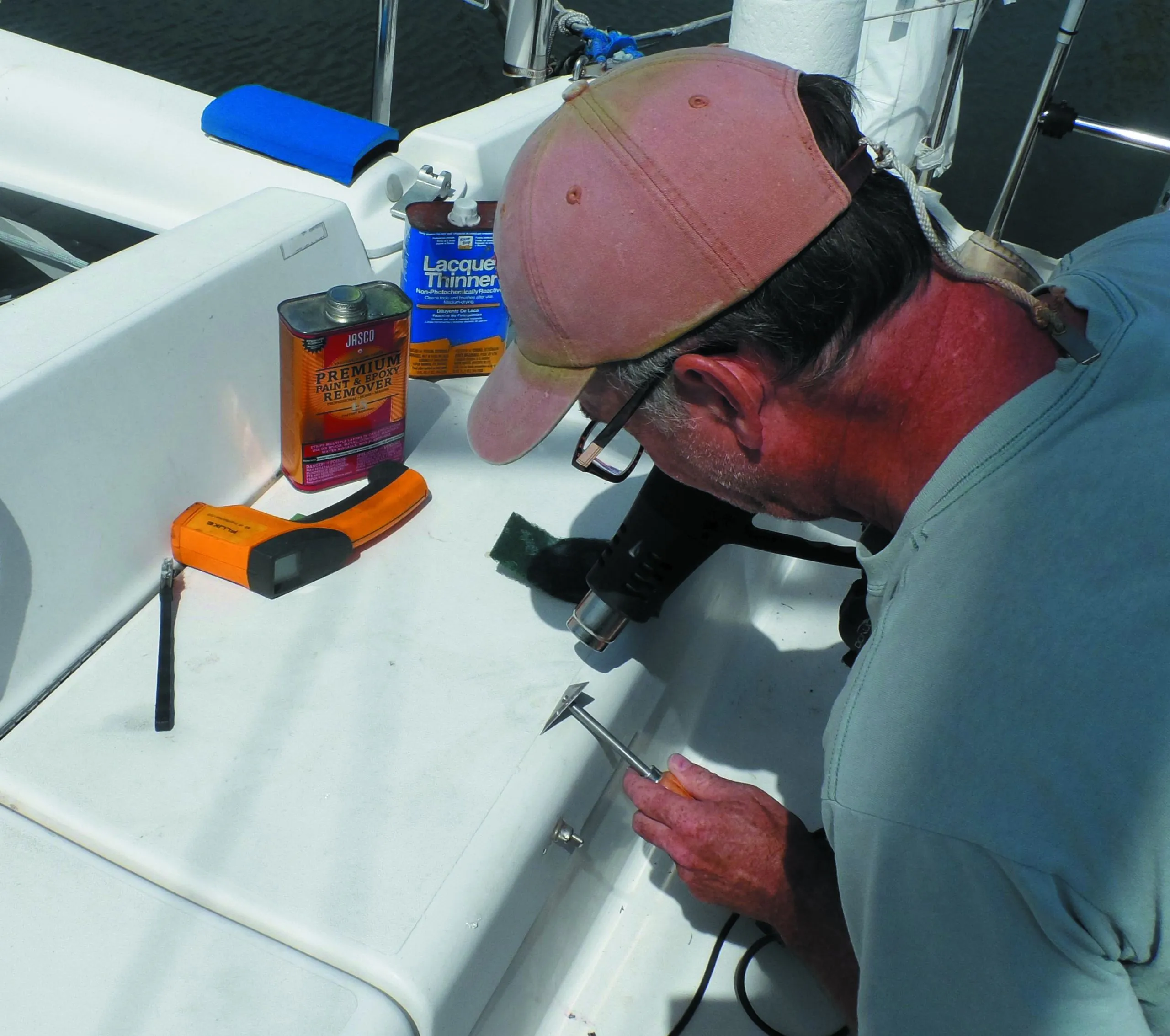
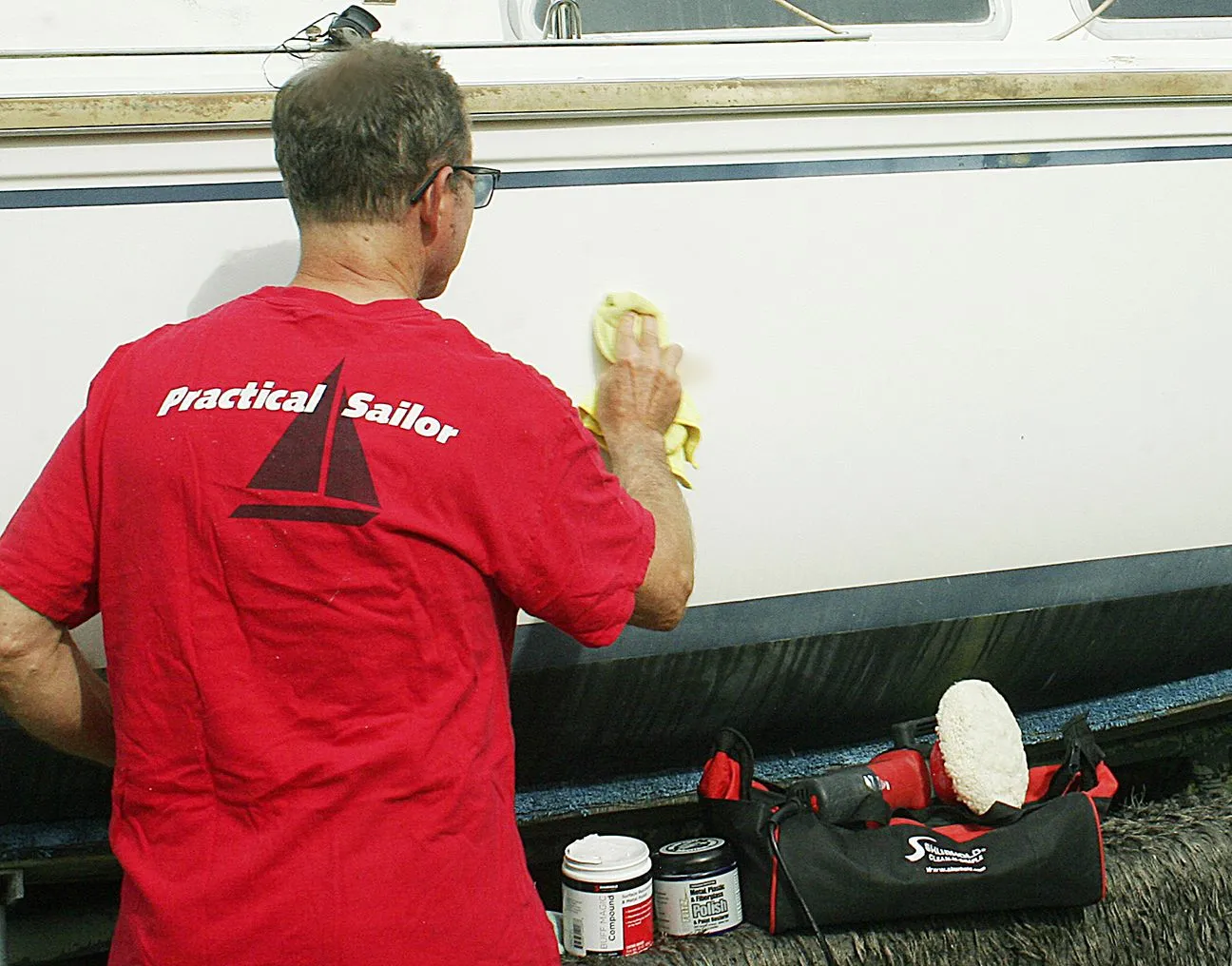
Collision Avoidance ConfusionSafety & SeamanshipCollision Avoidance ConfusionThe COLREGS are clear on paper, but real encounters leave skippers guessing. We untangle who gives way and when.Read more →Bottom Paint Removal: Should You DIY or Hire a Pro?Boat MaintenanceBottom Paint Removal: Should You DIY or Hire a Pro?Soda blasting, sanding or peeling? We weigh the cost, mess and results of stripping old antifouling yourself versus paying a yard.Read more →Maintaining Bronze Folding and Feathering PropellersBoat MaintenanceMaintaining Bronze Folding and Feathering PropellersA little annual service keeps a folding or feathering prop opening cleanly and not seizing when you need it most.Read more →Quick Tips for Cleaning Up Spilled EpoxyBoat MaintenanceQuick Tips for Cleaning Up Spilled EpoxyCatch it wet or wait until it kicks? Practical ways to deal with an epoxy spill before it becomes permanent.Read more →Cal 2-27 Used Boat ReviewSailboat ReviewsCal 2-27 Used Boat ReviewA roomy, affordable Bill Lapworth design, the Cal 2-27 remains a capable pocket cruiser for coastal sailing.Read more →How Do You Wax and Polish Your Boat?Boat MaintenanceHow Do You Wax and Polish Your Boat?Compounding, polishing and waxing in the right order brings tired gelcoat back to a deep, protected shine.Read more →Boat Deck Non-Skid: What Holds Up After 10 Years?Boat MaintenanceBoat Deck Non-Skid: What Holds Up After 10 Years?A decade on, we revisit the non-skid coatings and additives that kept their grip and the ones that wore smooth.Read more →How Can You Make Low-Cost Leather Chafe Guards?Boat MaintenanceHow Can You Make Low-Cost Leather Chafe Guards?Simple leather sleeves protect lines and rails from chafe, and you can stitch a set yourself for a few dollars.Read more →Electric Propulsion News: Torqeedo Exits Inboard, Hybrid MarketsSystems & PropulsionElectric Propulsion News: Torqeedo Exits Inboard, Hybrid MarketsA major electric-propulsion maker refocuses on outboards, and we look at what it means for inboard and hybrid owners.Read more →How Many Boat Cleaners Do You Really Need?Boat MaintenanceHow Many Boat Cleaners Do You Really Need?Marketers sell a bottle for every surface. We sort the genuinely useful cleaners from the redundant ones.Read more →

Watch

This Month on YouTube Free

Enjoying the preview? Get the full recap + 4,000+ articles — $34/yrBecome a Member