
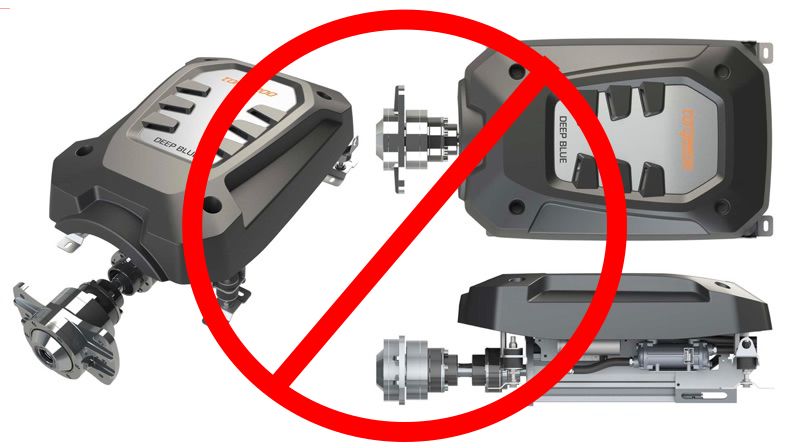
The electric propulsion market continues to evolve quickly, as evidence by developments revealed at the October 15-18 Annapolis Sailboat Show. The latest news is that German manufacturer Torqeedo, which was purchased by Japanese outboard manufacturer Yamaha Marine in 2024, is exiting the inboard and hybrid propulsion market.
The news of Torqeedo’s withdrawal of its inboard and hybrid propulsion systems was learned from executives at the Aquila booth at the Annapolis Sailboat Show. Until recently, Aquila offered Torqeedo’s Deep Blue hybrid propulsion system as the technology behind its optional Hybrid Ocean Drive, but it’s now seeking a new hybrid partner. Hybrid systems combine the range and reliability of diesel, using either diesel engines or generators, with the quiet operation, torque and efficiency of electric motors, used for either main or auxiliary propulsion.
Torqeedo Statement
Contacted for clarification, Torqeedo offered the following statement:
“We are currently pausing new projects across our Deep Blue range. Together with our shareholder Yamaha, we are exploring scalable systems that can be made available to a broad range of customers. We continue to see great potential for hybrid propulsion systems across many applications – wherever boaters need longer range, higher onboard energy demand or greater flexibility. Existing customers can rely on our continued commitment: all service obligations will be fully maintained, and ongoing projects will continue to receive dedicated support.”
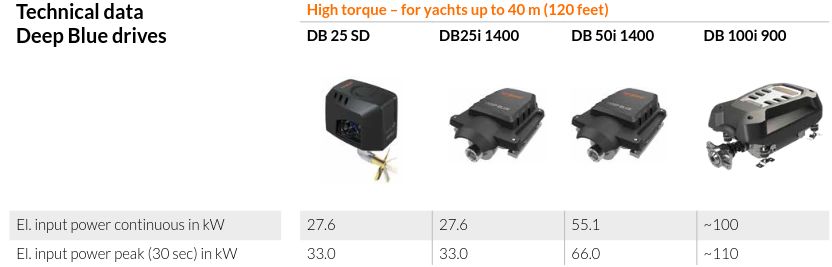
“Pausing new projects” effectively means ending development and new sales of a lineup that included three inboards with multiple configurations for planing and displacement boats. The company’s intentions for hybrid systems are less clear, but it’s most likely that any further development would be designed for use with electric outboard motors.
Facing Growing Competition
Torqeedo pioneered the electric outboard market starting in 2005 and had the market largely to itself for more than a decade. Yamaha’s 2024 acquisition closed as Torqeedo was facing growing competition, notably from Chinese manufacturer ePropulsion.
Earlier this year ePropulsion introduced its Spirit 2 outboard, a 2 kilowatt (kW) motor with an integral battery. The motor also features a 3 kW “Sport Mode” that provides of 60-second burst of additional power to get light inflatables (with one passenger) up on plane. The Spirit 2 has “taken the market by storm” according to e-outboard retailer EMO Electric, grabbing market share away from Torqeedo and other manufacturers of electric outboards in the .9 to 1.6 kW range.
Hybrid Offerings Multiply
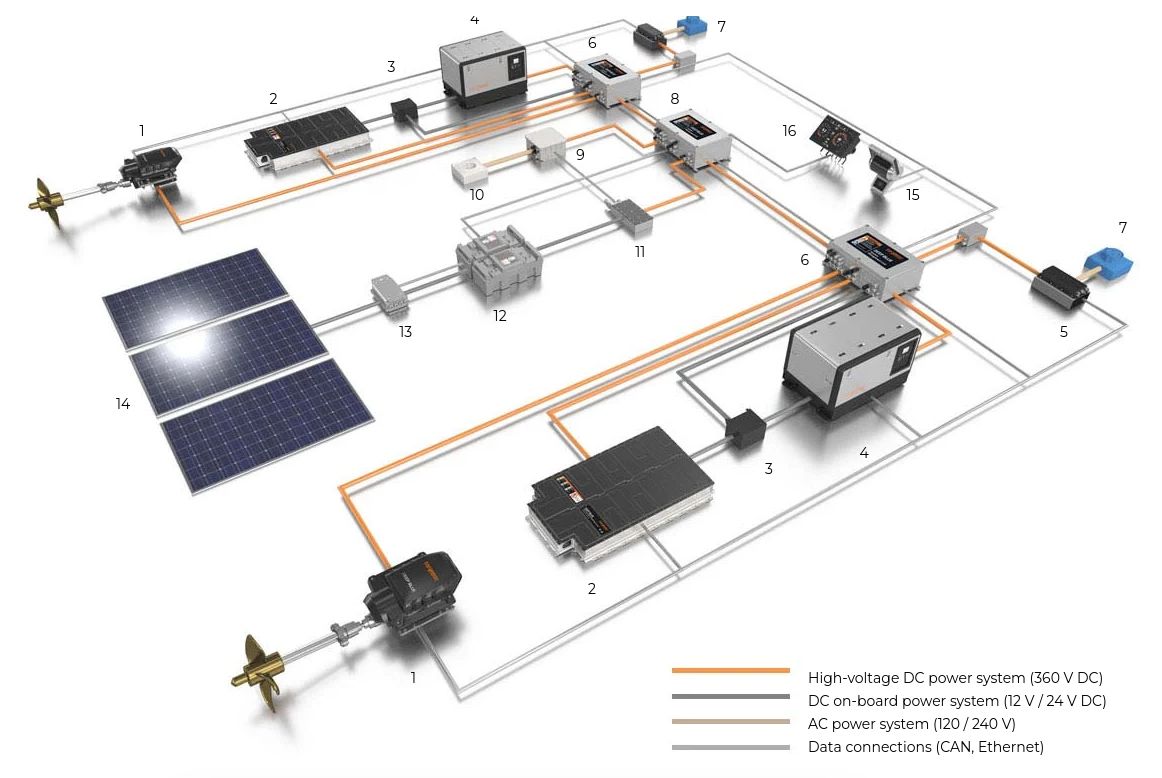
Competition in the hybrid space is growing, with boat builders and engine builders alike making long-range plans that will require significant investments. The Torqeedo Deep Blue hybrid propulsion system configured for the Aquila 50 Sail, introduced at February’s Miami Boat Show, featured two 50 kW straight-shaft electric motors, an 80 kWh battery bank, 4 kW of solar capacity and a Kohler generator managed by the Torqeedo Deep Blue energy management system.
Torqeedo Deep Blue was squaring off against incumbent hybrid system providers including OceanVolt, Joool, and Integral, each of which has worked with a who’s who list of leading boat builders.
Looking for economies of scale, Groupe Beneteau and Fountaine Pajot Group announced in April 2026 the creation of E-LEKTRA MARINE, a 50/50 joint venture dedicated to electric propulsion and intelligent onboard energy management. The alliance intends to provide electric/hybrid propulsion for seven major sailing brands: Beneteau, Jeanneau, Lagoon, Excess, Fountaine Pajot Sailing Catamarans, Fountaine Pajot Yachts, and Dufour. These brands are said to represent around 60 percent of the global market for new boats.
Diesel manufacturers are also joining the hybrid fray, with Yanmar now offering a hybrid system through its Vetus subsidiary in Europe and reportedly developing a Yanmar hybrid system for the North American market.
Market Developments to Come
What Torqeedo’s announcement makes abundantly clear is that the company’s core market—and that of parent Yamaha Marine—is outboard motors, a mass market in which the competition is fierce. Torqeedo didn’t introduce any new models in that range in Annapolis, so we’ll be eager to see any new, more powerful, or more price-competitive outboards that might be introduced at next year’s Miami Boat Show.








To add a bit of perspective on relative market scale, Sail America, the Rhode Island-based trade group, just reported that fewer than 600 new sailboats of 25 feet and larger were registered in the US in 2025. If E-LEKTRA, the Beneteau-Fountain Pajot JV, grabs 60% of that (both in the US and globally), that doesn’t leave much for remaining competitors.
In the outboard powerboat market (15 feet and up), by contrast, hundreds of thousand of new boats are sold each year. In short, Torqeedo and Yamaha clearly know where their bread is buttered.
Perhaps Yamaha wants something to compete head-to-head with Mercury Marine’s Avator line?
What about Elco? They’ve been in business for 123 years, and making electric outboards, based in most cases on Tahatsu bodies, for many decades. Not cutting-edge, but I’ve never heard of a problem, and I know two guys who have them. I’ve seen quite a few on pontoon boats on lakes. They just work.
From what I’ve seen, Mercury and Elco outboards aren’t leading the market. Mercury’s electric outboards are bulky, heavy, expensive, and, at higher power ratings, require two or more proprietary batteries. Elco has been around, and it’s technology shows. Elco motors are price competitive and use third-party batteries, which might offer more juice for the bucks, but it’s an electric motor placed inside a conventional outboard body. The downside is the old-school water pump and gearing, with all the maintenance (and inefficiency) those entail.
Modern e-outboards put the motor in a pod in the water for direct cooling and efficient direct drive.
The market leaders at this point are ePropulsion and Torqeedo, but the relative newcomer, ePropulsion, is clearly gaining market share.