

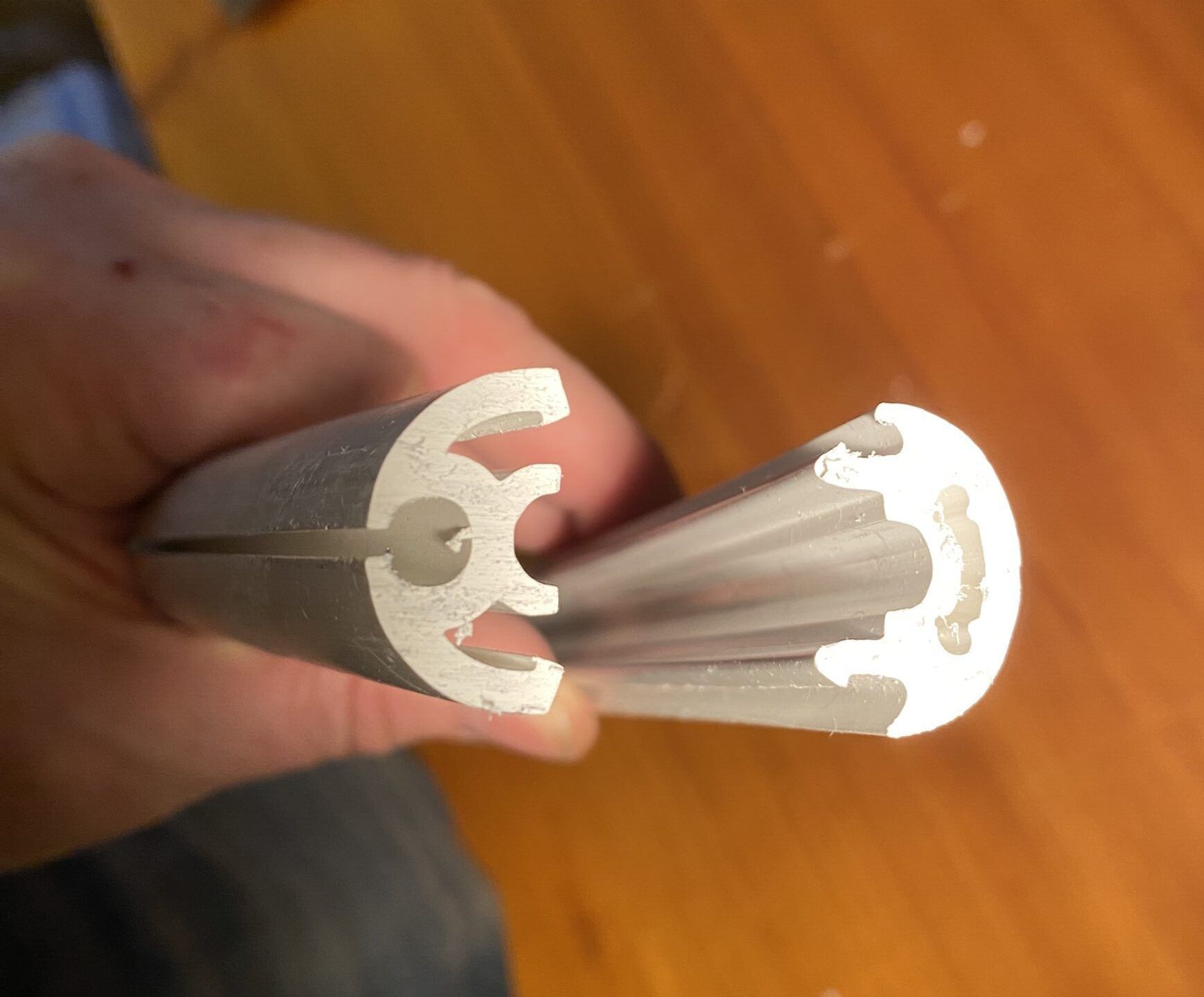
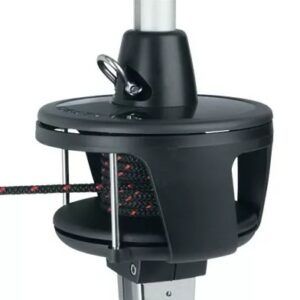
Sailors looking to add or replace a headsail furling system on a daysailer or small cruising boat in the 16-foot to 28-foot range will discover two cost-competitive options in the Schaefer Marine SnapFurl CF-500 (for 16 ft. to 24 ft. boats with 1/8 in. to 3/16 in. forestays) and CF-700 (for 24 ft. to 28 ft. boats with 5/32 in. to 7/32 in. forestays). A key to the low cost of both models is the two-piece polyvinyl chloride (PVC) extruded plastic luff foil. The two-piece plastic foil is cut to the required length and snapped together over the forestay, inspiring the product’s name.
I inherited a CF-500 when I purchased a used 1980 Tanzer 22 in 2018. Unfortunately, as described in this account the boat’s restoration, the PVC foil would twist when furling, with the top of the sail lagging behind the rotation of the drum at the bottom of the sail. This twisting action had the effect of wringing the sail like a wet washcloth, particularly when attempting to reef or furl the sail in high winds. In the worst cases, I’d get a tight, twisted wrap and run out of furling line before completing the furl, leaving a few inches or even a couple of feet of the genoa to grab the wind.
After researching new furling systems (see Practical Sailor’s most recent review), I convinced myself that my CF-500 foil was just worn and overly flexible after a couple of decades of use. I ordered a replacement extrusion from MauriproSailing.com for $387.90 (a 2020 sale price; the same item from the same retailer listed for $585.95 in January 2025).
Unfortunately, all the effort required to replace the PVC foil turned out to be wasted, as I discovered the twisting effect wasn’t much better. I should have scoured online reviews of the SnapFurl before ordering a replacement foil, as a search turned up similar complaints. One West Marine customer commented that his 10-year-old SnapFurl “developed a ‘cork screw’ twist and would not roll in or out without extreme effort. I relaced the foil and it is twisting again.” The twisting effect may not be so bad on a smaller boat or one with a fractional rig and, thus, a shorter forestay. The T22 is a masthead sloop with a 29-foot-long forestay, whereas a Cal 20, for example, has a fractional rig and a 23-foot forestay.
Plastic Problems
In another plastic-related snafu, I also discovered a tiny crack in the plastic torsion tube where the sail feeder clamps down on the foil extrusion. As Drew Frye observes in this comprehensive overview of what to look for and look out for in plastic boat parts, cracks in plastic are usually due to overtightening, noting that “a plastic part will fail under torque values 20 times lower than a metal one.” I slipped a stainless hose clamp around the feeder plate and torsion tube just to make sure the connection with the foil wouldn’t fail.
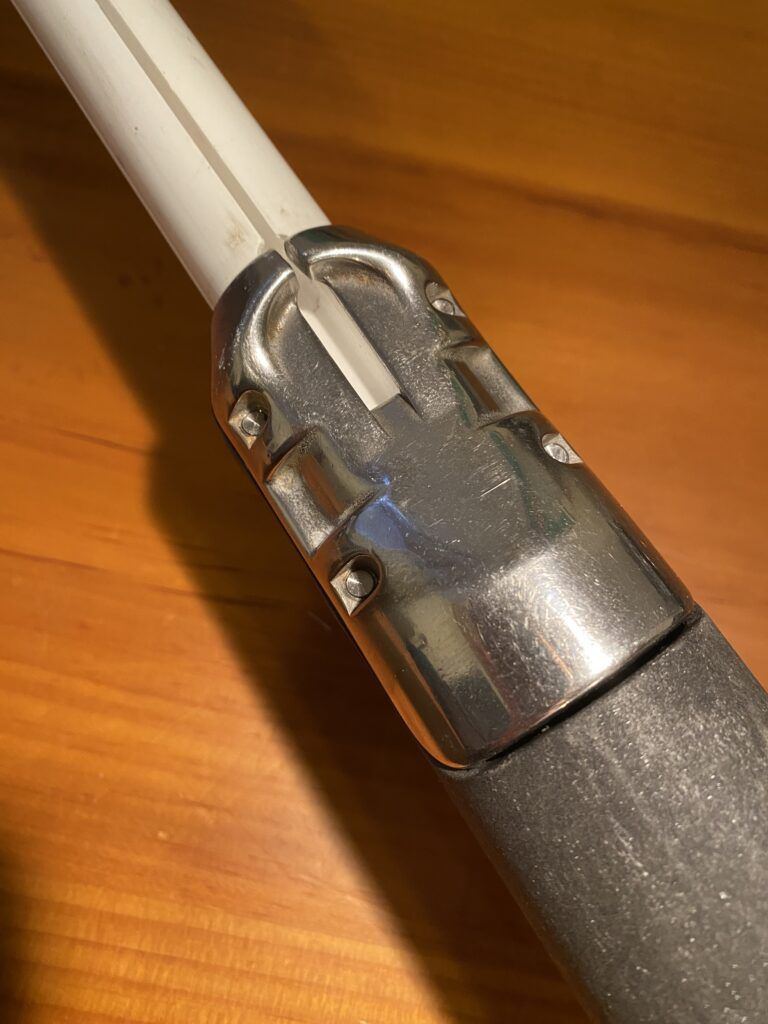
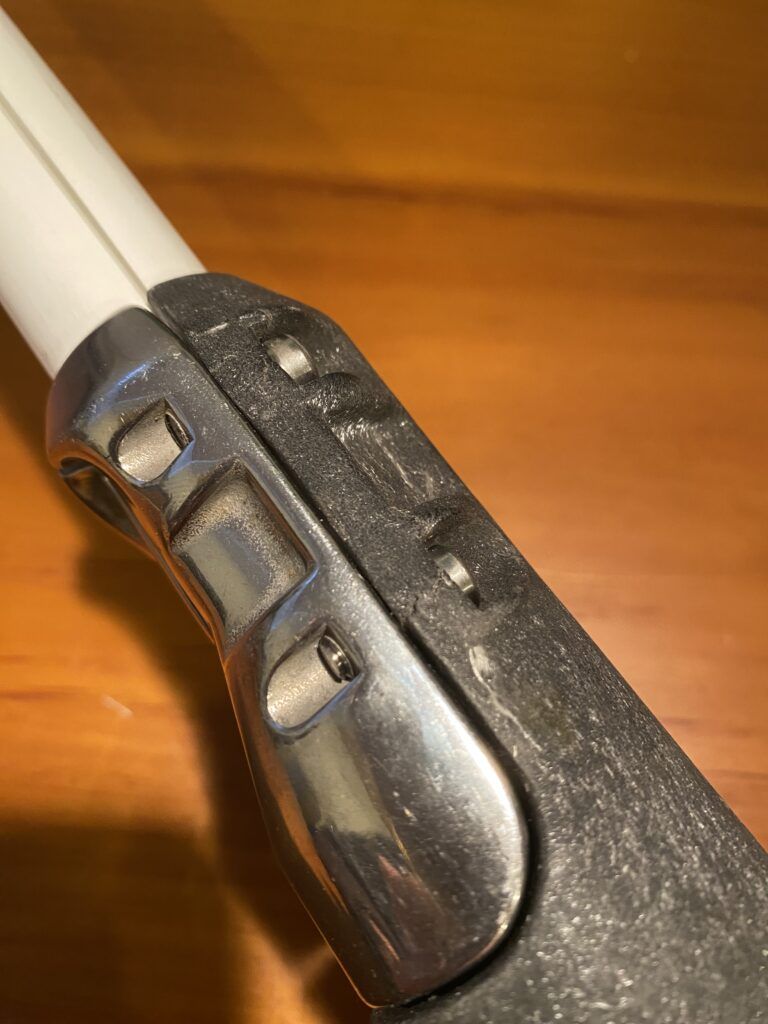
Is plastic a good choice for such high-stress components? It’s notable that the CF-700, which is designed for 24 ft. to 28 ft. boats, has an aluminum drum and torsion tube (though it uses the same two-piece PVC foil). Other low-cost genoa furling systems designed for small boats also feature PVC foil extrusions and plastic parts. The CDI Flexible Furler line, for example, employs a flat, one-piece luff extrusion that the manufacturer claims is “as stiff in torsion as a metal system.”
Maybe it’s possible for a one-piece plastic foil with different geometry to be as stiff as metal, but I didn’t want to take a chance. I had already ordered a new genoa and didn’t want to risk subjecting it to twisting. Instead, I upgraded to Harken’s MKIV Unit 0 roller reefing system, which features a rigid, metal foil. Installation involved zero manhandling of long extrusions, as with the SnapFurl, but it did entail more fine assembly work. The hollow metal sections are slipped over the headstay, piece by piece, and screwed together with metal connectors, tiny machine screws (using thread locking fluid) and plastic bushings that protect the wire from wear. You’ll also have to cut the final tube section to the required length using a hack saw or jigsaw with a fine metal blade.
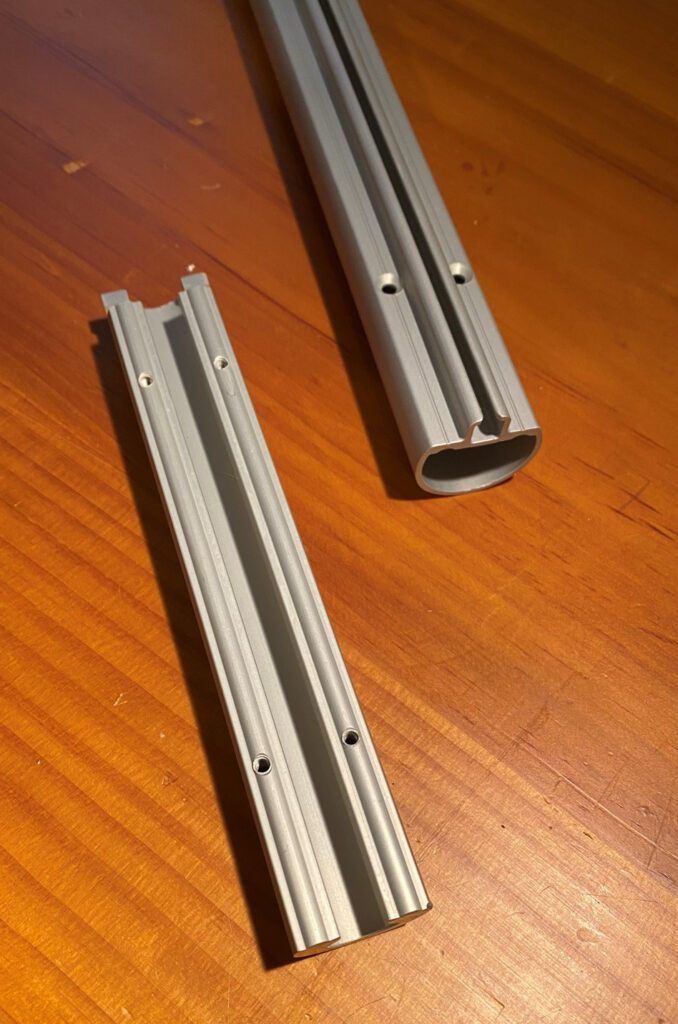
The results were as expected and desired, with my crisp new genoa wrapping uniformly around the Harken Unit 0’s rigid foil, from top to bottom. What’s more, reefing was more consistent and reliable. There are plenty of good uses for plastic on sailboats (like glass-reinforced hulls, for example), but in my experience, rigid metal systems are the way to go with headsail reefing systems.
A best practice with headsail furling system is to keep light tension on the furling line as you unfurl the sail to ensure a tight, tangle-free wrap around the drum. The continuous-loop furling line systems used for asymmetric spinnakers and Code 0 sails are another matter, but at this high end of the market there are also design efforts and manufacturer claims about reducing the twisting effect on sails.
Practical Sailor reached out to Schaefer Marine for comment, but have not received a response. If they would like to respond, we will publish their response here.












We are very satisfied owners of the Schaefer Snapfurl 700 system, experiencing none of the problems noted in this article.
We installed the system 2 years ago, on our hunter 26.5 utilizing a 150% Genoa. We have experienced none of the so-called twisting problems the author mentions….. Even in high winds of 20 knots, our big sale furls and unfurls smoothly every time.
We chose the Schaefer system because our prior system used the separate metal pieces rather than the extruded PVC. Over time in our experience the connections between the metal tubing…. Whether it be screws or rivets…. Tend to loosen over time and in our case was preventing the smooth raising of our jib… Little bits of the connecting screws started to come out blocking the drum from rising. That’s why we knew the Snapfurl was a better solution.
We are year-round sailors, typically out on the boat in both race and cruise conditions, and I have to say the Schaefer reliability has been one less thing to have to think about.
Again….no twisting, no cracks, smooth furling of larger sails, in heavy wind, year round use. My only guess is that perhaps the author may have installed it incorrectly we had ours professionally installed.
Hats off to Schaefer for a reliable and reasonably priced product.
I have an upgraded 1967 Morgan 24/25 which came equipped w a Cf 500. During the first year I had some furling problems and decided to study the system and found that the P.O. had ignored nearly all the manufacturer’s advice on a proper installation such as the angle of Halyard to mast and the angle of the furling line feeding into the spool. When I installed a furling line guide above and the optional furling line feeder guide below, and replaced the slightly fatter furling line with a higher strength lover diameter furling line on the spool, the system worked great. I think when the angle of the halyard from mast sheave to top is too flat, the tendency to exert twist into the foil is sufficient to cause the problems and when in warm climates or seasons might perform as mentioned in the article above. But mine has now been performing quite smoothly for over 12 years on windy Great South Bay (NY). I do not doubt a metal foil effectively eliminates any twist as mentioned, but since tweaking my installation, the polymer foil shows no twist or wrapping problems at all.
As a happy PS subscriber, I have relied on their reviews and recommendations for many years like most sailors. This review gives me significant pause. While the author experienced problems, he tangentially mentions a complaint he found online to support his opinion. Unfortunately he also conveniently ignored the many positive reviews out there. It took me all of 5 minutes to find dozens of them.
I have never had occasion to criticize a PS review in the past…and have no connection to Schaefer… But my observation is that the author may have been seeking reviews that tended to support his opinion. And of course the title of the article is highly inflammatory.
So far, you have two subscribers questioning whether or not your installation was done correctly and per manufacturers spec as a reason for the problems you experienced. How about a deep dive on that by way of follow-up, a revision to the title of the article, and a bit more digging and conversations with actual owners.