

Anchor Rode Buyer’s Guide: How to Select the Right Chain or Chain-Line Combination
If your anchor chain is too light, your boat is on the rode to perdition. Forgive the pun, but an inadequate anchor rode (whether...
Getting the Most Out of Older Sails
Efficient windward work requires sails with a good lift-to-drag ratio. Mylar laminate sails hold their shape throughout their useful life, well enough for all...
Top-Notch Wind Indicators
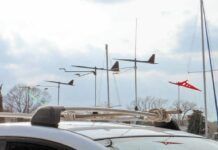
That fragile plastic wind vane at the masthead looks like a childs toy to a lubber. Its a nautical curiosity perched at the top of yacht that is also equipped with a comprehensive electronics suite. While we can certainly sail without wind indicators and telltales, judging the strength and direction of the wind by its effect on the sails and the feel on our neck, those little bits of plastic and yarn are darn handy when trimming sail, or balancing the helm.
The Science of Stern Anchoring
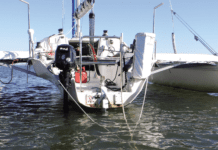
Sailboats yaw at anchor. In prior reports we discussed how seriously yawing can compromise anchor security, and we talked about how a riding sail...
Assessing the Anchor Kellet
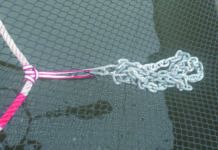
One of all-chain rodes most popular features among cruising sailors has little to do with anchoring-and everything to do with stowing. With a well-designed bow roller, windlass, hawse hole, and chain locker, your rode and anchor will deploy and stow belowdecks faster and with far less effort than nylon rode requires. But for a smaller boat without a windlass or deep chain locker, an all-chain rode is often impractical. Even cruising sailors who are perfectly equipped for all-chain anchoring often find that their nylon secondary anchor better is suited for some anchoring situations.
The Case of the Painted Jib
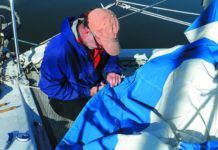
Polyester sailcloth is amazingly strong and durable stuff, often completing trips around the world or decades of weekend sailing. Its Achilles heel is the sun. After just 2-3 years in the sun, depending on the latitude, it becomes so rotted by UV that its little stronger than a cotton bed sheet. Mainsails are safely bundled under a Sunbrella cover. Nylon Spinnakers are bagged and stored below. Genoas, on the other hand, remain furled on the headstay, often year round, with the last 12 inches of the leach and foot continuously exposed.
In Search of the Ultimate Boat Hook
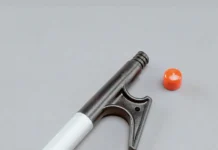
The basic design of the humble boat hook hasn't changed much over the years, but it has seen upgrades in construction and materials, along with some minor design tweaks. For this report, we set out to determine what constitutes the ideal boat hook. We evaluated boat hooks currently on the market and took a look at some old models still in service.
Rest Easy with a Riding Sail
Even when your anchor is well designed and ideally matched to your boat, there are four common factors that can cause an anchor to drag: poor bottom, short scope, insufficient shock absorption, and yawing. Each of these reduces the holding capacity of the anchor, and they are additive. That is to say that any one of them can ruin your day, solving only one or two of them does not ensure good holding, and the more problems you solve, the better youll sleep.
Ground Tackle Inspection Tips
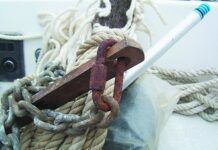
Your anchoring system is only as strong as its weakest component, which includes not only the rode, but also shackles, splices, mooring bitts, cleats - in short, any gear used to secure your boat while at anchor. Proper maintenance includes inspection of these as well as laying the rode out for thorough examination at least annually.
Reefing Basics
As the forecast for this season calls for much cooler temps and more frequent higher wind speeds and gusts, thanks to the effects of...
Latest Logbook

Practical Sailor Logbook – September 2026
This month we tour the Hans Christian 48T — the offshore cruiser many sailors call the holy grail — walk the custom Antigua 60...
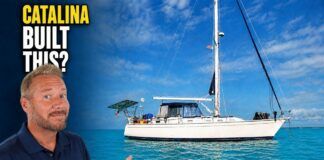
Video: Morgan 44 Review – The Catalina Cruiser Everyone Forgot
The 1989 Morgan 44 is a big center-cockpit cruising sailboat with Catalina DNA—but it may be one of the most overlooked boats of its...



Latest Sailboat Reviews
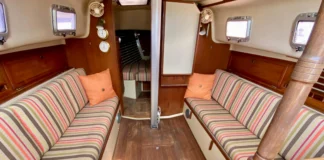
Bayfield 32 Used Boat Review
At first glance, the Bayfield 32 looks less like a fiberglass production boat from the 1980s and more like somebody shrank a traditional sailing...