



Galley Lighting
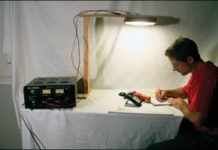
When we last dropped in on the realm of interior lighting (Practical Sailor January 2009), we looked at light emitting diode (LED) replacements for incandescent bulbs in a traditional bulkhead-mounted reading light. The test revealed some significant advances in LED technology, and those advances continue today at a lightning pace. Responding to the call for energy efficiency, LED makers are packing more and more luminosity output into smaller and smaller packages. As our reading light test showed, LED technology has developed to a point where finding LED "bulbs" that can provide enough illumination for reading is no longer an issue. Results from that comparison prompted PS to consider whether another key light on our boat-the galley light-could soon go the way of the incandescent reading light. Unlike reading lights, a galley light needs to cast a very wide beam angle to illuminate a large area, something LEDs alone are not very good at.

New Clear, No-rust Propane Tanks
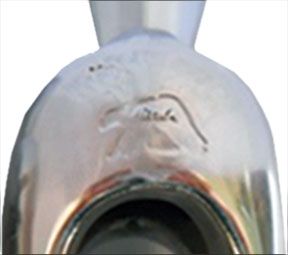
Unlike aluminum or steel propane tanks, clear composite tanks allow users to see how much fuel remains, a nice feature in an LPG tank.Following our year-long evaluation of Ragasco’s 9-kilogram one-piece blow-molded tank, Practical Sailor tested the American-made Lite Cylinder, a two-piece composite tank. The two tanks have nearly identical dimensions, and may be a challenge to fit in a standard propane locker designed for metal tanks. In fire tests, composite tanks melt rather than “explode” like metal tanks, giving them a slight edge in safety, and the non-metal tanks resist rusting, a common problem of aluminum LPG tanks.
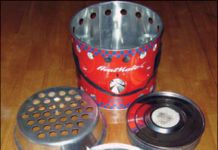
HeatMate Takes the Chill Off
When temperatures decrease, the search for viable heating options by shivering sailors invariably increases. A recent cold winters night provided the perfect opportunity for one blue-nosed liveaboard Practical Sailor tester to check out the HeatMate 5200 heater-stove from Contoure International Inc. The HeatMate 5200 is a portable, non-pressurized alcohol heater that easily converts into a stove. Weighing in at about 5 pounds, the fairly compact, aluminum unit measures approximately 11.75 inches tall by 11.5 inches in diameter, and it comes assembled and ready to go.

Mailport: February 2010
The February 2010 issue of Practical Sailor has letters on the following topics: requests for more used boat reviews, foggy electronics, hard varnishes, propane fridges and Iphone apps.

Navigator Wood Stoves Provide Classic Heating and Cooking Onboard
Navigator Stoves, based on Orcas Island in Washington state, produces three classic wood-burning stoves for use onboard boats and in cabins, RVs, and other small structures. The Little Cod and Sardine stove models are produced using the patterns originally made at the Lunenberg Foundry in Nova Scotia. The Halibut stove model is based on an old favorite, the Shipmate stove. The cast-iron custom-made stoves and can be ordered in the original stove polish or one of six porcelain enamels. They can burn wood and charcoal. The Halibut stove model can also burn coal. For use in warmer months, Navigator has designed denatured-alcohol drop-in burners for cooking.
Practical Sailors Gear of the Year 2009
Practical Sailor editors pored over the dozens of products reviewed in the previous months to find the best of the best sailing gear, products that are worthy of the designation Gear of the Year. This years editors choice list includes a rugged rope clutch (Spinlock), a grippy ratchet block (Ronstan), feature-filled VHF handheld radios (Standard Horizon and Cobra), high-quality nesting cookware (Magma), a proven paste wax (Collinite), an ocean-ready first-aid kit (Adventure Medical Kits), a reliable LED bulb for cabin lighting (Imtra), an economical ice box conversion kit (Frigoboat), an innovative ultrasonic tank sensor (BEP Marine), cold-weather gloves (Gill), and an easy-to-install Wi-Fi booster (5mileWiFi).
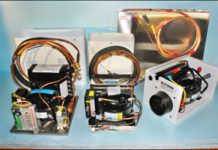
Conversion Kits that Turn Your Boat’s Ice Box Into a Galley Refrigerator
Practical Sailor tested three kits that convert onboard ice boxes into full-fledged refrigeration systems. The three reefer conversion kits in the review-the Waeco-Adler Barbour Cold Machine (CU 100) from Dometic Corp., the Frigoboat Capri 35F by Veco SPA, and the Sea Frost BD-represent a cross-section of whats available on todays refrigeration conversion kit market. Testers looked closely at energy efficiency and the 12-volt units abilities to cool a small ice box with the least amount of amp hours possible. Testers looked at quality, details, reliability, and cooling capacity.

Galley Solutions: Nesting Cookware Sets Under $250
A good set of nesting cookware means galley chefs can have all the tools they need for gourmet cooking, without sacrificing storage space. For this comparison of nesting cookware with removable handles, Practical Sailor took a look at cookware sets designed for galley use Cuisinart, Galleyware, and Magma Products, and one nesting set designed for trail cooking by camping-gear maker GSI Outdoors. Evaluation ratings were based on what the set includes, construction materials, handle construction, function, ergonomics, storage space required, whether the pans rattle underway, performance, ease of cleaning, price, and warranty.

Marine Refrigeration: Traditional Thermostats vs. Digital Thermostats
Modern galley refrigeration moved far beyond simple holding-plate refrigeration systems, and now competes with the more easily installed evaporative refrigeration systems. One key to efficiency in any refrigeration system is an accurate thermostat. Practical Sailor compares a more expensive digital thermostat to a traditional, less expensive mechanical capillary thermostat. Refrigerator and freezer tests pitted the Grunert Marine Air Systems mechanical capillary refrigeration thermostats against the Scad Technologies SensiStat digital thermostat. Mechanical thermostats are valued for their simplicity and reliability, but a digital thermostat may outperform mechanical thermostats when it comes to maximizing marine refrigeration performance.
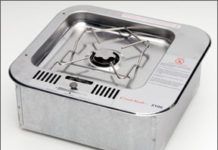
New One-Burner Alcohol Stoves Meet Their Market
Cookmates two new small alcohol stoves are a good fit for daysailers and boats with limited galley space. Unlike propane stoves, these non-pressurized alcohol systems require no valves, hoses, fuel tanks, or fuel lockers. The alcohol is easily poured into a stainless steel drum. Opening the burner allows for easy lighting of the stove. Methane, ethanol, and denatured alcohol can be used as a fuel source. The Cookmate 2100 drop-in model is made of stainless steel and puts out 7000 BTUs. It is well made and easy to use, but because it cannot be gimbaled, its use may be limited in rough seas. The CookMate 1600, designed as a portable countertop model, is also small and well made, and it can be gimbaled. It is made of stainless steel and puts out 7000 BTUs. Both Cookmate alcohol stoves beat the Origo alcohol stoves Practical Sailor tested in July 2006, and they gave the Force 10 Seacook seaswing style propane stove and Kenyon Appliances Kenyon Express II butane stove a run for their money.

Morgan 382 – The $30K Boat Nobody Talks About
The Morgan 382 might be one of the most overlooked cruising sailboats ever built. Designed by legendary naval architect Ted Brewer and produced between...



Latest Sailboat Review

Jeanneau 55 Boat Review
This recent sailboat from Jeanneau may as well be a spaceship. They’ve taken all the time-honored designs of a monohull aft cockpit and turned...