




Regalvanizing G70 Chain
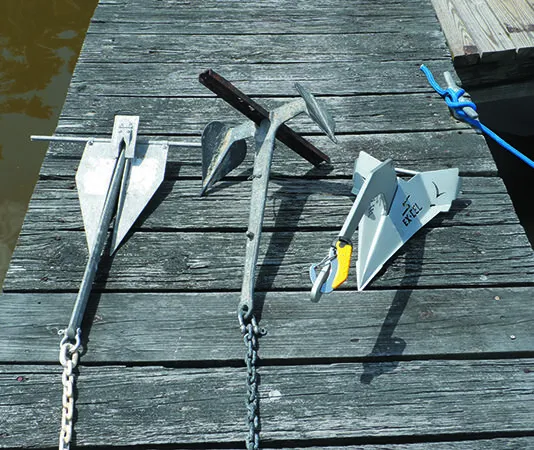
As high tensile G70 chain becomes more prevalent in the marine market, Practical Sailor has been busy testing the limits of this material, which has been used for many years in other industries. One question we have raised in the past is whether G70 chain can be safely regalvanized (see PS June 2014, Making Sense of Marine Chain Standards). Chain is expensive and regalvanizing helps to extend its life. If G70 chain can't be regalvanized, as we have suggested in the past, this needs to be factored into the initial cost.

Fixing Tears in Sunbrella Boat Canvas
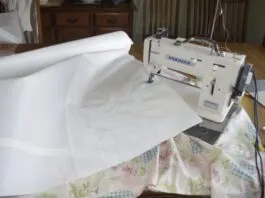
Sooner or later, chafe, UV rays, and sharp edges take their toll on our canvas. A misplaced screw or simple friction will eat holes in a dodger. A seam gives up, a boom rubs through the fabric, and a few snaps come loose.

Using a Jordan Series Drogue for Steering
Thanks for this discussion of using drogues for controlling a boat with a rudder lost or jammed over (see Sailing Without a Rudder, Practical Sailor, April 2017). I carry a Jordan Series Drogue (JSD), and I think that by bridling it somewhere in the middle, such that some of the cones open to resist water flow, and some are collapsed one could adjust the amount of drag that was appropriate for the conditions. Have you considered testing this?

Controlling Jibes With Boom Brakes
Ten years ago, you may recall having seen the Walder boom brake demonstrated at sailboat shows. There wasn't anything quite like it. The device caught on for a time with single-handed racers, who liked the way it slowly eased the boom across during jibes. (Philippe Jeantot had one on Credit Agricole when he won the first BOC Challenge.) When your hands are full with jib sheets and the wheel or tiller, there's too often the tendency not to pull in the mainsheet to minimize the shock load on the gooseneck when the boom slams across to the new tack.
Tools to Tame the Jibe
The loads of a flying jibe in late summer squall are enough to shred sails, rip out deck or boom fittings, bend or break the boom gooseneck, or even bend the boom itself. The novice sailor learns very quickly to be wary of an unintentional jibe.
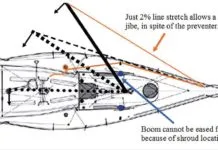
The Best Prevention is a Preventer
Ideally, you don't put yourself in a position where an accidental jibe can happen, but even an experienced sailor can get caught off guard by sudden, violent wind shifts in mountainous coastal areas or in night-time squalls. The most common way to take the fright out of an unintentional jibe involves a preventer, something weve examined in a number of previous reports. Preventers are especially useful when sailing deep downwind in rolly conditions, when exaggerated yawing lets the wind sneak behind the mainsail.
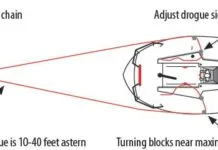
Ideal Drogue setup will require experiments
For maximum maneuverability, the control lines-one port, one starboard-should attach at the widest part of the boat. This maximizes leverage and places the effort close to the center pivot point. On a catamaran, closer to the transom works because of the wide beam, but for monohulls, attaching near the pivot point at the keel will be more responsive. For maximum responsiveness, the drogue should be as close to the transom as practical-this results in more responsive steering and minimal drag. We found the best compromise to be around 65-80 percent of the way aft, where there is still enough beam, but less risk of the control lines fouling.
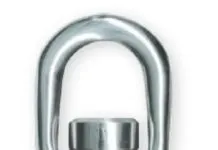
Snap shackles not advisable for snubbers.
In regard to your ongoing investigations of snubber hooks (Snubber Chain Hooks Revisited, February 2017), I want to add another idea to the mix. Our boat uses a fixed eye snap shackle spliced onto the end of a three-strand nylon snubber. Our shackle is similar to this Wichards 2 -inch fixed eye snap shackle (part #2472).
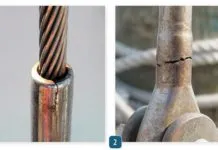
DIY Rig Check
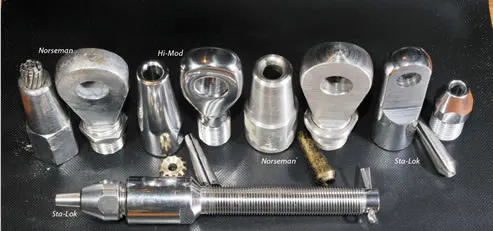
Here are two good examples showing the problems associated with the lower or deck level use of swage terminals for your standing rigging. Swaging is a process where tubular stainless steel fittings are essentially crimped onto rigging wire under high pressure.

Rope-to-Chain Splice Test
If youve ever struggled to retrieve a balky rope-to-chain back splice with your windlass, youve probably wondered if there wasnt a better approach. The problem becomes especially acute if youve upgraded to higher tensile chain and want to use nylon rode with the same approximate tensile strength.

Lithium Batteries on Sailboats: The 3 Mistakes Everyone Makes
Lithium batteries are one of the most popular sailboat upgrades today—but they’re also one of the most misunderstood. In this Practical Sailor Saturday episode,...



Latest Sailboat Review
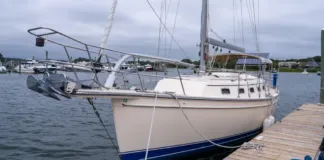
Island Packet Estero Used Boat Review
Florida-based Island Packet targets a relatively narrow niche, so the toughest competitors to its new boats are often older Island Packets. Introduced in 2010, the 36-foot, shoal-draft Estero is the company’s latest attempt to introduce a distinctive model that doesn’t stray too far from the company’s proven formula for success: moderate displacement, full-keel cruisers designed to be lived on, sailed far and in comfort, and endure the bumps, scrapes, and storms that cruising boats inevitably encounter. After sailing the Estero on Florida’s Sarasota Bay and inspecting its interior, construction, and systems, Practical Sailor testers noted that the shoal-water cruiser will appeal strongest to Island Packet fans who’ve been waiting for a shoal-draft, easy-to-sail boat that compares to the IP37 in terms of interior space. These strengths will be most apparent on intracoastal or riverine adventures like the Great Loop.