



Swage Fitting Breaks Surprise PS Testers
During the first round of mechanical terminal testing, testers were surprised to see that wire failures were occurring at loads that were at least 10-percent lower than expected. The swaged-end fittings had been applied by a rotary swage machine, which is considered to be a very reliable way to form swaged terminals.
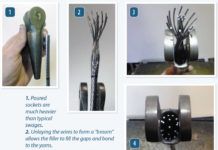
Poured-Socket Assembly Requires Special Care
The most common error with poured sockets is insufficient cleaning of the wire, and/or using the wrong solvent to clean it. Even dry, stainless wire, when new, can have a residue of lubricant left over from the extrusion process. If this lubricant is not removed, it can compromise the adhesion of the wire yarns to the filler material in the socket.

The Pros and Cons of Mechanical Terminals
Mechanical terminals more expensive than the usual alternative-swages-but they also have many advantages that swages do not.
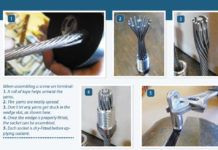
Methods to Mess Up Your Screw-on Terminals
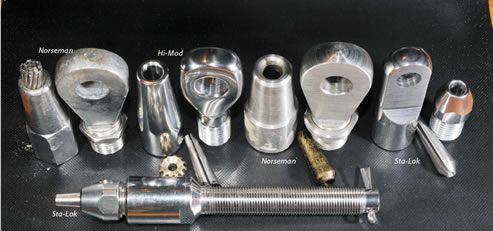
All of the mechanical terminals we tested are based on the same assembly concept: The rigger opens the cover yarns, and then slides a wedge over the core yarns, near the end of the wire. The rigger closes the cover yarns over the wedge, and then, screws together the two outer parts of the terminal over the wedge, compressing the material, and thus generating friction. Simple, but like any assembly, it can be done wrong. Here are a few things to watch out for when assembling a mechanical terminal.
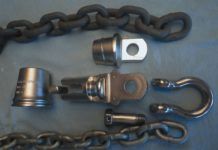
New Mantus Swivel
In our recent article on anchor swivels (see PS September 2015 online), we reiterated our view that swivels are unnecessary in most anchoring situations. For those who insist on using one, we suggested staying away from cheap varieties, and using only load-tested designs that exceed the rating of the anchor chain from every angle of pull. (None of the ones we have found that meet this criteria are cheap.) Shortly after that article, Mantus Anchors, a relatively new maker of anchors and anchoring accessories, introduced its swivel, which it claims is as strong as an ordinary shackle and priced in a range that ordinary cruisers can stomach.

How Well Do Swivels Reduce Twist?
We know the theory behind using anchor swivels: The swivel releases any twists in the chain when an anchored boat swings through 360 degrees or more. Still, we question the logic of using them. Our skepticism is supported by our own experience, previous testing, and input from long-term cruisers, but we wanted to devise a test to investigate chain twisting.
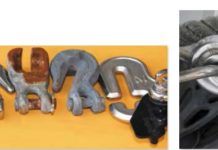
Changing Views on Chain Hooks
There are a number of ways to attach a snubber to an anchor chain. A gripping hitch, a soft-shackle, or a chain hook are the most common. Of the three, Practical Sailor has a strong preference for a camel hitch or similar gripping knot, but for the many who seek a faster, simpler way to attach a snubber, here is a look at chain hooks.
A Different Approach to the Catamaran Bridle
When it comes to snubber sizes and diameters, catamarans present special challenges, and usually require a bridle, with separate lines leading from the hook to each hull. Heres an example of the bridle-type snubber that PS contributor Jonathan Neeves uses on his seven-ton, 38-foot catamaran that he lives aboard and cruises in Australia.

Testing the Effects of Chain Hooks
During our research, nearly every maker of industrial chain offered the same caution: Using a generic chain hook can reduce the link strength by 20 to 25 percent. The generic style of chain hook, familiar to most sailors, resembles an elongated fish hook. As we found in this test, some other hook types are potentially more harmful.

Long-term Test Gear Updates
Many of Practical Sailors tests move from the lab (workshop/garage/driveway) to our fleet of test boats, where we can evaluate the top products in real-world conditions over the long haul. These long-term tests can last from two to 10 years, and we try to offer occasional updates on their status, when its warranted.

O’Day 40 – A Budget Cruiser for the Bahamas
The O’Day 40 (1986) is one of those cruising sailboats that somehow slipped through the cracks of sailing history. Built during the final years...



Latest Sailboat Review
Island Packet Estero Used Boat Review
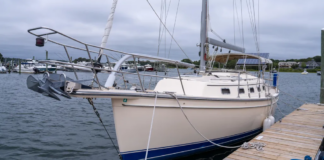
Florida-based Island Packet targets a relatively narrow niche, so the toughest competitors to its new boats are often older Island Packets. Introduced in 2010, the 36-foot, shoal-draft Estero is the company’s latest attempt to introduce a distinctive model that doesn’t stray too far from the company’s proven formula for success: moderate displacement, full-keel cruisers designed to be lived on, sailed far and in comfort, and endure the bumps, scrapes, and storms that cruising boats inevitably encounter. After sailing the Estero on Florida’s Sarasota Bay and inspecting its interior, construction, and systems, Practical Sailor testers noted that the shoal-water cruiser will appeal strongest to Island Packet fans who’ve been waiting for a shoal-draft, easy-to-sail boat that compares to the IP37 in terms of interior space. These strengths will be most apparent on intracoastal or riverine adventures like the Great Loop.