



Practical Sailor Tests Lightweight Tether Aimed at Racing Sailors
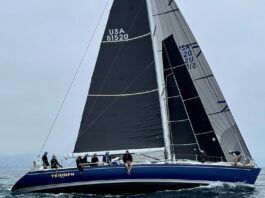
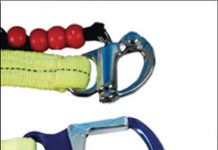
Theres a reason why we recommend safety tethers-the umbilical cords that connect the jacklines on our boats to the harnesses on our bodies-be 6 feet long or shorter. Getting dragged behind a boat, even at the sedate speed of 4 knots, can easily drown a person. Unless someone is on hand to haul you on board, survival relies on a superhuman burst of adrenaline. Though rare, there have been some highly publicized deaths involving harnesses. The story of Harvey Shalsky, a sailor in the 1999 Double-handed Farallones Race, is familiar to most racers. Shalsky, racing with longtime partner Mark Van Selst, drowned while tethered to his J/29 White Lightning. Van Selst was unable to slow the boat or haul his partner in, and eventually cut loose Shalsky (who was by then unconscious) so that following boats could recover him. The hazards associated with a tether that cannot be easily released under load prompted the International Sailing Federation (ISAF, the council responsible for regulating offshore sailing races) to recommend this feature in tether designs. It is not a requirement, only a recommendation, and ISAF does not stipulate what method should be used for the release.
Headsail Furlers Sans Swivels Face-Off
A follow-up to our evaluation of jib furlers with head swivels, Practical Sailor reviews roller furlers that use no swivel. For many years, the Flexible Furler from Cruising Design Inc. (CDI) was the most prominent player in this category, but some new products and innovative designs are offering more options for sailors looking for easy-to-install furling. Along with the CDI furler, we look at four roller-reefing systems: Alado A-2, Spin-Tec Triumph 2000, and Reefurl. Having no upper halyard swivel, these furling systems put the foil sections in compression and use an external halyard system to attach the head of the jib to a built-in halyard or a fitting at the top of the foil system. Although PS regards conventional roller-bearing furlers with top swivels (tested in August 2009) as the most sensible choice for serious offshore cruisers, these alternative jib furlers offer a cost-effective, easy-to-install option.
Practical Sailors Gear of the Year 2009
Practical Sailor editors pored over the dozens of products reviewed in the previous months to find the best of the best sailing gear, products that are worthy of the designation Gear of the Year. This years editors choice list includes a rugged rope clutch (Spinlock), a grippy ratchet block (Ronstan), feature-filled VHF handheld radios (Standard Horizon and Cobra), high-quality nesting cookware (Magma), a proven paste wax (Collinite), an ocean-ready first-aid kit (Adventure Medical Kits), a reliable LED bulb for cabin lighting (Imtra), an economical ice box conversion kit (Frigoboat), an innovative ultrasonic tank sensor (BEP Marine), cold-weather gloves (Gill), and an easy-to-install Wi-Fi booster (5mileWiFi).
Gripping Hitches for Loaded Lines
Testers evaluated five different knots to determine which would be the ideal for holding a tensioned line. Testers considered ease of tying and untying, ease of learning and recall, and holding power with various types of line. The old standard rolling hitch was pitted against the modified rolling hitch, icicle hitch, gripper hitch, and sailors hitch.
A Look at the Latest Generation of Genoa Furlers
To get an idea of whats on the market and see how the newer products fare against the simpler, tried and true furling systems, Practical Sailor rounded up 11 new headsail furlers suited for 30- to 35-foot sailboats. This, the first of a two-part report on the evaluation, focuses on the seven products that use a head-swivel design and range in cost from $950 to $3,200. (The report of integral systems will follow in an upcoming issue.) The following furlers were reviewed: Facnor LX 130, Harken MkIV and Cruising 1, Profurl LCI32, Schaefer 2100, Furlex 200S (Selden Mast), and US Spars (Z-Spar) Z-780.
Synergy Dock Line Stands Up in Tests
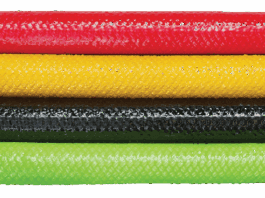
In July 2008, Practical Sailor looked at products for docking, anchoring, or mooring in a storm. Among those mentioned was the Synergy docking line, an abrasion-resistant polyester braid with a short length of industrial-grade rubber in the core. Synergy also makes a stretchy, floating tow-rope for dinghies. We put Synergy dock lines into use for six months on a fixed dock and during a two-week Mississippi River delivery cruise. They held up as well as similar braided lines and proved to be more convenient to use than its nearest comparison, a dock line with a rubber snubber. One drawback noted was that the woven cover was more prone to snagging than more tightly braided lines.
Winch Makeover
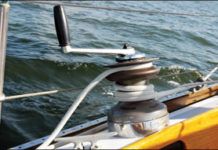
The Winchmate is one answer for sailors who are considering upgrading to self-tailing winches but find the price tag too intimidating and have otherwise perfectly functional non-self-tailing winches that are too good to toss out. Now theres another option: Older Barient or Barlow winches can be retrofitted with a carefully machined upper drum assembly that adds a rugged and reliable self-tailing feature. To test the concept, we retrofitted a set of near museum-aged Barlow two-speed 28s with the easy-to-install Winchmate system. Combining the upgrade with normal annual cleaning and maintenance makes the changeover quite simple and straightforward. The process can be "e-assisted" with Winchmates step-by-step online installation video.With the drum removed and bearings, gears, and pawls cleaned, greased and reassembled, a spindle extender is threaded to the top of the winch spindle. A Delrin spindle extension bushing is added, and attention is then turned to the drum itself.
Furling-friendly Storm Sails: Are They a Sensible Solution?
The advent of roller-furling headsails has generated a new area of concern for sailors: the inability to hank on a storm jib when the need arises. Practical Sailor prefers a dedicated storm jib on a staysail stay or a storm sail on a solent stay, over any over-furling storm sails. That said, Practical Sailor did evaluate two products that claim to restore the missing storm jib capability on vessels with roller-furling headsails. Testers compared the ATN Gale Sail and the Storm-Bag from Banner Bay Marine, two very different products. The evaluation compared basics such as cost, quality of construction, ease of use, and other characteristics related to each particular sail design.
Boat Deck Hardware: Rope Clutch Test Update
Practical Sailor testers compared the new Garhauer rope clutch to rope clutches from Lewmar and Spinlock, which were tested in March 2009. They rated the line handlers’ ease of threading, loads, slippage, load loss, and line pull, along with price, warranty, and weight.
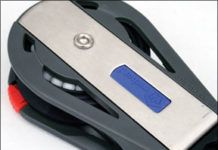
Practical Sailor Tests and Reviews the Latest in Boat Ratchet Blocks
The racket block is one of the most recent innovations in the world of line-handling blocks. The most common use of a ratchet block is on smaller racing boats, where you are adjusting a spinnaker sheet or mainsheet by hand, without using a cleat. Uses on larger boats include running a line through a ratchet block when releasing the control line on a headsail furler, and for traveler control lines and genoa lead adjusters. In a search for the best ratchet block, Practical Sailor tested four ratchet blocks with on/off switches; three ratchet blocks with auto-sensing that will automatically flip the ratcheting on or off; and one ratchet block that has both an on/off switch and an automatic sensor. The head-to-head ratchet block comparison included products from top marine hardware makers Selden, Wichard, Ronstan, Holt Allen and Harken.

What Happens When Lightning Hits a Sailboat?
Lightning striking a sailboat sounds like something out of a disaster movie—but what actually happen when it does? In this episode, we break down...


Latest Sailboat Review
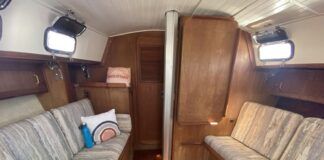
Caliber 33 Used Boat Review
The Caliber is a peculiar blend of tradition and innovation, of security and performance, of practicality and pizzazz. All of the owners we heard from were "satisfied." One called the 33 his favorite boat over six decades of sailing.