

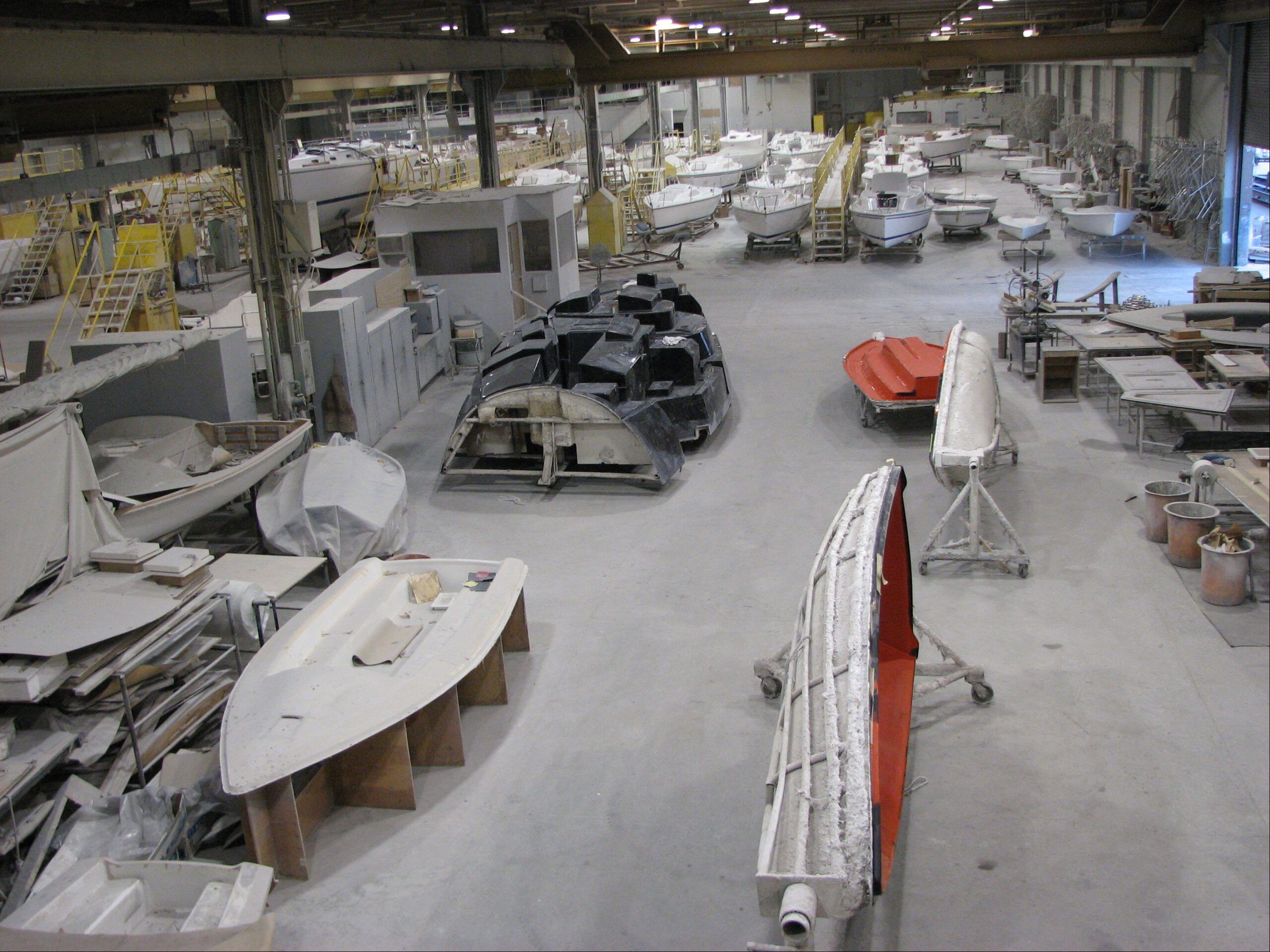
2025 has not been a good year for U.S. sailboat manufacturing. Com Pac Yachts closed its doors in May and, as explained in this Practical Sailor video, the future of Catalina is now in doubt, with its Largo, Florida factory shut down and a dispute playing out between the company’s buyer and seller.
What we’re seeing, in part, is a changing of the guard, with former leaders of a once-strong industry literally dying off. What’s concerning is the lack of (or failure of) succession planning for some of the most successful brands in the industry. It’s a cautionary tale that what production boat builders need to survive is scale and ongoing innovation.
Crossing the Bar
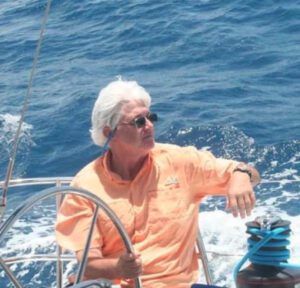
This year has seen the passing of at least two former sailing industry leaders and innovators. Com Pac closed its doors after the death of its longtime leader, Gerry Hutchins, in February. Com Pac’s most innovative days were in the 1970s when Les Hutchins, patriarch of family-owned, Clearwater, FL-based Hutchins Co. decided to focus on small, trailerable “Com-Pac” yachts. It started with the 1972 launch of the Com-Pac 16, a huge success that was followed by the Com-Pac 23, in 1978, and the Com-Pac 19 in 1979.
Les Hutchins’ sons, Gerry and Richard, eventually took the reins of the company, with Gerry spearheading innovations including stainless steel centerboards and a unique folding mast and boom system. Following a path taken by many boat builders, Com-Pac eventually moved up into bigger boats, including the Com-Pac 35 in 1990. In 1999 the company branched out with a new line of small catboats.
What you don’t find in the company timeline is as many accounts of innovation and new company leaders in the 2000s.
Hunter’s (Temporary) Savior

The second sailboat/marine industry figure passing away this year was David Marlow, who died on July 13. Marlow founded Marlow Yachts in the early 2000s and was the savior, for a time, of Hunter Marine. Marlow Yachts became known for high-quality, high-end motor yachts built to its founder’s exacting specifications. Marlow also built one of the earliest “green” boat plants, in China, and was honored with the World Yachts Award for Environmental Consciousness in 2007. At the core of the company’s quality and environmental innovation was a close-molded RIVAT (Resin Infused Vacuum Assisted Transfer) methodology that Marlow spearheaded.
Marlow rescued Hunter when he purchased the sailboat line along with Luhrs and Mainship powerboats after the bankruptcy of Luhrs Marine Group in 2012. The newly created Marlow-Hunter continued production of selected Hunter models for at least eight years, but production ended in 2021 (during the COVID pandemic) when Marlow sold the builder’s Alachua, FL, plant to fiberglass pontoon boat manufacturer A&M Manufacturing. Despite Marlow’s death, Marlow Yachts continues to operate.
Catalina in Chaos
This spring it appeared that Catalina Yachts, the volume leader among U.S. sailboat manufacturers for more than 50 years, would write a new chapter under the ownership of Michael Reardon of Daedalus Yachts. That future is now in doubt. In October, news spread that the Catalina plant had been shut down and its workforce laid off. Marine industry columnist and muckraker Peter Swanson, author of the “Loose Cannon” column on Substack, reported that the new owner had been locked out of the plant for defaulting on the company’s purchase agreement.
Casting yet more doubt on Catalina’s future, Catalina’s now-former president, Patrick Turner, told employees that the company needed an infusion of capital to stay in business, but that Reardon had failed to woo a potential investor. (Reardon’s Daedalus also acquired Tartan Yachts earlier this year, but that company still appears to be operating.)
Leadership changes undoubtedly played a role in the sale and current woes of Catalina, which was founded and privately owned by Frank Butler, who passed away in late 2020. Soon afterward, Catalina’s chief yacht designer and executive VP, Gerry Douglas, retired. Catalina posted on its web site home page a concept photo of a new 48-ft. model that would mark a radical, modern-looking departure from the builder’s traditional lines. However, with the new owners of the company in search of financial backing, at this writing, there’s reason to doubt the new boat will see production.
The Scale and Innovation Playbook
Did the late owners of Com-Pac, Marlow-Hunter and Catalina hold on too long and fail to set up these companies for future success? When Reardon acquired Catalina and Tartan, he promised to breathe new life into the respected brands by consolidating admin and overhead costs, centralizing purchasing for economies of scale, and investing in innovation.
The strategy of consolidating brands to minimize overhead and maximize buying efficiency is well proven. In the powerboat world, Brunswick Corp. owns Sea Ray, Bayliner, Boston Whaler, Crestliner, Lowe Boats, Lund, and Harris Pontoon Boats, not to mention Mercury Marine. Correct Craft now owns Nautique, Centurion, Supreme, Bass Cat, Yar-Craft, SeaArk, Parker, and Ingenity boats as well as Pleasurecraft Engine Group, Indmar Marine Engines and Velvet Drive Transmissions. On a smaller scale, Malibu Boats now owns the Malibu, Cobalt, and Pursuit lines while Marine Products Corp. owns Chapparal and Robalo.
Unfortunately, even a well-funded U.S. sailboat conglomerate building on the base of Catalina and Tartan couldn’t match the economies of scale possible in the powerboat market. New sailboats have been selling in the U.S. at a rate of 700 to 800 boats per year in recent years, according to the International Boat Industry (IBI). New powerboats sold to the tune of 168,000 units in 2024, according to the National Marine Manufacturer’s Association.
The paucity of U.S. sailboat sales accounts for Beneteau Group’s 2020 decision to close its only U.S. sailboat plant in South Carolina. The French boatbuilding giant has concentrated sailboat production in France while continuing to manufacture Antares, Beneteau, Four Winns, Scarab and Wellcraft powerboats in the U.S.
Can American Builders Innovate?
Part of the problem for many U.S. sailboat makers has been a lack of innovation, which puts them in the position of competing with used boats. For every new sailboat sold in the U.S., 17 used boats are bought, according to IBI’s report, and the average age of 25 ft.-plus sailboats in the U.S. is now 34 years.
As one viewer commented on Practical Sailor’s “What’s Really Happening to Catalina & Tartan Yachts?” video, “U.S. sailboat manufacturers didn’t innovate, ever,” commented @Tome-q3e. “Plumb bows, wide beams carried aft, hard chines, the use of sail drives, etc. all came from Europe. The use of newer cabin materials…again, from Europe.”
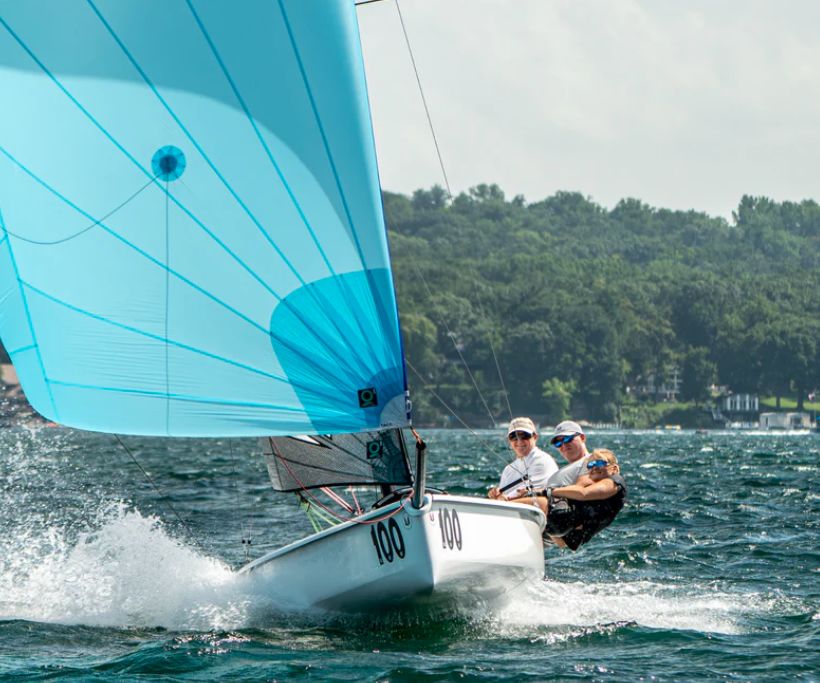
I’d say that’s painting a picture with too broad of a brush, as U.S. sailboat manufacturers including J/Boats, based in Newport, Rhode Island, and Melges, based in Zenda, WI, continue to innovate and turn out performance-oriented sailboats at scale.
New Building Techniques
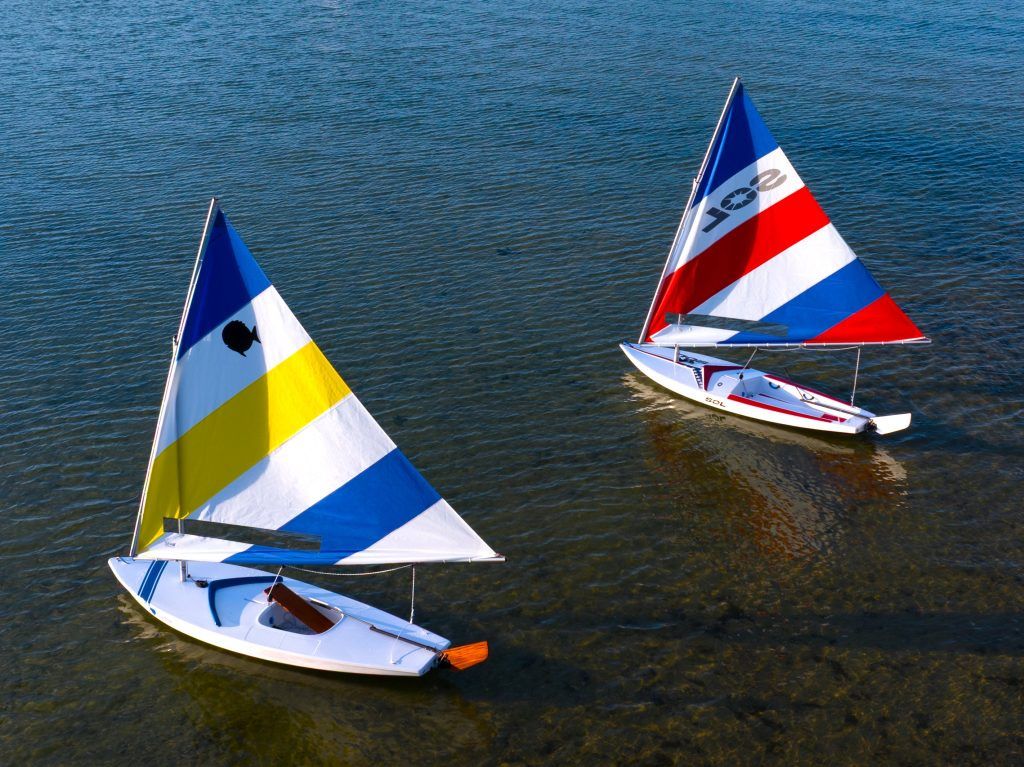
It’s also possible to innovate in the way you build boats, even if they are old designs. Sero Innovation of Marine City, MI, for example, is proving that automation and modern production techniques can make tried-and-true models more affordable. After making a hit with its 13-ft. 9-in. SOL sailboat, Sero ended up purchasing and is now producing the iconic Sunfish that inspired the SOL and, beginning in the 1950s, helped take sailing mainstream.
Hobie, another iconic sailing brand, may also see new life, with Bass Pro Shops/White River Marine Group recently buying the company. Bass Pro Shops also is bucking the prevailing trend by moving production from Mexico back to the U.S. The builder’s core interest is undoubtedly in Hobie’s line of rotomolded kayaks and fishing boats, but it appears the company will also continue to produce the Hobie Cats that introduced the masses to sailing catamarans.
Other U.S. sailboat builders seen at the recent Annapolis Sailboat Show included Flying Scott, Island Packet and Marshall Marine, all of which build traditional designs. In short, the list of builders is getting shorter, but that doesn’t mean that U.S.-based sailboat manufacturing is going away.
Conclusion
The key to regaining volume is clearly affordability, which means building smaller, entry-level boats. While the real volumes in the powerboat market are in the 18-to-24-ft. range, the sailboat industry, at large, has steadily moved up to bigger boats.
Encouragingly, J/Boats recently went downmarket, introducing the 23-ft. J/7 in 2025. Meanwhile, Melges, an 80-year-old company now on its third generation of family leadership, recently introduced a 19-ft. boat with the expressed intent to “lower the cost of entry, simplify rigging and launching, and make it easier for more sailors to get on the water.” Let’s hope the trend continues, setting the stage for a next-generation of sailboat buyers.








You might have to knock down, TRUMPS ‘wall’, & let some Mexican cheap labourers in??? ‘B J’.
A friend of mine once told me that “the world is filling up with old people stuff.”
Fiberglass has proven durable and most boats are not heavily used. As a result, if you want a traditional design, the used boat market is rich. If you want a euro-designed cabin and cockpit, and a really big boat (these two are what you see at shows), and you’re in the chips, you may buy new. For most of us, for the near future, the used boat market is a much better value. Of course, some people like new rather than inheriting old problems, and they have a point.
Very big boats, if you can sell them, have more margin. In part this is because they are not competing as dirrectly with the used boat market. This trend is obvious at any boat show.
Perhaps it is a cycle, but a very long one.
Good points, Drew, but I’d say buyers need reasons to buy. Value is a good reason to buy used. Innovation isn’t limited to “Euro designs.” In fact, Euro designs are now available on the used market. Innovation, to me, means new, different, better, simpler, faster, more exciting, etc. Americans used to have a rep as innovators. American business leaders are now often noted for financial leverage, exporting jobs, diminishing value and offering / believing the fairy tale that AI can replace people. Innovators roll up their sleeves and innovate.
Innovators roll up their sleeves and innovate! EXACTLY
Thanks for a great article with much historical knowledge. I learned a great deal. Beneteau’s North American plant was in Marion, SC. With it closing (it produced the modern 235 among others) , the passing of many sailboat builders, costs increasing for small to midsize trailerables (20’-27’) there is just an availability gap in that range for new boats. The older used market looks robust. I would still buy a good condition wing keel Catalina 250 or Hunter 270 for their value and features.
Good piece. I own a 12 year old Carolina built Sailboat, but I started with a little Catalina 22 Sport I bought new, nearly 20 years ago. I loved that boat and Frank Butler and his designs have a dear spot in my heart. Imagine my feelings when I learned of his marques demise (or near-demise).
I realized that it was a lack of succession planning that did him in and that intiated a sit down with my wife, owner of a medical practice, “who will never retire but will eventually die”, to discuss what might happen to her employees, several of whom have worked for her over 30 years.
I’m still hopeful Catalina will come back. I’m still happy Island Packet is still around. Innovation, when it comes, will be either in a method of reducing construction costs without reducing safety, quality and strength, or in the use of new, innovative materials, like Twaron, that offer weight and strength advantages not found in older, used boats.
Meanwhile, I’ll stick with my Oceanis 41. It sails well, it’s comfortable and my wife and I, even at our age, can still handle it.