
Do you remember the August 1979 Fastnet Race when a worse-than-expected European windstorm wreaked havoc on the 303 yachts that started the biennial race? This storm resulted in 21 fatalities—15 yachtsmen and 6 spectators—during the early morning hours of August 14th. Emergency services, naval forces and civilian vessels from around the west side of the English Channel were summoned to aid in what became the largest ever rescue operation during peacetime. The operation involved some 4,000 people including the entire Irish navy, civilian lifeboat organizations, commercial boats and helicopters from multiple sources. It was a tragic event that changed the world of sailboat racing.
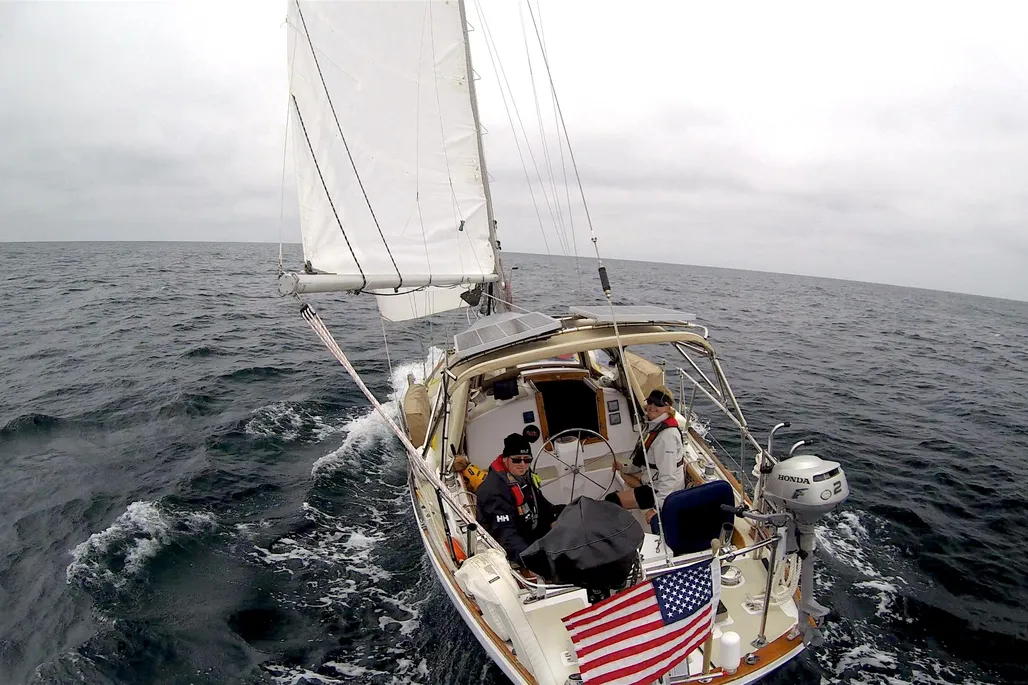
But there was another sailboat out there in that weather during the race—a boat that wasn’t racing, the Fowle family aboard Arion. They were sailing across the Atlantic from Massachusetts to Ireland through that same storm, and described towering seas and winds registering to 76 knots. What kind of boat were they on? One of Carl Alberg’s of course, the Alberg 37.
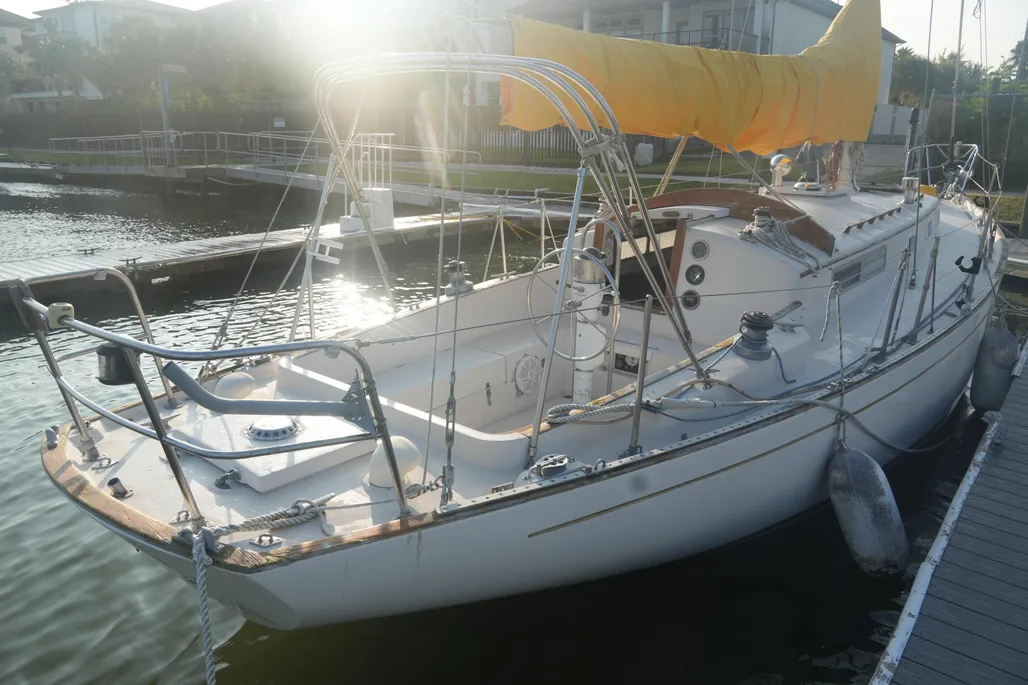
If you’re in the market for a used boat and want something ocean going, battle tested, and more capable than you’ll ever need, but also need it to be under $100,000, Carl Alberg’s boats will end up on your radar. While the most famous of his designs is the Alberg 30, its big brother needs some attention too.
History
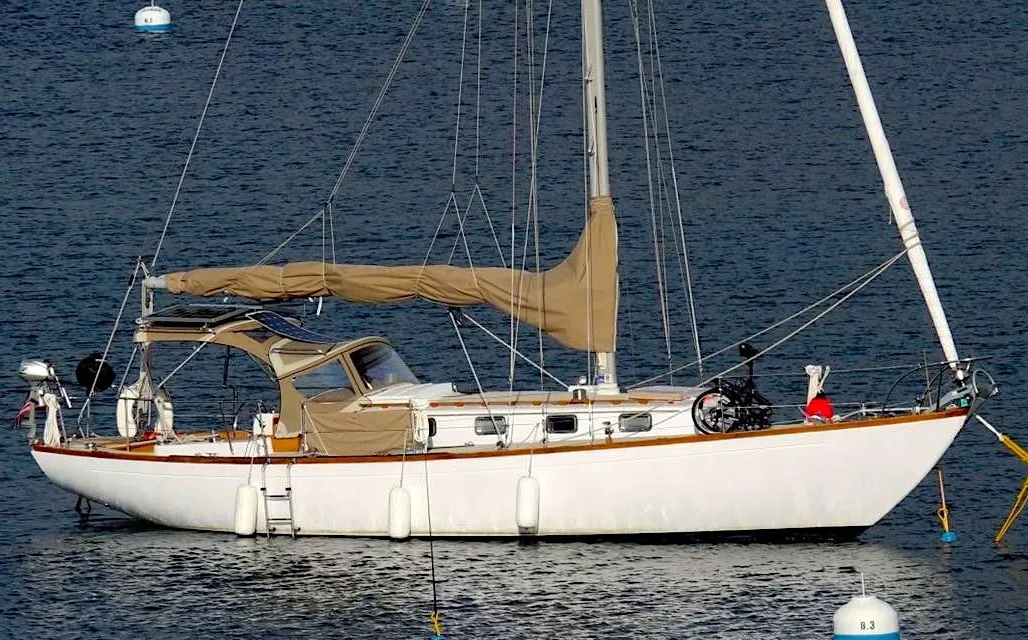
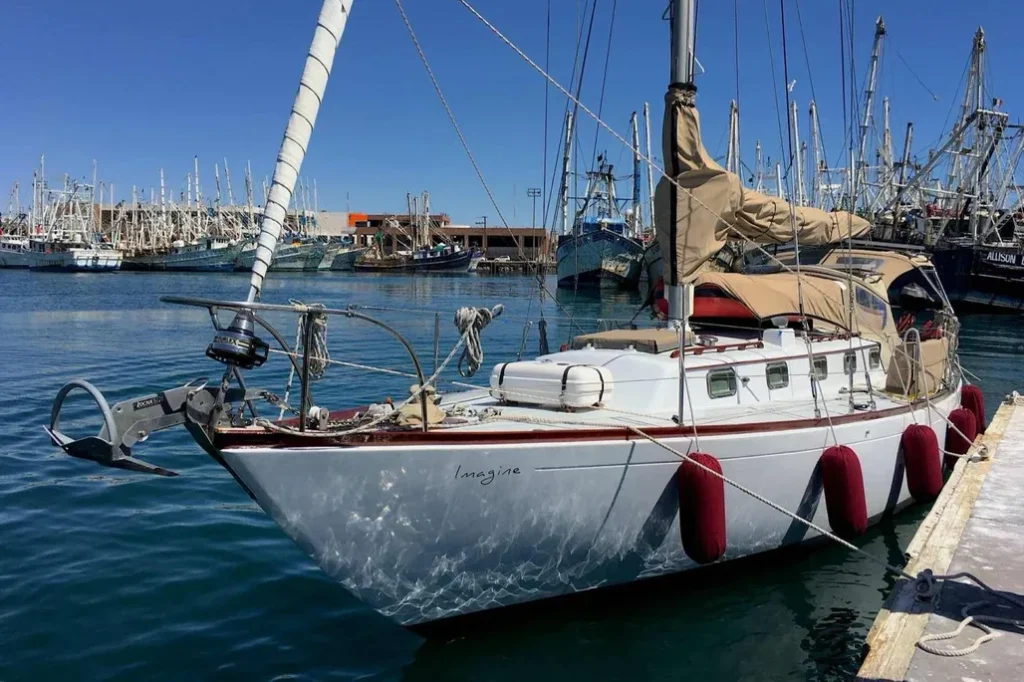
The Alberg 37 was designed by the Swedish-born Carl Alberg for Kurt and Doris Hansen’s Whitby Boat Works of Ajax, Ontario. Constructed between 1967 and 1988, a remarkable 248 of these sturdy boats were produced. The Mark 1 was produced from 1967 to 1971 with the Mark 2 picking up after that to the end of production in 1988. With long overhangs and a pleasing shear, the Alberg 37 is an unmistakably classic design. Although first built as a racer/cruiser, this design is now known as a traditional cruiser with medium to heavy displacement performance. During the early 1970s the Alberg 37 was actively raced in the SORC (Southern Ocean Racing Conference) and other offshore events. Today, it’s only occasionally seen in PHRF club racing.
Design
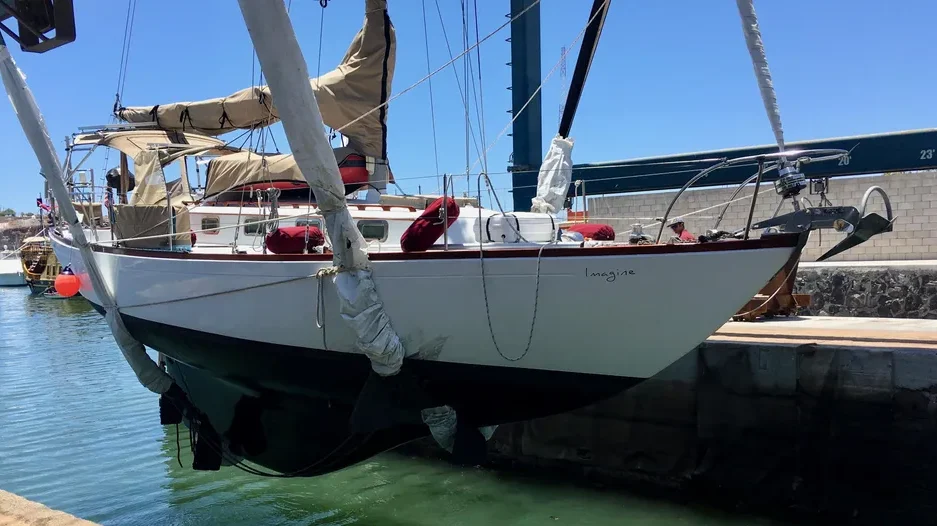
Below the waterline the design shows a cut-away forefoot on a relatively short keel. The large, raked rudder is attached to the trailing edge of that keel with the propeller in a cut-away aperture. Low top sides, a long narrow cockpit, and a well-proportioned coach roof are the distinctive features of this design. Of the quoted weight of 16,800 lb., the encapsulated ballast is 6,500 lb. with the capsize ratio a very comfortable 1.59. Hull speed is about 7 knots and a draft of 5 ft.
Doug Stevenson, a former sales agent for Whitby Boat Works from 1981 until the time the factory closed in 1988, and now a yacht broker in Bay Port Yachting Centre in Midland Ontario, described the differences between the Mark 1 and Mark 2.
“On the Mark 2 the toe rail was changed from wood to fiberglass, a dodger splash guard was incorporated into the cabin top, and the portlights were enlarged with fewer of them opening. The Mark 2 included more efficient use of interior space allowing for a larger head and galley along with longer berths. But from a construction perspective the biggest change was the addition of a molded cabin sole support and overhead liner to replace the wood in the Mark 1. This decreased production time and also made the boat more durable.”
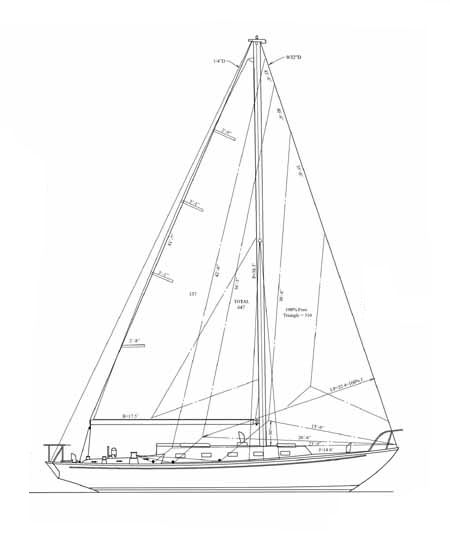
Sailboat Specifications Courtesy of Sailboatdata.com
Hull Type: Long Keel
Rigging Type: Masthead Sloop
LOA: 37.17 ft / 11.33 m
LWL: 26.50 ft / 8.08 m
S.A. (reported): 646.00 ft² / 60.02 m²
Beam: 10.17 ft / 3.10 m
Displacement: 16,800.00 lb / 7,620 kg
Ballast: 6,500.00 lb / 2,948 kg
Max Draft: 5.50 ft / 1.68 m
Construction: FG
Ballast Type: Lead
First Built: 1967
Last Built: 1988
# Built: 248
Builder: Whitby Boat Works Ltd. (CAN)
Designer: Carl Alberg
Make: Volvo
Model: MD2B
Type: Diesel
HP: 23
Fuel: 35 gals / 132 L
Water: 60 gals / 227 L
S.A. / Displ.: 15.82
Bal. / Displ.: 38.69
Disp: / Len: 403.02
Comfort Ratio: 39.80
Capsize Screening Formula: 1.59
S#: 1.05
Hull Speed: 6.90 kn
Pounds/Inch Immersion: 962.97 pounds/inch
I: 44.25 ft / 13.49 m
J: 14.00 ft / 4.27 m
P: 38.50 ft / 11.73 m
E: 17.50 ft / 5.33 m
S.A. Fore: 309.75 ft² / 28.78 m²
S.A. Main: 336.88 ft² / 31.30 m²
S.A. Total (100% Fore + Main Triangles): 646.63 ft² / 60.07 m²
S.A./Displ. (calc.): 15.83
Est. Forestay Length: 46.41 ft / 14.15 m
Construction
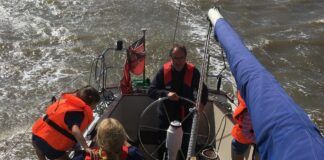
Although strong and solid, the Alberg 37 was not intended to be a luxurious racer/cruiser. With a beam of only 10 ft. 2 in., the interior is small by today’s standards. Indeed, her interior is relatively modest, almost spartan in fact. There are square corners and a distinct lack of fancy woodwork. Climbing into the companionway from the cockpit can be a bit of a challenge. The wheel and binnacle are, unlike modern designs, right up against the companionway bridge with engine instruments tucked behind the binnacle, which is somewhat difficult to see and work with. The wheel position does lead to staying dry behind the dodger if one is fitted, even while perched on the coaming. The cockpit is deep and comfortable with high back rests—perfect for long watches at sea.
Interior
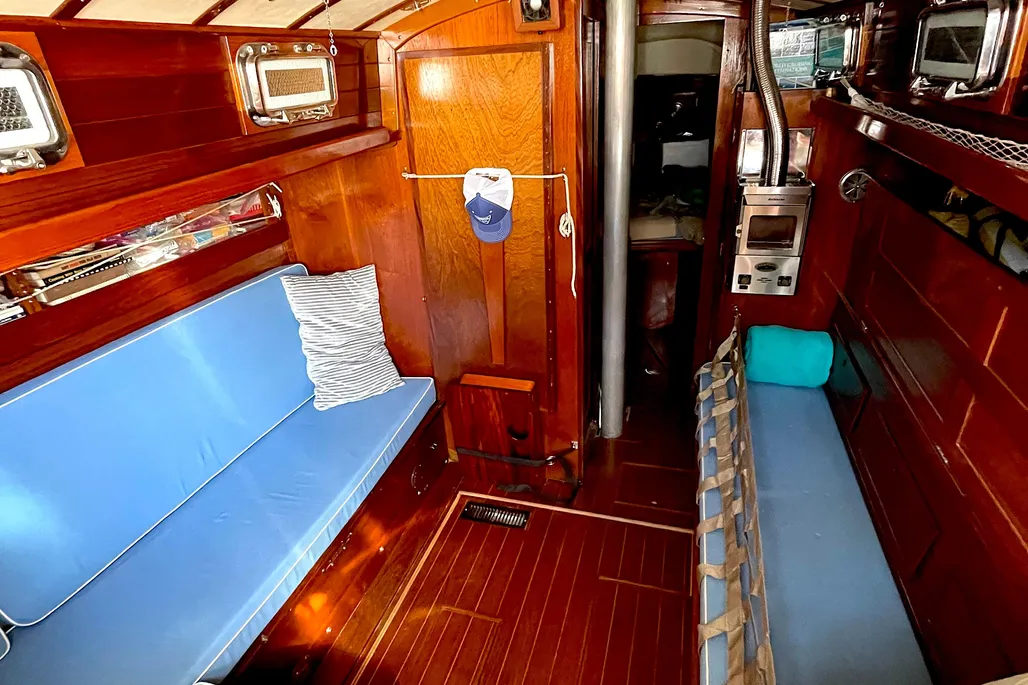
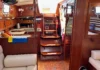
Once you are past the wheel and through the offset companionway, the interior opens up into a very traditional layout: an L-shaped galley to starboard reaches under the step, a forward facing folding navigation table to port, the leading edge of the quarterberth serves as a seat. The salon settees face each other with a folding drop-down table next to the keel stepped mast. Moving forward, the relatively small head is to port with storage lockers to starboard. The V-berth has multiple nicely finished storage bins along the overhead, which are all very functional and seaworthy. These boats were built for a reasonable base price, although individual owners could add options if they wanted to.
Storage and Engine
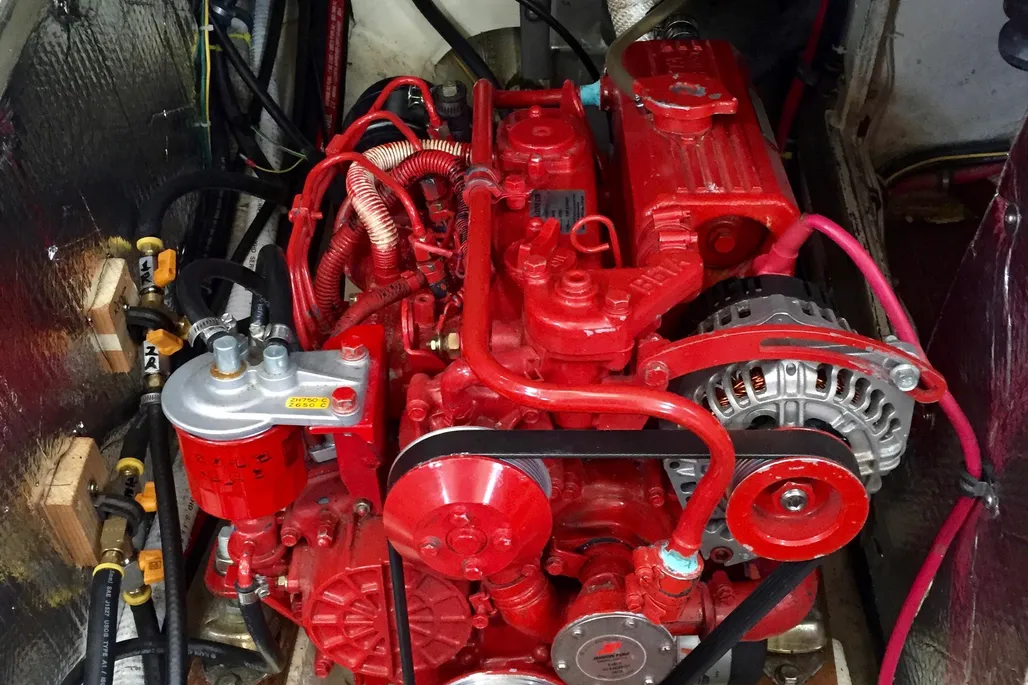
The Alberg 37 has a waterline of only 26 ft. 6 in. on a 37 deck, plus the traditional overhangs also cut into usable space below decks. There is, however, a very usable locker aft of the cockpit for the usual deck gear. Whitby Boat Works offered different engines from the 23-hp Volvo MD2B or the 27-hp Volvo MD11C (Mk II), which were the standard for most years. A 40-hp Westerbeke 4-107 was an option. The fuel tank could hold 35 gallons (132 liters) of fuel.
Reputation
During the 1970s the Alberg 37 was considered a boat show “dream boat” by sailors in the market. At the time, the yawl rig was especially coveted because of its graceful silhouette. A good part of the 37’s reputation was from its strength as an ocean-crossing vessel.
Florida sailor Mark Phelps completed a seven-year global tour on hull #42, which emerged from the factory in 1968. There are bound to be others who have also completed a circumnavigation in this durable vessel.
Rugged Construction
A Vancouver, B.C., single-handed sailor was on what he had hoped to be a circumnavigation in his Alberg 37 when he became stranded for days on a coral head near the entrance of uninhabited Palmyra Atoll in the Central Pacific. Due to errors in navigation, he attempted an entry when the angle of the sun made it difficult to see the narrow entrance and nearby coral heads. The Alberg settled on her bilge, not coming off in the running seas.
He cast thousands of dollars worth of gear, books and charts overboard in an unsuccessful attempt to lighten the boat, but the boat pounded on the coral head for three days before the tide rose high enough to float off. He then sailed her to Tahiti, thousands of miles away, before he made repairs to the port side bilge. As a testament to the integrity of the Alberg, the boat never leaked, and suffered no serious damage other than cosmetic scrapes and cuts.
James Hiller of Southfield Michigan had a new Alberg 37 built in 1982, one of only 42 built in the 80s. During construction James visited the factory and serendipitously pocketed two core samples from the shop cutting through-hulls into his new boat. He sent those samples to a testing laboratory, presumably to check up on the quality of his nearly completed hull. When the report came back it read: “Both samples are excellent and represent state-of-the-art fiberglass work.”
Refit Costs
With some of these boats reaching their 60th birthday, most will need some work. Anyone considering a purchase of the Alberg 37 should budget anywhere from $10,000 on up to $50,000 for a full refit. There are, however, many well-loved examples of these boats on the market that have been upgraded over the years. Well-cared for examples are often listed for upwards of $60,000. Others are structurally sound but rough cosmetically. They sell for under $40,000.
I’ve been aboard several of these boats and some of the bulkheads and cabin sole tabs have separated from the hull or other structural members. Occasionally the decks need attention, particularly around the staunchion bases. On older models, the deck hatches, hardware and portlights will probably need to be re-bedded to stop leaks. I would expect a re-power would be needed if you find one with the original engine. I’ve seen many with a new Beta diesel, which is a great choice if you’re going to do a re-power.
Conclusion
Although these boats are getting older, there are fine examples of the Alberg 37 that can be an up-to-date world cruiser if you’re willing to invest time and money. When it was designed by Karl Alberg and constructed by Whitby Boat Works back in the day, the structural strength of fiberglass was not well understood. Scantlings were based on wooden boat construction with the result that they were built with far too much fiberglass by today’s standards.
A well-cared-for hull like the Alberg 37 will last for decades into the future. It will be the hardware, sails and electronics that will need attention. The question will be, in this world of million-dollar world cruisers, can these older boats fit a niche where sailors are willing to put in the effort to maintain and sail them?
Market Scan Contact
1969 Alberg 37 La Paz Cruisers Supply & Brokerage
$57,000 USD 619.609.3432
Puerto Penasco, Sea of Cortez, Mexico Yacht World
1987 Alberg 37 Seger Yachts
$24,900 +1 346.594.5874
Kemah, Texas Yacht World


Hello Tim,
I just read your review article about the Alberg 37. Thank you.
The pictures of the Alberg 37 look remarkably like my boat, a Creekmore 36 (which measures closer to 37). My boat was built, I think, in 1962 or ’63, in Florida, by Ray Creekmore, so before Alberg started his series. Could Alberg have bought the mold from Ray Creekmore? Do you know if Ray Creekmore and Carl Alberg had a working relationship? And who built the mold in the first place?
I would be happy to share photos and details.
The last time I talked to Ray’s son, we was a marine surveyor in Georgia. He worked on the Creekmore boats but after all these years, he doesn’t remember many details.
Ed Douglass
(920) 743-3733
Sturgeon Bay, Wisconsin
“Georgia”