

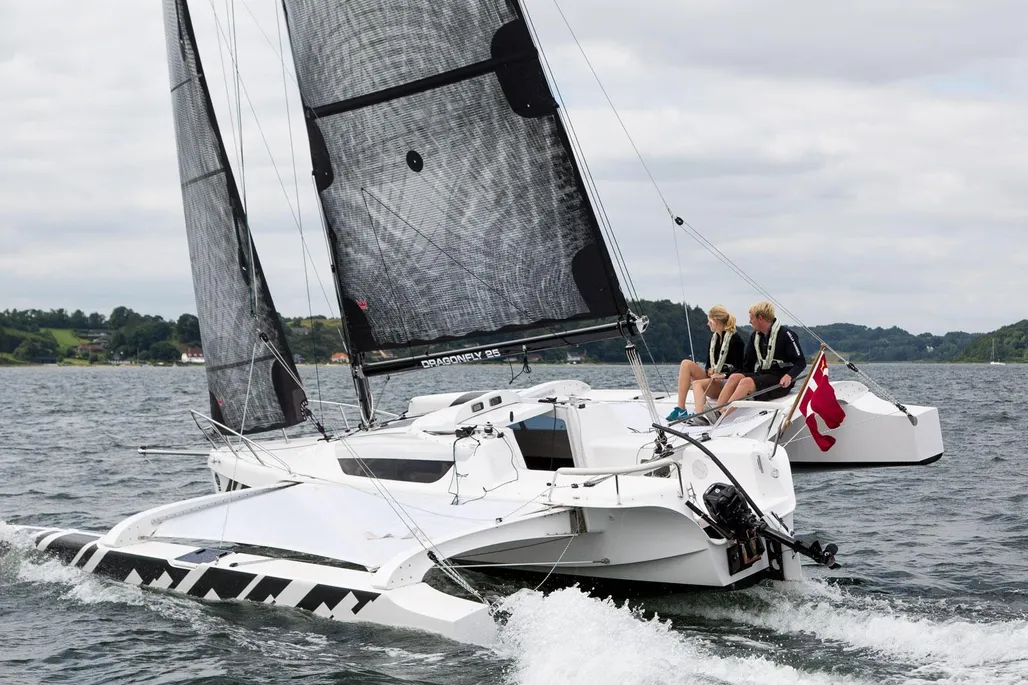
If you’ve ever dreamed of blasting across the water at 25 knots with the wind in your hair and the spray in your face on a boat that feels more like a magic carpet than a sailboat, then let me introduce you to the Dragonfly 25-2. This is not your granddad’s old cruiser. This is a modern, trailblazing, foldable trimaran that can take you from your driveway to a remote island anchorage before lunch. Yeah, it’s that cool.
A quick story: I was out in about 8 to 10 knots of wind on a Hobi Getaway, a 17-ft. Hobi with the folding wings that you can sit on. I was single handed, just cruising around, and I came across a C&C 27 sailing comfortable downwind. I easily caught up to him, sailing up behind him on his downwind stern quarter. We had a pleasant chat for a few minutes, then it was time to go. I hardened up the sails and sped past him, still downwind, in the dead zone under his big genoa with about 12 knots of boat speed. The point of the story is, sometimes more hulls are just more fun! To be able to rocket around everywhere at 15 to 20 knots while leaving a wake behind you, and splashing water up into the air, can be a ton of fun.
Design
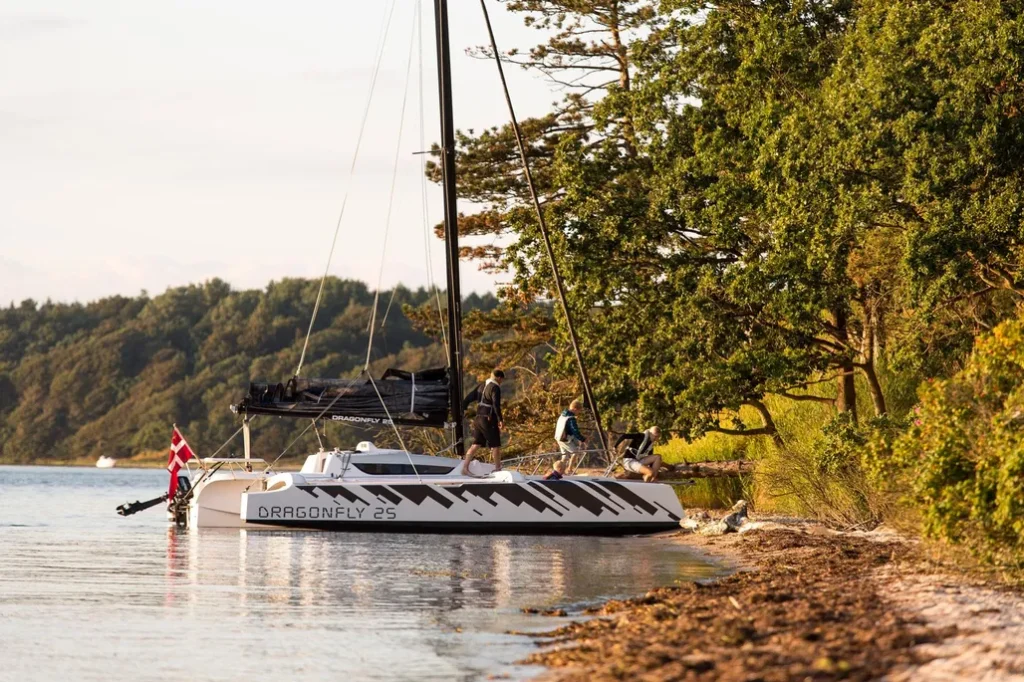
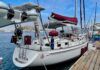
Which brings me to the Dragonfly 25-2. What is this thing? Well, the 25-2 is a trimaran with a central main hull and two smaller amas on either side. That gives it incredible stability and more speed than a monohull of the same size. No heavy chunk of lead underneath slowing you down. And it has a futuristic look that gets people to pause and stare when you’re at the dock. This isn’t just a boat—this is a conversation starter. Out on the water you don’t sail past people on this boat, you fly past them while they ask: “What was that?”
The Dragonfly 25-2 is built in Denmark by Quorning Boats, a company with a serious reputation for quality and innovation since 1967. They have been building trimarans for a long time and the Dragonfly 25-2, introduced in 2015, is one of their most interesting designs. At just over 25-ft. long it’s compact enough for you to trailer, launch and store without needing a marina. But it packs a whole lot more than what you’d expect from a boat this size.
Construction
Dragonfly 25-2 is built like a Scandinavian tank, if tanks were light, sleek and made for the water. Overall weight is a light 2,315 lb. (1,050 kg). Remember, there is no heavy keel under the hull to keep the boat upright. That stability is provided by the amas. The hull and amas are foam-sandwiched fiberglass composite which means it’s stiff, strong and light. Everything feels solid—no creeks, no rattles. The finish work is clean, minimalist and smart with everything designed to be easy to use and maintain. You get the feeling that every inch of this boat has been thought through carefully—because it has.
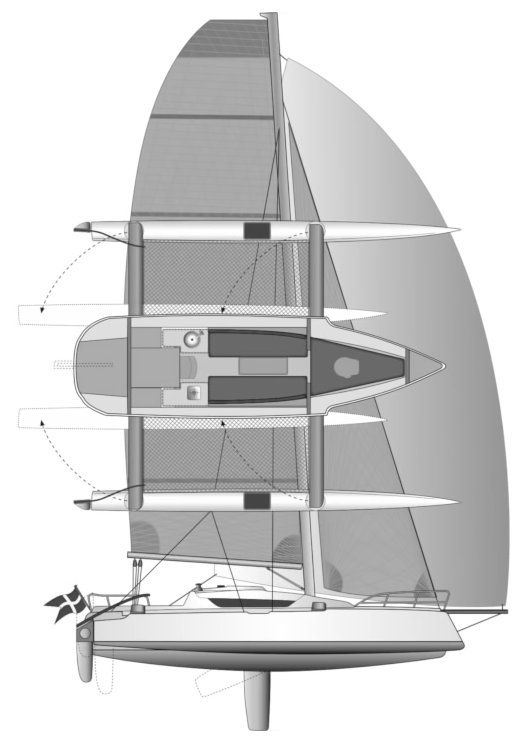
Sailboat Specifications Courtesy of Sailboatdata.com
Hull Type: Trimaran Dbrd.
Rigging Type: Frac. Sloop (Rotating Spar)
LOA: 25.10 ft / 7.65 m
S.A. (reported): 290.00 ft² / 26.94 m²
Beam: 19.03 ft / 5.80 m
Displacement: 2,315.00 lb / 1,050 kg
Max Draft: 4.92 ft / 1.50 m
Min Draft: 1.15 ft / 0.35 m
Construction: FG/Sandwich
First Built: 2015
Builder: Quorning Boats
Designer: Jens Quorning and Steen Olsen
S.A. / Displ.: 26.58
Builders: Quorning Boats
Auxiliary power is going to be your choice of outboards, gas or electric. A mounting well at the transom can be used or, if desired, hang it off the transom on a standard outboard bracket and keep the well for sailing gear.
Launching from a trailer doesn’t require a highly trained NASA team. It’s surprisingly simple with a little bit of practice—that means more freedom. You’re not stuck in one cruising ground or locked into an expensive marina. You can go explore that lake up north, or the bay that’s three hours away overland. Your sailing world just got a whole lot bigger.
On Deck
The Dragonfly 25-2 comes in two editions, the touring and sport. The touring model is a bit more chill with a slightly smaller sail plan and more relaxed rig set-up. It’s still fast, it’s still a Dragonfly. But it’s a bit more forgiving for newer sailors or those who don’t feel the need to break the sound barrier every time they leave the dock.
But the sport version, this is the one for the speed freaks. Its carbon mast is five feet taller than the touring aluminum mast. With the taller mast comes more sail area, an extra 54 sq ft (5 sq m) in the main alone. Plus, there’s a little extra adrenaline baked into that fiberglass. Both masts pivot to optimize wind flow over the mainsail. The sport version also comes standard with a retractable bowsprit for flying sails, an option in the touring version. It’s like taking the touring version and giving it an energy drink with a workout plan.
Sail handling is straightforward, especially with the self-tacking fractional jib. A curved track just forward of the mast handles the jib while you deal with the tiller and the mainsheet on a cockpit traveller. Sail control lines lead back to clutches and two winches at the trailing edge of the coach roof. Single handing is very doable. And because it’s a trimaran it stays fairly flat underway. This means less sliding around in the cockpit, less spilled coffee in the cabin, and less heeling anxiety for nervous crew.
Another big perk—it doesn’t need much water. With the centerboard up, the draft is just over a foot. That means you can sneak into coves and anchorages other boats can only dream about. Want to pull up to the beach for lunch? No problem. Want to drop the hook in a foot and a half of crystal-clear water? Go for it! This opens a whole new world of shallow water sailing.
Mast Raising
Whether you have the aluminum or carbon fiber mast, raising the stick is the same process. Using the boom as a fulcrum, the mast can be raised or lowered using the mainsheet and one of the two cabin-top, self-tailing winches. This is a time-honored system that’s been in use on small boats for decades. Factory-supplied bow and stern cradles hold the lowered mast on deck for storage or transportation.
Ama Rigging
Trimarans generally fold the amas by raising the arms as the amas pull in. One of the disadvantages to this process is the outer skin of the topsides becoming submerged as the ama is pulled in. For any kind of storage at a saltwater marina, these outside edges will quickly gain marine growth requiring constant cleaning or antifouling paint.
The Dragonfly is different. The hulls rotate about a vertical axis, swinging in and aft, staying flat. This reduces the beam from 19 ft. (5.8m) to just 7 ft. 7 in. (2.3 m), making the combination narrower than a typical modern 25-ft. monohull. However, overall length increases from 25 ft. (7.6 m) to 30 ft. (9.1 m) with the amas tucked in.
The folding mechanism is simple to operate, control lines leading to deck winches and clutches ensure that each ama is locked into place. That is somewhat important when sailing along at 20-plus knots.
Centerboard
A foam-core centerboard on the main hull is controlled by a pair of lines in the cockpit. One to pull it down to its almost 5 ft. (1.5 m) draft, the other to pull it back into the hull for a shallow 1-ft. 2-in. (.35 m) draft. Interestingly, the down clutch has a spring release should the centerboard strike ground—this is a neat safety device also incorporated into the rudder. The transom mounted rudder also has a series of mounting pins which allows you to pre-set the depth. Both features allow for beaching without damage.
Below Decks
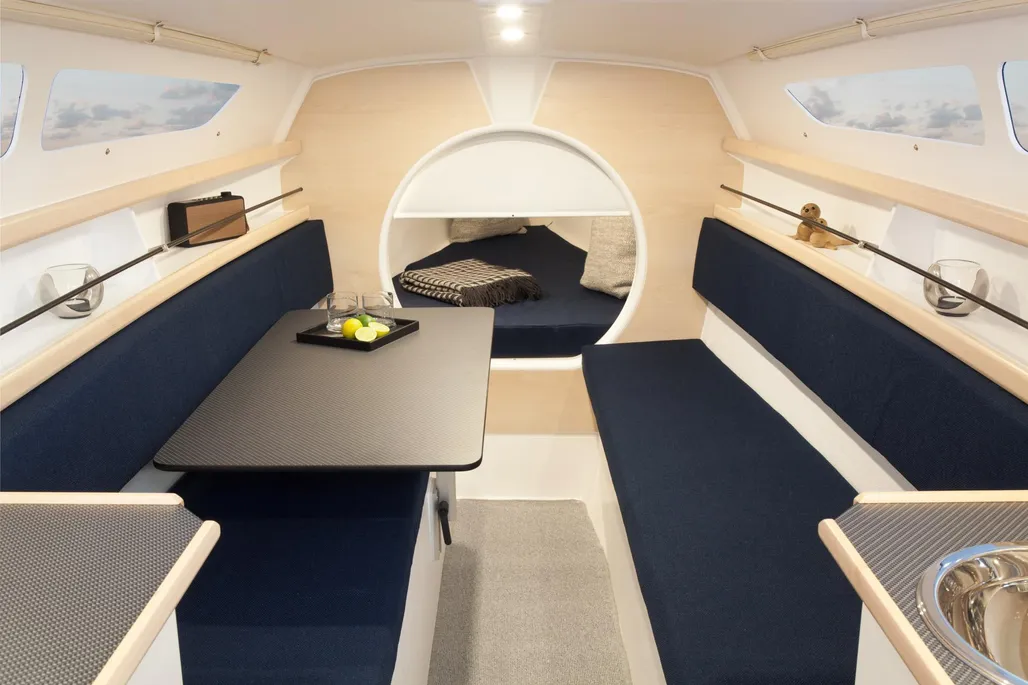
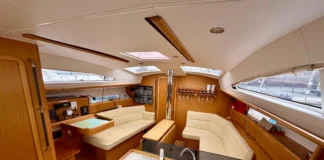
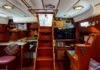
Now, you might be thinking, okay cool, it’s fast, but is it comfortable? And the answer is surprisingly, yes. Below decks it’s not exactly a floating condominium, but for a 25-ft. sailboat it’s very cleverly laid out and very functional. Virtually all surfaces are white gelcoat with pale plywood for the bulkhead and cabinetry. Large windows allow plenty of light into this open space, claustrophobia should not be an issue.
Galley
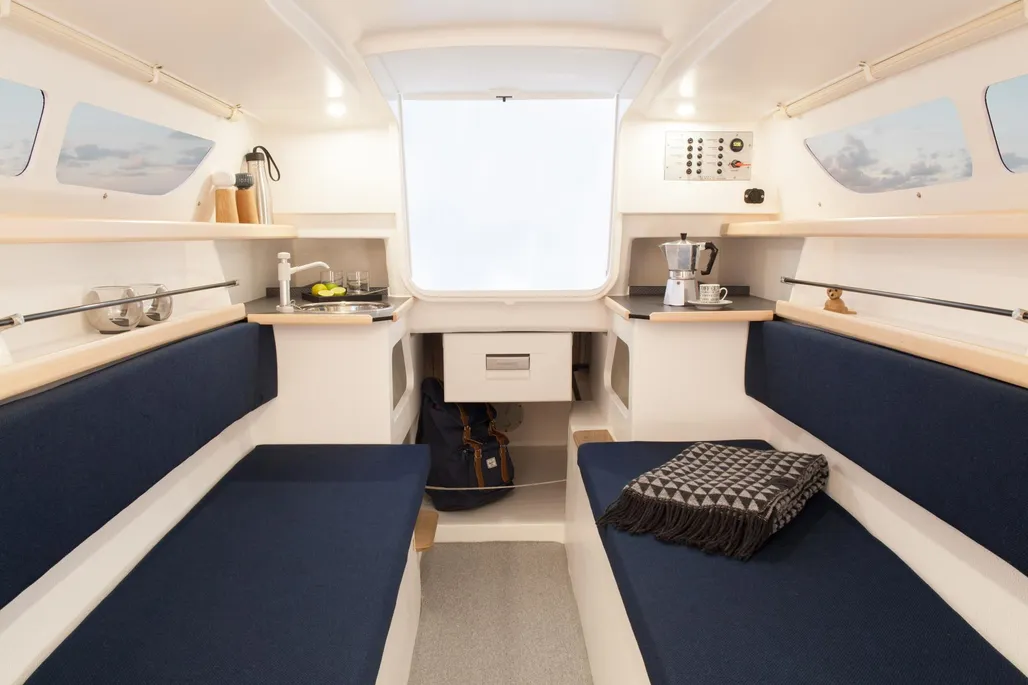
To starboard is a small, workable galley with a hand pump faucet and portable burner that sits in the sink. There is a small water tank holding 40 liters aboard, the deck filler on the foredeck. To port is a small storage locker. Both of these items are self-contained and removable should weight become an issue for the true racer. Under the companionway is a portable refrigeration unit, accessible from inside or simply leaning down from the shallow cockpit.
Saloon
Standing headroom is available at the companionway with sitting headroom further forward. Two full length settees face each other with a small swing table in the middle. This table can be removed and used in the cockpit when the sun is shining. No big gatherings here, but that’s not what this boat is designed for.
There is limited storage capacity under the settees in the main cabin, supplemented by opening hatches in the amas. This allows for additional storage of small items such as fenders and such without cluttering up the cabin.
Berths
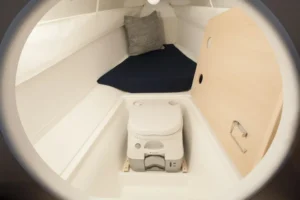
Sleeping accommodations allow for three adults. The center aisle can be filled with the table and seat-back cushions, making for a comfortable double berth in the main cabin. A short adult, or a child, would be very comfortable in the V-berth. Unfortunately, the portable chemical toilet is under the V-berth and, although it comes with a small privacy curtain, what privacy can you expect on a 25-ft. boat?
The Dragonfly 25-2 is not a liveaboard boat by any means. But for weekend cruising it’s more than enough. If you add the optional cockpit tent you basically double your living space. Boom! Instant glamping on the water. Although it’s great for a couple or small families, you won’t be hosting a dozen friends for a weekend getaway.
Performance
Let’s talk performance—that’s what this boat is all about. This thing moves! In the right wind you can sail over 15 knots comfortably. If you’re brave, and the conditions are favorable, you may see over 20 knots. It accelerates like a sports car. You sheet in the sails and the boat heels just a little, the amas dig in, and you’re off. It’s like hitting the throttle on a jet ski, except you’re powered by nothing but the wind. No noise, no fuel to burn, just that clean silent rush of speed that makes you grin like a kid at the holidays.
Trimarans sail differently than monohulls. Tacking takes a little getting used to and you’ll want to learn how to balance the sail plan carefully to keep everything efficient and fast. But that learning curve is fun. This is a boat that rewards you for good sailing and encourages you to push your own skills to the next level.
If you’re into racing, there’s a strong trimaran community out there and the 25-2 has been known to crush the competition. But even if you’re just cruising, this boat makes every sail feel like a bit of a thrill ride. You don’t just go sailing, you go flying.
And let’s not forget how the 25-2 looks. This boat has some serious dock appeal. Sleek lines, that aggressive trimaran stance, and the way it slices through the water all add up to one undeniable truth—this is a cool boat. You will get questions, you will get compliments and yes, you’ll probably have to give a few tours to curious sailors who just can’t believe what they’re seeing.
Transportation
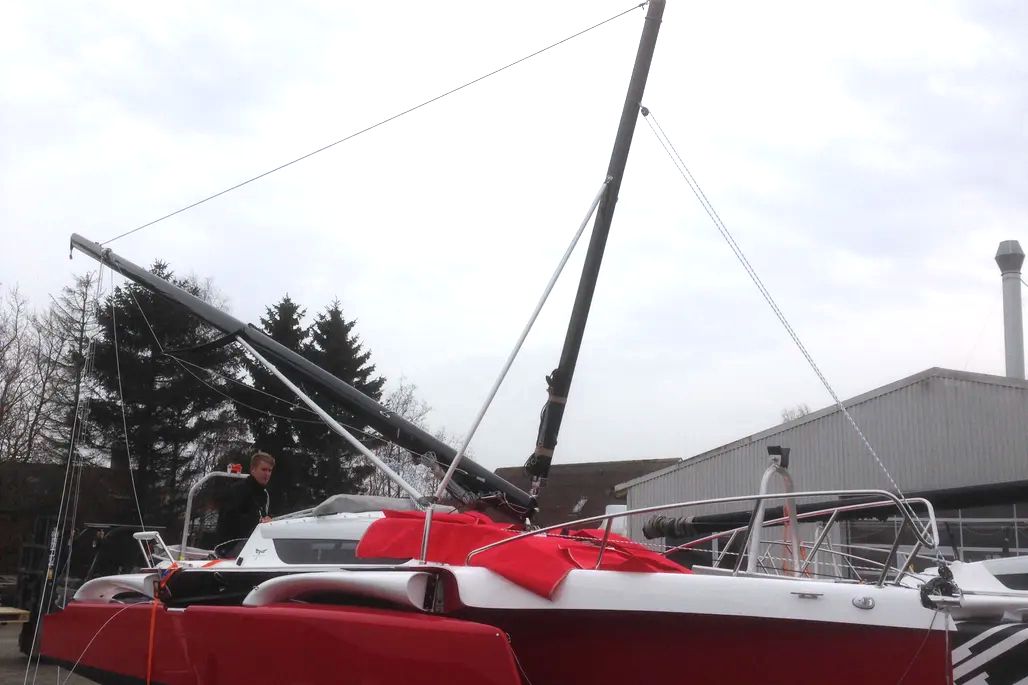
One of the most exciting parts about this boat is that you don’t need a huge towing rig to take it places. The full weight, trailer included, is under 4,000 lb. (1,815 kg). A mid-size SUV or light pick-up truck can haul this thing around without breaking. That makes it one of the most accessible performance multihulls out there.
You get top-shelf performance without needing a massive support system to move it around or maintain it. And the Dragonfly 25-2 is foldable. It is narrow enough to fit in a standard boat slip or towing without special permits. It will even fit a standard shipping container should you really want to get away to distant cruising grounds.
Conclusion
Who is the Dragonfly 25-2 really for? It’s for adventurers, speed junkies, and sailors who want something light, fast, fun and a bit different. It’s for people who don’t want to be locked into one place, one slip or one style of sailing. It’s for folks who want to sail further, sail faster and smile wider. Whether you’re new to trimarans or a long-time fan, the 25-2 is the kind of boat that makes you fall in love with sailing all over again. It’s exciting without being too intimidating, practical without being boring, compact without being cramped.
It’s not cheap—but it’s not just a boat. It’s a ticket to adventure, a launchpad to memories and an absolute blast to sail on. The Dragonfly 25-2 on the used boat market is available for under $100,000. Considered the entry-level trimaran by the Quorning Boats company, it will be a short step up in their fleet of trimarans, topping out at the magnificent Dragonfly 40.
If you ever get a chance to hop aboard one of these rockets, do it. If you’re lucky enough to own one, well, I’m jealous. Once you experience what this boat can do everything else just seems a little bit slower.
Market Scan Contact
2027 Dragonfly 25 Ashley Yachts
Request price (843)577-7222
Charleston, South Carolina Yacht World
2025 Dragonfly 25 Martin Robitaille
US$110,000 tax not paid 514-613-3842
North Vancouver, British Columbia Yacht World

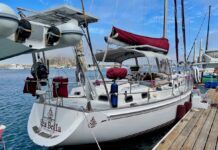
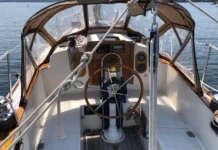

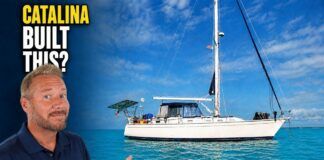




I only see these things ripping along in flat water. How does it handle in a chop? I’m thinking conditions in Lake Erie when the wind gets to 15kts. I’d imagine the Chesapeke offers a similarly rough ride as soon as the wind pipes up. Great review! Now I’m scheming how to increase the fleet…
I’ve owned a number of performance multihulls and have sailed one of them (27 feet) at over 20 knots. A few (realistic) thoughts.
a. Speeds over 12-15 knots, depending on the boat, require that you bring your A-game. Think dinghy sailing. You are moving through the waves fast and things can go wrong fast. At over 20 knots the concentration must be 100% AND you must know how to react, specific to the boat, conditions, and point of sail.
b. Most places don’t have smooth water and the wind for those speeds at the same time. Anything other than a deep reach is just too rough. Even on flat water, high speeds are from (true wind) beam to broad reaches. They can exceed wind speed by just a little, but only going deep with a chute or reacher.
c. Windward speeds are only a little higher than a good multihull, and often slightly less if there is chop. Considerably less if there are big waves. Multihulls have a lot of windage upwind. Think about that windward float and tramp catching air. No magic.
d. Average passage times for multihulls are typically only a little faster than equivalent monos. Your nerves can only handle high speeds for short periods. There is no such thing as leaving it on autopilot for even a minute over 15 knots. You don’t go below. You don’t look anywhere except where you are going, and to true windward to spot the puffs.
e. They only go fast if you keep them light. When they get heavy they plow through waves.
There is no point in comparing a trailered tri to a cruising monohull. It’s like comparing a motorcycle to a motor home. Each has a purpose.
Yes, Dragonflies are a lot of FUN!