

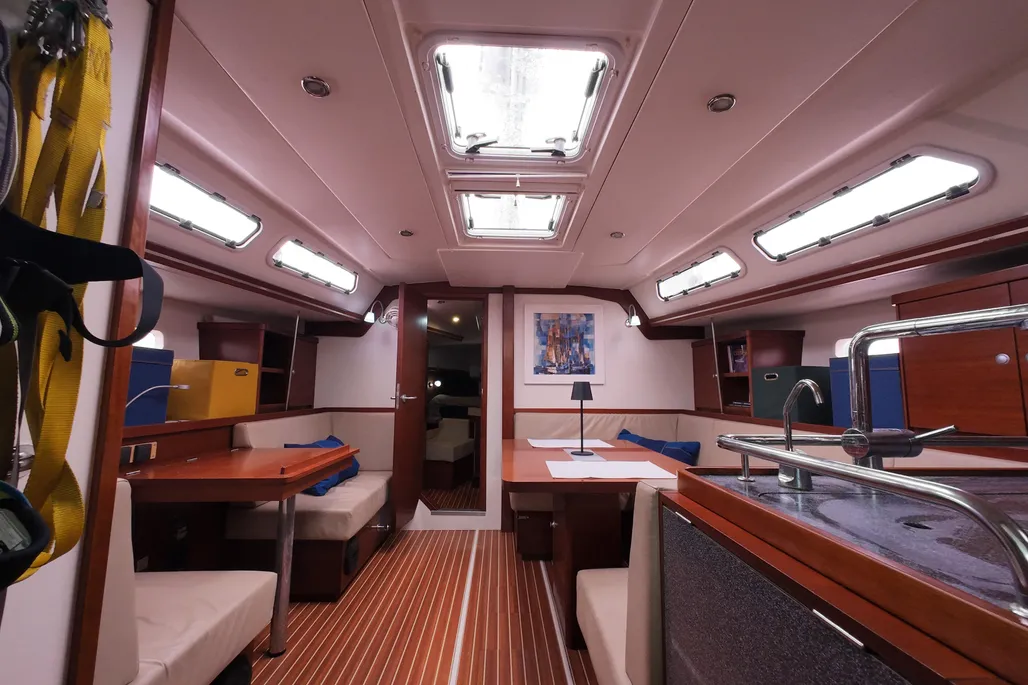
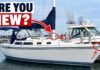
We’re looking at a boat that sounds like a German electronics band but is actually a 43-ft. cruising sailboat—the Hanse 430e. If you’re shopping that 40-ish foot production cruiser universe, you already know the usual cast of characters; the Beneteaus, Jeanneaus, Catalinas and Hunters. The boats you see everywhere because they breed in marinas like rabbits with financing. So, why would a potential buyer zig over to Hanse when the whole dock is zagging?
The Hanse 430e is still a production boat, is still built to a price, and still has compromises. But it leans hard into two ideas: short-handed sailing made easy, and a construction upgrade that actually matters if you plan to own it long enough for real world aging to show up.
Design
Let’s start with the basic size and numbers. This is a 43-ft. 8 in. (13.30 m) boat with a waterline around 39 ft. (12.0 m), first constructed in 2006 with at least 161 units emerging from the factory until 2010. Beam is 13 ft. 9 in. (4.18 m), so it has some shoulders. Draft on the deep keel version is 7 ft. 3 in. (2.2 m), the shallow model at 5 ft. 11 in. (1.8 m) if you pick that option. Displacement is 24,000 lb. (10,886 kg) for the standard Hanse 430 with this e version listed lighter, about 23,000 lb. (10,432 kg). Ballast is around 7,000 lb. (3,175 kg) with sail area of about 1,022 sq ft (94.95 sq m) in the self-tacking version. Obviously more when you opt for an overleaping genoa.
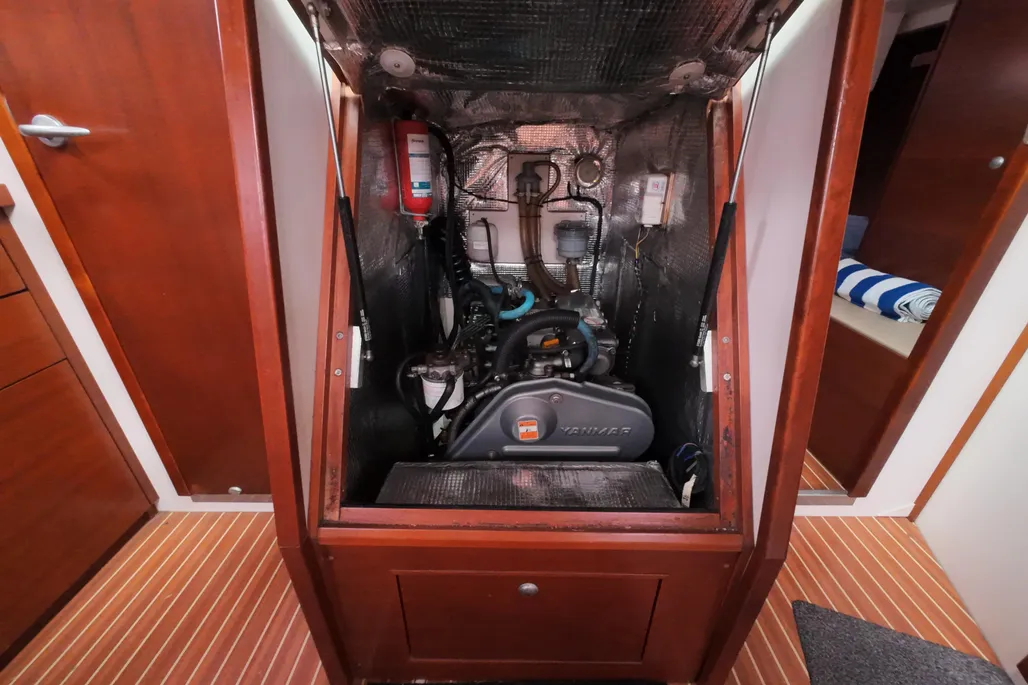
Mechanically, the engine is typically a 40-hp Yanmar on a sail drive under the companionway. Fuel capacity is 61 gallons (239 liters) with water capacity at 86 gallons (325 liters). Its International Marine Certification Institute (IMCI) CE category is “A,” meaning the Europeans are willing to let you take it into serious water, assuming that you also bring skill, common sense and snacks. Those numbers matter, but they don’t tell you what it feels like to own, sail and live with this boat.
So, let’s do this the way Practical Sailor people actually think. You’re not buying just a boat. You’re buying a long-term relationship with fiberglass and rigging, and the occasional mysterious smell that appears after rainstorms. Let’s talk about the stuff you’ll either live with forever or argue about at 2:00 a.m. while you’re barefoot in the bilge holding a flashlight in your teeth.
Construction
First, the big letter in the room, the “e” in the 430e. This is the epoxy version of this boat. Hanse offered an epoxy-built variant of this boat and widely described it as an upgrade of the standard 430. Here’s why epoxy matters in plain English.
Most production fiberglass boats are built with polyester resin, sometimes with vinylester resin in certain structural areas or as a barrier coat. Polyester is cheaper. It’s proven. There are millions of polyester resin boats happily floating in waters all over the world. But polyester is also permeable and prone to the kind of water absorption that can lead to blistering. That’s the boat equivalent to your hull getting acne at middle age. It doesn’t always mean the boat is dying, but it’s annoying. It’s expensive to repair, and it makes surveyors pay attention.
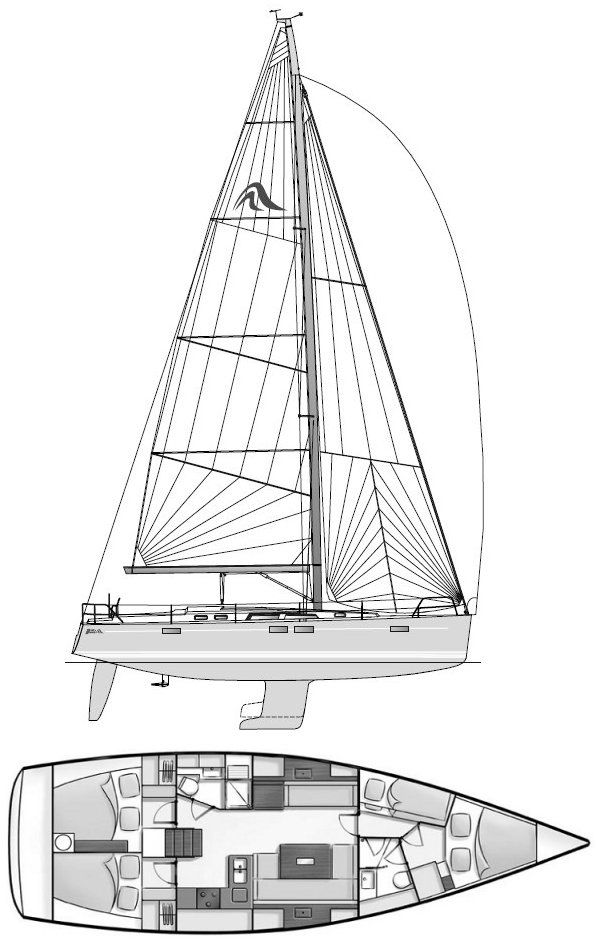
Sailboat Specifications Courtesy of Sailboatdata.com
Hull Type: Fin w/bulb & spade rudder
Rigging Type: Fractional Sloop
LOA: 43.63 ft / 13.30 m
LWL: 39.37 ft / 12.00 m
S.A. (reported): 1,022.00 ft² / 94.95 m²
Beam: 13.71 ft / 4.18 m
Displacement: 24,030.00 lb / 10,900 kg
Ballast: 7,055.00 lb / 3,200 kg
Max Draft: 7.09 ft / 2.16 m
Construction: FG
Ballast Type: Lead
First Built: 2005
Builder: Hanse Yachts
Designer: Judel/Vrolijk
Make: Yanmar
Type: Diesel
HP: 40
Fuel: 61 gals / 231 L
Water: 86 gals / 326 L
S.A. / Displ.: 19.71
Bal. / Displ.: 29.36
Disp: / Len: 175.80
Comfort Ratio: 27.96
Capsize Screening Formula: 1.90
S#: 3.35
Hull Speed: 8.41 kn
Pounds/Inch Immersion: 1,928.63 pounds/inch
I: 59.05 ft / 18.00 m
J: 15.42 ft / 4.70 m
P: 58.07 ft / 17.70 m
E: 19.52 ft / 5.95 m
S.A. Fore: 455.28 ft² / 42.30 m²
S.A. Main: 566.76 ft² / 52.65 m²
S.A. Total (100% Fore + Main Triangles): 1,022.04 ft² / 94.95 m²
S.A./Displ. (calc.): 19.72
Est. Forestay Length: 61.03 ft / 18.60 m
Epoxy, on the other hand, is generally more water resistant and tends to have better secondary bonding. In the real world, that translates into a boat that’s marketed as more resistant to blistering and often stiffer for the same weight, or lighter for the same stiffness, depending on how the builder executes it. Hanse’s own specifications reflect that the epoxy version is lighter than the standard laminate. On a 43-footer, shedding roughly 1,000 lb. is not nothing. That’s like sailing without a bunch of adult passengers who all insist they don’t weigh a pound over 150. Yes, epoxy can mean a boat that feels a bit livelier under sail. It can also mean less long-term drama with moisture-related laminate issues.
Epoxy Repairs
But epoxy also comes with one very Practical Sailor reality check—repairs. If you own an epoxy-built boat and you need fiberglass work, you want the repair to be done with epoxy. Not because the universe will explode if you don’t. But because going backward to polyester is like trying to glue a floor tile into a greasy frying pan. Polyester does not reliably bond to cured epoxy well. Epoxy bonds to, well, everything. Including mistakes. So, the “e” matters in two ways: potential durability and performance advantages, and the fact that your future repair should be epoxy based. If you’re the kind of owner who does your own work, you’ll just need to know that before you’re standing in the chandlery holding the cheaper resin like it’s a coupon for regret. You’ll have a long-lasting relationship with West System from now on. You may as well buy stock.
Now, that’s the construction hook. Let’s move on to why Hanses should be in the mix in the first place. Hanse has a design language all their own. On the 430e it’s pretty clear. Modern hull form, broad stern, twin helms, the open transom vibe, and a deck layout that’s trying to make sailing less like a circus act and more like operating a reasonably well-designed machine. It’s very German that way.
Cockpit
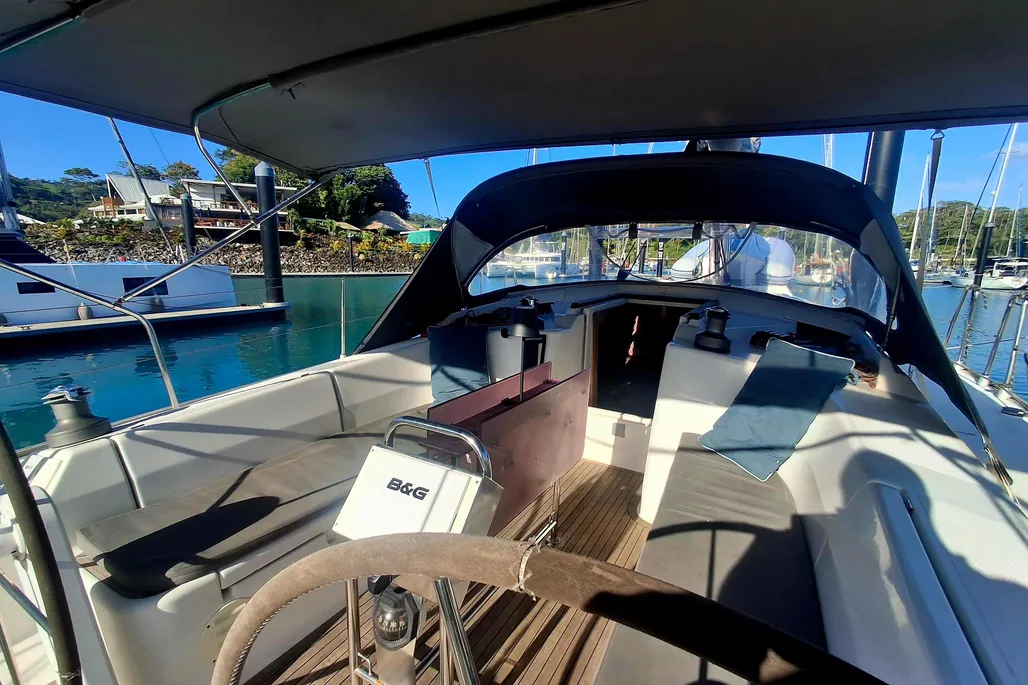
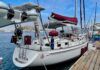
The cockpit is almost as wide as the hull itself with flush coamings aft of the wheels, just right for the helmsperson to perch comfortably while viewing the sails and water. The open transom is divided by the single backstay with hydraulic adjuster, no transom to drop for a swim grid. The cockpit sole is the swim grid. Twin helms on pedestals occupy the stern half of the cockpit with a central folding table and seats just forward. The coaming rises to provide comfortable back rests for the crew. Two-speed winches are mounted just forward of the helm allowing for easy access when single handed. Main sheet, depending on owners’ wishes, is either on a traveler forward of the companionway or, for the diehard racer, on a traveller across the cockpit just in front of the twin helms. That sort of divides the cockpit but is perfect for controlling the main from the helm.
On Deck
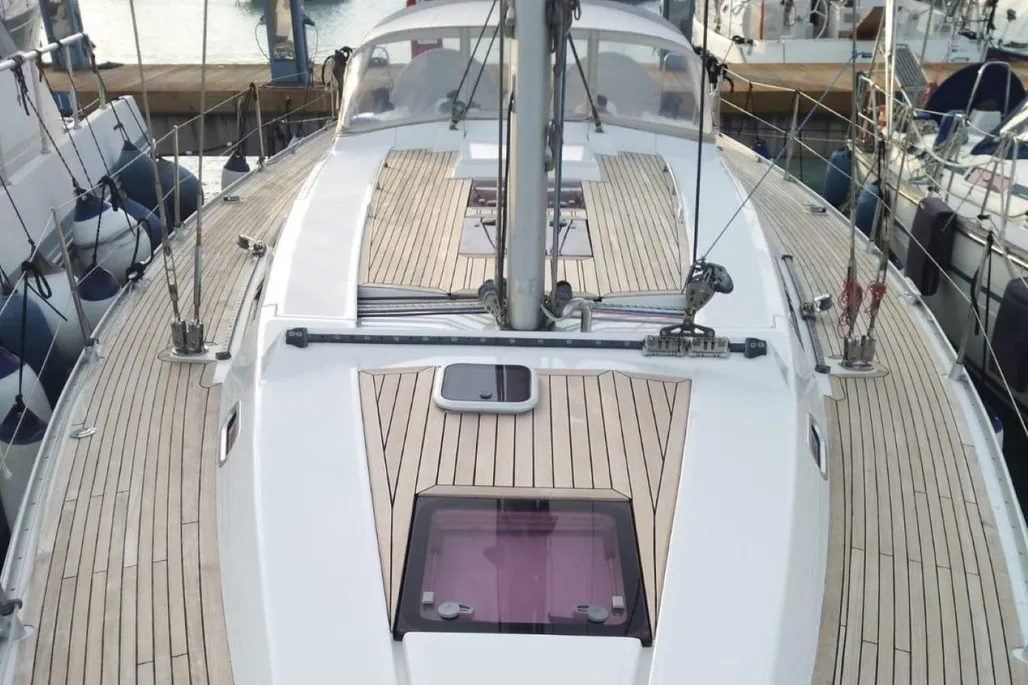
The side decks are wide and unobstructed; the genoa track and stays are mounted inboard against the cabin trunk. The cabin top has relatively short stainless-steel handrails and opening hatches centrally mounted under the mast, clearing the cabin top for foot work. The aluminum toe rail lacks holes or slots for sailing blocks or fender ties. The pulpit is split with a proper stainless steel anchor roller, a single from the factory but with room for a double if desired. The anchor well is deep with the furler mounted below decks, the furling line carried aft along the gunnel. All sail control lines from the mast lead aft under removable fiberglass panels, not becoming a danger under foot while handling the mainsail.
Self-Tacking Jib
The star of the show is the self-tacking jib on this boat. If you’ve never lived with a self-tacker, here’s the general experience. The old way of tacking goes from you spinning the wheel, releasing the leeward sheet, crank the windward sheet and don’t get a wrap on the winch and don’t fling the handle into the drink. With a self-tacking jib, simply turn the boat and the jib just turns with it. It’s the sailing equivalent of switching from a manual transmission to a modern automatic while inching forward in stop and go traffic. Purists will complain. Then they’ll sail it and suddenly they’re smiling like they just discovered heated seats.
The first self-tacker I ever skippered was on the Chesapeake Bay coming into a tight section, upwind. Instead of firing up the diesel and dousing the sails, we were able to short-tack and climb the channel because the jib didn’t require any attention at all. It’s a pretty cool feeling, especially when you’re shorthanded.
So, for couples cruising, for solo sailors, and for anyone who spends time in narrow channels, crowded harbours, or who just don’t want every tack to be a cardio event, the self-tacking jib is genuinely a quality-of-life upgrade. The trade is, depending on conditions and how the rig is set up, you usually give up some sail area and some pointing ability compared to a big overlapping genoa. But a lot of owners happily take the performance hit for, “I can actually do this without yelling at anyone.”
Why Hanse?
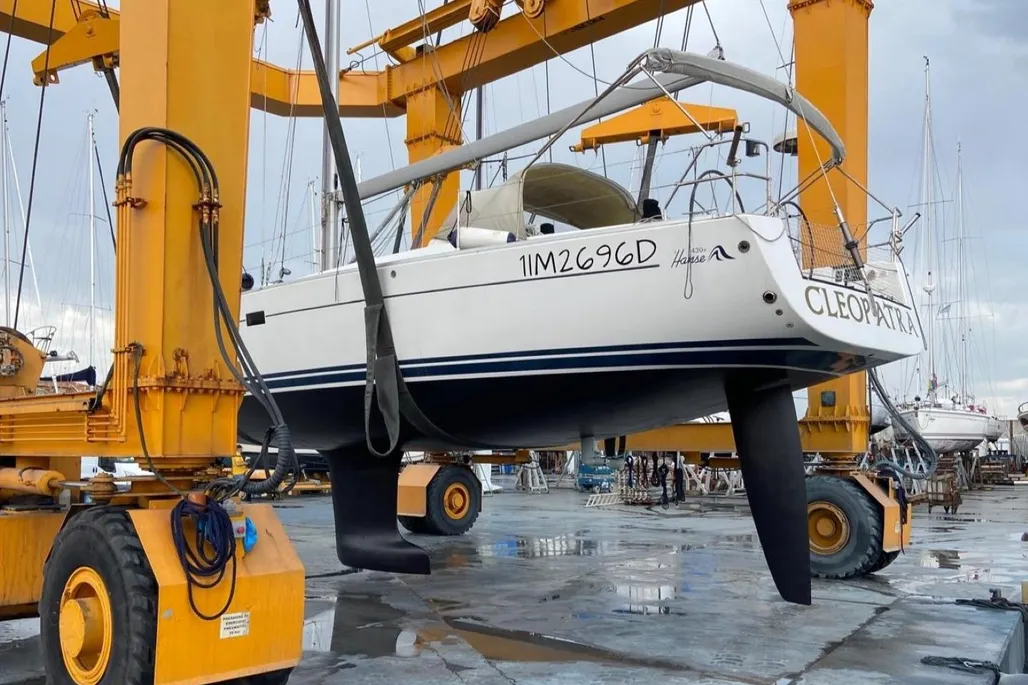
That ties into the big: Why Hanse? Because Beneteau and Jeanneau also make excellent boats. And they’re not bad, they’re just optimized for slightly different missions. The French boats, in broad strokes, tend to lean more into volume and comfort and dealer networks and massive model availability. You can buy a Beneteau the way you can buy a Toyota Corolla—anywhere, anytime and any trim level with parts and service everywhere. Hanse comes at it with a more German personality: cleaner deck aesthetics, simplified handling, and a general sense of, “We thought about the workflow.” It’s less croissant and more torque wrench.
But you should always know what that means on the other side of the coin. If you’re in North America, the Beneteau/Jeanneau ecosystem is huge. Brokers know them. Boat yards have seen them and worked on them. Part pipelines are wide and re-sale can be easier simply because more people recognize the brand and more boats exist for the price comparison. Hanse may be more dealer dependant regionally for you. That doesn’t make it risky. It just means you don’t have the same boat every marina has five or more of—that sort of safety net.
Performance
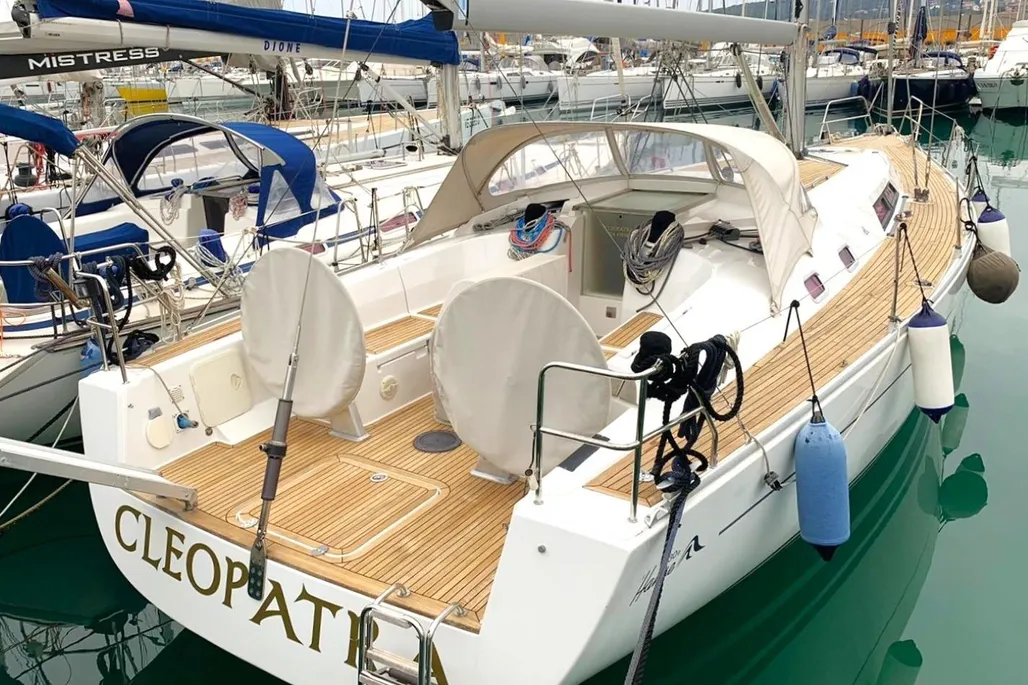
Now let’s talk about how this boat sails. Reviews tend to paint the 430e as a modern cruiser with a performance streak. The design pedigree is known for boats that are not allergic to speed. The lighter epoxy spec doesn’t hurt. Broad stern, decent sail plan, and modern underbody typically mean the boat wants to get up and go when you give it a breeze. The deck plan and cockpit are meant to reduce workload. The lines are led aft under panels. Usually, the cockpit is arranged so you can sail it without needing a small choir of athletic friends. The twin wheels give you access to the swim platform and better sight lines around the dodger. If you’re the kind of buyer who thinks, “I want my cruising boat to still feel like sailing,” this is the type of boat that tends to scratch that itch. Usually better than something a little more French.
Interior
Now we need to look at the livability side because you can’t just sail a boat, you need to live in it, to cook in it, to try to sleep well at anchor. The overnight soundtrack is half wind and half of your neighbour’s generator running like they’re powering a nightclub.
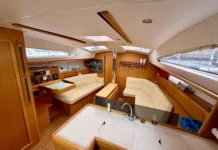
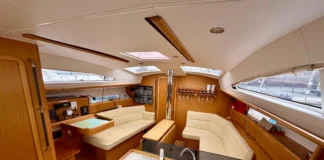
Hanse pushed what they call an individual concept here. Basically, modular interior arrangements and layouts allowing a host of purchase options. The vibe is contemporary, clean and modern European. And this is where taste divides people like pineapple on pizza. Some buyers love the bright modern interior, the airy layout and the way it looks like a boat designed after 2003. Others will say modern interiors can date quickly and some layouts can prioritize showroom appeal over offshore practicality. That’s not a knock, it’s just the reality of this design. A boat optimized to impress at a boat show might put less emphasis on things like a truly secure sea berth, heavy duty handholds exactly where your body needs them at 3:00 a.m., and storage that’s shaped for actual gear rather than decorative throw pillows.
Galley
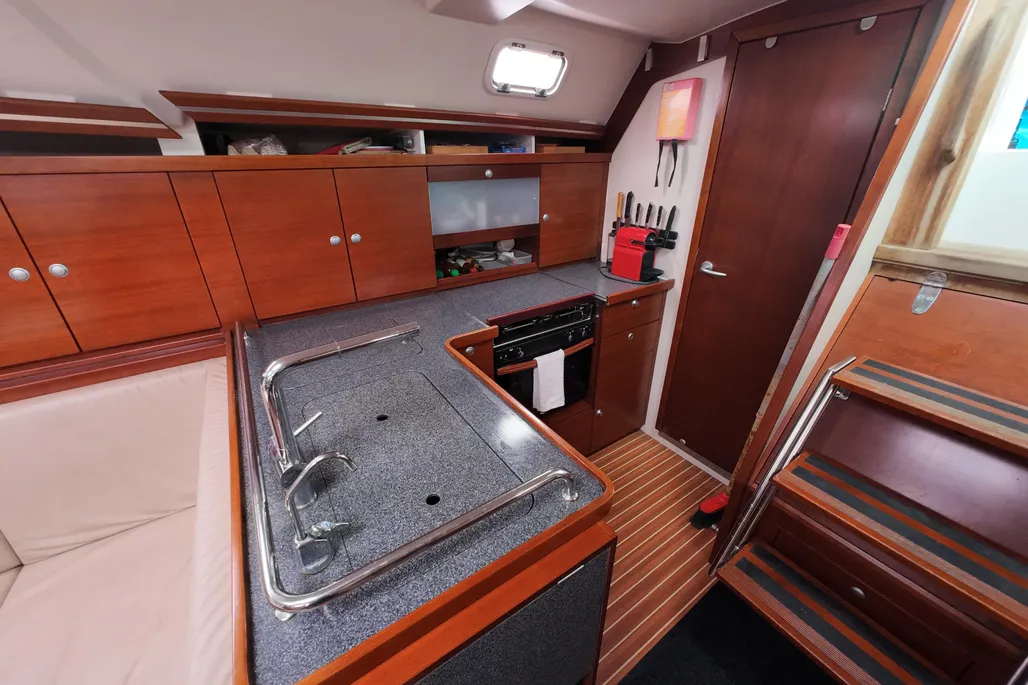
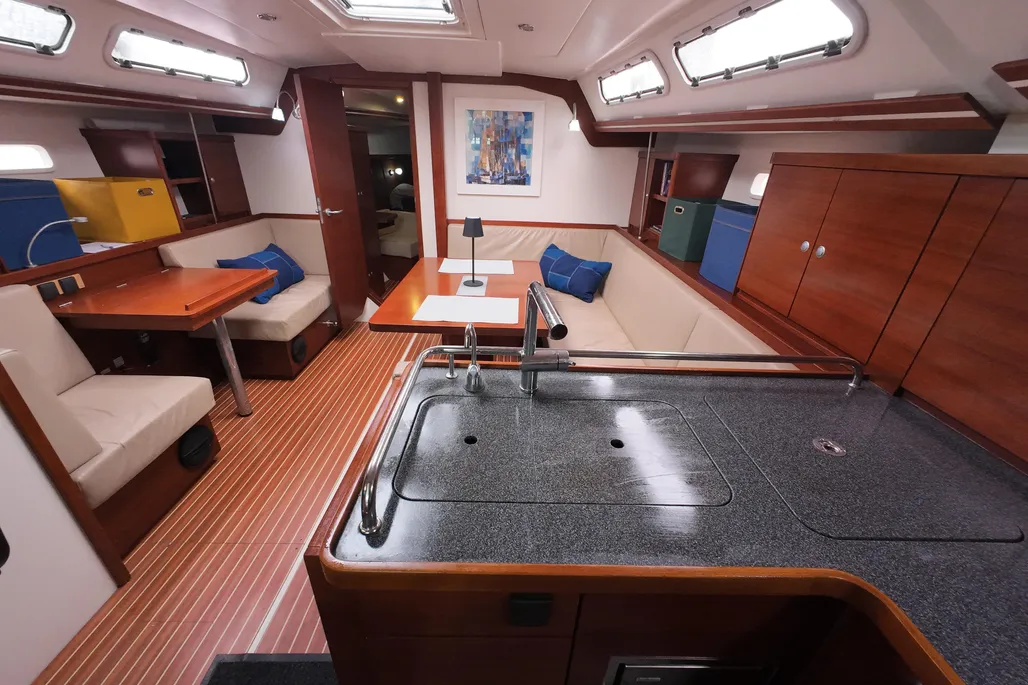
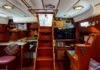
Down the companionway stairs there is, once again, a lack of proper handholds to grab in a seaway. There is a grabrail on the galley countertop. The L-shaped galley is to starboard with a deep double sink near the centerline. A flip-up shelf dramatically increases the limited counterspace. There are plenty of cabinets for storage. Only one small opening portlight is overhead of the galley range but located this close to the companionway, that shouldn’t pose a problem. The large main cabin windows also open allowing plenty of ventilation through the main cabin and galley.
Head
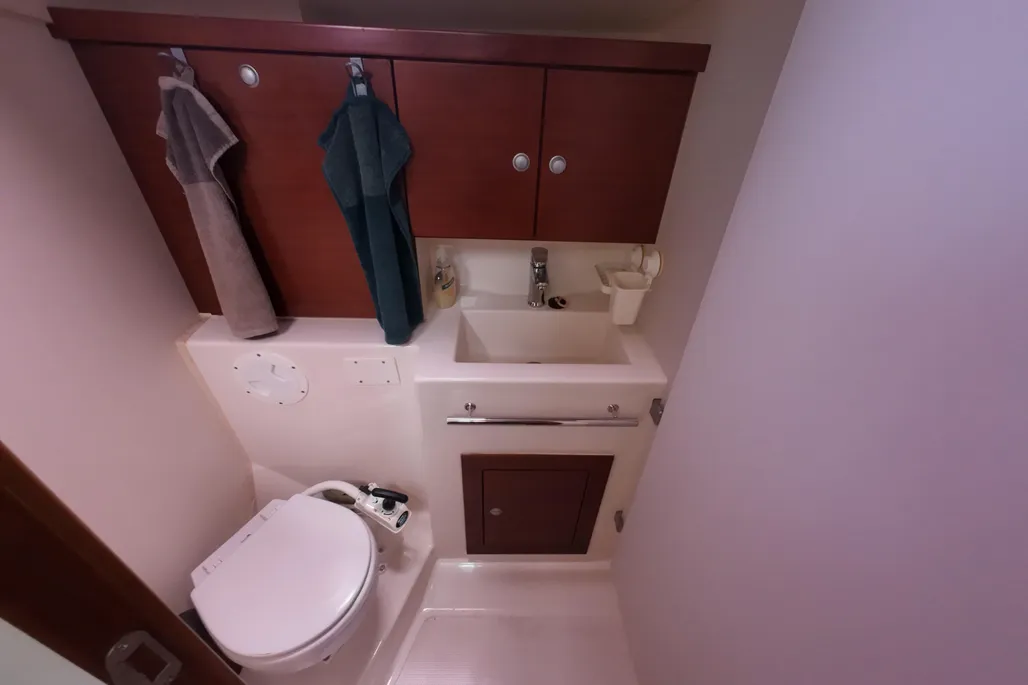
To port is the main head compartment with separate shower and an opening portlight. All white fiberglass and easy to keep clean.
Cabins
Aft of the head and galley, on both sides of the companionway, are two aft cabins with generous twin mattresses and adequate storage cabinets. Headroom is reasonable with opening portlights into the cockpit and hull.
The main cabin is very traditional with a U-shaped dinette to starboard and seats separated by a small cabinet to port, all in a host of finishes to complement the white bulkheads trimmed with teak.
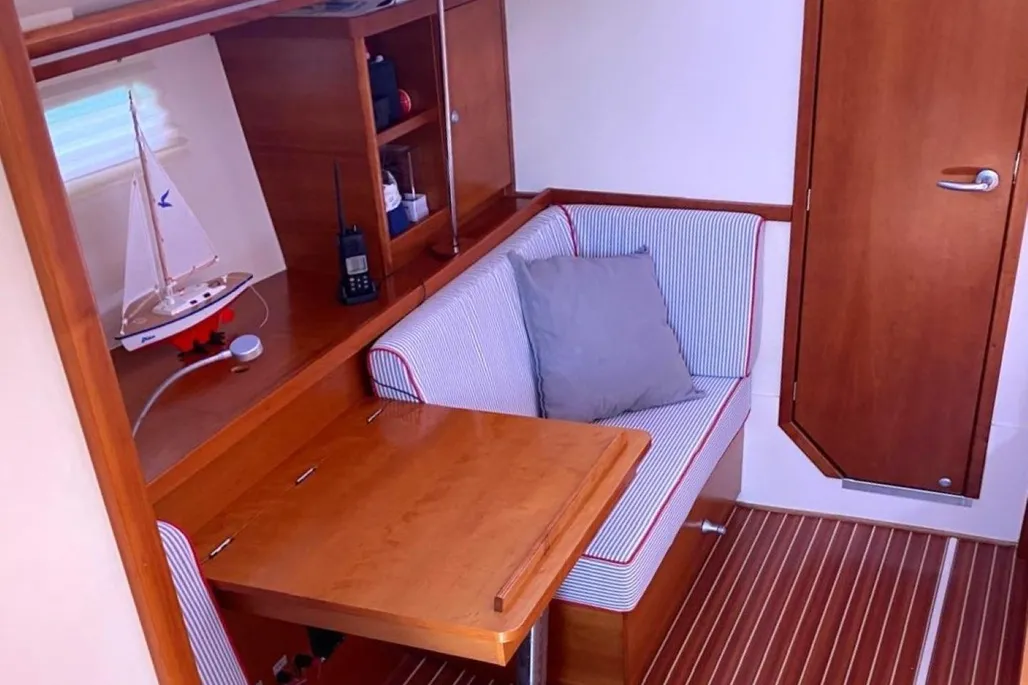
The V-berth has a mattress off-set to starboard. A large storage cabinet is to port with a small desk and sitting area. A properly sized en-suite with shower is to starboard. Only two small opening ports adorn this cabin, one in the head and the other opposite, over the small desk. A large opening hatch allows for some ventilation if it’s not raining.
So, if your goal is coastal cruising, or island hopping, or weekends, or a couple of weeks at a time with an occasional longer trip, the Hanse interior concept might be right up your alley. If your goal is to cross oceans and live like a sea turtle, you’re going to want to look at the details harder.
Owner Comments
And speaking of looking harder, let’s talk to owners in the Hanse forums. This is where that glossy brochure meets reality. The Hanse owners’ community, especially places like My Hanse Forum reads like a boatyard doctor’s waiting room. Which is good. It means people are dealing with normal boat stuff. But it also tells you what to survey if you want one of these boats. There are recurring discussions about portlights and windows, including cracking and leaks. There are discussions about rudder issues like delamination or water ingress. There are plenty of general electrical gremlin threads because every modern production boat is basically a floating house with a small power plant and a personality disorder.
This does not mean that the 430e is uniquely flawed. It’s not. It means that it’s a modern production boat and those are common stress points across the whole industry. Windows leak, rudders can take water, wiring can be adventurous. But for a buyer, this is gold because it turns into a survey checklist.
Purchasing
If you’re shopping for a Hanse 430e, here’s the Practical Sailor “don’t skip this list.” Start with the obvious. Moisture readings of the hull and deck, especially if the boat has lived in warm water for long stretches. Epoxy helps osmosis resistance, but it doesn’t mean the boat’s immortal. It means the odds improve a little bit. Survey it anyway. Then inspect the portlights and windows like you’re buying a used car and the seller says it just needs a little TLC. Look for cracking and crazing and signs of resealing and any staining inside that suggests intermittent leaks. Water doesn’t just leak, it migrates. It finds new hobbies.
Next, the rudder. Tap testing, signs of weeping, rudder play, any history of repairs. If you haul it, look closely at the rudder surface and the trailing edge. Water in a rudder is one of those things that starts as a minor and ends as, “Why am I spending money on this instead of tacos?”
Then systems. A 20-plus-year-old cruiser lives and dies by its systems. Refrigeration, plumbing, electrical distribution, battery charging, and all the little convenience items that are fun when they work and infuriating when they don’t. Also, and this is where Hanse handling philosophy matters: pay attention to the deck hardware and line runs. A clean deck unobstructed by sail control lines is lovely until you need to service something buried under a cover panel in a place only a yoga instructor can reach.
Hanse 430e versus French Production Boats
Should you buy a Hanse 430e instead of a Beneteau or Jeanneau? Here’s the real talk. Buy the Hanse if you want a boat that’s designed to be sailed short-handed without constant winching. The self-tacking jib is real, and it changes the day-to-day experience. If your partner is not into grinding winches, the self-tacking could be the difference between “we cruise” and “we sold the boat.” With a modern sailing feel, the 430e has the design cues of a performance cruiser, not a dock condo with a mast.
If you like the idea of covering miles efficiently, probably quickly, and enjoying that ride, this boat has a reputation for doing that. And then there’s the epoxy build story. If you’re shopping and you see that e in the brand, it’s not just marketing glitter. It’s a legitimate construction variant with implications for weight, stiffness, and blistering resistance. Plus, it tells you how to approach repairs.
But maybe don’t buy this boat if your priority is the widest North American service and resale ecosystem. Beneteau and Jeanneau have the sheer numbers on that one. That matters when you need parts fast or you want to sell the boat quickly into a bigger pool of familiar buyers. If you want a more traditional interior optimized for offshore living in the conservative blue water sense, you may want to go with something else. The Hanse can go offshore, absolutely, but the interior may be more modern cruising than hardcore passage making. That’s not a disqualifier. It’s just matching the boat to the mission.
And finally, a word about expectations. No production boat is perfect. They are all a compromise or a series of compromises. The question is whether the compromises align with your life.
That’s the big picture of the Hanse 430e. If you’ve sailed one, or surveyed one, or have strong feelings about this boat, drop it in the comments.
Market Scan Contact
2007 Hanse 430e Alex Hill
US$175,000 tax included +61 7 5452 5164
Cakaudrove, Fiji Yacht World
2007 Hanse 430e Grabau International
€178,000 (US$209,820) tax included
+44(0)1590 673715
Rosignano Marittimo, Livorno Yacht World

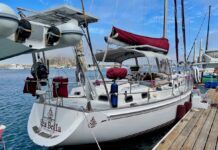
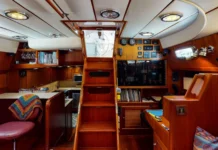




It’s not like self-taking jibs and twin wheels are unique to the Hanse brand. A visit to the Annapolis Boat Show says that almost all new production sailboats have these features plus a dropdown aft platform. The Catalina (now out of production) is an exception and has a more traditional design. Most modern boats are optimized for coastal cruising because that is how the majority of buyers use their boats. Computerized design tools allow for better sailing performance combined with larger interior volume compared with older designs.
As I understand it, the main advantage of the epoxy build is reduced weight, which translates to better light air performance. I might be wrong, but almost all boats built after the late 1980s have a vinyl ester barrier behind the gel coat to prevent blisters.
Build quality is what differentiates the brands. Are there storage cabinets in the salon or just open shelving? How are the sail controls set up? Where are the winches? It’s the details that count. I own an allied brand, Dehler, and think the build is better than most.
I attended the 2005 Miami Boat Show looking for a new boat. There I discovered Hanse’s newly designed 34. Soon after I purchased a 2006 370e which I sailed on Lake Michigan for 16 yrs. In all that time I never had a major repair. Every year my wife and I would cruise the Lake for 3 weeks. The boat was a joy to sail and live aboard. The rest of the season we would daysail and in 2007 I began to race her. Distance races were her forte. In approximately 14 Queens Cup races across Lake Michigan (70-90 nm depending on destination port) we had flags in about half including 2 firsts in our division. Not bad for a novice. Sold her to an experienced couple who live aboard on Lake Ontario and still enjoy her. I don’t know much about the latter iterations of the 370 or the 430 but I highly recommend the 2006-? versions.