

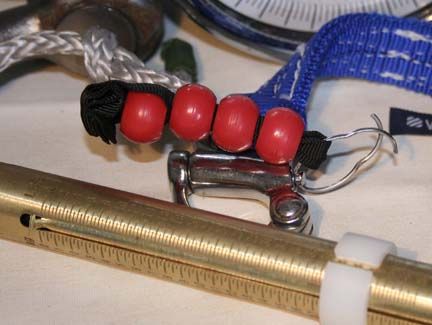
The primary purpose of the safety harness tether, the vital link between you and the boat, is to keep the wearer aboard, not dragging alongside or hydroplaning astern.
After extensive on-the-water evaluations, Practical Sailor has crafted a list of criteria for the ideal tether. It should incorporate a quick-release snap shackle at the inboard end with a lanyard long enough so that the wearer can easily release the snap shackle under load. The tether should be just long enough for the wearer to reach the rail should he fall overboard. PS found 6 feet to be the longest practical tether length. The “boat end” of the tether should have a non-magnetic, locking snap hook that can be opened with one hand.
Tethers with elastic, allowing them to contract when not under load, are preferable. The ability of tethers with integrated elastic to retract helps keep the tether out from underfoot and free of entanglements with winch handles, engine controls, and deck gear. It is also easier to comfortably wrap these elastic tethers around your waist or over your shoulder when they’re not in use.
A quick-release snap shackle at the harness end of a tether is especially important in case the wearer becomes trapped under an inverted boat or in a tight spot, like on the wrong side of a jib sheet. The quick-release shackle at the harness end has the added benefit of allowing the wearer to go below before unhooking, leaving the tether clipped on deck and dangling down the companionway or hatch, to be easily reconnected before the sailor returns topside. Quick-release shackle lanyards should never have loops, which could inadvertently snag and open the shackle.
Tether stitching ideally should be bar-tacked in a repeated zigzag pattern. The thread color should be different from the tether color to allow for easy visual inspection of the stitching’s integrity. Faded or damaged webbing or stitching indicates loss of strength and that the tether should be retired.
Some tethers have overload indicators built in. These indicators consist of a colored flag embedded in the tether stitching. In theory, when the tether reaches its overload limit a level of stress that compromises its integrity as a safety device the flag is revealed. And although testers like the concept of the overload indicator, we wouldn’t rely on it to let us know when to retire a tether. The indicators do not take the place of visual inspection.
For more life-saving safety gear recommendations and rescue techniques, download MOB Prevention & Recovery today.