The J-Boat Class, which vied for The America’s Cup in the 1930s, is considered the very pinnacle of competitive sailing. Yes, the new crop of America’s Cup foiling monohulls are faster. And the Sail GP wing-masted catamarans will skitter around the racecourse at 50 knots. But nothing carries the speed, the grace, the power and the sheer majesty of a J-Class yacht. Their rebirth at the tail end of the 20th and beginning of the 21st centuries is a testament to not just what money can buy. Each J-Boat sailing today represents a focus and a commitment that attracts the very best in the sport of sailing.
And just so you know, the buy-in of a J-boat is already breathtaking. But sustaining a J-boat on an international schedule takes almost the purchase price—paid out every year. Devotees consider the money an after-thought. For sailors in this rarified league it’s about operating a complex machine at one of the highest competitive levels in any sport.
So when we see a J-Boat slip quietly into The Cove, we sit up straight and pay attention. Who is she? And what brought her here?
History
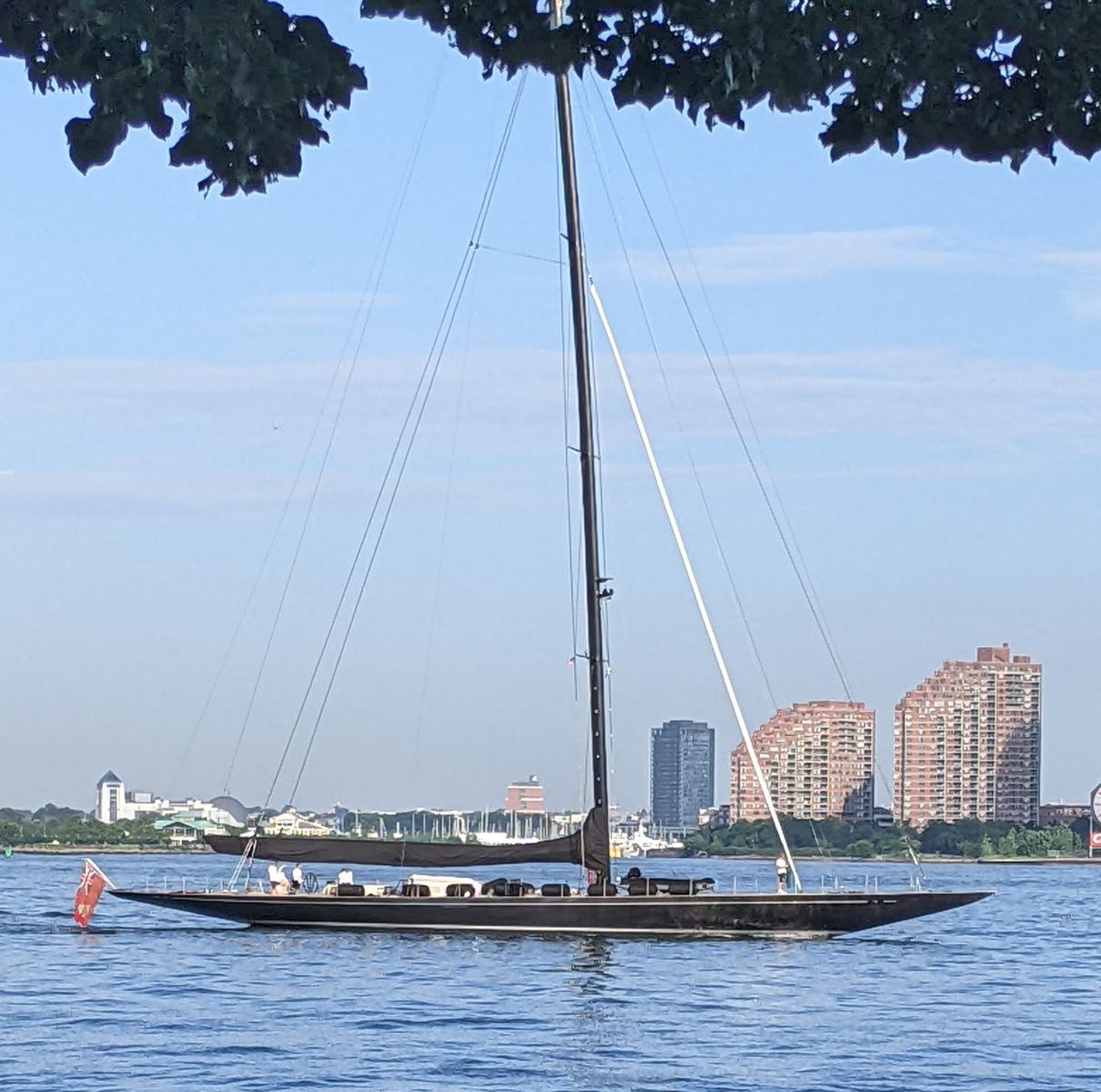
It turns out the story of Svea blends Sweden’s deep tradition of nautical design (think Carl Alberg, Pelle Petersen, and the Ljungström brothers) but also the very highest technology available today in sails, rigging, electronics, hydraulics and synthetic cordage. Svea’s Swedish owners and her 35-person crew have won numerous J-Class regattas in the past three years, including firsts in the ’22 and ’24 Maxi Rolex Cup and a first in the ’24 Barcelona J-Class championship.
According to her delivery captain Paul Kelly, Svea’s story began with a lost design.
Design
The yacht’s original designer Tore Holm drew her lines in 1937 to mount a Swedish challenge for the 1939 America’s Cup. Holm was a noted Swedish designer of six- and eight-meter racing boats. These so-called “meter boats” had classic lines with long ends, tall, high-aspect rigs and deep underbodies. World War II conspired to spoil the America’s Cup competition until the event was reconstituted in 1958 with the smaller, less-costly, more manageable 12-meter class.
J-Boats went through a sad period of near extinction until the 1980s with the rescue of Endeavor by Washington Post heiress Elizabeth Meyer. Inspired by Ms. Meyer’s bold initiative, wealthy sailors in more recent times have revived some of the old classics like Vanderbilt’s Ranger, and Valsheda, both still competitive following upgrades in sails and rigging.
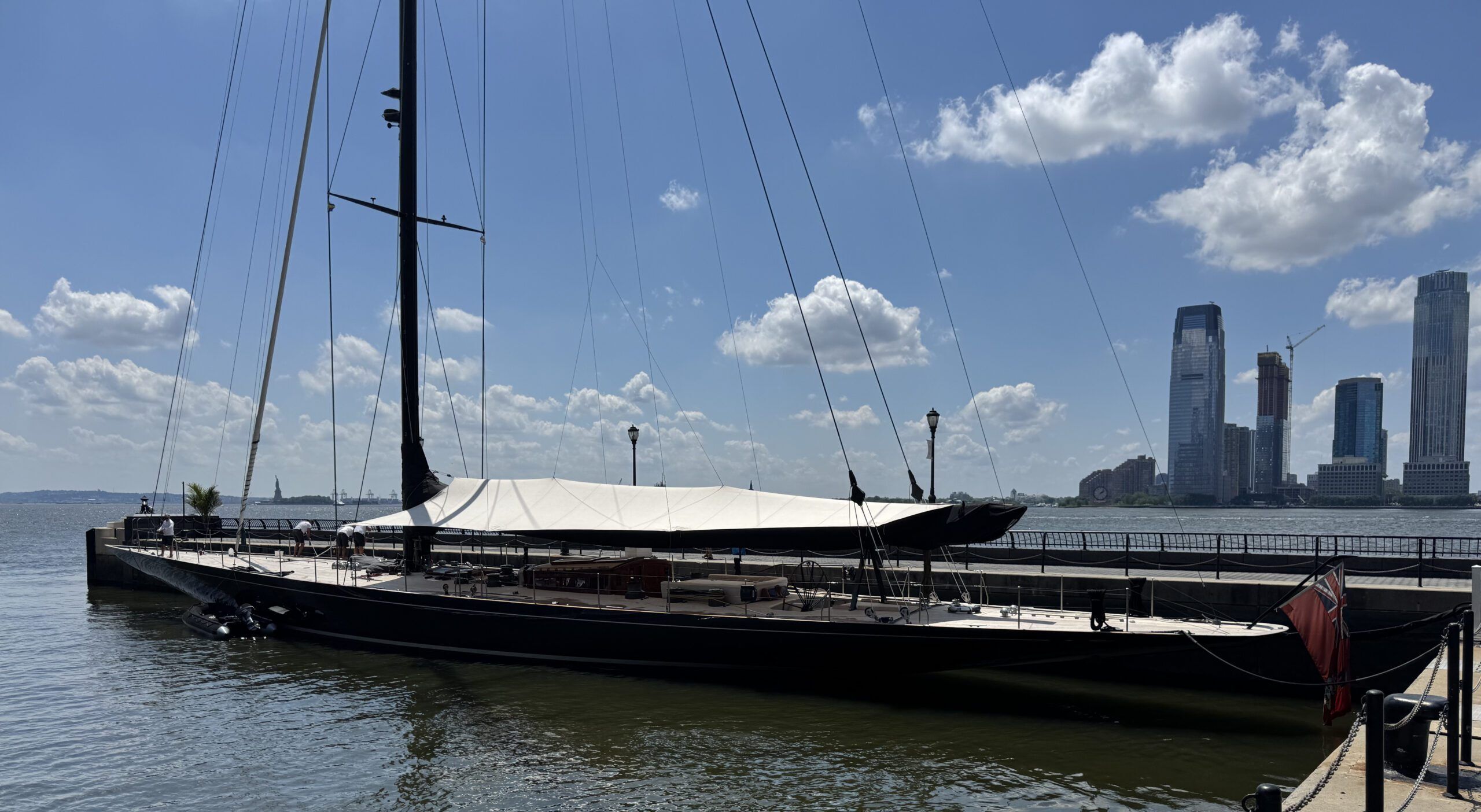
Svea’s 1937 design was laid down in aluminum by her original owner starting in 2012, but the project was halted in 2016. A new consortium stepped in and she was finished in 2017. According to Kelly, Svea is all 1937 from her gunwales down, and a SpaceX rocket from the gunwales up.

Best of the Old and the New
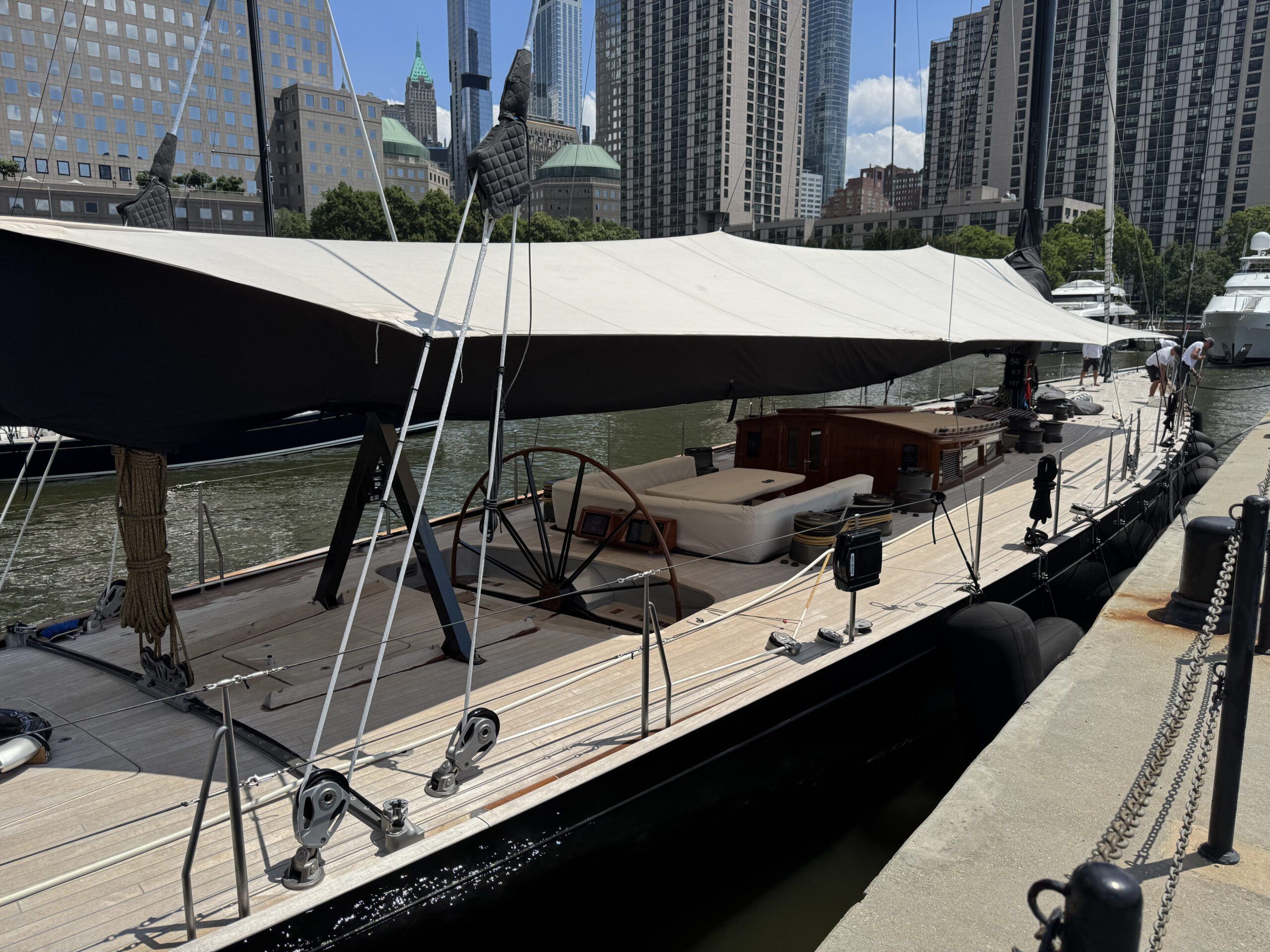
She carries a four-spreader carbon rig, a carbon boom and carbon spinnaker pole. North’s molded 3Di sails drive her, and a huge carbon wheel sunk into a deep recess allows the helmsperson to stand outboard for better sight lines. Her deck is festooned with electronic readouts for racing, allowing the afterguard to measure and monitor everything from velocity made good to subtle shifts in apparent wind when Svea’s massive 143-foot long hull powers through the water.
To control Svea’s cloud of sails, she has banks of huge Harken electro-hydraulic self-tailing winches—eight arrayed around her central trimming pit. Kelly said each gear of each winch can be individually tweaked and tuned to yield different levels of output based on changes in trimming requirements around the racecourse.
Interior
Of course a J-boat owner and crew can’t sleep on sail bags and settle for Dinty Moore. Svea’s interior, designed by Pieter Beeldsnijder and deVosdeVries, is classically tasteful, functional and comfortable, with a full-width owner’s cabin aft, a big galley to prepare bountiful meals for her 35-person crew, and private cabins for guests forward. Claasen Shipyards initiated the build in 2012, which was completed by Vitters Shipyard in 2017. Final build and commissioning was supervised by Hoek Design.

Bottom Line
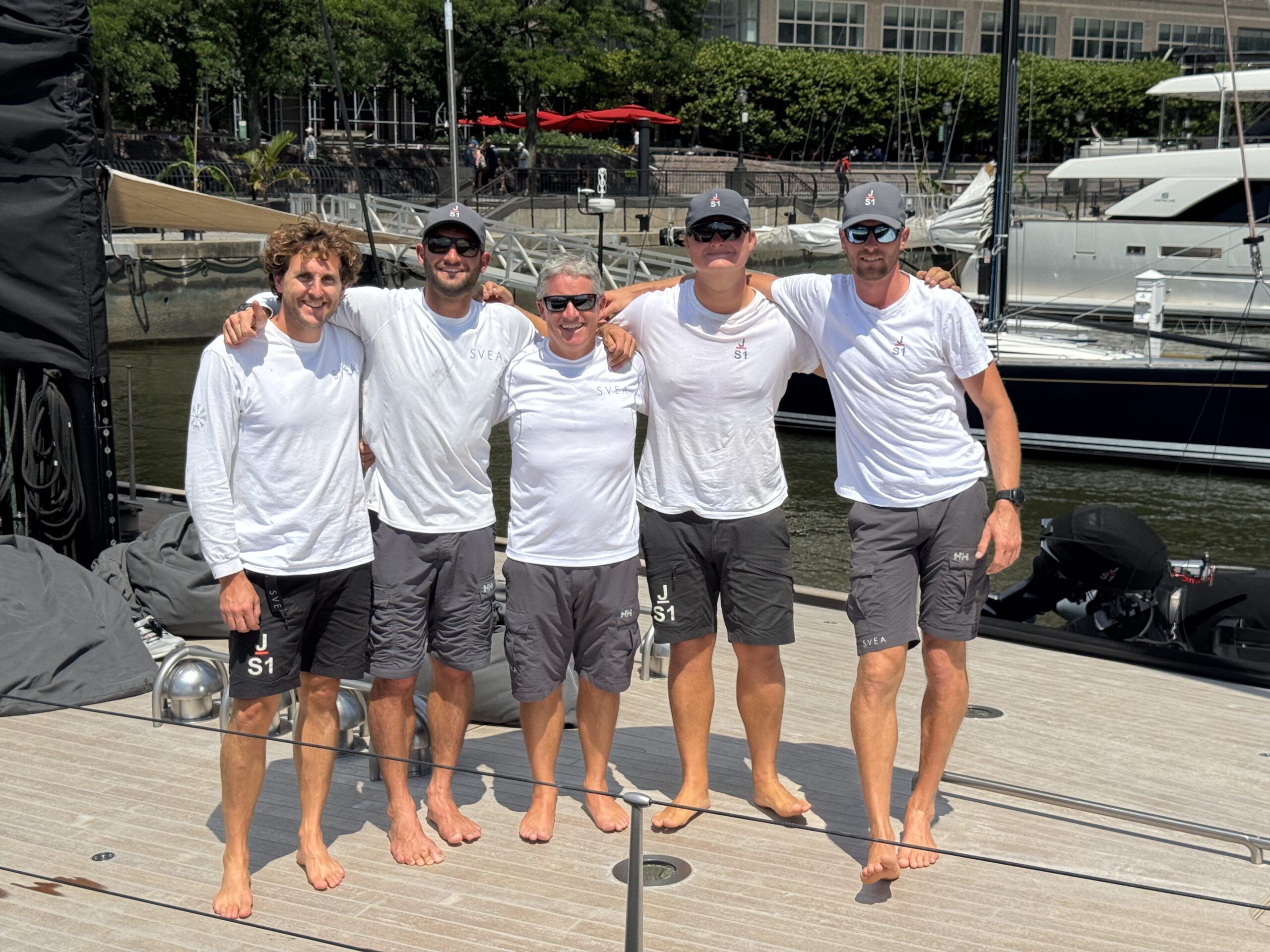
How cool is it to sail a J-Boat? Just check out Englishman Paul Kelly’s smile after Svea landed in Manhattan this morning. As they say on the other side of the pond.
“Jolly good!”
Svea’s next stop will be Newport, Rhode Island for more J-Boat action.