


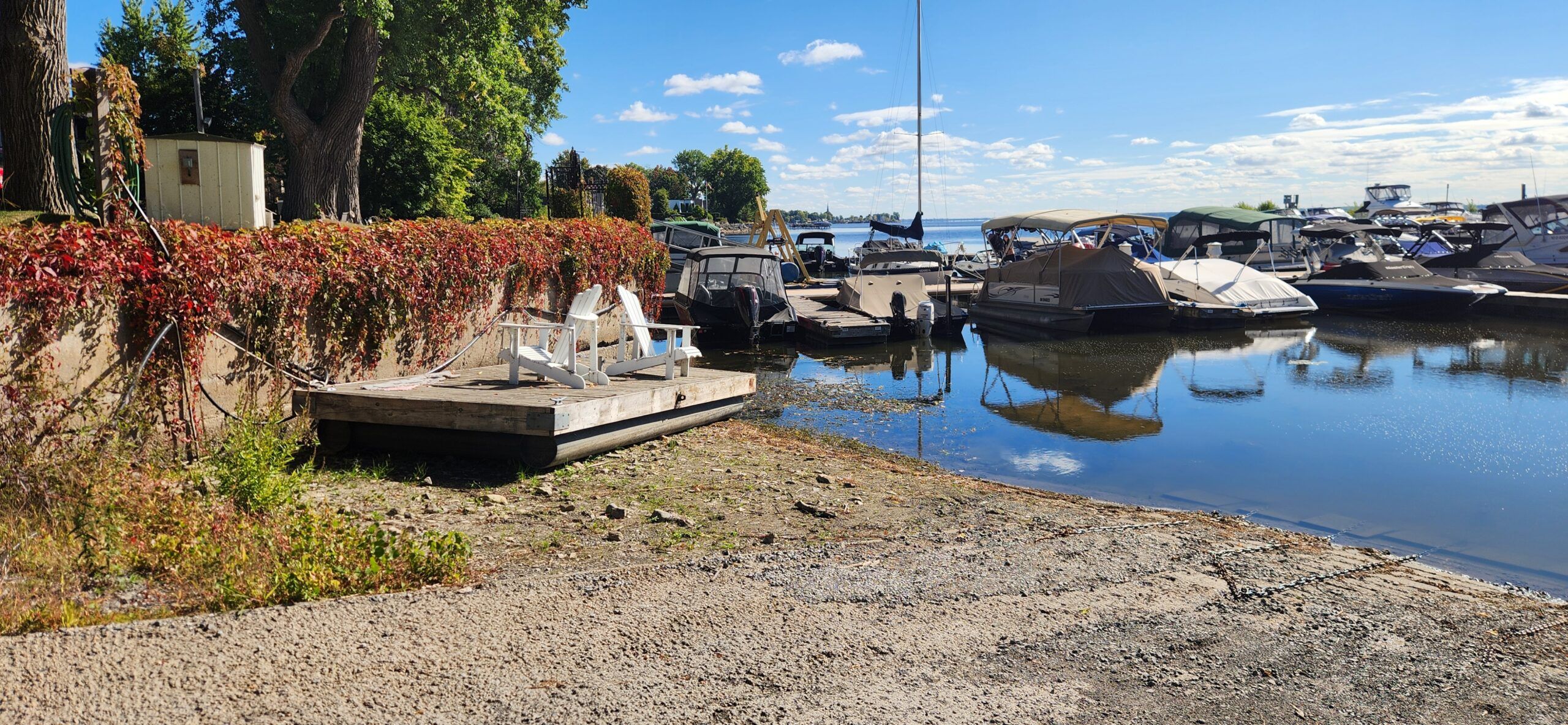
Worldwide, freshwater lakes, rivers and waterways are currently impacted by the lack of rain and water levels, creating serious concerns for all types of boaters, marinas and yachts clubs. The United States and Canada are certainly not spared and, unable to reach launch ramps and service piers, boaters, marinas and yacht clubs are worried as many are scrambling to find solutions to hauling out boats. This is especially true for those located north of the North-American snow belt, where lakes and harbors freeze over the winter— leaving boats in the water is not an option.
The 2025 boating season will be one remembered by all boaters, particularly sailors, as the water levels are at all time lows. What’s worst is that the levels have dropped in the latter part of the season when, very soon, many boats will need to be hauled out before winter sets in and water turns to ice.
For most sailors, this means having to lower their mast. For those with deeper keels, this will absolutely mean trouble as they are unable to get close enough to service piers or shear legs. This is where lots of creativity will be required. As they say, necessity is the mother of invention.
Here are some examples of what some clubs are doing, or at least hope to do.
Quebec Area

The Royal St-Lawrence Yacht Club, in Dorval, Quebec, despite having the most equipment and top-notch facilities, are concerned because their travel lift basin is currently too shallow for many of their members with keel boats. They reported that they have many deeper keel sailboats stuck in their slip, unable to go out, let alone get to the service pier to lower their mast or empty their poop tanks. Despite having a great travel lift, they may have to resort to hiring a big old crane with a large weight and reach capacity. Good luck booking one on time for the haul-out season. Dredging the basin is not an option unfortunately due to permit requirements and the time it takes to get them.
Crane Contingency Plans
The Île-Perrot Yacht Club, (my club) also located in the Montreal area, are also having to make contingency plans. This sailboat-only yacht club owns their own large crane that is able to reach, as well as lift, every boat in the club. The club limits boat sizes to 30 ft. max length and 5 ft. draft maximum. So, the crane can lift boats even if they are 5 to 8 feet away from the pier, where the water is deep enough to advance.
However the service pier, where boats go to lower their mast, is currently not accessible for boats with 4 feet of more of draft. The club is planning to set up and use the crane to lower mast for those unable to get to the service pier. Other local clubs have offered the use of their service piers to lower other club’s member’s mast.

Other marinas and clubs in the area, including the New England areas (New-York, Vermont, New-Hampshire) New-Jersey, Pennsylvania, Ohio, etc. are reporting the same general issues and concerns.
Dams and Water Levels
Other than Mother Nature, water levels from the Great Lakes all the way down the St. Lawrence Seaway are mostly controlled by the U.S. and Canadian Seaway Authorities that control water flow via multiple dams and hydroelectric dams. There are dams controlling water flow down from the Hudson Bay all the way to the Outaouais River (Ottawa River), which joins the St. Lawrence Seaway in the Montreal area. Of course, their priority must be to protect their power generating turbines, and this year is no different. While they are aware of the situation in areas affected by water levels under their control, they must also protect their power generating turbines. So, releasing too much water is not an option.
However, as of September 9, the Seaway Authorities said they plan on releasing some water in mid to late October. This is cutting it close, as yacht clubs and marinas usually start hauling out boats during that same period. Plus, will the short release of water bring the levels up enough to make a difference.
Lake Sailors Impacted
Elsewhere in North-America, water levels are also causing headaches. Some marinas, like those in Nevada’s Lake Mead and Lake Powell in Utah, may not have winter freeze to contend with, but they too have their challenges as many have their boats and docks are actually sitting on the bottom. Stuck in the muck as they say. For power and sailboats with flatter bottoms or retractable keels, the concern is not as serious as sailboats with fixed keels that are now leaning over.
Many access ramps across Canada and the U.S. have reported they need to close the access to their boat ramps as there is insufficient water to actually make it to the ramp.
Many boaters located in the upper half of the country will have to make alternative plans to lower their masts and have their boats hauled out, sooner rather than later, before winter arrives. For most areas, this means mid-December at the very latest. October would be best!
Areas Most Impacted by Drought Conditions
The chart below shows the areas currently most affected by water levels in the U.S. All red, orange and yellow zones are at abnormally low levels. And precipitation forecasts are not encouraging.

Boaters in these areas, especially sailboats, would be well advised to cut their season short and plan their haul-outs as soon a possible.
Conclusion
Let’s hope Mother Nature will intervene and come to the rescue soon. On the upside, this season, many sailors are learning how to get themselves off the rocks.
How are the water levels in your area and what measures are you and/or your club and marina doing as countermeasures? Please comment and share. I’d love to hear from your part of the world.






Definitely seeing this on Lake Ontario. We have a Beneteau First 36.7, so the keel is over 7′ deep. Amazing for racing upwind, but challenging for haul and launch! This year we’ve moved our haul-out marina to another port due to the slip not being deep enough in our normal location. When they set our boat down in the Spring it was wobbling on the keel, and took quite an effort to plow out when the work was down (luckily soft mud). That was even before the draught. When we delivered our boat to its new haul out port the first staging slip we tried to get into was so shallow we bottomed out 1/3 of the way into it. Luckily we found another that was deep enough nearby. This has also made us think about hauling earlier since lake levels always drop in the Fall, so it’s cutting the season a bit shorter.