




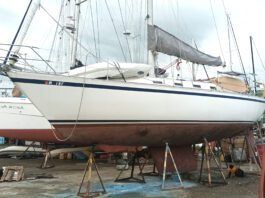
Sailboat Do-it-Yourself Rig Survey
Several subscribers who read my recent blog post regarding stainless steel corrosion, “Detecting and Dealing with Stainless Steel Corrosion” asked if we had any...

The Curse of the Mystery Mooring Chain
We’d like to say mooring chains like the one pictured above are a rare occurrence, but they are not—especially when you get off the beaten track and find yourself in unregulated mooring fields where the law of the jungle prevails. We’ve seen moorings like this in even “high-end” clubs, and for anyone who is familiar with our dozens of anchor chain tests over the years, this may come as no surprise.

Saving a Furling Genoa with Paint
if you look closely, it is clear that something is different with the genoa aboard Tech Editor Drew Frye’s F-24 Corsair. Battleship gray is not a common color for the suncover on a recreational sailboat, and the sheen is more reflective than normal. The boat's suncover is actually painted with flexible paint that was meant for inflatable boats — and nearly three years later, it's still holding up just fine.
Rotten to the Core: Deck Core Repair Advice
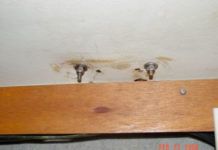
Cored decks are a soggy subject that many owners of older boats can relate to. In a perfect world, your boat's manufacturer has anticipated where all deck penetrations are necessary (stanchion bases, cleats, etc) and has "de-cored" these areas by reverting to solid fiberglass, allowing you to mount hardware without drilling into the core. But this is rarely the case with older boats.
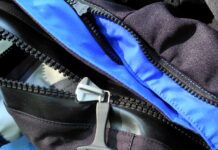
Details to Look for in Drysuits for Sailors
As more cruising sailors take advantage today's technology to extend their sailing season in winter or to push into the higher latitudes for new summer adventures, sailing apparel makers have followed suit—as in drysuit.

Winterizing Your Boat’s Water System
Much of your winterizing success will depend on the initial condition of your existing water system. If it is nearly sterile (effectively chlorinated water), there may be too few bacteria and fungus present for infection to start. However, if you use less than 20 percent alcohol or glycol (after dilution with water left in the system) you are at risk of biological growth; the lower the concentration the greater the risk. This is the reason why vodka and other alcohol-based winterizing fluids should be avoided. In our testing these solutions acted like an invitation to a microbial feast.

Safe Navigation in Poorly Charted Waters
I often worry that the topic of chart accuracy, which we revisit in the upcoming April issue of Practical Sailor, downplays the importance of other skills, published sources, and equipment we should use to solve a navigational puzzle. A recent bottom-scraping cruise I took along the ever-changing coast of Southwest Florida reiterated some key points regarding coastal navigation.
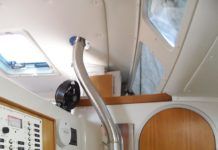
LPG Fireplace Safety Guidelines
As part of a report on the Dickinson P9000 in the December issue, Practical Sailor tester Drew Frye provides an in-depth guide to a do-it-yourself installation, with special emphasis on safety. The following are important safety tips that generally apply to any propane heating system, whether it is the Dickinson fireplace, a Sig Marine cabin heater, or a similar heater.
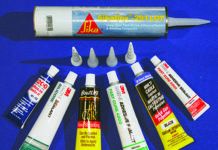
The Right Caulk for Your Boat
The sudden and complete failure of 3M's 4000U adhesive sealant after five years of exposure, discussed in the upcoming December 2021 issue of Practical Sailor, inspired me to review our extensive library in adhesive sealants to determine if it could have been due to an application error. The short story is that it wasn't. Choosing the right sealant or flexible adhesive used to be fairly straightforward. There were fewer products and usually there was somebody to tell you which compound was best for bedding cleats or sealing joints. That's no longer the case. These days trying to find the right sealant for the right job is as complicated as choosing breakfast cereal, except that if you make the wrong choice you are-literally-stuck with it.
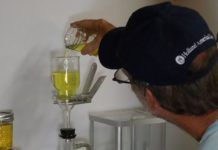
Fuel Storage Tips for Sailors
Sometimes it is not what has been added to your fuel that matters, but what is missing. Anywhere between 5 to 20 percent of the contents of a portable or installed polyethylene tank can vanish during the course of a year, the result of breathing losses and permeation. The remaining fuel is lower in octane, contains fewer of the volatiles that are so essential for easy starting, and has reduced solvency for gum and varnish. It often looks perfectly good, but is perfectly rotten and potentially harmful as fuel.

What Happens When Lightning Hits a Sailboat?
Lightning striking a sailboat sounds like something out of a disaster movie—but what actually happen when it does? In this episode, we break down...



Latest Sailboat Review

Caliber 33 Used Boat Review
The Caliber is a peculiar blend of tradition and innovation, of security and performance, of practicality and pizzazz. All of the owners we heard from were "satisfied." One called the 33 his favorite boat over six decades of sailing.