





Propellor Paints Versus Barnacles
Practical Sailors search for longer lasting prop paints has led us down many rabbit holes, we've experimented with several different prop paints with varying degrees of success, although none of the results so far have been dazzling. Some of our testers have had better success with dedicated slick prop paints such as PropSpeed. In our testing, however, mostly in Chesapeake Bay, no prop paint had lived up to our increasingly faint hope that the paint repel growth as effectively as our hull paint.
Complacency and the Modern Sailor
In recent years it seems as if not a fall sailing season goes by without at least one presumably sound vessel and experienced crew running into trouble off Cape Hatteras. It is almost as if todays sailors are suffering a severe case of amnesia, causing them to forget that this stretch of water has rightly earned the moniker Graveyard of the Atlantic. Or perhaps this is just another example of how improved weather forecasting and state-of-the-art navigation and communication systems (not to mention distress signaling) has led us to become complacent?
Drysuit vs. Survival Suit for Offshore Sailing
The problem with survival suits is that theres no telling when the big wave or brutal wind gust will hit, and it may not leave time to don a survival suit. Some survival suits have sewn-in gloves that make it almost impossible to turn on the radio or deploy a personal locator beacon. Thats why wearing a comfortable, breathable drysuit makes sense. It leaves you much more ready to manage the boat in heavy weather. And should the unexpected happen, your odds of survival in the water are better than they would be in foul weather gear.

Repairing Plastic Water Tanks
In our recent report on plastic tank repairs, we explore several different methods of repair, including heat-welding using commonly available welding kits. As that article points out, the manufacturers of these tanks do not recommend such repairs. However, our long-term tests of steel-mesh reinforced repairs of water and holding tanks (not fuel!) have so far been very promising.

Preserving Leftover Paints and Varnishes
Perhaps the best reason to touch-up or add a coat of varnish in the fall is to avoid having to do it in the spring, when you are anxious to get back in the water and have so many other critical tasks to carry out. But once your varnish work is done, what do you do with partially full cans that you don't want to go bad?
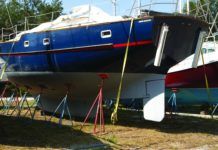
Pro Tips to Hauling Out
Once a boat has been shored and blocked, its a good idea to layer tarps or plastic sheeting beneath it. That keeps cleaners, paint, paint removers, and other chemicals from contaminating the ground. Layering the tarps means you can remove a soiled one and have a clean surface to kneel or stand on.
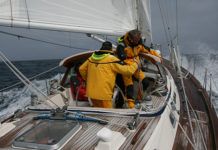
Bracing for Cold and Wet Sailing
As any cold-weather sailor will tell you, the battle against the elements involves more than just bibs and a jacket. Keeping out the wind and wet begins with underlayers, boots, and gloves. Whether youre dreaming of high latitude adventures, or just want to keep sailing through October, weve got you covered. Here is a summary of past reports on cold-weather sailing apparel.
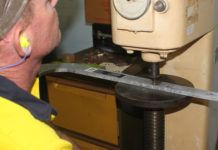
Quick and Dirty Anchor Shank Strength Test
So you've read our many reports on anchor shanks, and you're thinking, "I wonder what kind of steel my anchor shank is made of?" You could go to the maker, but you might find, as we did, that some manufacturers consider this proprietary information - as if the strength of the steel is not worth sharing with the consumer. So you decide to find out for yourself.
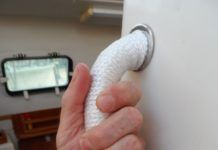
A Better Hand Grip
Most boat railings are a spindly -inch or 1-inch diameter polished stainless. The Occupational Safety and Health Administration, on the other hand, requires hand rails be 1 -inch diameter. The average baseball bat, hockey stick or hammer is about 1 -inch, often fattened with tape beyond that. Why would we accept anything less secure on a wet and wildly pitching deck?

Coast Guard Warns of Radio Interference from LEDs
In response to ship reports of radio interference from LED lights, the U.S. Coast Guard has issued a step-by-step guide to checking for interference on VHF frequencies used for radiotelephone, digital selective calling (DSC) and automatic identification systems (AIS). Because mariners use these frequencies for communication and tracking of nearby vessels, interference can create a safety hazard. Practical Sailor has been warning sailors about problems with LED lights for several years, and has tested several LED navigation lights for VHF interference.

Morgan 382 – The $30K Boat Nobody Talks About
The Morgan 382 might be one of the most overlooked cruising sailboats ever built. Designed by legendary naval architect Ted Brewer and produced between...



Latest Sailboat Review

Jeanneau 55 Boat Review
This recent sailboat from Jeanneau may as well be a spaceship. They’ve taken all the time-honored designs of a monohull aft cockpit and turned...