



Making a Case for Sodablasting Your Hull
One of the biggest mistakes an owner makes when estimating how much time it takes to strip bottom paint from a hull is to peck away at one of the easy spots where the paint is peeling and then assume the rest of the coating will come off just as easily. We offer a more realistic formula for estimating the amount of time a stripping project will take.
The Best Sailboats for the High Seas?
At the St. Petersburg Boat Show month a while back, I had the pleasure of seeing delivery skipper and author John Kretschmers presentation on what he called sailboats for a serious ocean. I have reservations about any ideal boat list, but Kretschmer, who reviews boats for Sail Magazine and whose most recent book Sailing a Serious Ocean was one of our favorite books last winter, has the ideal background for this sort of work, and a list like this is undeniably helpful for wannabe cruisers who need a place to start their search.

Buyers Beware of Post-Storm Bargains
If you are in the market for a used boat and live where winter storage is the norm, now is probably one of the best times to bargain. The owner is looking at another year of storage bills for a boat he no longer wants, and he knows that trying to sell a boat thats buttoned down for the winter is like trying to sell a house thats under a circus tent. However, if you are anywhere near the pathway of last years Hurricane Matthew, that bargain boat might well turn out to be your worst nightmare.

The Ultimate Test Boat Test
Ive been the fortunate witness to the rebirth of a boat and the marvelous effects that sailing can have in the life of a boy. And Practical Sailor readers have unknowingly been along for the ride. For the past five years, boatbuilder Robert Helmick has allowed his Endeavour 42 Lost Boys to serve as a test platform for a wide array of sailing gear featured in these pages.
Can a Snubber Hook Weaken Your Rode?
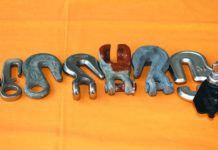
In the March 2016 article Changing views on chain hooks, we pointed out that the major manufacturers of marine anchor chains caution that some chain hooks can weaken chains under extreme loads. These chain hooks are often used to attach an anchor snubber to the anchor chain. We confirmed this effect with testing and advised that if you want to use a hook on your anchor snubber, you should choose a hook that doesn't weaken the chain through point-loading (concentrating shock loads on a small area of the chain link). Greg Kutsen, president of Mantus, the maker of one of the chain hooks that we tested, contends that the real-life loads encountered when anchoring with a snubber are not significant enough to worry about any point-loading caused by the hook on the chain. Kutsen explains the reasons for his view here.

The Chilling Facts About Cold Water Survival
After living in Florida for so many years, it is easy to forget the risks associated with colder waters, as the video on cold-water survival that I have included in this weeks blog post demonstrates. According to the U.S. Coast Guard, the risk of drowning increases nearly five times if the water temperature is below 59 degrees. That puts many sailors in the Northeast, West Coast, and Great Lakes areas at risk for most, if not all of the year.
Storage Tips for Gasoline and Diesel
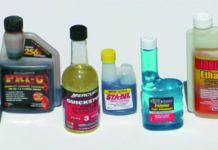
If you're putting your boat into storage this winter, one of the simplest jobs you can do to save you headaches next spring is to make sure youve treated your fuel system for storage. For owners of diesel engines, you want to protect your tank year-round against biological growth-primarily fungus and bacteria. For owners of gasoline powered boats-the bad side effects of ethanol fuel are your chief enemy. Our test of biocide treatments safe for diesel fuel singled out products from Biobor, Racor, Starbrite, and Valvtect as good choices.For those with gasoline engines, the problems with ethanol require a specialized product. This months issue has an update on our test of ethanol fuel additives for marine engines. BioborEB again proved its superior ability to fight corrosion. Sta-Bil Marine Formula, Star Tron, and Mercury QuikStor (the most expensive treatment, by far) picked up recommendations. Sea Foam came in as the low-budget contender.
Corrosion Protection: Ethanol Fuel Additive Test
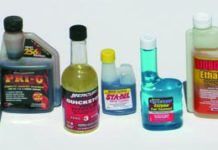
Those boatowners preparing their gasoline-powered boats for winter storage will want to take a look at our gas additive test which compares the corrosion fight characteristics of such products as Biobor EB, Valv Tect, Sta-bil Marine Formula, Mercury QuickStor, Sea Foam and others. It is important to keep in mind that additives can't solve real gasoline-quality problems. At best, consider additives to be only a final tweaking opportunity, something to supplement the following fuel-management practices.
Tips for Caulking Polyethylene
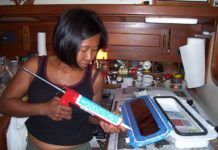
In our upcoming test of marine sealants we looked at ways to develop bonds between common polyurethane sealants and polyethylene plastics-the kind of plastic used in a variety of marine products ranging from fuel tanks to baseplates. Starboard is one of the most common brand-name high-density polyethylene materials, and it is notoriously difficult to seal or bond using conventional caulks or adhesive sealants. But there is a partial solution to using an adhesive sealant with plastic, and our tests show it works.
The Blow-by-blow Boathook Test
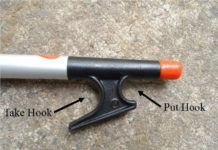
Our first surprises came when we began pull- and push-testing the telescoping boathooks. Only one pole consistently held firm under load. All the others slipped at loads between 100 and 185 pounds. We then tested them in compression. Most of the poles could manage 170-pounds of compression, although a few telescoping poles slipped.

Morgan 382 – The $30K Boat Nobody Talks About
The Morgan 382 might be one of the most overlooked cruising sailboats ever built. Designed by legendary naval architect Ted Brewer and produced between...



Latest Sailboat Review
Caliber 33 Used Boat Review
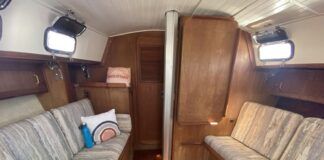
The Caliber is a peculiar blend of tradition and innovation, of security and performance, of practicality and pizzazz. All of the owners we heard from were "satisfied." One called the 33 his favorite boat over six decades of sailing.