


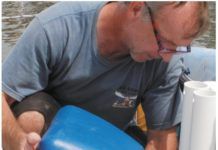
Making a Do-it-Yourself Jerry Can Drip Catcher
The previous owner of our test boat swore by using a funnel. Of course, the funnel was too small to catch nozzle leaks, reduced the flow, required holding a heavy can on a rocking deck for three minutes while the CARB can dribbled along, hoping the wind or rocking didnt move the funnel. (Sure, the flow is faster with non-CARB cans, but you had to reduce the flow for the funnel anyway.)
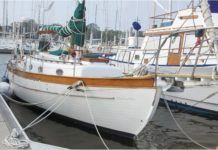
Floating Docks and Storm Preparation
With regard to your July 2016 article on storm preparedness and spring lines, what advice is there for storm prep for floating piers? We are in a slip with a 36-foot boat, and there is no way to cross-tie to pilings across the slip. Also, there are no cleats at the head of the slip, only on the finger pier.
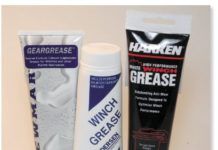
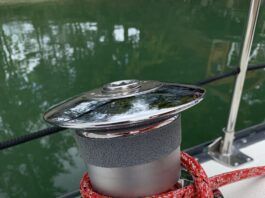
Winch Grease Corrosion Tests
When it comes to most mechanical things-like wheel bearings on a car-its miles that wears em out, as my grandfather used to say. And while there are many reasons why 200,000 miles on a modern car is less remarkable than 75,000 miles was in his day, improvements in lubrication rank high on the list. Lubes of old would oxidize to sludge, stop circulating, wash out, fail to suspend dirt, and drop in pH from acid buildup-or all of these.
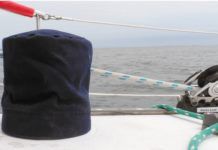
Winch Servicing Basics
While using the right winch grease is important, servicing the winch before the grease turns to gum, washes out, or the pawls start to hang up is more important. Makers recommend annual servicing, but racers and full-time cruisers may go one to three years, and weekend sailors might stretch it a bit further. Three years really would be the max, unless you can live with increased wear. If you go any longer, you risk increased wear and even damage. If the pawls hang up and the drum releases, parts can break, and people can get hurt as the handle whips around.
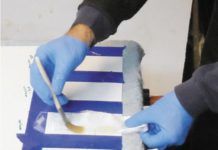
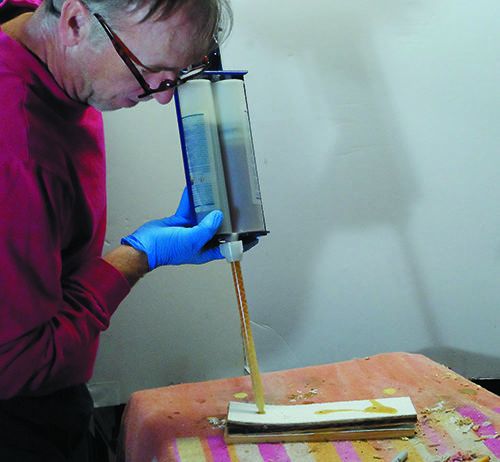
Unsticking Molds
Our boats are molded, heart and soul, from fiberglass resin. And while sailors will argue for hours over the best splice, multi-function display, or anchor, repairs or modification to the actual fiberglass structure are considered a black art. However, working with composite structures is not much more complicated than woodworking; it just requires a new skillset and a different bag of tricks.
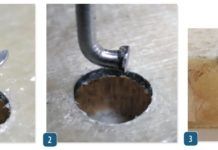
How big does a backing plate need to be?
Practical Sailor recently tested the strength of solid laminate with relation to the bolt passing through it (see PS, June 2016 online). We also tested several materials used to make backing plates when attaching fittings, hardware, and structural components to the boat.
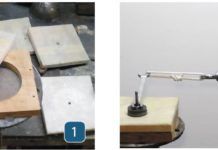
Loading Up Backing Plates
Our deck core samples for testing duplicated the deck core of our test boat, a 32-foot PDQ catamaran. Some other boat cores will be more strongly constructed; some will be lighter.
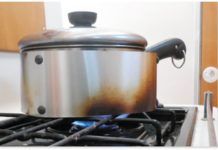
Pot Skirt: DIY Cooking in the Wind
The writers and editors at Practical Sailor are perpetual tinkerers-always looking for creative, do-it-yourself solutions to even the smallest onboard problems. We figure our readers likely suffer the same challenges on their boats, so were obliged to share such projects.

Epoxy Fairing Compounds, Part One
Breathing life into an older fiberglass boat always entails more work than was expected, but for a person with the time, skill, and do-it-yourself inclination, it is often worth the extra effort. The DIY approach makes even more sense when the boats structural quality and big-ticket components meet the grade, and the skipper and crew are ready to tackle the cosmetic makeover. These fairing compounds are perfect for structural and cosmetic fiberglass repairs.
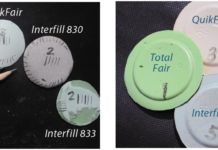
Testers Check Epoxy Sandability, Adhesion, and More
Testers evaluated sandability, resistance to sag, cure time, and adhesion using sample fiberglass panels with 3-by-3-inch test swatches. The fairing compounds were applied and cured in temperatures ranging from the low 60s to the mid-80s. Each test was repeated three times, and the results were averaged. The shaping test involved closely timed periods of even sanding using a block sander and new sheets of 80-grit sandpaper. Testers observed each materials tendency to clog the sandpaper, and measured the volume of accumulated dust after four minutes of sanding.

O’Day 40 – A Budget Cruiser for the Bahamas
The O’Day 40 (1986) is one of those cruising sailboats that somehow slipped through the cracks of sailing history. Built during the final years...



Latest Sailboat Review
Island Packet Estero Used Boat Review
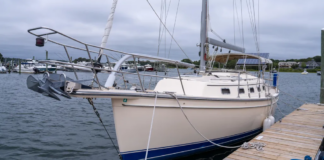
Florida-based Island Packet targets a relatively narrow niche, so the toughest competitors to its new boats are often older Island Packets. Introduced in 2010, the 36-foot, shoal-draft Estero is the company’s latest attempt to introduce a distinctive model that doesn’t stray too far from the company’s proven formula for success: moderate displacement, full-keel cruisers designed to be lived on, sailed far and in comfort, and endure the bumps, scrapes, and storms that cruising boats inevitably encounter. After sailing the Estero on Florida’s Sarasota Bay and inspecting its interior, construction, and systems, Practical Sailor testers noted that the shoal-water cruiser will appeal strongest to Island Packet fans who’ve been waiting for a shoal-draft, easy-to-sail boat that compares to the IP37 in terms of interior space. These strengths will be most apparent on intracoastal or riverine adventures like the Great Loop.