



Standard Horizon GX1700 Requires Firmware Update
If you purchased a Standard Horizon GX1700 VHF with GPS (PS Best Choice, June 2012) before mid-July 2012, it likely is in need of a firmware update. A bug in the original programming made it nearly impossible to save a waypoint using the Mark Position function.

Where Credit is Due: September 2012
Letters to Practical Sailor, September 2012. This month's letters cover topics such as: Marina in westBrook, Polyform, Questus Marine, and more!
Ultrasonic Antifouling Test Update
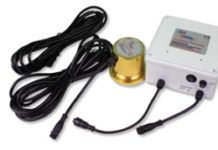
In April 2012, we launched a long-term test of SmartAntifouling’s M20, an electronic antifouling solution that the maker claims uses ultrasonic waves to prevent algae and barnacle growth on boat hulls. The M20 transducer emits a high-frequency vibration that creates a thin layer of moving water around the hull, making it difficult for organisms to attach to the hull. The evaluation was set to run for a few seasons. However, after just three months of testing, disappointing results prompted testers to put the experiment on hold until the test boat’s bottom is re-painted later this year.
Mailport: August 2012
Letters to Practical Sailor, August 2012. This month's letters cover subjects such as: Anchor Rhodes, Ultrasonic Antifouling, Inflatable PFDs, and more
Chemical Varnish Strippers
I want to varnish my companionway hatch boards, but I need to remove the old finish. Is there a varnish remover that works well and doesn’t ruin the wood?
Mailport: July 2012
Letters to Practical Sailor, July 2012. This month's letters cover subjects such as: Dinghy Launcher, iPad Glare, Racor, and more!
Where Credit is Due: July 2012
Letters to Practical Sailor, July 2012. This month's letters cover topics such as: BEP Marine, Sparcraft /Tylaska, and more!
Companionway Hatch Fix
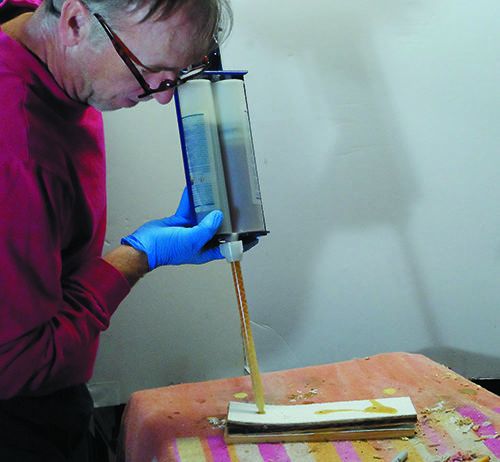
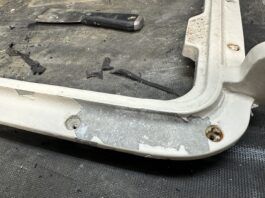
I did some research on gluing plastics and came away more confused than when I started. My research revealed that some plastics cannot be glued, while others can be, as long as the right glue is utilized. I don't even know what the smoke-colored, half-inch-thick hatch cover material is: acrylic, poly-carbonate, Lexan? Any suggestions would be appreciated.
Around the Americas in a Vega
Rutherford, who took 309 days to sail the 27,000-mile route in a 36-year-old, 27-foot Albin Vega, braved icebergs in the Northwest Passage, freezing winds in the Bering Straits, and relentless gales near Cape Horn. His was a tale of great adventure, the kind that sailors love to hear and tell.
Nonskid Test Update
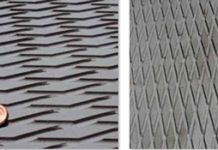
Practical Sailor recently tested a nonskid mat from Soft Deck Inc. as a followup to our January 2012 report on do-it-yourself options for replacing worn nonskid. Soft Deck Inc., owned by brothers and lifelong sailors Ross and George Champion, is a family-run business with manufacturing based in Southern California. The January report reviewed six nonskid paints, three nonskid additives, and two nonskid mats. For this evaluation, we used the same test protocol to compare the Soft Deck to our Best Choice mat, Tiflex’s Treadmaster (www.tiflex.co.uk.com).

O’Day 40 – A Budget Cruiser for the Bahamas
The O’Day 40 (1986) is one of those cruising sailboats that somehow slipped through the cracks of sailing history. Built during the final years...



Latest Sailboat Review
Caliber 33 Used Boat Review
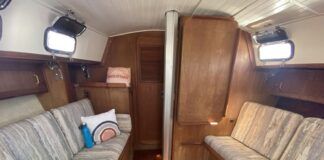
The Caliber is a peculiar blend of tradition and innovation, of security and performance, of practicality and pizzazz. All of the owners we heard from were "satisfied." One called the 33 his favorite boat over six decades of sailing.