


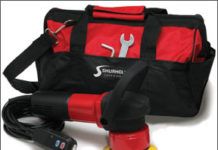
Shurhold Shines Among Electric Buffers
Practical Sailors endless testing of hull waxes and polishes gives us ample opportunity to try out electric buffers. Weve used countless brands and types over the years-from cheapos to professional grade-and decided to see how Shurhold Industries new Dual-Action Polisher compared.
April Attitude Adjustment
For the northern sailor, April is the cruelest month. Its been five years since I moved back to Florida, but I remember those Rhode Island winters well. With the morning chill and evening darkness coming still too early, it is a dispiriting time to get real work done. The false hope of April, more than anything else, chafed upon my psyche.

Mailport: April 2010
Letters to Practical Sailor's April 2010 issue include: MOB drills, tethers, nav lights, cleats, no-buff shines and tankless water heaters.

Cape Dory 25 Do-It-Yourself Refit
Cape Dory sloops-even those like the 25, which was not designed by Carl Alberg-have one of the most loyal followings among production boats. These loyal owners, added to a reputation for quality construction, enables Cape Dory boats to hold their resale value well, making them prime candidates for a do-it-yourself project boat like Practical Sailors test boat, Satori, a 1981 Cape Dory 25.Satori was purchased in 2008 in Sarasota, Fla., for $1,500. Although structurally sound for a boat her age, the interior had been gutted.Satoris sale price included an inventory of like-new sails, a new 5-horsepower Nissan outboard, and ground tackle. Completely rebuilding a boats interior would seem daunting to many, but Satori owner Jon Perkins is a carpenter by trade so he had the tools, resources, and know-how to get the job done. Cape Dory is an ideal fixer-upper boat, if the owner is up for the project. On today market, the Cape Dory 25 can fetch $3,000-$8,000. The pocket cruiser is also an excellent boat to fix and sail as a nice weekend cruiser for a family or a coastal cruiser for a couple.
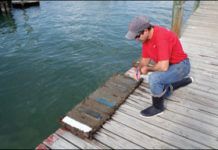
Bottom Paint Test Updates
These six-month and 18-month bottom paint test updates cover dozens of antifouling paints that were immersed in Florida waters.Tested paints include marine coatings from Blue Water, Epaint, Flexdel, Interlux, Pettit, Sea Hawk, and Copper Coat, an epoxy-copper blend that claims multi-year protection. BoatKoat Laminates experimental stick-on antifouling for sailboats also was included in the fray. Hard antifouling paints and ablative antifouling paints work differently and are intended for different applications. Find out which type best matches your sailing style and boat maintenance regimen. Testers flagged the best bottom paints in each category, including ablative paints, hard paints, freshwater paints, aluminum paints, racing paints, water-based paints, and eco-friendly paints. Copper-free bottom paints and low-copper coatings performed surprisingly well at the six-month mark.
Mailport: March 2010
The March 2010 issue of Practical Sailor features letters from readers on such subjects as: household adhesives, Union 36s, foggy electronics, digital freezer controls and converting a boat from gas to electric.
PS Advisor: Do Alcohol and Antifouling Mix?
Today I went to paint the bottom of my boat with Interlux’s VC-17m, which I have used since it first came on the market. I had always cut/thinned the paint a bit with acetone. Today, the West Marine store manager (who is an experienced boater) told me that Interlux changed the VC-17m formula and that you should thin it with simple rubbing alcohol. When I used the paint with the alcohol, I noticed that it did not dry as quickly as it had with acetone and seemed thicker than usual after mixing the copper powder. Is it correct that you can now use isopropyl (rubbing) alcohol to "thin" VC-17m antifouling?
Portable Sailing Tools for Tracking and Tuning Boat Speed
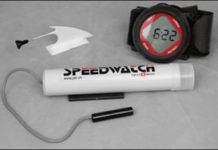
Practical Sailor recently spent a week experimenting with three handheld products geared toward performance sailors. These portable tools are for tracking and improving sailboat speed. Unlike conventional portable GPS units, which have relatively small displays and deliver a wide range of navigational data, these products display large digits that can be read from a distance, and the view options are limited to those that relate exclusively to speed and racing performance. Practical Sailor tested the Speedwatch and two GPS units, Velocitek SC-1 and SpeedPuck. These instruments make good training tools for young sailors and will give all around-the-buoy sailors the ability to quickly quantify performances.
Bio-Solv Green Acetone
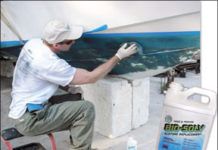
A bottom-paint job is unpleasant from start to finish, and wiping down the hull with acetone plays a role in that unpleasantness. So when a Cinnaminson, N.J., company sent us an acetone alternative called Bio-Solv, we were more than keen to test it. Bio-Solv is a non-toxic, non-flammable cleaner that works better and is safer than acetone, lacquer thinner, or Xylene, according to Anthony Severino of MAS Epoxies, which began selling Bio-Solv last year. The company buys it from a proprietary manufacturer.
Mailport: February 2010
The February 2010 issue of Practical Sailor has letters on the following topics: requests for more used boat reviews, foggy electronics, hard varnishes, propane fridges and Iphone apps.

O’Day 40 – A Budget Cruiser for the Bahamas
The O’Day 40 (1986) is one of those cruising sailboats that somehow slipped through the cracks of sailing history. Built during the final years...



Latest Sailboat Review

Caliber 33 Used Boat Review
The Caliber is a peculiar blend of tradition and innovation, of security and performance, of practicality and pizzazz. All of the owners we heard from were "satisfied." One called the 33 his favorite boat over six decades of sailing.