


Mailport: 08/09
As a new boat owner, I have no end of questions, but here’s a quickie: I have recently had my boat hauled and sanded to the gelcoat, and repainted with all the right stuff. (The bottom was coated with Interlux CA Bottomkote.) Now, how often should I have a diver clean the underside, bearing in mind I live in San Diego? The service providers have a vested interest in selling frequent cleans—one company running a special at the moment wants me to sign a contract for a bottom clean every three weeks, but that sounds way too often to me. I realize it may well vary with geography and ambient temperature, but there should be some kind of general rule of thumb, perhaps?
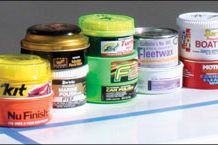
Paste Waxes Test Six-month Checkup
In February 2009, Practical Sailor tested a sampling of 10 paste waxes.After six months, two of these waxes clearly stood out for their continued ability to bead water and repel dirt. Collinite No. 885 Fleetwax and 3M Marine Ultra Performance Paste Wax retained the best gloss and water beading abilities. Mothers Cleaner and the Nu-Finish Paste performed well. Among the automative products that we included in the test, Turtle Wax F21, and Kit waxes stood out.
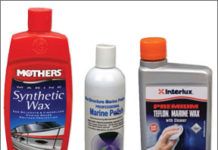
Practical Sailor Launches Long-term Liquid Boat Wax Test
With an ever-growing number of boat wax products on the market, Practical Sailor settles on 25 liquid wax products to test for application, initial gloss, and water beading. Marine wax manufacturers included Star brite, Cajun, Collinite, 3M, Mothers, Interlux, Rejex, Imar, Yacht Brite, West Marine, Turtle Wax, and Island Girl. In many ways the waxes all look, feel and smell the same and their differences may be in what the market application the manufacturers are seeking. Most of the two dozen waxes did a good job in the initial testing, and Practical Sailor will watch these for long-term protection. Waxes with a slightly oily wax finish formula showed better results at water beading in our initial tests, including two products by Star brite, and liquid waxes Island Girl, Zaino Brothers Z-3, Collinite Nos. 845/925, two carnauba wax products by Meguiars and Turtle Wax F-21.

Diesel Biocides Take On Contaminated Boat Fuel
Biological contamination of a fuel tank is a true challenge to any boater. Once the tank is infected with bacteria, an absolute cleansing of all contaminating organisms is necessary, or else the surviving organisms will repopulate the tank. Practical Sailor took a look at how fuel contamination occurs and tested six biocide fuel additives to combat a tank infected with microbial bacteria. Biobor JF, Racor, Stanadyne, Star brite, and ValvTect biocides were tested against diesel cultures shown to have a variety of bacterial and fungal species present. Similar to the effectiveness of antibiotics, the effectiveness of the biocides can varying depending on the type of infection they are fighting, testers found.
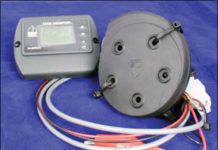
Boat Holding Tank Sensor Long-term Test Update
Last year, Practical Sailor installed and tested seven internally mounted liquid-level monitoring kits, including the sensors and their mated remote display panels, in a polyethylene holding tank; the results were reported in the May 2008 issue. The sensors spent the following nine months marinating in the tank, with the occasional sloshing by a tester, before being re-tested to see how well they continued to perform. The test field comprised float sensors, neumatic sensors, and an ultrasonic sender. Float sensors included Sealand TankWatch1, Dometic DTM4, Groco TLM Series, and Wema SHS-8. Air-pressure-fueled sensors included Fireboy-Xintex PTS and Hart Systems Tank Tender. BEP Marines (Marinco) TSI sender uses ultrasonic pulses to measure liquid levels.
Mailport: 07/09
Were trying our best to provide subscribers with the most value for their money, but for now, we must continue our policy of charging everyone to download articles published more than two months prior. Subscribers get a discounted rate on these archive articles, available at www.practical-sailor.com, and all subscribers have full access to this months issue and the previous months issue, as well as to other subscriber-only online content. Readers who register online get e-mail notifications, along with issue highlights, when each new issue is posted online. We encourage readers to download and save the articles (features are now available in PDF format) as soon as they become available. We recognize the value of having access to archive tests and are working to expand subscriber access.
The Crime of Owning a Small Boat
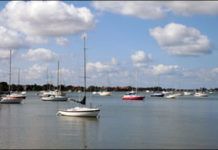
From shore, you can see the bright-green violation notice stuck to the hull of the San Juan 21. Several other boats in the soon-to-be "public" mooring field in Practical Sailors home port of Sarasota, Fla., bear similar stickers. The letter that the city mailed to the owner of the San Juan spells out the terms: Move the boat by Aug. 1, or it will be impounded and possibly destroyed. Its a familiar story. Burdened by a variety of "boat problems"-some real, some imagined-city officials move to further regulate the local harbor. Responsible boaters whove historically used the anchorage for free plead their case, but they are no match for the landlubber majority. A common solution is the one Sarasota has chosen: Install a fee-based mooring field and force boaters to use it. Many such mooring fields around the country are fairly priced, often administered by a government agency. In Sarasotas case, the mooring enterprise is supposed to be run as a not-for-profit enterprise. The contractor, Jack Graham Inc., also has a controversial long-term lease to run the adjacent marina, Marina Jack. The proposed mooring rates are above the norm, making it hard to dismiss the accusation that the fees are inflated to "keep the riff-raff out."
Feature-loaded High-end Marine Handheld VHF Radios
Practical Sailor tested eight high-end marine handheld VHFs from three manufacturers: Cobra, Standard Horizon, and Uniden. Among those tested were two updated Standard Horizon VHFs, the HX500S-LI and HX600S-LI, and three of the companys latest floating VHF radios, the HX750S, HX760S, and HX850S. From Uniden, testers evaluated the MHS450 and MHS550. They also tested the Cobra HH425 LI. These feature-rich handheld marine radios, priced from $130 to $350, were tested for transmitter power, frequency accuracy, frequency stability, receiver sensitivity, audio output, and audio quality. They also were submerged in fresh water, dropped from 4 feet onto concrete and batteries were left on for 15 hours to test battery life.
PS Advisor: Waterline Stains Revisited
I own a 1978 Columbia 9.6, which I sail on freshwater Lake Erie four to five months each summer at Sandusky Harbor Marina in Ohio. My problem is keeping the 1-inch white bootstripe between the bottom-paint line and the molded-in black stripe clean. After three or four weeks, the scum buildup requires heavy brushing or sanding to remove.
Do-It-Yourself Boatyards
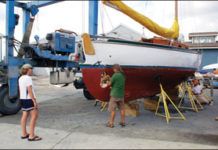
The cost of buying and maintaining a sailboat has spiraled to an all-time high. There are a few steps sailors can take to help keep boating cost effective, including buying a sound older boat and finding a boatyard that is friendly to do-it-yourselfers. In an effort to support affordable boating, Practical Sailor has launched a reader survey on DIY yards, where boaters can rate their favorite boatyard on criteria such as protection from foul weather, boat hauling equipment, service quality and availability, Travelift operator skill, and yard ambiance. These are among the criteria PS Technical Editor Ralph Naranjo used to rate our sample DIY yard, Galesville Harbor Yacht Yard on Marylands western shore of the Chesapeake Bay. Our look at Galesville and some tips on choosing the best do-it-yourself yard offer valuable insight for the DIY boat owner looking for a place to haul out.
O’Day 40 – A Budget Cruiser for the Bahamas
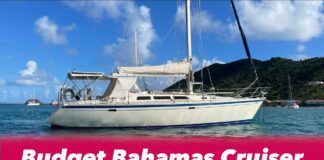
The O’Day 40 (1986) is one of those cruising sailboats that somehow slipped through the cracks of sailing history. Built during the final years...



Latest Sailboat Review
Island Packet Estero Used Boat Review
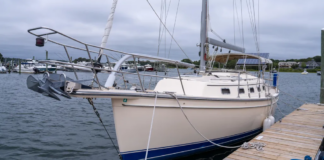
Florida-based Island Packet targets a relatively narrow niche, so the toughest competitors to its new boats are often older Island Packets. Introduced in 2010, the 36-foot, shoal-draft Estero is the company’s latest attempt to introduce a distinctive model that doesn’t stray too far from the company’s proven formula for success: moderate displacement, full-keel cruisers designed to be lived on, sailed far and in comfort, and endure the bumps, scrapes, and storms that cruising boats inevitably encounter. After sailing the Estero on Florida’s Sarasota Bay and inspecting its interior, construction, and systems, Practical Sailor testers noted that the shoal-water cruiser will appeal strongest to Island Packet fans who’ve been waiting for a shoal-draft, easy-to-sail boat that compares to the IP37 in terms of interior space. These strengths will be most apparent on intracoastal or riverine adventures like the Great Loop.