





Do-It-Yourself Boatyards
The cost of buying and maintaining a sailboat has spiraled to an all-time high. There are a few steps sailors can take to help keep boating cost effective, including buying a sound older boat and finding a boatyard that is friendly to do-it-yourselfers. In an effort to support affordable boating, Practical Sailor has launched a reader survey on DIY yards, where boaters can rate their favorite boatyard on criteria such as protection from foul weather, boat hauling equipment, service quality and availability, Travelift operator skill, and yard ambiance. These are among the criteria PS Technical Editor Ralph Naranjo used to rate our sample DIY yard, Galesville Harbor Yacht Yard on Marylands western shore of the Chesapeake Bay. Our look at Galesville and some tips on choosing the best do-it-yourself yard offer valuable insight for the DIY boat owner looking for a place to haul out.
Practical Sailor Tillerpilot Test: the Simrad TP10 and the Raymarine ST1000 Plus
Offshore sailor Skip Allan tested two entry-level tillerpilots, the Simrad TP10 and Raymarine ST1000, aboard his 27-foot sloop during last years Singlehanded Trans-Pac race. The autopilots were used during varying weather conditions and sea states, including gale conditions. The review considers characteristics of the Raymarine tillerpilot and Simrad tillerpilot, including price, power supply, drive thrust, installation ease, user friendliness, construction, and performance.

Marine Electronics: Practical Sailor Reviews New Raymarine A-series Chartplotter-sounder
Sailors looking for a chartplotter who tend to stray from the beaten path or those who spend a fair amount of time fishing may want to consider a combination chartplotter-fishfinder. Our last look at plotter-sounders named the Garmin 545s the Practical Sailor Best Choice for combination chartplotter sounders. This review compares the Garmin to the new Raymarine A50D. Testers looked at display unit features, plotter features, and sounder features. The Raymarine unit uses Navionics cartography and can interface with AIS devices.
Marine Handheld GPS Test Update
The Delorme Earthmate PN-40 is one of the newest additions to the handheld marine electronics market. Practical Sailor evaluated the rugged, palm-sized Earthmate using the same tests used in past GPS evaluations to see how it matched up against the Garmin GPSMap 76CSx, our top performer in past tests. Testers used the unit for multiple days and rated key functions, battery life, lighting, waterproof quality, cold starts in multiple locations, and visibility under different conditions.
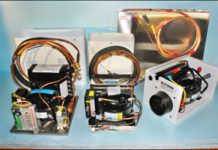
Conversion Kits that Turn Your Boat’s Ice Box Into a Galley Refrigerator
Practical Sailor tested three kits that convert onboard ice boxes into full-fledged refrigeration systems. The three reefer conversion kits in the review-the Waeco-Adler Barbour Cold Machine (CU 100) from Dometic Corp., the Frigoboat Capri 35F by Veco SPA, and the Sea Frost BD-represent a cross-section of whats available on todays refrigeration conversion kit market. Testers looked closely at energy efficiency and the 12-volt units abilities to cool a small ice box with the least amount of amp hours possible. Testers looked at quality, details, reliability, and cooling capacity.
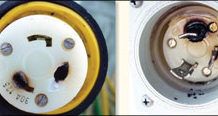
Shore-Power Boat Fire Protection
With the increased demand to have all the electrically powered comforts of home onboard, it should come as no surprise to boaters that the majority of AC-related electrical fires involve overheated shore-power plugs and receptacles. Prime Technology, aims to change all that with the introduction of its Shore Power Inlet Protector (ShIP for short), a monitoring and alarm device that automatically disconnects AC shore power when excessive heat is detected at the power inlet connector. We reviewed the ShIP 110 designed for use with a 110-volt, 30-amp system. The company also offers a similar unit (the ShIP 220) for use with 220-volt, 50-amp service. Charred plugs and receptacles are the result of resistance build-up (due to loose or corroded connections), which generates heat and the potential for fire, a problem especially prevalent among vessels that continually run high energy loads such as water heaters and air-conditioning units. In addition to monitoring the temperature of your vessels shore-power inlet plug and its wiring, the ShIP system automatically disconnects AC shore power when an unsafe temperature is detected, providing visual and audible alarms. (The audible alarm shuts down after five minutes to avoid prolonged disturbance to surrounding boats.)

Bluewater Sailors Review Tethers Underway
Practical Sailor had a chance to compare how three common snap hooks and three tether types function in actual use on a passage from Boston to Bermuda. Testers evaluated the pros and cons of elastic tethers and non-elastic tethers, double-legged tethers, single-leg tethers, the new Kong snap hooks, carabineer-style safety clips, and the Gibb-style clip. The Wichard elastic single-leg tether (nearly identical to our 2007 tether test favorite from West Marine, the West Marine 6-foot elastic tether with Wichards double-action hook at the deck end) was unanimously preferred over the non-elastic tether. Testers also preferred the Kong snap hooks over the others.
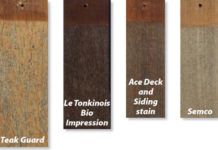
Six-Month Checkup: Long-Term Boat Wood Finish Exposure Test
Practical Sailor closes in on its search for the best teak oil, best marine varnish, and best synthetic wood finish this month. Testers check in on the 53 coated wood panels on our test rack, which have been enduring the elements for six months. Testers rated the panels for single-season gloss and color retention and coating integrity. The test products included dozens of one-part varnishes, two-part varnishes, synthetic wood finishes and stains, spar varnishes, wood sealants and teak oils from makers like Interlux, Pettit, Epifanes, Le Tonkinois, Minwax, Ace Hardware, Star brite, and West Marine. The long-term evaluation aims to find the best exterior wood finish based on overall ratings for ease of application, gloss integrity and appearance, and how the coating fares over time under real-world conditions. At the six-month mark, this report offers our single-season recommendations for finishing teak decks, cockpit trim, toerails, and other exterior wood surfaces.
Mailport: 05/09
In light of your recent letters on copper/epoxy antifouling bottom coatings, Id like to share my experience. Near the end of my Searunner trimaran boatbuilding project, I decided to apply a product known at the time as Copperpoxy. I applied the coating to all three hulls to about 20 mils thick, and then sanded this "orange peel" surface down to about 10 mils. I finished up with 220-grit sandpaper. In the end, it was beautiful. It was just like a perfectly smooth, new copper penny, and just a bit thicker than recommended. We started our cruising adventure in the foul waters of Beaufort, S.C. Very soon, I was doing a huge scrape job every week. The bottom was covered with grape-size barnacles. I noticed that the aft half of the main hull, the part with underwater metals, was fouling the worst. (I was changing zincs every week.) Two years later, in Pensacola, Fla., we decided to give up on this product and paint over it with Pettit Trinidad SR bottom paint. When doing the weeks-long prep for this painting, we could see that the skin of our epoxy/ply boat was electrically conductive and corroding all the way through in the entire area of the bonded shaft, strut, prop, gudgeons, and copper mast ground. We put on three coats of Trinidad, waited a few days, and splashed the boat. Within two weeks, the new paint had peeled off in the electrically active area. We re-hauled, stripped the paint in this area, and coated the problem Copperpoxy area with three coats of epoxy. After sanding and repainting, we set off for the Western Caribbean. Over the following six months, we noticed that even the epoxy would not stick to the Copperpoxy.

Eco-friendly Boat Maintenance
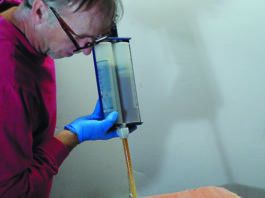
Practical Sailors May 2008 issue looked at green practices in marine maintenance outside the hull. This spring, we look at eco-friendly products and techniques for the boat interior. We focus on areas belowdecks where we can reduce our impact on the environment. Proper disposal of petrol fluids used in most inboard engines-fuel, lubricant oil, and transmission fluid-is paramount. Preventing engine fluid spills by using careful filling techniques is key, as are careful preparation for a possible spill and proper cleanup should a spill occur. The best products we found for preventing oil spills and cleaning up oil spills include 3M Sorbent Pads and MDR Oilzorb Engine Pads; Jabsco Oil-Changing System; and the Vetus Bilge Water/Oil Separator. We recommend RydLyme Marine and Barnacle Buster for a green descaling of a boats heat exchanger.Eco-friendly bilge cleaners that we recommend include CRC Industries Big Bully Natural Orange Bilge Cleaner, Clean Water Solutions Microbial Powder, Star brites Sea Safe Biodegradable Bilge Cleaner, and Star brites Super Orange Bilge Cleaner. Eco-friendly soaps and detergents recommended for green cleaning include Dr. Bronners Sal Suds and some cleaners in the Simple Green, Spray Nine, and Thetford Marine lines. And, don't forget plain old blue Windex.

Inspection Checklist: Sailboat Buyers Guide
If you're buying a used sailboat, this sailboat inspection checklist will help you avoid expensive mistakes. In this video, we cover exactly what to...



Latest Sailboat Review

Pearson 37 and 37-2 Used Boat Review
This 1981 Bill Shaw design is a late-IOR racer/cruiser.