



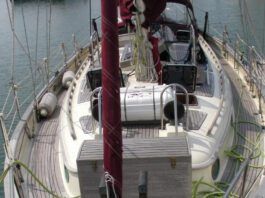



Reviving the Galley Spark
Any thoughts on how to get the “spark” back in the burners on our Force 10 stove? The ignition sparkers on all three burners are, at best, sporadic. I’ve gotten some basic info from the factory, but it hasn’t helped. The ignitor’s battery has been replaced, the ends cleaned, and what I thought might be the issue—stove grease—has been taken care of.

Mailport: October 2011
Letters to Practical Sailor, October 2011. This month's letters cover subjects such as: DIY Dingy Wheels, Infant PFD Field Test Phone Foulies, and More!

USCG Safety Alert Concerning DSC-equipped VHFs
Most of today’s fixed VHF marine radios come equipped with Digital Selective Calling (DSC) capability, and many high-end handheld VHFs do as well. For years, Practical Sailor has recommended that buyers select a model with this capability—and for good reason: As the U.S. Coast Guard’s new marine radio network Rescue 21 becomes operational, rescue centers are able to receive instant distress alerts from DSC-capable VHF radios. However, spending the extra money to have a feature-loaded, DSC-capable VHF offers little benefit if you do not have the radio properly registered and set up. The Coast Guard recently issued a safety alert, warning that mariners were endangering their lives and those of their crew by having a DSC-capable VHF that lacks identifying information.
Additives for ULSD Fuels
I just read an editorial in another magazine stating that next year, only low-sulfur diesel will be sold at fuel docks. They went on to say that you can kiss your old diesel goodbye and re-power. I really don’t want to do that. Our 27-year-old M-30 Universal is running just fine. It seems to me that an additive should take the place as a lube that sulfur did for the engine. What is your opinion?

Mailport: September 2011
Letters to Practical Sailor, September 2011. This month's letters cover subjects such as: Shoes for Crews, Washing Dock Lines, and More!

Anchor Chain Advice
I sail an Areodyne 38 in New England, primarily on weekends and a two-week annual cruise. I use 25 feet of 5/8-inch chain with 200 feet of oversized braided rode and a 35-pound Bruce anchor. In 12 years of cruising this boat, the setup has dragged only once, yet I’m still unable to relax at anchor. I’m considering going to all-chain. Also, because my boat is pretty light with a fin keel and bulb, the rode wraps around the bulb when the current is stronger than the wind, requiring diving to free the mess. This is manageable in July, not so fun in October. Can you recommend a type, size, and length of chain given my criteria? My boat weighs in at 10,000 pounds, and I am the windlass.

Mailport: August 2011
Letters to Practical Sailor, August 2011. This month's letters cover subjects such as: Wing Dinghy, Rope Hygiene, Multi-Pump Bilges, Water Tank Sealsnt and More!
Bilge Setup Keeps Electrical Bits High and Dry
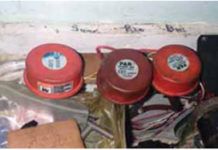
In your continuing review of bilge pumps and automatic switches, you may want to include a somewhat atypical approach that has worked very nicely on my 1964 Rhodes Reliant. It is based on the simple premise that any electrical components (pumps, wires, connectors) in the bilge are at risk of corrosion and galvanic action. Bilge electrical components can be unreliable and may cause serious damage. Hence, there should be no electrical components below the floorboards. Here’s how I did it.

Hunting Elusive CNG Refill
I have a CNG (compressed natural gas) stove onboard, and Ive had a hell of a time finding a place to refill the tanks. Im in the Cleveland, Ohio area, and I had to go to Grosse Point, Mich., the last time for a fill-up. Do you know of dealers in my area who can fill CNG tanks?
Mailport: June 2011
Letters to Practical Sailor, June 2011. This month's letters cover subjects such as: Barnacle Barrier Success, Pump Switches, Antifouling Field Report and more!

Bahamas for $5000? The Watkins 27 foot Sailboat
Is the Watkins 27 the ultimate small cruising sailboat? In this video, we take a deep dive into the Watkins 27 — a classic...



Latest Sailboat Review

Jeanneau 55 Boat Review
This recent sailboat from Jeanneau may as well be a spaceship. They’ve taken all the time-honored designs of a monohull aft cockpit and turned...