


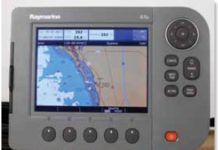
PS Tests Small-screen Plotter-sounders
Practical Sailor tested four small-screen chartplotter-sounder combo units priced from $700 to $1,500: Raymarine A70D, Garmin 740S, Lowrance Elite-5, and the Humminbird 798si. While there was a disparity in what features the units offer, the plotter-sounders were similar in terms of the GPS-based functions. Testers looked at ease of installation, ease of use, screen visibility, resistance to fogging, and water/spray resistance. They also compared features including price, man-overboard functions, waypoint and route storage, available charts, chart interface, and user interface. This article focuses on the electronics' chartplotter capabilities. The December issue will include the report on the devices' sounder functions.

Plotter-sounders Undergo a Battery of Tests
Fogging screens, water intrusion, poor visibility in bright sunlight, and slow redraw rates are the most common complaints we get regarding plotter-sounders. Better construction, new screen technology, and faster processors in our current crop of units seems to have addressed these issues. None of our products experienced serious problems during our environmental testing. Our tests focused on four key elements:
Chandlery: August 2011
Practical Sailor Chandlery: August 2011. This month reviews a tiller, tool toter, and smart-phones.

Route-planning Software Review
Practical Sailor editors evaluated Digital Waves Visual Passage Planner software, which is based on the U.S. Pilot Charts and lets users plan a voyage based on historical weather patterns. Testers used the software to recreate the 1888 historical passage by Joseph Conrad. Conrads passage from Bangkok to Singapore, aboard the iron barque Otago, took an excruciating 21 days. By plugging in waypoints, location and time of year, testers were able to see wind, current, sea state, water temperature, and air temperature along Conrads route. Visual Passage Planner showed the average wind speed and direction, as well as the number of days of calm, for the area and time of year. The software is an interesting tool for passage planning, but because it uses historical rather than real-time data, it shouldnt be compared to true weather-routing software like the weather-routing module from MaxSea, which uses a boats polar data to evaluate real-time routing.

Marine Electronics:Garmin 48 Tops in Handheld GPS
As it is with notebook computers, GPS receivers continue to evolve into faster, smaller and more powerful devices. Our latest crop of test models...
Offshore Log: Robertson AP 300CS on Trial. Bob Earns His Keep
Our trip from Venezuela to Bonaire was the first real test of Bob, our Robertson AP 300CX autopilot. He passed with flying colors.Although I...
A New Era in Weather Forecasts
Benjamin Franklin is credited with the quote “the weatherwise and the otherwise.” It remains savvy advice for all sailors, and thanks to modern oceanographic...
Tips From A First “Sail” on the ICW
My dream to sail from New England to the Bahamas involved a trip down the Atlantic Intracoastal Waterway (ICW), also known as “the ditch”...
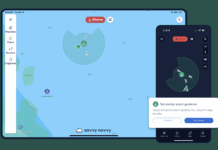
Navigation App Review: Savvy Navvy
When Savvy Navvy navigation app asked me to review the app and share my impressions, I was curious enough to do a little background...

Getting Weather on the Water: From VHF to Starlink
We are in the midst of a yachting weather forecasting and awareness revolution. With satellite internet technology today’s sailors have never had so much...
How Long Do Sails Last?
How long do sails actually last? Sailmakers often say cruising sails last around 10–15 years, but what happens when you discover a sail that’s...



Latest Sailboat Review

Jeanneau 55 Boat Review
This recent sailboat from Jeanneau may as well be a spaceship. They’ve taken all the time-honored designs of a monohull aft cockpit and turned...