
Hunter Factory Blends Old and New Technology
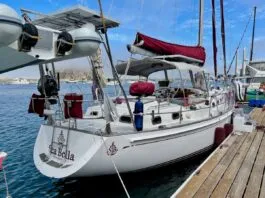
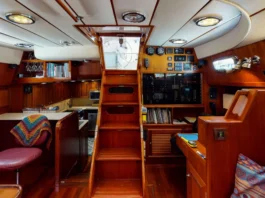
The Hunter 33 is built in Alachua, Fla., using high-quality resins and laminates and conventional open molding hand-laminating processes.
Funding the Dream
In the June 2001 issue, Practical Sailor looked at financing boats and recommended that prospective boat buyers “stick with the pros.” We recently set out to see what had changed in boat financing since the 2008 U.S. financial crisis. After interviewing industry experts and related organizations on the state of the marine lending and boating industries, we assumed a boat-buyer’s role and sought financing help from marine loan specialists, large banks, and small lenders. We looked at cash versus financing, borrowing against your home, finance products, rates on boat loans, collateral on the loans, insurance issues, pre-approvals, repossession, and borrower qualifications.

A Practical Look at Sailboat Cockpit Design
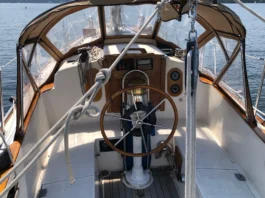
A sailboat cockpits design and layout can determine the process of boat-handling tasks, including everything from steering and sail trimming to what goes on when its time to reef. Weve found that many cockpits are optimized for at-anchor enjoyment instead of underway usability, so boat shopping should include close scrutiny of how essential sailing and boat-handling tasks will be accomplished. Make sure that the cockpit of the boat you are about to buy is in keeping with the mission of the rest of the boat-whether youre a marina hopper, a club racer, or an offshore cruiser. Our recent survey of cockpits covers the highs and lows of cockpit design for various types of sailboats, and also includes a DIY guide to rating cockpit ergonomics to help your boat-shopping process.
Building a New Beneteau
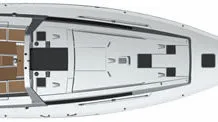
The building process that gives rise to the Beneteau Oceanis 41 begins in France, where digital design files stir a five-axis cutter to life, and 3D foam patterns begin to take shape. These robotically cut male plugs are used to fabricate female molds, often referred to as “tools.” The hull and deck are the major molds, but there are often 20 or more smaller tools created that are used to mold other interior and exterior components—ranging from locker lids to a plinth for the marine head. All of the tooling for each Beneteau is made in the prototype shop in France and is shipped to factories around the world.

Offshore Cruising
Perhaps the biggest surprise during a circumnavigation is just how critical the engine is to a cruising sailboat. Running under power for almost 25 percent of the miles that passed under your keel is not unusual. The engine also provides battery charging for everything from lighting to making fresh water. It drives the refrigeration system, and makes hot water.
Build Your Own Fender Boards
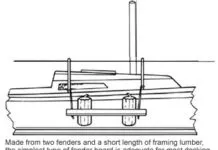
Fender boards are almost a necessity when docking against pilings because without them, no matter how you position and secure your boat and fenders, movement of tide and boat will displace the position of the fenders relative to the piles. The result dinged topsides.
Boat Review: Marshall 22 Catboat
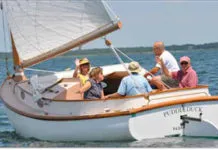
The stout Marshall 22, in production since 1965, rekindles the romance of shoal-water sailing. As a weekender or coastal cruiser, the Marshall has much to recommend it, especially to those who can fully exploit its shallow draft. Drawing less than 6 feet, the Marshall opens up new cruising grounds for those willing to put in a little extra effort. New boat prices range from the base $76,900 to around $90,000. Used boats range from around $18,000 to $70,000. Practical Sailor recommends a survey for the purchase of all used boats.
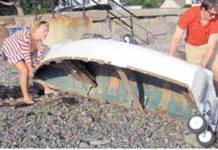
Dinghy Launchers: Wheels for the Dinghy
Getting your dinghy to the dock, across a beach, or down a boat ramp can be a real back-breaker, unless you have some mechanical advantage. Several manufacturers offer wheeled devices to keep you out of the chiropractor’s office. We tested seven of them—one dolly and six sets of launching wheels: Davis Instruments’ Wheel-a-Weigh Boat Dolly, two sizes of Davis' Wheel-a-Weigh launch wheels, the Garelick Eez-In, Newport Vessels Launching Wheels, Defender Industries Launching Wheels, and Danard Marine Launching Wheels. Selecting the appropriate launching wheels depends on the size and weight of your dinghy or small boat and where you intend to use it. Practical Sailor tested the products on concrete, a soft-sand beach, and a rocky shore, and we found that not all wheels can handle uneven terrain.
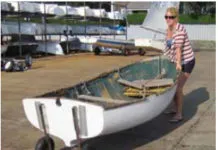
Dinghy Roller Test Drive
We tested each product for overall quality of construction, ease of installation, and ease of use. Each model was tested on three different surfaces that are common dinghy-transporting areas: an inclined, concrete boat launch ramp with cracks in the pavement wide enough to push some dinghy dollies off course; a sandy beach, where the sand ranged from nearly flat and hard at water’s edge to more than 4 inches deep and soft above the high-tide mark; and a rocky shoreline, with some irregular stones that measured up to a foot in diameter. Each set of dinghy wheels was attached to the transom of a 9-foot, 130-pound rowing skiff. To avoid drilling a bunch of holes in our own $1,200 dinghy, we picked up a haggard—but appropriately sized—$75 garage-sale skiff for these tests.

Velux Race Boats Showcase Alternative Energy Options
In the recent Velux 5 Oceans Race, four solo sailors piloted their 60-foot boats some 30,000 miles around the globe, putting a number of innovative products to the test. The race required each boat to be equipped with at least three means of power generation, and two had to be alternative forms of energy. Racers Brad Van Liew and Zbigniew Gutkowski each supplemented power from their auxiliary engines, solar panels, wind generators, with two new Watt & Sea hydrogenerators. Because of the reported efficiency of these transom-hung devices, the singlehand sailors enjoyed the rare phenomenon of surplus power. Two other racers, Chris Stanmore-Major and Derek Hatfield, relied on more traditional alternative energy sources: wind gens and solar panels. All four were enthusiastic about the example they might be setting for other sailors, but are emerging technologies like hydro-power generation practical for the typical cruising boat?
Latest Logbook

Practical Sailor Logbook – September 2026
This month we tour the Hans Christian 48T — the offshore cruiser many sailors call the holy grail — walk the custom Antigua 60...
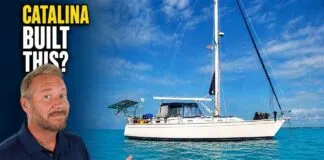
Video: Morgan 44 Review – The Catalina Cruiser Everyone Forgot
The 1989 Morgan 44 is a big center-cockpit cruising sailboat with Catalina DNA—but it may be one of the most overlooked boats of its...



Latest Sailboat Reviews
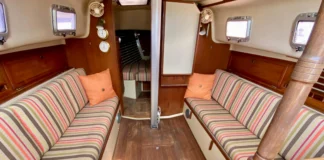
Bayfield 32 Used Boat Review
At first glance, the Bayfield 32 looks less like a fiberglass production boat from the 1980s and more like somebody shrank a traditional sailing...