




Deck, Hull-to-deck Joint, and Keel Merit a Close Look
As is typical of C&Cs, owners give the boat high marks for quality of construction, and in general, their enthusiasm is justified. The boat does, however, have a potential weak point. Hull: Like most C&Cs, the 40 was built with a balsa-cored hull. The result is a hull that is extremely stiff for its weight, but balsa coring is not without its potential for problems. In the event of delamination or rupture of the hull skin, the balsa coring can absorb moisture. Moisture penetration of the outer laminate could ultimately reach the balsa coring. It is imperative that a balsa-cored hull be carefully examined by a knowledgeable surveyor before purchasing a used boat.
Used Boat Review: LM32 Pilothouse Sloop
Danish company LM (Lunderskov Mbelfabrik) began as a wood furniture maker in 1940. In the 1950s, the company incorporated the newfangled fiberglass into their furniture, and in 1972, the company built its first fiberglass sailboat, the LM27. Over the next 20 years, it built 3,000 boats in five models, ranging from 24 to 32 feet. All LM models share a similar look-canoe-stern hulls with a pilothouse ahead of a sizable cockpit. All are mast-head rigged sloops, and every owner we talked to said that the boats sailed better than they expected-an experience that we shared on our test sail of the LM32.
Financing Good Ole Boats
Here is a question that has puzzled me for a long time. Many financial institutions offer financing on mature vessels but have a boat age limit of 15 to 20 years. But, if a 1978 classic-plastic boat underwent a major refit in, say 1999, does that make the boat a 1999 in the eyes of the financiers? Id like to hear tales on how others may have gotten around this rule.
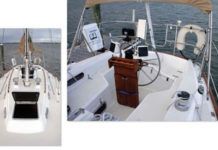
Boat Test: The Last Sabre 34 Mark II
In 1985, after nearly a decade of building the popular Sabre 34, Sabre Yachts significantly revamped the design. The resulting boat-beamier, roomier, faster, and more powerful than the original-is usually referred to as the Sabre 34 Mark II. The Mark II, like its predecessor, still hews the performance-cruising line that Sabre established with the introduction of its very first boat, the Sabre 28, in 1971. The Sabre 34 Mark II is not without quirks, but its many positives far outweigh its downsides.
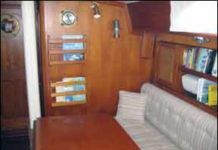
Used Boat Review: Gulfstar 36
The Gulfstar 36, also called the Gulfstar 36 Auxiliary, was the smallest boat built by Gulfstar Yachts. Gulfstar, which produced 2,500 boats in the 1970s and 1980s, was launched by Vincent Lazzara, one of the early experts in fiberglass boat building. The Gulfstar 36 design is conservatively traditional-it was never called a racer-cruiser, but it was similar to many popular racer-cruisers and coastal cruisers of the time, with modest overhangs, a longish waterline, a moderately long fin keel, and a skeg-hung rudder. The designers are listed as R.C. Lazzara and David Jones.

DIY Survey Checklist for Used-Boat Buying
Boat buying is an exciting, maddening exercise that can test the tolerance of even the most patient sailor. Most of the maddening part has to do with trying to ferret out a boats problems before buying it-and making the problems your own. Hiring a professional marine surveyor can be expensive when youre looking at multiple boats, so save yourself some money-and potential heartache-by learning how to examine a used sailboat, from stem to stern and mast to bilge. Practical Sailors DIY survey how-to details common problem areas (like engines and rigging), what issues are easy to remedy, and what red flags you should walk away from.
Funding the Dream
In the June 2001 issue, Practical Sailor looked at financing boats and recommended that prospective boat buyers “stick with the pros.” We recently set out to see what had changed in boat financing since the 2008 U.S. financial crisis. After interviewing industry experts and related organizations on the state of the marine lending and boating industries, we assumed a boat-buyer’s role and sought financing help from marine loan specialists, large banks, and small lenders. We looked at cash versus financing, borrowing against your home, finance products, rates on boat loans, collateral on the loans, insurance issues, pre-approvals, repossession, and borrower qualifications.

A Practical Look at Sailboat Cockpit Design
A sailboat cockpits design and layout can determine the process of boat-handling tasks, including everything from steering and sail trimming to what goes on when its time to reef. Weve found that many cockpits are optimized for at-anchor enjoyment instead of underway usability, so boat shopping should include close scrutiny of how essential sailing and boat-handling tasks will be accomplished. Make sure that the cockpit of the boat you are about to buy is in keeping with the mission of the rest of the boat-whether youre a marina hopper, a club racer, or an offshore cruiser. Our recent survey of cockpits covers the highs and lows of cockpit design for various types of sailboats, and also includes a DIY guide to rating cockpit ergonomics to help your boat-shopping process.
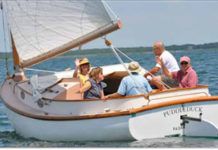
Boat Review: Marshall 22 Catboat
The stout Marshall 22, in production since 1965, rekindles the romance of shoal-water sailing. As a weekender or coastal cruiser, the Marshall has much to recommend it, especially to those who can fully exploit its shallow draft. Drawing less than 6 feet, the Marshall opens up new cruising grounds for those willing to put in a little extra effort. New boat prices range from the base $76,900 to around $90,000. Used boats range from around $18,000 to $70,000. Practical Sailor recommends a survey for the purchase of all used boats.
PS Reviews the Presto 30 Trailer-sailer
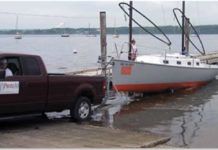
Rodger Martin’s Presto 30 is clearly a descendant of the round-bilge sharpies made famous by Ralph Munroe’s Presto and Egret. The origins of the hull and rig date back to a classic American oyster-tonging boat, the New Haven sharpie, which first appeared in Long Island Sound around 1850. Martin wanted the Presto 30 design details to include trailerability and shallow draft. The Presto is 30 feet long and 8 feet, 6 inches wide. With the centerboard up, it draws just 13 inches; with the centerboard extended, it draws 5 feet, 6 inches. The 320 feet of sail area is evenly divided between two sails set on wishbone booms, and while the designer calls it a schooner rig, the maker, Ryder Boats, has deemed it a cat-ketch rig. The Presto’s 1,000 pounds of lead shot in the keel help address this shoal-draft weekener's tender handicap, but like any shallow-water boat, the Presto will need to be actively sailed in a blow.

Morgan 382 – The $30K Boat Nobody Talks About
The Morgan 382 might be one of the most overlooked cruising sailboats ever built. Designed by legendary naval architect Ted Brewer and produced between...



Latest Sailboat Review

Jeanneau 55 Boat Review
This recent sailboat from Jeanneau may as well be a spaceship. They’ve taken all the time-honored designs of a monohull aft cockpit and turned...