



Small Versus Large Anchors
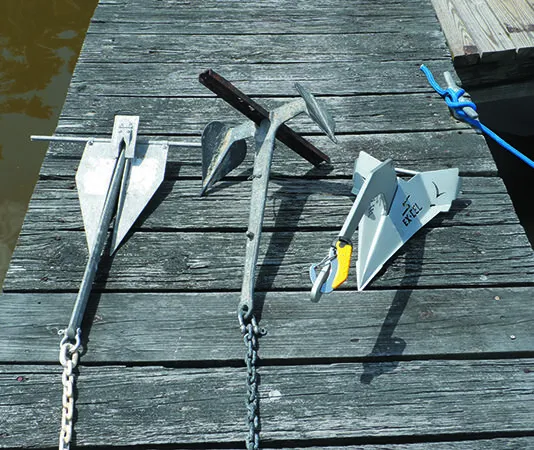
The consensus among anchor makers (Fortress, Bruce, Manson, Mantus) is that holding power in soft bottoms increases in approximate proportion with anchor mass; exponents range from 0.92 to 1.0. While there are differences between models and manufacturers, a 35-pound Mantus should hold roughly 18 times more than a 2-pound Mantus, and a Fortress FX-16 should hold four times more than a Guardian G5.
No Drama Anchoring Approach
This months report on tandem anchoring rigs was on my mind as the winds began gusting above 30 knots in the Dry Tortugas. Wed stopped there to wait out the passing of a late-season cold front during our recent voyage from Sarasota, Fla., to Havana, Cuba, aboard a friends 42-foot Endeavor, Lost Boys.
Spring Lines for Storm Preparedness
A well-secured boat in the best-designed marina can't be expected to survive a direct hit from a hurricane. Major boat-insurance companies recommend hauling out and tying down your boat, but that isn't always an option, nor is it any guarantee.
Tips for Riding Out the Storm in Your Marina
Practical Sailor has covered storm preparation on several occasions. The two most extensive articles appeared in July 2008 Gear for Battening Down Ahead of Storms, and Tropical Storms Dos and Donts, from November 2011. We also have an online article How to Help Your Boat Survive a Major Storm. What follows are just a few tips relevant to securing your boat in a marina when you have exhausted all other safer alternatives.
Pencil-Thin Anchor Rode
Would you trust a pencil-thin, anchor chain that touts greater strength than the locker-full of high-quality, 3/8-inch, galvanized short-link chain that youve counted on for years? Would you even want a lighter chain? After all, the chains heft creates catenary, that all-essential dip in the anchor rode that improves your anchors holding ability.
Sewn Splices Two-Year Followup
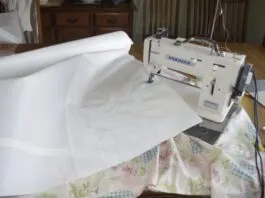
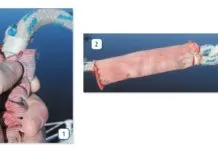
The true test of marine gear is not whether it works when installed, but rather how it functions after years in the field. To that end, we have left samples of sewing materials and sewn test samples in the sun, wind, rain, and snow for two years, and have also sailed with sewn samples in service on our test boat.
The No-sew Webbing Strap with Link Buckle
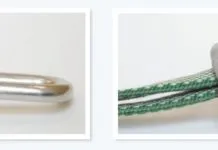
Weve sewn our fair share of eyes in nylon webbing, but heres an easy no-sew alternative for creating a webbing strap with a buckle (shackle) that can be used for easily lashing down the dinghy, a battery, or even holding up your pants in a pinch. It is based on stuff a sailor has on hand-webbing, a chain link, and a shackle-and is as strong as professionally sewn ends, plus it can be untied after loading. It has tested at greater than 85-percent breaking strength and 100 percent of minimum rate strength, and it works on both nylon and ultra-high strength materials like Vectran webbing.
A Quest for Keel Integrity
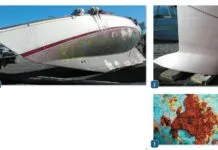
Over the past few years, weve noticed a worldwide uptick in keel failures. The problem has yet to reach epidemic proportions, but we are hearing more and more troubling accounts of what happens when the ballast parts company with the hull, and a crew faces capsize, flooding, and-all too often-death.
Hitches to Grip Anchor Chain
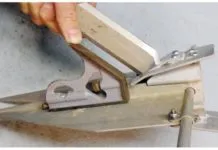
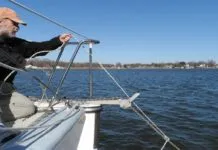
When researching Changing Views on Chain Hooks (see PS, March 2016 online), we were surprised to discover that some chain hooks greatly reduced the breaking strength of a chain. Unless the hook itself broke, we assumed its effect on chain strength would be very minor.
Mechanical Terminal Pull Test
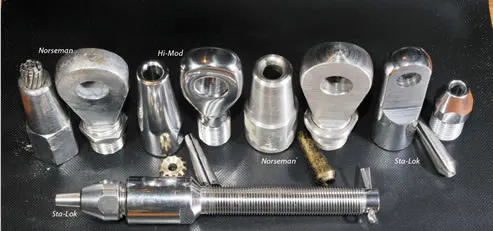
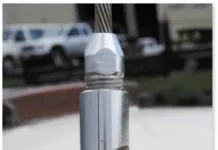
Swageless wire-rope terminals have long been a favorite piece of rigging kit among all kinds of sailors. These terminals are inspectable, reusable, and can be assembled with simple hand tools. But for all of their acknowledged advantages, data is scarce about their mechanical efficiency. How much, if any, do they weaken the wire rope they are attached to?
Lithium Batteries on Sailboats: The 3 Mistakes Everyone Makes
Lithium batteries are one of the most popular sailboat upgrades today—but they’re also one of the most misunderstood. In this Practical Sailor Saturday episode,...



Latest Sailboat Review
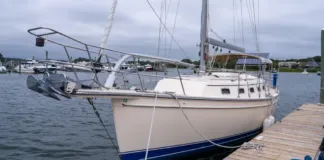
Island Packet Estero Used Boat Review
Florida-based Island Packet targets a relatively narrow niche, so the toughest competitors to its new boats are often older Island Packets. Introduced in 2010, the 36-foot, shoal-draft Estero is the company’s latest attempt to introduce a distinctive model that doesn’t stray too far from the company’s proven formula for success: moderate displacement, full-keel cruisers designed to be lived on, sailed far and in comfort, and endure the bumps, scrapes, and storms that cruising boats inevitably encounter. After sailing the Estero on Florida’s Sarasota Bay and inspecting its interior, construction, and systems, Practical Sailor testers noted that the shoal-water cruiser will appeal strongest to Island Packet fans who’ve been waiting for a shoal-draft, easy-to-sail boat that compares to the IP37 in terms of interior space. These strengths will be most apparent on intracoastal or riverine adventures like the Great Loop.