


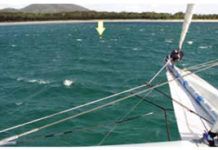
PS Asks Who Would Even Consider G7 Chain?
The value of catenary varies with the depth of the water. In shallower waters, bottom friction replaces gravity as a force of resistance against shock loading.
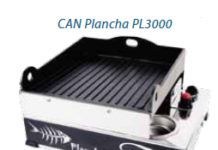
Standouts from METS
The Marine Equipment Trade Show (METS) held annually at the enormous RAI convention center in Amsterdam, the Netherlands, is the ultimate candy store for nautical gearheads. Divided into 11 pavilions, a seemingly endless grid of aisles, and probably hundreds of thousands of products, its overwhelming. Technical representatives from companies around the globe-China, Turkey, New Zealand, Argentina, Italy, Thailand-stand in their booths ready to explain the amazing attributes of their latest products, from deck shoes to gensets, turnbuckles to carbon fibers, life jackets to bow thrusters, windlasses, pumps, portlights … you name it, its there.
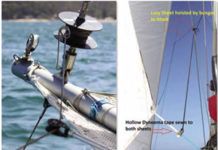
DIY Rigging Hacks
Over the years weve owned Josepheline, our 38-foot Lightwave catamaran, weve figured out a few simple fixes to some niggling onboard problems-some boat hacks, if you will-and we thought wed share a few in the hopes that other boat owners may benefit. If you have any little fixes of your own that youd like to share, email your story to [email protected].
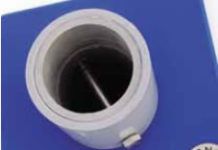
Moorings Soft Side
Every decade or so, local sailing clubs go through a re-evaluation of their mooring fields, looking for ways to improve or upgrade equipment without straining their budget. Island Mooring Supplies, the same Rhode Island-based company that introduced the splinter-free Deluxe Pickup Stick we featured in the April 2010 issue, has developed a new, soft mooring buoy designed to put an end to the annoying hull-knocking of conventional mooring buoys.
Real-World Anchoring
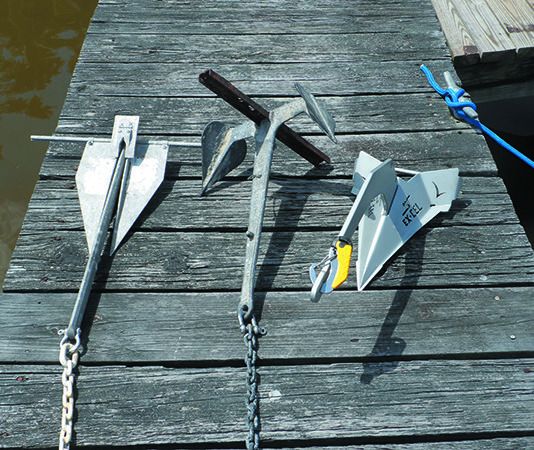
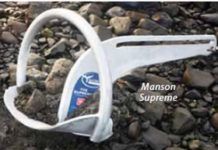
After nearly four decades of being married to my CQR plow anchor, I decided to try a new anchoring solution aboard my Ericson 41, Wind Shadow, and mounted a Manson Supreme on her bow roller. Ill be long-term testing the Manson, but heres a preliminary look at the CQR and the Manson.
Testing Top-Down Furlers
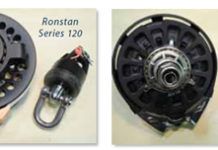
Top-down furlers have proven to be a legitimate means of taking the drama out of spinnaker setting and dousing, and they represent a new breed of hardware thats carefully designed and manufactured to be durable for the long haul. In Part I (PS, January 2014) of this two-part report, we introduced five top-down furlers, detailed how they work, and made a good case for their use. In this article, Part 2 of the series, well take a closer at the furlers and the results of on-the-water and bench tests. Spinnaker furling systems we tested were made by Colligo, Karver, Profurl, Ronstan, and Selden.

Reader Experiences with Top-down Furlers
Following the publication of Part 1 of this report, we heard from several readers about their experiences with top-down furlers. Here are a few of their comments.
Anchor Rode Report
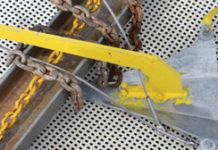
In our continuous research of ground tackle, we noticed that large oil rigs are often anchored into place with a spider web of stranded wire-or in some cases, Dyneema, a low-stretch, high-strength synthetic fiber. We wondered whether Dyneema or a wire cable might have some application in recreational sailboat anchoring, and we launched field tests to find out. These tests also looked at how changing the diameter of your anchor chain affects anchor performance.

Rodes Tested from Shore and Catamaran
Our test anchors included a small, 11-pound Spade anchor, which we set using a chain winch off a beach in Pittwater, Australia. We set the anchors using two different rodes: 30 feet of 5/32-inch stainless wire strop that we fabricated using old lifelines and 33 feet of quarter-inch, short-link BBB chain. We extended each rode with 5/16-inch chain and aimed for length-to-depth ratio of a 5-to-1.
Mantus Upgrades to a Stronger Shank
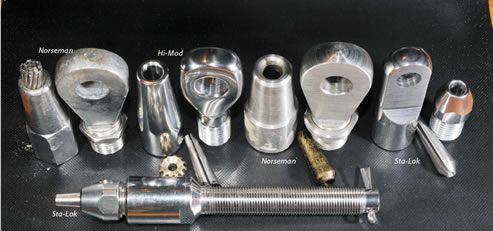
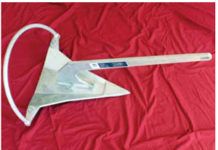
Late last year, we had our first look at the bolt-together Mantus anchor. Although we liked the design, and prices were favorable (around $330 for a 35-pounder), we raised concerns about the shank strength, which by our estimation was the weakest of all anchors of a similar design.

Lithium Batteries on Sailboats: The 3 Mistakes Everyone Makes
Lithium batteries are one of the most popular sailboat upgrades today—but they’re also one of the most misunderstood. In this Practical Sailor Saturday episode,...



Latest Sailboat Review
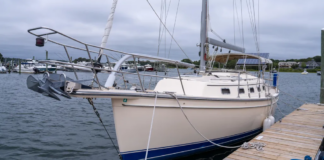
Island Packet Estero Used Boat Review
Florida-based Island Packet targets a relatively narrow niche, so the toughest competitors to its new boats are often older Island Packets. Introduced in 2010, the 36-foot, shoal-draft Estero is the company’s latest attempt to introduce a distinctive model that doesn’t stray too far from the company’s proven formula for success: moderate displacement, full-keel cruisers designed to be lived on, sailed far and in comfort, and endure the bumps, scrapes, and storms that cruising boats inevitably encounter. After sailing the Estero on Florida’s Sarasota Bay and inspecting its interior, construction, and systems, Practical Sailor testers noted that the shoal-water cruiser will appeal strongest to Island Packet fans who’ve been waiting for a shoal-draft, easy-to-sail boat that compares to the IP37 in terms of interior space. These strengths will be most apparent on intracoastal or riverine adventures like the Great Loop.