




A Second Look at Anchor Tests
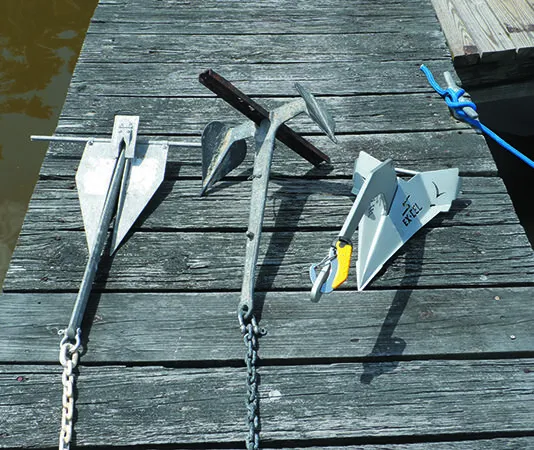
Anchor testing at Practical Sailor has always been a controversial enterprise, sure to fire up someone. As one reader commented in response our most recent anchor report (PS, March 2013): Anchors are a whole lot like religion. No matter what the tests show, each of us has a favorite that well defend to the death! This month, our report on anchor-shank strength approaches the topic from a different angle. Rather than singling out specific anchors for holding power or design, we take a closer look at the way anchors are evaluated and promoted.
The Hassles of Hockles
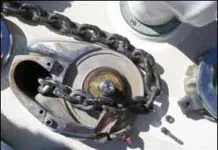
Taking the advice of a PS review, I installed a Lewmar V2 windlass on my boat in 2008. I went with the installers recommendation of 100 feet of galvanized chain and 100 feet of eight-part braid, connected with a rope-to-chain splice, and I have a Delta 35 anchor. I found that a chain hockle (a twist in the chain that jams the windlass) will terribly mangle the vertical windlass. I have just completed my second mangling and ordered replacement parts-but these parts will not save me from the next mangling. The Lewmar distributor told me to install a chain swivel, but PS has warned about this (PS Advisor, May 2010). Is an all-chain rode a dumb idea? Is there some solution?
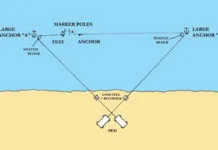
Anchor Resetting Tests
Practical Sailor has carried out dozens of anchor tests over the years. This month, we set out to compare anchor performance when the boat position changes under the forces of wind or tide, a shift that often causes the anchor to move and reset itself. The test compares 12 anchors, including some newer fixed-shank anchors-such as the Rocna and the Manson Supreme-and some concave fluke designs similar to the Spade, one of the strongest performers past tests. The test field included: the CQR, Spade, Ultra, Super SARCA and SARCA Excel, Manson Supreme, Rocna, Kobra, and the Lewmar Claw.

Attack of the Zebra Mussel
For 20-plus years, I have removed my mooring buoy from the water at the end of the sailing season on Lake Champlain. This year, however, I was surprised to find that my mooring chain was totally covered by zebra mussels. The 3/8-inch chain was about 3 inches thick with mussels when I hauled it up! Do the zebra mussels affect the chain strength or its life expectancy?

Life Rafts, Pride, and Prejudice
My cruising life often seems like a string of disasters narrowly averted-storms, reefs, mechanical failures, bad enchiladas-but the most frightening near miss (apropos of this months special report on life-raft inspections) was the one I never knew about.
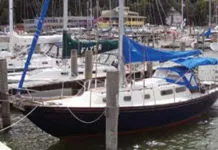
The Custom Winter Cover
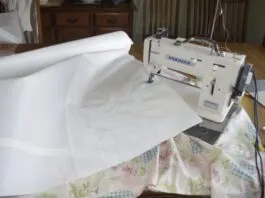
We now have a boat-an Allied Seabreeze 35 sloop, hull number 23, from 1965-and overall, its a well-kept and sea-kindly boat. Winter is coming, and a winter cover seems in order. The conduit-frame-and-tarp that you published (www.practical-sailor.com/marine/do_it_yourself_winter_frame-10593-1.html) is an option, but a fitted canvas (Sunbrella or better) cover is another, which will perhaps pay for itself in about three seasons. What is your view on this?
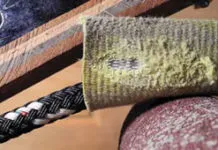
Round 2: Chafe Gear for Mooring and Dock Lines
With hurricane season in full swing and volatile fall weather approaching, storms can threaten the safety of sailboats by placing extra loads on dock and mooring lines. In the July 2011 issue, Practical Sailor evaluated rope chafe protection and found Fjords Chafe-Pro chafe guard trumped products from Taylor Made, Fiorentino, and Davis Instruments. This followup report-the result of aggressive bench testing and long-term field testing-compares the top pick Chafe-Pro to new mooring and dock line protection from Fjord and Robship, as well as do-it-yourself options like fire hose, leather, and a homemade Kevlar/Acrylic sandwich.
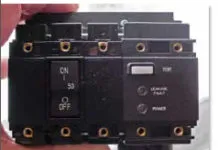
Laying the Ground Rules
In the excellent article on DIY boat surveys on page 19 of your June 2012 issue, PS suggests that AC outlets located in the galley and head (among other places) should be ground-fault protected. BoatUS requires this as well, for those of us insured with them, and the National Marine Manufacturers’ Association (NMMA) also requires it. I wish someone could explain to me why this is the case.
Practical Sailors Picks for Best Sailing Gear of 2012
Of the dozens and dozens of sailing products Practical Sailor tested between September 2011 and August 2012, only 18 earned the designation as 2012 Editors Choice gear. These are marine products that clearly stood out among their peers during our independent tests as the best in their category-marine maintenance, marine electronics, sailing apparel, personal gear, etc.-and whose performance earned the confidence of Practical Sailors editors. A hybrid touchscreen multi-function display that can link with your iPhone; an iPad app that can serve as a backup for your chartplotter; a powerful, rechargeable LED spotlight that floats; an affordable vent filter that eats up holding tank odor; and a single-part varnish that retains a mirror-like gloss for more than a year-these are just some of the picks for the years best sailing gear.

Ocean Tested: Rock-climbing Gear
In this “Ocean Tested” report, PS contributor Drew Frye, an avid sailor and rock climber, makes the case for using recreational climbing gear in marine applications. He’s had over 20 years of experience with the climbing products—aluminum carabiners, bolt hangers, climbing slings, etc.—in all sorts of marine applications and has found that the crossover gear can save money while doing double duty. His report offers an overview of the gear and its potential uses onboard, as well as tips on where to find it.

Small Boat, Big Keel Why This 27 Footer Works
What makes a small sailboat truly seaworthy? In this video, we take a deep dive into the Pacific Seacraft Orion 27, a rugged, long-keel...


Latest Sailboat Review
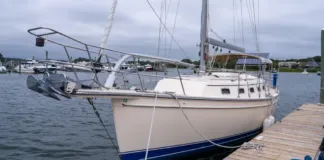
Island Packet Estero Used Boat Review
Florida-based Island Packet targets a relatively narrow niche, so the toughest competitors to its new boats are often older Island Packets. Introduced in 2010, the 36-foot, shoal-draft Estero is the company’s latest attempt to introduce a distinctive model that doesn’t stray too far from the company’s proven formula for success: moderate displacement, full-keel cruisers designed to be lived on, sailed far and in comfort, and endure the bumps, scrapes, and storms that cruising boats inevitably encounter. After sailing the Estero on Florida’s Sarasota Bay and inspecting its interior, construction, and systems, Practical Sailor testers noted that the shoal-water cruiser will appeal strongest to Island Packet fans who’ve been waiting for a shoal-draft, easy-to-sail boat that compares to the IP37 in terms of interior space. These strengths will be most apparent on intracoastal or riverine adventures like the Great Loop.