
Used Nylon Three-Strand Rope Faces The Ultimate Endurance Test
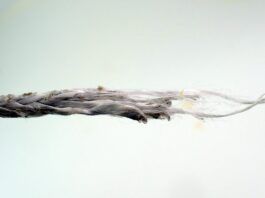
The nylon three-strand dock lines used for this test had weathered significantly, and chafed noticeably where the lines exited chocks and made contact with cleats. We put these lines under increasing tension in laboratory conditions and tested them to destruction. Our test shows that even when the effects of chafe were eliminated, up to 75-percent of the original tensile strength in our sample ropes was lost. These findings fly in the face of the conventional rhetoric that views nylon as such a strong material that one should always opt for thinner line due to its better elastic effect. To the contrary, within reason, this overly springy, rubberband-like function is a foe rather than a friend. We left the lab realizing the importance of taking a close look at dock lines and other nylon-line applications, noting the last time they had been replaced and why tropical storms and noreasters take such a heavy toll. A new set of dock lines is cheap insurance, and money well spent.
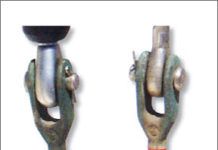
Practical Sailor Test Boat Gets Half a Refit With Powerlite PBO Rigging
Although stainless steel wire and rod rigging are still the traditional, most popular, and economical material of choice for mast rigging, metal is rapidly giving way to a new generation of synthetic rigging material. There are a handful of companies that manufacture standing rigging using ultra lightweight high-modulus synthetic fibers such as Kevlar, PBO (polybenzoxazole), and carbon.There are many advantages of synthetic rigging. Weight savings aloft is the primary benefit, and high-modulus fiber can be up to 50 percent stronger than similar diameter rod or wire rigging, and up to 90 percent lighter. Another touted benefit is greater fatigue resistance. For the average racer-cruiser, there are three big drawbacks to PBO: It is four times as expensive as stainless steel wire, although roughly on par with rod rigging; should its cover fail, it drastically loses strength in direct sunlight; visual inspection and DIY repair is currently impossible. Until recently, the technology for high-modulus, synthetic fiber rigging was only available to deep-pocketed mega-yacht owners. As development advances and competitive pricing is sparked, this type of rigging may one day be an option for average sailors. Under the current state of technology, we can only recommend this product for the serious racer with very deep pockets.
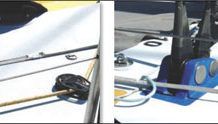
Sailboat Jackline Test
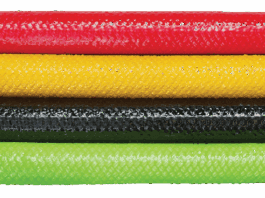
Whatever jackline system is used, it should be supplemented with fixed clip-in points in the cockpit, at the helm, and around the mast-wherever crew members work for extended periods. International Sailing Federation recommendations require that two-thirds of the crew be able to be simultaneously clipped on without depending on jacklines. Our top choice is a low-stretch Dyneema or Spectra jackline custom made by a professional with loops bartacked in place. For those on a budget, low-stretch polyester jacklines like those made by one of our recommended suppliers will suffice. In either case, routine inspection for wear and UV damage is imperative.
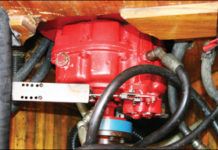
The Cruising Sailor’s Drivetrain
When a cruising sailor starts thinking about exploring fjords and glaciers, he starts putting a little more thought into his boat’s diesel engine and drivetrain components. High-latitude cruising sailor Andy O’Grady writes about several parts that has served him well in extreme conditions: the Kiwiprop, the Manecraft dripless prop shaft seal, the PRM150 transmission, and the K&N reusable air filter.
The Cruising Sailors Drivetrain
When a cruising sailor starts thinking about exploring fjords and glaciers, he starts putting a little more thought into his boat’s diesel engine and drivetrain components. High-latitude cruising sailor Andy O’Grady writes about several parts that has served him well in extreme conditions: the Kiwiprop, the Manecraft dripless prop shaft seal, the PRM150 transmission, and the K&N reusable air filter.
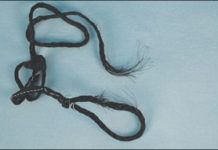
Sailing Safety Tethers: Tested and Reviewed
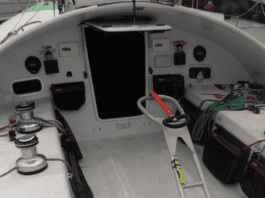
Noted West Coast sailor Skip Allan - fresh from "falling" off the deck of Wildflower in our harness test (December 2006) - spent several days offshore again, this time tangling with sailing safety tethers. The results were shocking. Several major retailers continue to sell safety tethers with jackline snap hooks that might disengage themselves, and one of the two child safety tethers we tested broke - twice.

Riding the ‘A’-train
Prices, advice vary greatly when it comes to asymmetrical sails.
Riding the A-train
Prices, advice vary greatly when it comes to asymmetrical sails.
A Fistful of Splicing Fids
The stainless set from Selma combines elegant design with durability.
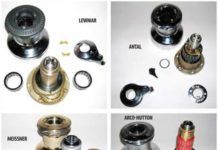
Seven Muscular Winches
Powerful and efficient, Andersen is our top pick.
Latest Logbook

Practical Sailor Logbook – September 2026
In September we tour the Hans Christian 48T — the offshore cruiser many sailors call the holy grail — walk the custom Antigua 60...

Video: If You See This on a Used Sailboat, Walk Away
If you’re searching the used sailboat market, comparing sailboats for sale, or learning how to inspect a sailboat before buying, these are the red...


Latest Sailboat Reviews
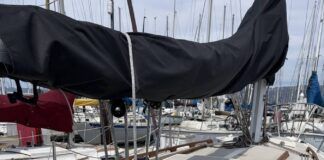
Cal 2-27 Used Boat Review
Our story begins in 1970, with the introduction of the Cal 29. Looking for something similar but a bit smaller, the company asked designer Bill Lapworth for a 27-footer, which at first was the Cal 27, a fin keel, spade rudder design with a convertible pop top; another incarnation of this basic hull was the T/2. But the concept of the 29 found its full expression in the Cal 2-27, which began production in 1975 and continued to 1977, after which it was again modified and called simply the Cal 27...again. Production of it ceased in 1986.