
From the Bench to the Bath
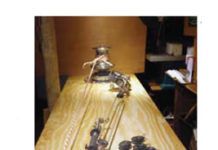
With some modification to our bench-test jig, we were able to place two blocks in opposition to each other, attach them via a closed loop of ultra low-stretch line and place the system in tension. The load-inducing mechanism was a vertical capstan Ideal anchor windlass capable of incrementally adding tension to the mix. A Dillon AP dynamometer was placed in series with the tension-creating tackle, and during each test, the load on the closed loop was closely monitored.
Rope Test Yields Rope Hernias
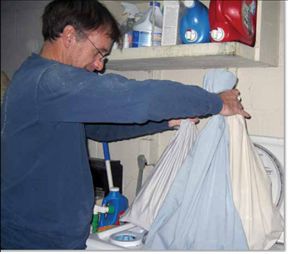
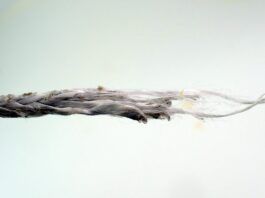
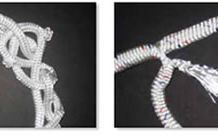
Researching an upcoming article on the effects of various cleaning chemicals on ropes, our testers scrubbed and machine-washed mountains of nylon and polyester rope of every description. Samples ranged from three-strand dock line encrusted in marine life to brand-new polyester double-braid line. Our testing for that article continues, but we want to report one immediate finding relevant to any sailor who is wondering how to deal with old or dirty lines. Fully 70 percent of our test samples, including new and used line from New England Ropes (NER) and Samson Ropes, experienced failure of pre-spliced eyes; the buried portion of the core worked its way out of the main line and into the eye, where it carried zero load. In some cases, these failures were scarcely visible, while in others, the tail was exposed.

Sailboat Design Conference Part I
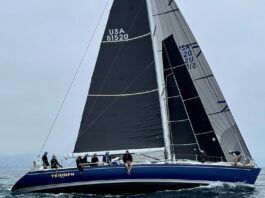
Beyond the text and photos contained in a sailboat manufacturing company’s brochures, and the words of a dealer or salesperson, and absent an understanding of yacht design, discerning the actual capabilities of today’s production boats is a major task. Gone are the days of Herreschoff et. al., when the conventional wisdom held that a long, deep keel was the best method of producing good tracking, displacement produced a seakindly ride, and performance (straightforward speed) was a simple matter of adding sail area. Prior to the age of fiberglass, most yachts used similar raw materials (wood and metal), and construction methods, so those variables were not generally a consideration.
Sailboat Design Conference Part II
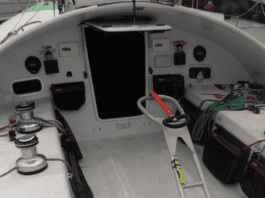
Take a cursory glance at a new 35-footer and you might easily conclude that, except for cosmetic changes, the boat is essentially unchanged from those that made their debut in 1995. But that is not the case. In contemporary designs, modifications to deck layouts, the design of creature comforts, and boathandling systems, all reflect the market's desire for easy use, as evinced by below-deck sheeting systems (X Yachts), electrically controlled stern platforms (C&C), and removable traveler systems (Etap), for instance.
In-Boom Furling: Five Systems
There's no perfect solution to boom furling. It's not an easy bit of engineering. Still, all the systems on the market continue to mature. Schaefer's new offering looks like a good bet for medium-sized boats.
Mainsail Track Hardware
The systems used to attach a mainsail to its mast have come a long way since the time of hoops and parrels, and the variety of options now available for retrofitting plays to the advantage of the consumer.
Do You Want a Headsail Luff-groove Device?
Unless the boat was equipped with two headstays, which adds considerable windage, the headsail change drill meant releasing the lowest hanks on the headsail in use, tacking down the new sail, hanking it on below the head-sail already up, taking a deep breath, letting the jib halyard run, then going like mad to get the hanks open on the old jib, all the time listening to the skipper scream to hurry up.
Mast Support for Trailerable Boats
On most trailerable boats, when the mast is stowed for travel it is lashed to the bow pulpit and stern rail with no support at all in the middle.
The Rig: Keep it Standing
When was the last time you went carefully over every detail of your boat’s rig? The chances are good that it may have been a few years, and it’s possible that you may never have looked at it in the detail it deserves.
Tiller Taming with Two Fingers
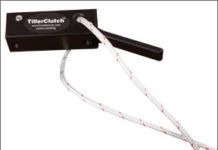
During the past decade, Practical Sailor has looked at a number of devices designed to hold the tiller while the helmsman can attend to other important business-such as trimming a jib sheet or popping open a frosty cold beverage. Theres the Davis Tiller-Tamer (Oct. 1, 1992), the Tillerstay (April 15, 1997), the Tillermate (April 1, 2005), and the Steer-iT (April 1, 2008). Except for the Steer-iT, all of these systems involve some form of line-clutch device on the tiller. The clutch "grabs" an athwartship line that passes through it. The line then leads back to cam (or clam) cleats on either side of the tiller that can be used to tension or release the line.
Latest Logbook

Practical Sailor Logbook – September 2026
In September we tour the Hans Christian 48T — the offshore cruiser many sailors call the holy grail — walk the custom Antigua 60...

Video: The 11.5 Knot Cruiser – Bavaria Match 42 Yacht Tour
Could this be the fastest family cruiser you’ve never heard of? The Bavaria Match 42 is a genuine performance sailboat hiding beneath the interior...



Latest Sailboat Reviews
Cal 2-27 Used Boat Review
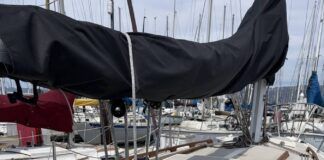
Our story begins in 1970, with the introduction of the Cal 29. Looking for something similar but a bit smaller, the company asked designer Bill Lapworth for a 27-footer, which at first was the Cal 27, a fin keel, spade rudder design with a convertible pop top; another incarnation of this basic hull was the T/2. But the concept of the 29 found its full expression in the Cal 2-27, which began production in 1975 and continued to 1977, after which it was again modified and called simply the Cal 27...again. Production of it ceased in 1986.