




Boat Clinic: Tuning the Masthead Rig
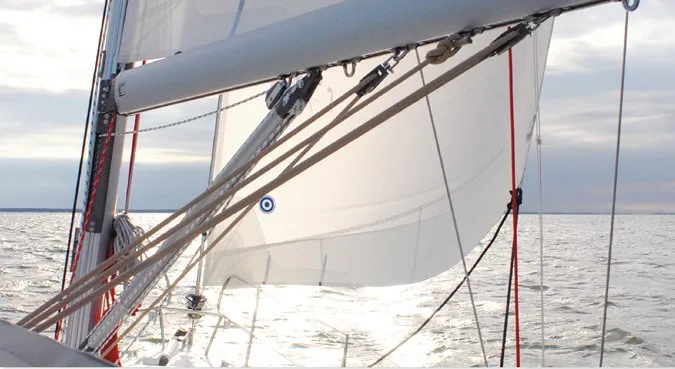
Tuning the rig of a boat is one of the necessary -and pleasant -tasks which must be done to achieve good performance. In an untuned boat, the mast bends in odd ways, and this in turn causes the sails to set badly. By contrast, on a well tuned boat, the rig bends in a controlled fashion, allowing the sails to do their best.
The Multifarious Mainsheet
The mainsail is a big part of the motive power of almost every sailboat. The art of mainsail control, however, is a relatively modern one. One tool that greatly facilitates mainsail control is the traveler.
The Rig: Keep it Standing
When was the last time you went carefully over every detail of your boat’s rig? The chances are good that it may have been a few years, and it’s possible that you may never have looked at it in the detail it deserves.
The Canvas Air-Conditioner
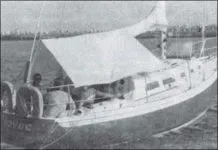
Even the most dedicated sun worshipper craves shade after a bright, hot day on the water. For those of us whose goals include keeping our skin intact over time, a way to get out of the sun is imperative if we are to enjoy being in the cockpit at anchororinaslip. The problem is that few sailboats come equipped with usable shade, at least when the sails are down. The solution to the shade problem is a sun awning. A sun awning also solves another problem, particularly in tropical climates. By keeping the deck shaded, and by preventing the sun from streaming through deadlights and open hatches, an awning is a big help in keeping the temperature of the cabin interior at a habitable level.
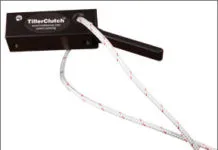
Tiller Taming with Two Fingers
During the past decade, Practical Sailor has looked at a number of devices designed to hold the tiller while the helmsman can attend to other important business-such as trimming a jib sheet or popping open a frosty cold beverage. Theres the Davis Tiller-Tamer (Oct. 1, 1992), the Tillerstay (April 15, 1997), the Tillermate (April 1, 2005), and the Steer-iT (April 1, 2008). Except for the Steer-iT, all of these systems involve some form of line-clutch device on the tiller. The clutch "grabs" an athwartship line that passes through it. The line then leads back to cam (or clam) cleats on either side of the tiller that can be used to tension or release the line.

Mailport: December 2010
Letters to the Practical Sailor editors in December 2010 include: paint colors, sailmaker services, bilge pumps, pest control and the Wirie v. a DIY WiFi antenna.

Testers Examine Running Rigging Options
Today's sailboat owner faces myriad options when shopping for running rigging. When faced with so many choices-from lines made with the old standby materials like polyester to the newer high-tech ropes made from materials like Vectran and Spectra-it's hard to know which one would make the best mainsail halyard, best afterguy, or best genoa sheets. To find out, Practical Sailor tested 26 different varieties of braided rope from four manufacturers: Yale Cordage, Samson Rope, Novatech Braids, and New England Ropes. With so many lines to consider, we grouped the products by material and construction, sorting them into three fairly distinct performance groups (low, mid, and high tech) based upon their fiber content. The ropes were evaluated on their elongation, abrasion resistance, and handling characteristics. Ultimately, when all the stretching, abrading, and coiling was done, testers were able to find some clear choices based on price range and offer some general guidance for those who are shopping for new cordage.
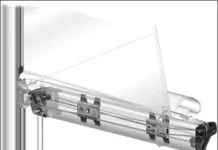
PS Advisor: Rig Loads and Reefing Lines
Recently, while working to add third-reef controls to the mainsail reefing on my Morgan 382, I realized I had no idea how to calculate loads and, therefore, no concept of the size and strength of hardware to install.

The State of the Main: A Look at Sail Materials and Sailmaking Methods
Sails are a fascinating engineering statement, and when all is said and done, whats sought after is the lightest material possible that will neither stretch nor tear as it withstands the ravages of wind-induced pressure, vessel righting moment, and harassment from sunlight, chafe, atmospheric deposition, and other deteriorating effects. Practical Sailor toured sailmaking facilities and talked to several pros in the know to find out what sail materials are best suited for cruising, racing, and passagemaking. While cotton cloth lies well astern as a sail material, Dacron-which has been powering boats for five decades-has yet to be relegated to the junk pile. However, those willing to pay more to optimize performance have a wide range of just-out-of-the-lab, high-modulus material options to choose from, including high-modulus materials like Kevlar, Spectra, carbon, Vectran, North Sailss Cuben Fiber that are strung into high-end sails in much the same way that carbon fiber is used in a hull skin.
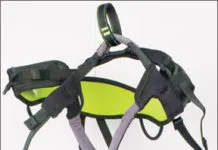
Practical Sailor Tests Bosun Chairs and Harnesses
Practical Sailor recently took a look at nine different bosun chairs and bosun chair alternatives to determine which ones are worth recommending to the sailor facing a repair project high above the deck and which ones wed drop into the nearest dumpster. Included in this test were products from ATN, renowned-rigger Brion Toss, Black Diamond outdoors sports company, sailing hardware-maker Harken, French yacht-equipment manufacturer Plastimo, and Spinlock, a company that specializes in deck hardware and personal safety gear. While none of the products, which were bench tested and evaluated in the field, would ever be considered comfortable, several fit the bill for getting crew to the masthead (and down) safely and offer the features necessary for working aloft. In the review, we also give a rundown on tips and the essential techniques for going aloft safely.

Morgan 382 – The $30K Boat Nobody Talks About
The Morgan 382 might be one of the most overlooked cruising sailboats ever built. Designed by legendary naval architect Ted Brewer and produced between...



Latest Sailboat Review

Jeanneau 55 Boat Review
This recent sailboat from Jeanneau may as well be a spaceship. They’ve taken all the time-honored designs of a monohull aft cockpit and turned...