



Keel and Rudder Design Basics
This is a simple explanation for those new to sailboats about what effect sailboat design has on performance. There are few “bad” boats but...

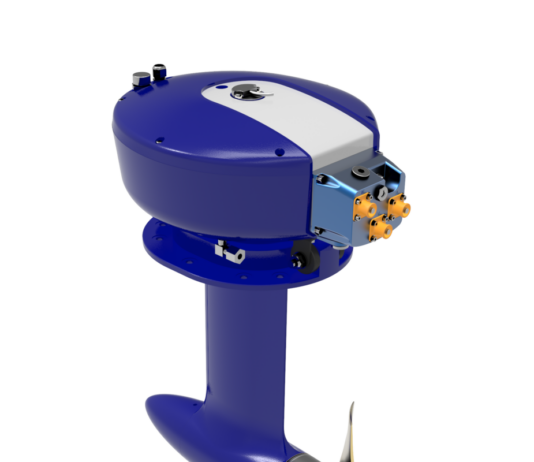
Diesel-Electric Hybrids Vs. Electric: Sailing’s Auxiliary Power Future
How do we reduce and even eliminate our sailboat's carbon dioxide emissions when using auxiliary propulsion and electrical HVAC systems?
Just like with automobiles, how...
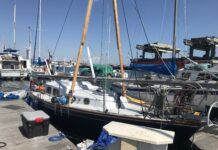
Sailing Triteia: Budget Bluewater Cruising
If I were to sum up, in one word, how James Frederick has managed to create his sailing life, I’d say “resourcefully.” The 49-year-old...
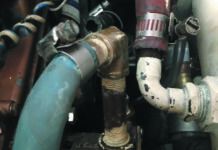
How To Keep Pipe Fittings Dry: Sealant and Teflon Tape Tests
After replacing the raw water pump on his 30-plus-year old Universal diesel, former PS Editor Darrell Nicholson reconnected the tangle of hoses on the...
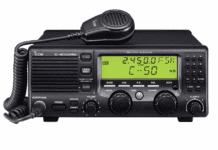
How to Create a Bullet-Proof VHF/SSB Backup
In this short article I want to chat about ideas for making the radio bombproof in an emergency. I haven’t “invented” any of these...
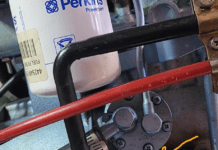
Fuel Lift Pump: Easy DIY Diesel Fuel System Diagnostic and Repair
As with all things in life, everything goes well until it doesn’t. It is an inevitable truth that something will go wrong eventually and...
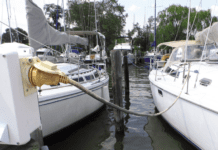
Ensuring Safe Shorepower
Power pedestals are handy and safe when they match the power requirements of the boat. Thirty amps for a 30-amp boat. Fifty amps for...
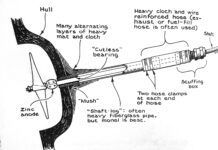
Sinking? Check Your Stuffing Box
Sometimes as a sailor you are learning to run before you can walk or even crawl. If the auto bilge pump isn’t working, maybe...

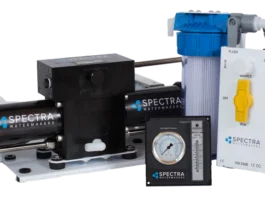
The Rain Catcher’s Guide
An efficient, clean rainwater catchment isn't just for cruisers venturing into remote areas. While biologically safe, many areas of the U.S. are served by well water that is not chlorinated, high in sulfate that makes it prone to going bad. When stored in the absence of oxygen, the sulfate becomes the preferred oxygen source for microorganisms and hydrogen sulfide is the byproduct. Only .05 parts per million (ppm) sulfide is required to make water distasteful. Even if the water at your next marina is fresh and sweet, filling from an unfamiliar source is always a roll of the dice.
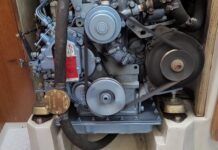
How to Change Your Engine Mounts
It is always discomforting when you know, and actually feel, that something is not quite right. For a little while now, while navigating under...

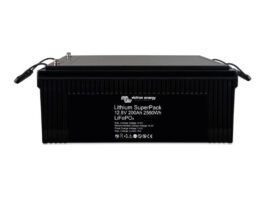
Lithium Batteries on Sailboats: The 3 Mistakes Everyone Makes
Lithium batteries are one of the most popular sailboat upgrades today—but they’re also one of the most misunderstood. In this Practical Sailor Saturday episode,...



Latest Sailboat Review
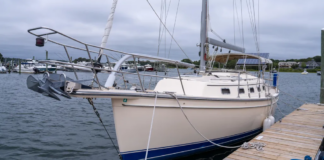
Island Packet Estero Used Boat Review
Florida-based Island Packet targets a relatively narrow niche, so the toughest competitors to its new boats are often older Island Packets. Introduced in 2010, the 36-foot, shoal-draft Estero is the company’s latest attempt to introduce a distinctive model that doesn’t stray too far from the company’s proven formula for success: moderate displacement, full-keel cruisers designed to be lived on, sailed far and in comfort, and endure the bumps, scrapes, and storms that cruising boats inevitably encounter. After sailing the Estero on Florida’s Sarasota Bay and inspecting its interior, construction, and systems, Practical Sailor testers noted that the shoal-water cruiser will appeal strongest to Island Packet fans who’ve been waiting for a shoal-draft, easy-to-sail boat that compares to the IP37 in terms of interior space. These strengths will be most apparent on intracoastal or riverine adventures like the Great Loop.