

Electronics, unfortunately, don’t last forever. When an electronic component decides to fail on your boat, you will likely want to have it replaced. While sailors with deep pockets may love the excuse to replace the gizmo with the latest and greatest unit, for many of us cost and compatibility with existing systems makes upgrading prohibitively expensive and complex. Luckily for us frugal mariners, there is a vibrant secondhand marine electronics market to help us save money and get back out on the water with a fully-functioning electronics suite.
When an electronic component on your vessel fails, you are immediately faced with different options for repairing, replacing or upgrading your gear. For the purposes of this article, I will use a recent experience with a failed radar to help us navigate through some questions, decision-making and possible solutions as we explore options to get back out on the water.
The Failure
Early in the New England summer boating season my Garmin radar suddenly stopped working. The Garmin GMR 18 HD radar on my boat had reached the tender age of 13 years. As the second owner of the boat, I only transmitted the unit for a few hours over the past five years. I cannot know how much it was run before I owned the boat, but the radome (and insides) looked factory fresh.
The inoperative radar brings us to the first question:
Is the Component Mandatory?
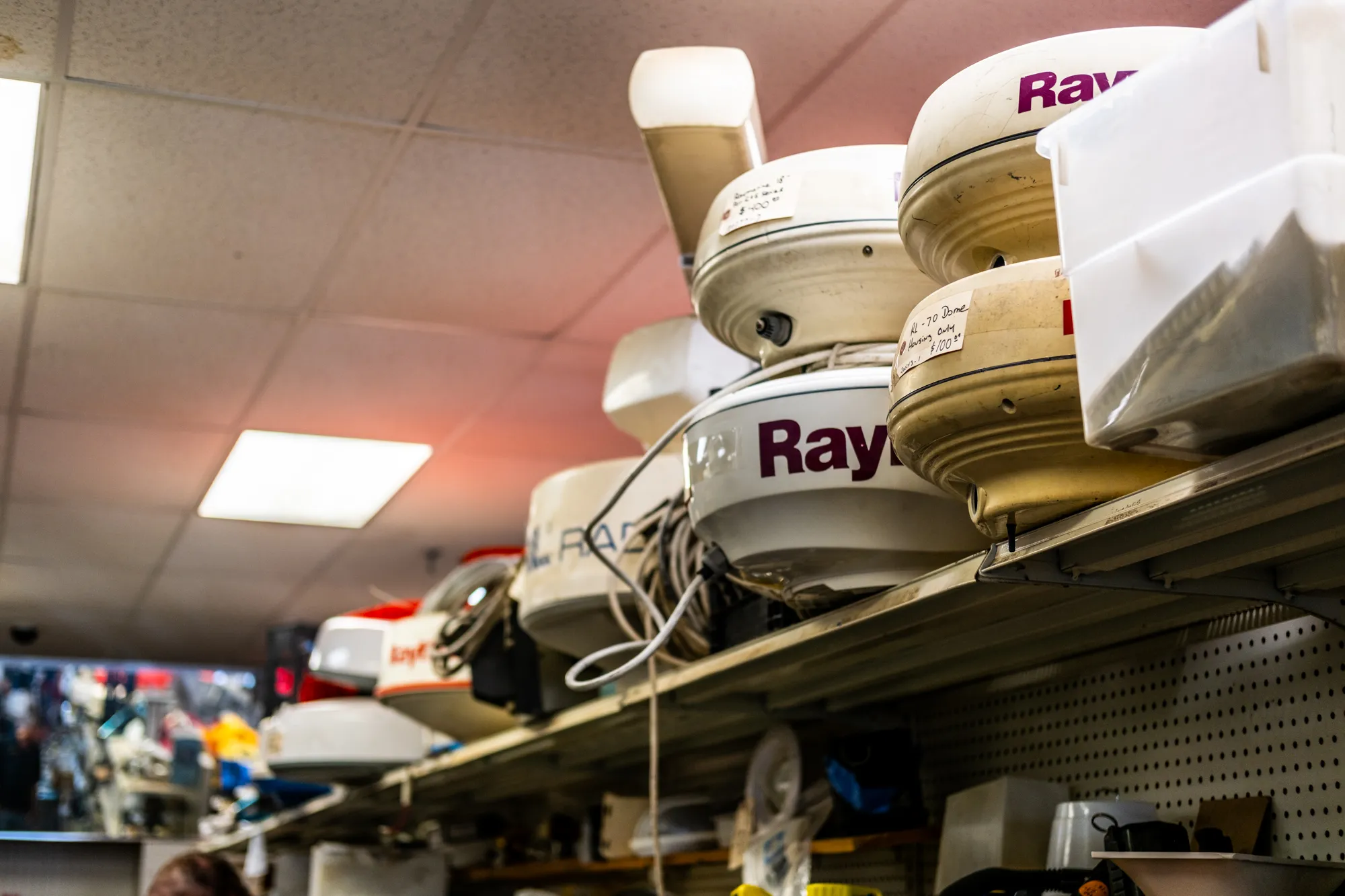
I don’t run radar often, but when you need it, you need it. I don’t require a working radar every weekend, but radar is on my Mandatory Equipment List (borrowing a phrase from my aviation days) for any offshore voyages, regardless of the weather or time of transit.
Of course, depending on what breaks on your boat, you will be faced with the decision to: replace it immediately, kick the can down the road a bit, or ignore it altogether. For years, I owned a sailboat without an operable electronic wind instrument (there is nothing as reliable as an analog Windex) and a very intermittent speed sensor (GPS speed over ground suffices unless you are curious as to the current speed).
If what has failed is required, the next question is:
Is The Component Integrated Into Other Electronics?
If what broke is a standalone system, and you do not need, nor want, to integrate its replacement into a networked system of other electronics, your task is considerably easier than if you are replacing a networked unit.
As amazing as a standardized NMEA network system can be, you will be hard pressed to find a chartplotter that has unlimited network compatibility with a new VHF, radar, depth sounder or other device. Your primary device is usually a chartplotter and, if you are lucky, it will be compatible with, maybe, a second generation of components other than the generation it was released with.
Knowing if you are networking, or planning to network, we then ask:
Is It Time To Upgrade (New) or Replace (Used) the Component?
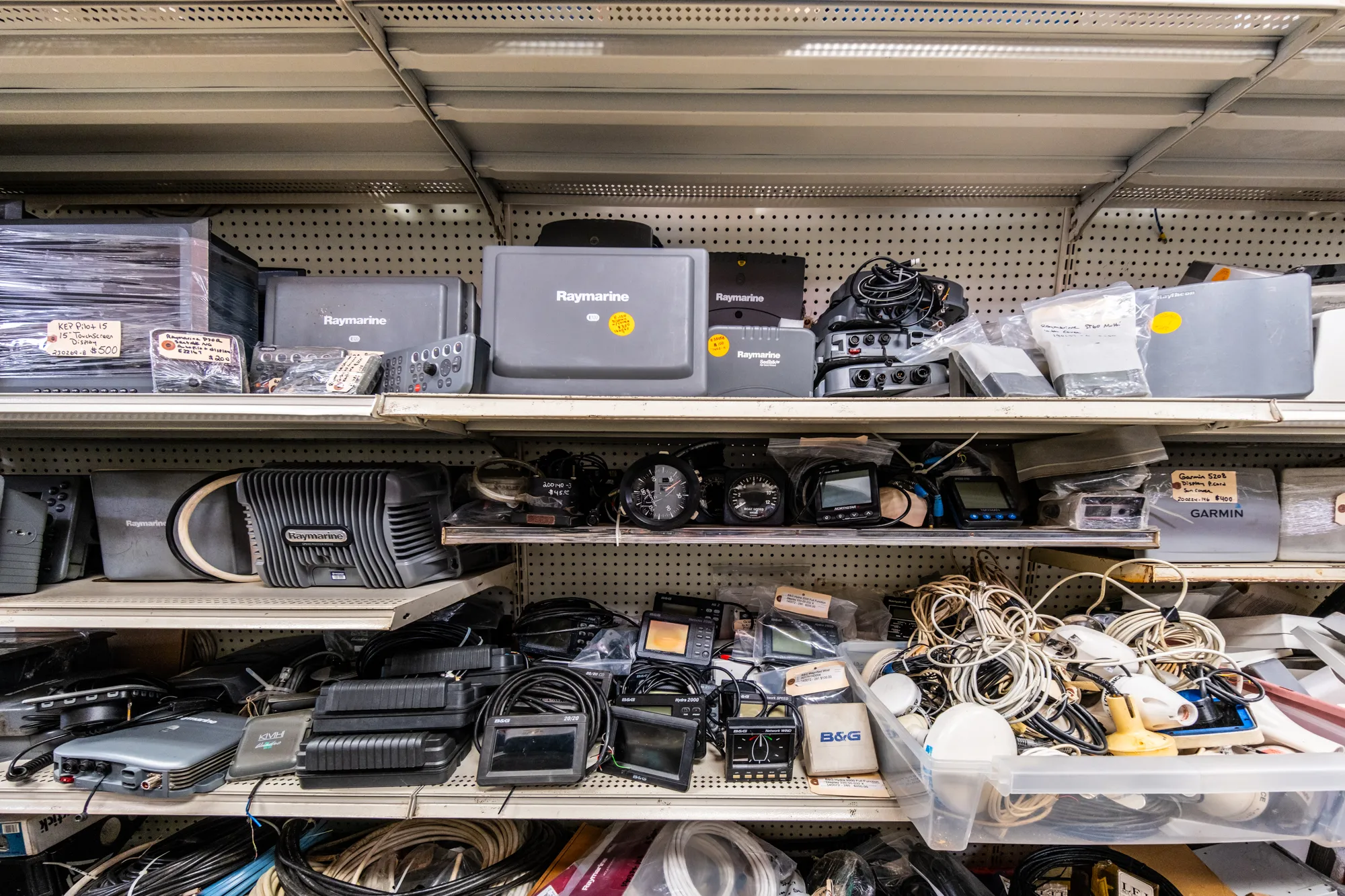
The silver lining of a failure is that this misfortune may just be the catalyst that pushes you towards doing that electronics upgrade on your boat—maybe one that you have been dreaming of for some time but could not justify as everything had been working just fine. If you have the finances at the ready and have been waiting for a great excuse to refit your boat with the newest electronics, by all means, go wild!
There is definitely something to be said by wiping the slate clean and starting over with some shiny new electronics. Plus, unboxing is fun.
But, if you want to replace your component, your next query is:
Do I Replace With the Same Unit or a New(er) One?
On my boat, I was very impressed with the 13-year-old radar’s performance and features, even when compared to full-sized commercial 3 cm and 10 cm radars I used on large containerships. The Garmin GMR 18 HD worked well for me, and I did not feel a need to upgrade to a more modern unit.
After the GMR 18 HD, Garmin introduced the new-and-improved GMR 18 HD3. “Cool,” I thought. Time for an upgrade, right? Well, in this instance, the GMR 18 HD3 was not compatible with my chartplotter. My options had boiled down to: 1) Find a used GMR 18 HD or, 2) Get a different (new or newer) radar and then upgrade the chartplotter (and then possibly be forced to upgrade other electronics like the VHF, AIS, depth sounder, two multi-function displays, etc…a task daunting to any wallet).
As I was not prepared to replace two or more electronic components, I made the decision to find myself a new-to-me Garmin GMR 18 HD radar.
Can We Get a Used Radar and Where Should We Look?
Used Marine Electronics Shopping
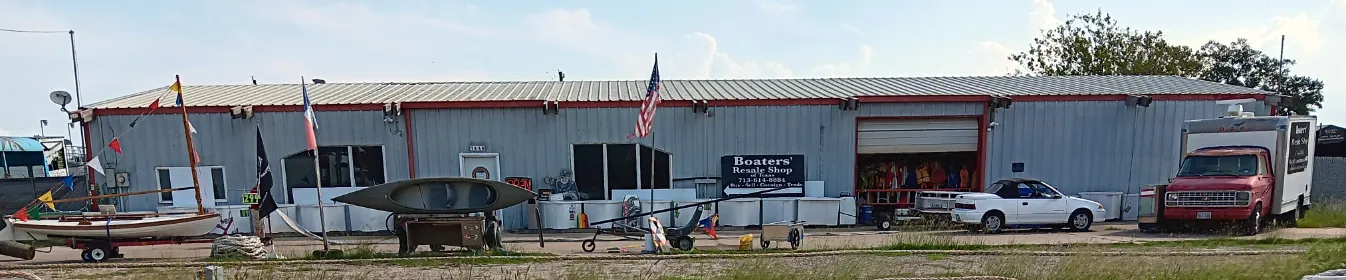
There is a relatively (when compared to traditional chandleries) small number of individuals, consignment shops and used electronics dealers that specialize in refurbishing, testing and selling marine electronics components.
Consignment
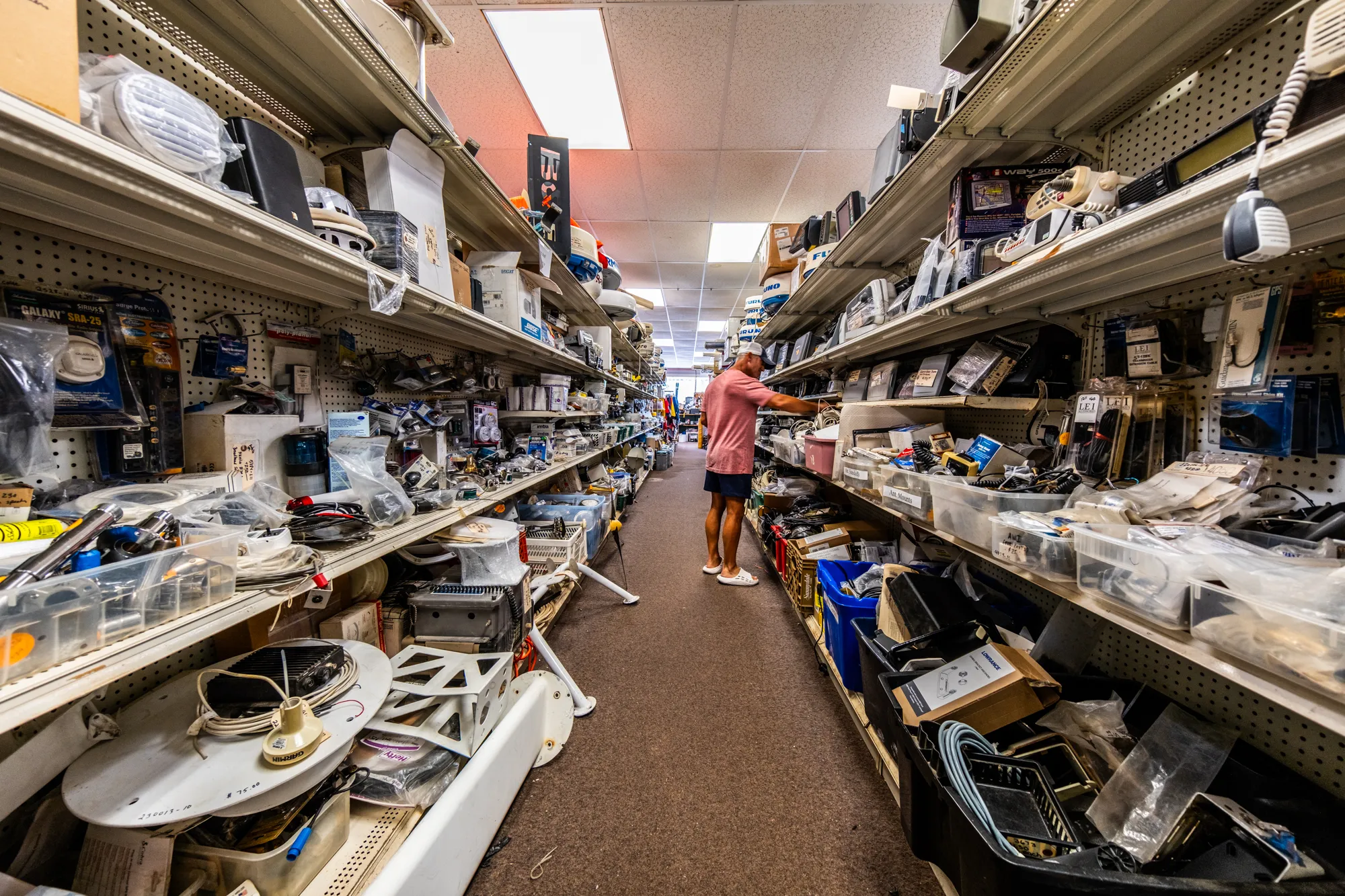
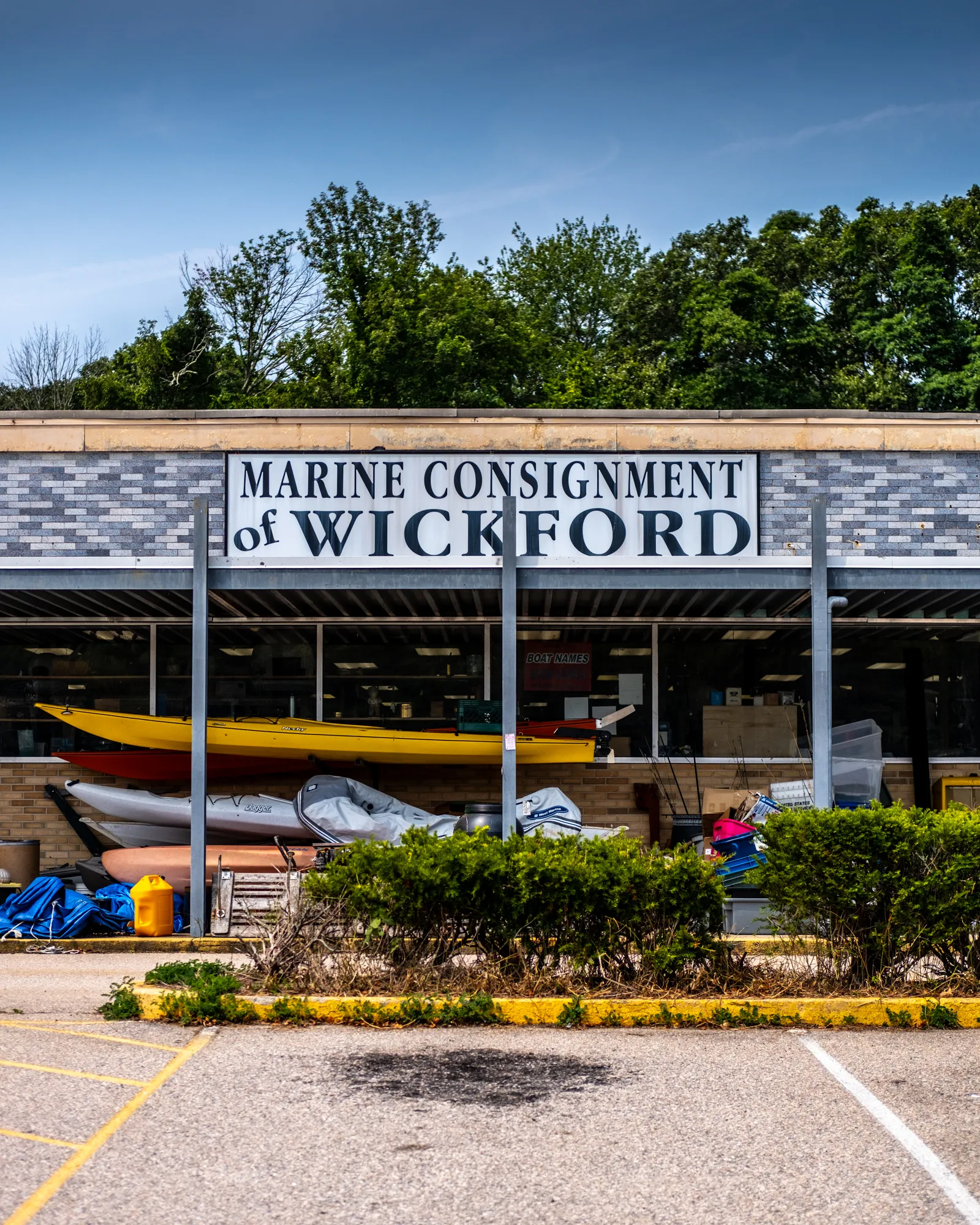
While some marine consignment shops steer clear of used electronics, others embrace them knowing that there is a market out there. Sam Angelini of Marine Consignment of Wickford (RI) has been in the business for 26 years and his shop is chock-full of boating gear from foulies to outboard motors to bimini frames to scuba gear to hardware to vintage marine electronics. The shelves are overflowing with so much gear that you feel like you could park a bare hull outside and, within a few hours of shopping, have a fully rigged and outfitted cruiser ready to cross oceans.
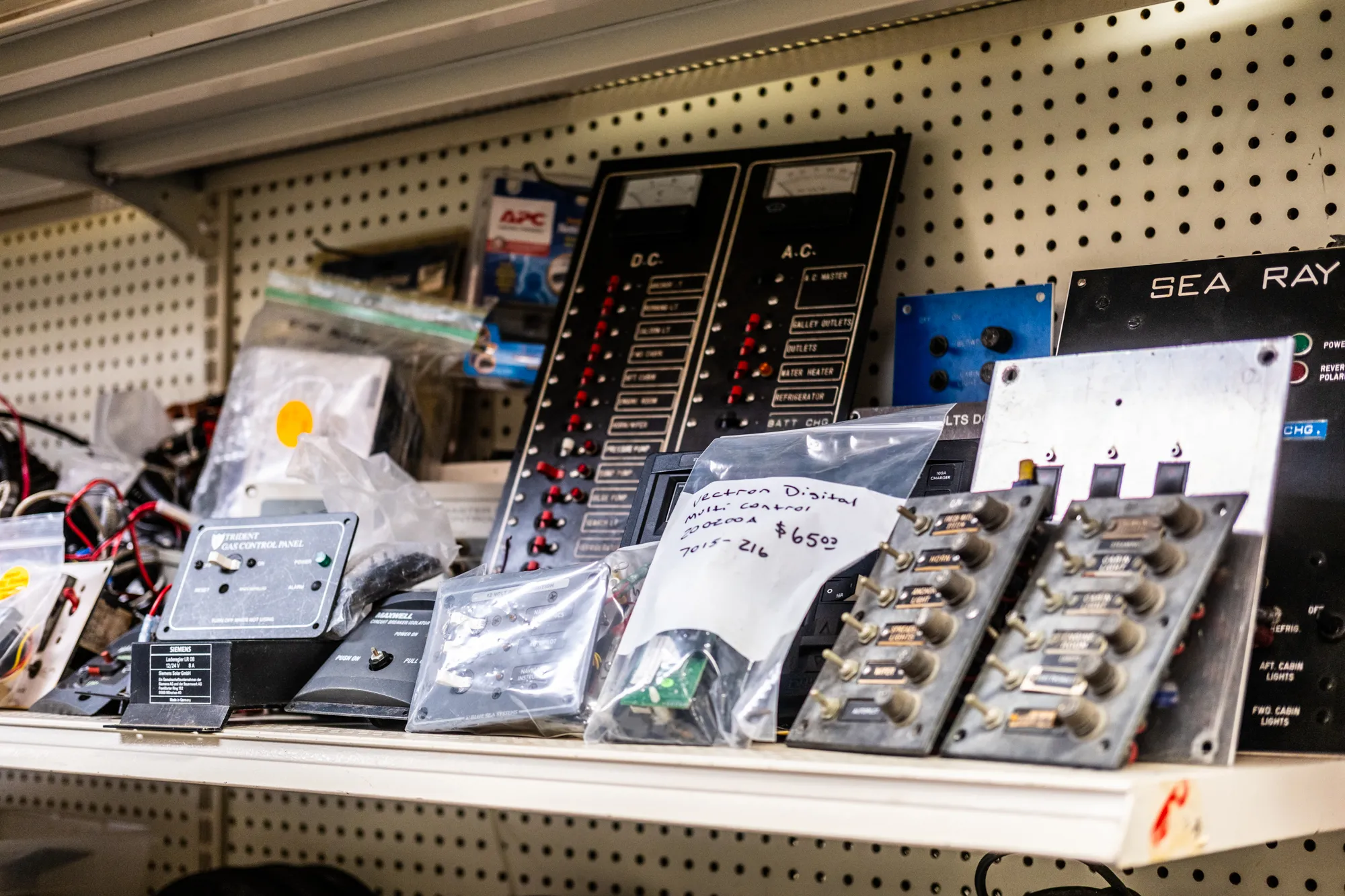
Angelini says that most of his electronics customers are shopping for a specific component for a larger system—replacing an inoperative element—versus shopping for a complete electronics suite. Autopilot control heads are a hot item according to Angelini. With varying levels of compatibility, customers can upgrade screens or radars by grabbing gear in his shop that others have consigned.
Wickford customers can shop electronics with confidence. Angelini offers a money back guarantee on electronics as he tests the gear before it goes out on the shelves.
Many of these shops run parallel eBay and/or Facebook Marketplace virtual storefronts that you can shop at.
Used Electronics Dealers
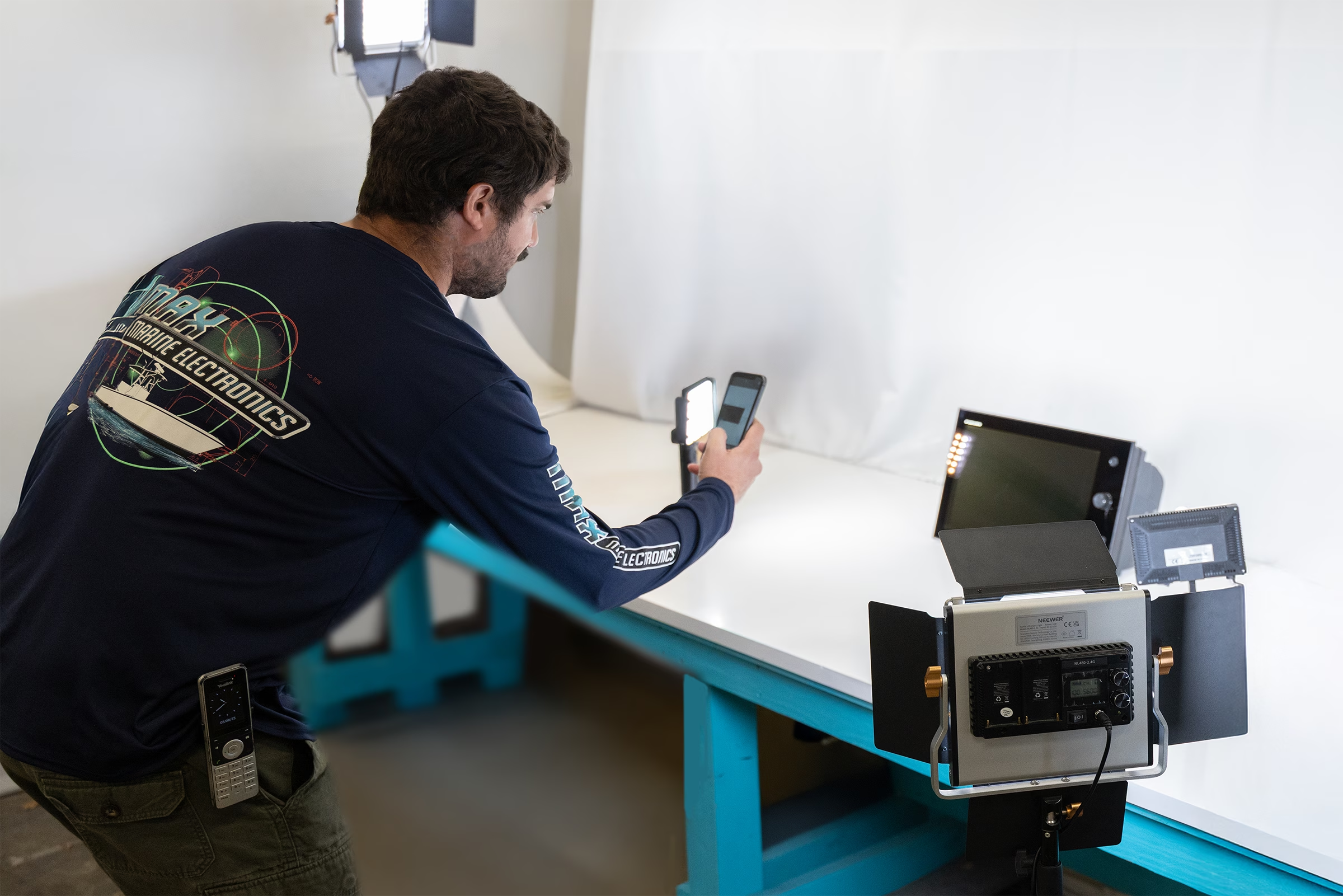
Julian Maxwell Stein (“Max”) started Max Marine Electronics almost by accident in 2011 when he bought a nice looking Apelco Fishfinder at a garage sale and resold the unit on eBay for a decent profit to a boater who needed to replace an inoperative unit but did not want to upgrade his entire electronics suite. At the time, Stein was working in the signs and graphics business. His success with the Apelco, combined with his boating and mechanical background, combined with an entrepreneurial spirit led him to pivot into trying his hand at selling used marine electronics.
The Business Model
Fourteen years later Max Marine Electronics has over 25 employees, two E-commerce sites, and a 15,000 sq. ft. warehouse handling equipment testing, refurbishment and shipping.
Stein has had a front-row seat to the marine electronics industry and has seen that as of late, manufacturer support for legacy systems has dwindled. Most of his customers find that a five-to-ten-year-old system on a boat is “perfectly capable” of doing its assigned tasks. For example, one of Max’s most popular items is the Raymarine ST60 tridata. He “cannot keep them in stock” and sells them for around $400 each.
Another driver of the used electronics industry was, as Max puts it, “the MFD revolution,” where, primarily power boaters, wanted to upgrade from older 10 in. to 12 in. multi-function displays to 16-plus in.” units, providing the used market with very nice and not very old screens.
According to Stein, most of Max’s customers are boaters looking to replace a failed component in a larger system. They wish to avoid the cost of a full electronics overhaul as well as potential downtime inherent in installing a new system that may bring stock delays as well as fitment issues on installation. Although peddling used gear, his customer service team is not shy about steering customers to new products if they feel a used component will not serve them as well. He often recommends new replacements for electrical components in “non-networked or standalone systems” as opposed to a used replacement.
Testing and Sales
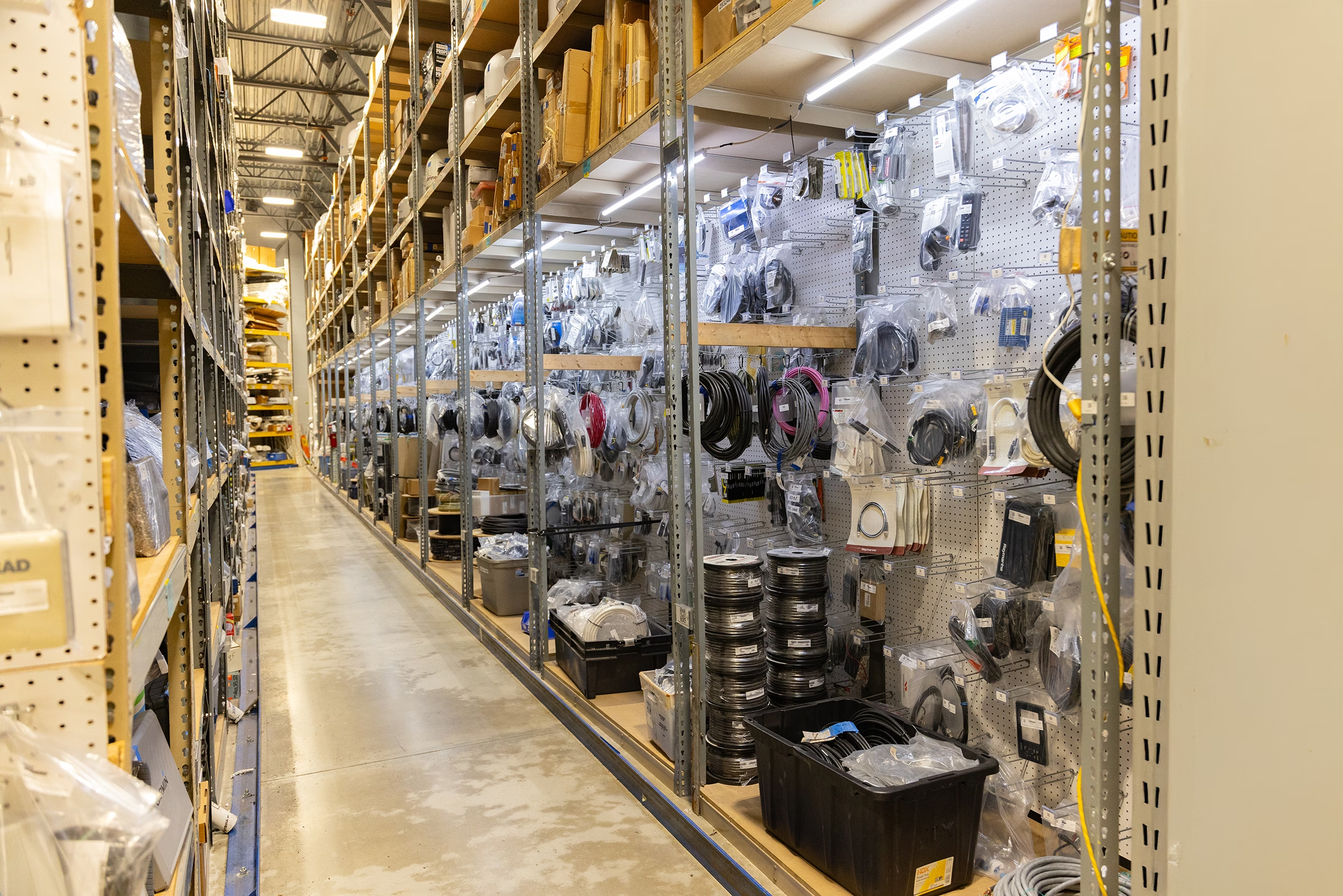
Max Marine Electronics purchases gear from both installers (after they upgrade a vessel) and individual owners. The shop performs a comprehensive quality assurance process on the gear before listing the items for sale with a 90-day warranty. This includes a full bench test and software update, any necessary repairs, and any cosmetic work that will improve the unit’s “dash-appeal.”
Max Marine’s website and eBay store run in parallel with items appearing synchronized on both sites. They have used Facebook Marketplace for some large or odd items. Stein shares that 60 to 70 percent of his sales are direct through his website and the rest come through eBay.
Facebook Marketplace Sellers
Aside from eBay, Facebook Marketplace has become a major player in the used marine equipment market with the ability to facilitate quick fee-less transactions and local pickup of goods. It is here that I came across Central Connecticut’s Jonathan Giannone. Giannone works in the technical/electronics field and found his way into the used marine electronics in a similar fashion to how Max Stein did when he picked up a Garmin GPS at a garage sale four years ago.
After reselling the Garmin, he decided to take a deeper dive into flipping marine electronics and studied up on how to repair and test components. He saw that “millions [of dollars of marine electronics] are thrown away every year with people not knowing they can still use” the equipment. Now he works with individual sellers and installers to refresh his inventory and move equipment.
Specializing in GPS and radar systems, “customer safety” is his number one goal and he makes sure everything he sells is in good working order. He also will get on video calls with customers to assist with installations. Furthering his customer service, when shipping items, he always photographs the contents in the box, the sealed box, and all shipping labels to give peace of mind to the recipients.
He says the majority of his customers are boaters looking to upgrade existing components to something newer but do not have the budget for the latest electronics—often after they bought a used boat with outdated gear on board. Many of the remaining buyers are those looking to replace inoperative gear and get back on the water.
Share Your Experiences
Have you been forced, or chosen, to jump into the used marine electronics market due to a desire to upgrade your boat’s electronics or replace a broken unit? Share your experience in the comments below to help your fellow sailors navigate these waters!








Well thought out article Todd. The dilemma of new vs refurbished comes up often with my clients. The same goes for rebuild or replace the diesel. I’ll be sending undecided skippers to this article and save myself a lot of e-mails and text messages.
Hi Bert,
Thanks for the kind words! I hope the article helps guide those “undecided skippers!”
Best,
Todd