

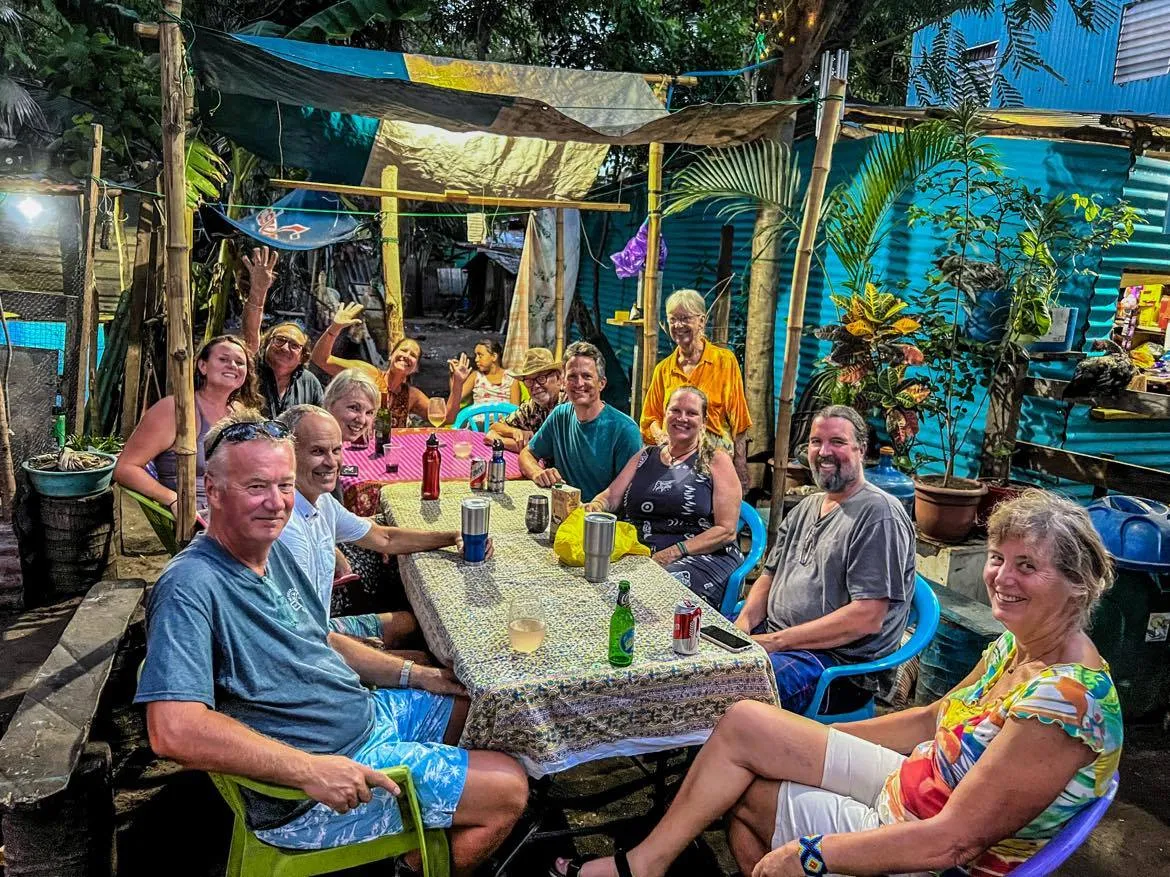
The simplest things can impact and change our lives forever. I was sitting at my computer in California’s San Diego Yacht Club library in 2008 during a brief stopover on my sail down to Mexico from Victoria, Canada. A sailing magazine was glaring at me from a shelf above my computer and the front cover featured “El Salvador: A Hidden Treasure.” “This looks amazing. I could go there!” I said to myself as I devoured every word in the article. And I did!
Fast forward six months, after sailing with the Baja Ha-Ha rally to Mexico and then down the beautiful Mexican coastline, I anchored my boat Precious Metal in the stunning Zihuatanejo Bay, in southern Mexico. Zihuatanejo had been a favorite holiday destination by air over the years, and I had always dreamed of anchoring my own boat off Zihuatanejo’s beautiful La Ropa Beach.
The Beginnings of Sailfest
To celebrate my arrival in Zihuatanejo, I met up with some friends at a quaint palapa bar and to my surprise, well into the night, a tiny young girl tapped on my thigh asking if I wanted to buy a box of Chicklets chewing gum. I couldn’t resist her beautiful brown pleading eyes, and as I reach for my wallet, I asked her, “Why aren’t you in bed getting ready for school tomorrow?” My friends across the table replied, “Because she isn’t allowed to go to school. Her family is too poor, and she must work at night to help support her family. Besides, she doesn’t own shoes, and you must own shoes to go to school.” I was aghast.
Coincidentally, the following morning radio Net announced a meeting to raise money for education in the region. The organization was named Sailfest and in its infancy. Local philanthropists Gloria and Richard Bellock established the agency three years earlier with the purpose of building schools for the poor regions of the community. I attended the meeting and instantly became the Sailfest Co-Chairperson of the committee that represents the cruising community.
Just like that, the sequence of extraordinary events in San Diego and Zihuatanejo began my 17-year chapter of cruising the magical southern Central American corner between Zihuatanejo, Mexico and El Salvador.
Don’t Turn Back at Zihuatanejo
Ironically, most cruising boats in mainland Pacific Mexico turn around at Zihuatanejo and head back north for hurricane season to expensive, crowded marinas. They head north just when I believe the best cruising grounds in Central America are beginning. That said, there’s usually a small fleet of adventurous boaters that head to El Salvador after enjoying Zihuatanejo’s famous Sailfest and Guitar Fest activities (mid-February to mid-March).
What’s wonderful about having a base in this unique corner of Central America is that cruisers can easily wander as far north as the Sea of Cortez (2,000 miles), as far east as Panama (1,000 miles), and south to Galapagos, Peru and Ecuador (2,000 miles) and still be home in El Salvador for hurricane season.
El Salvador has never had a hurricane. Hurricanes form off the coast of Central America and then turn east or west and follow the warmer water towards Pacific Mexico, or the Caribbean. I have cruised extensively throughout all these regions from El Salvador to the Sea of Cortez, Panama, Galapagos, Equator and Peru, and easily return each season to my “second home” of El Salvador.
Zihuatanejo: Music, Artisans, and Amazing Culinary Experiences
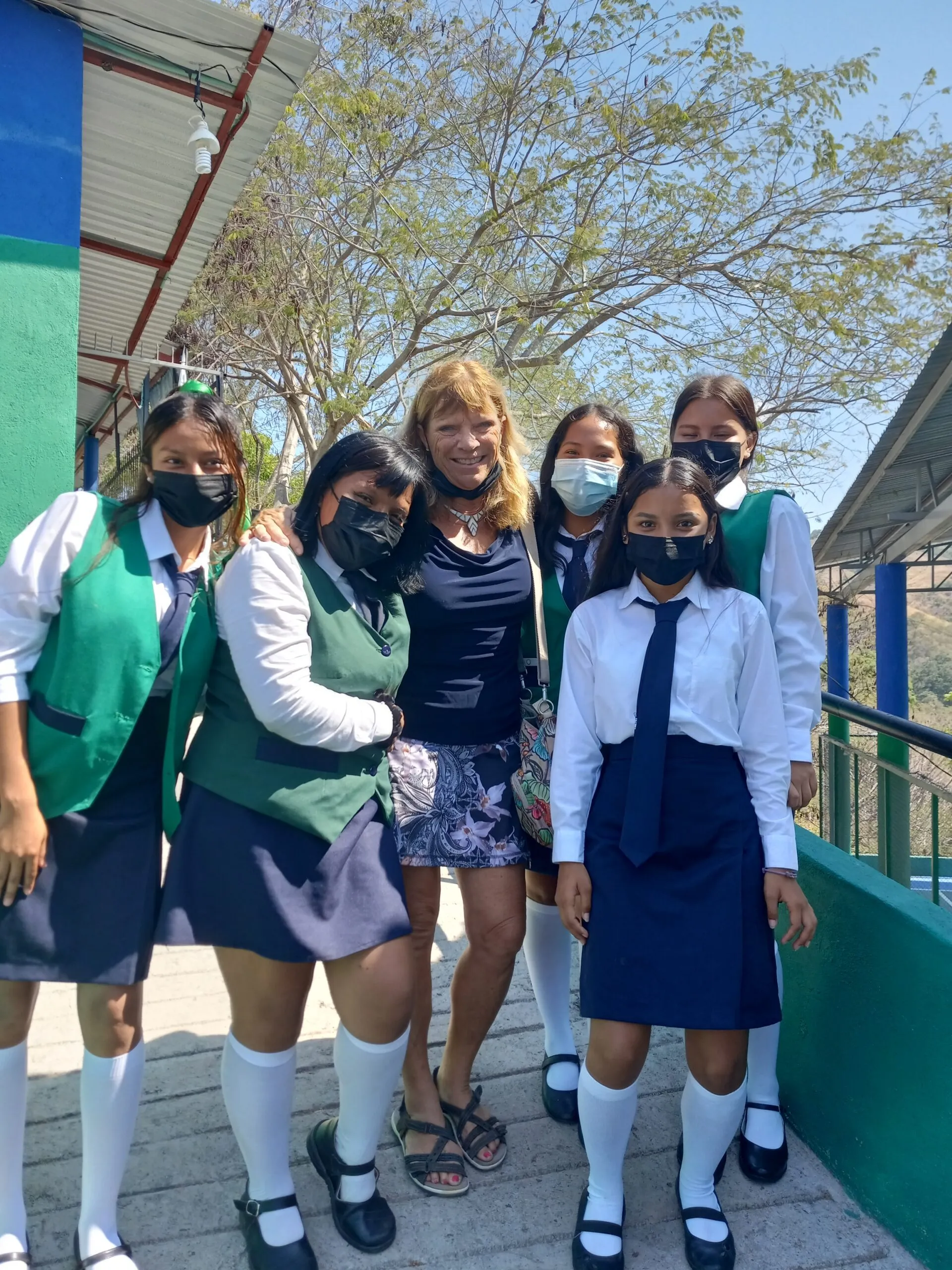
Zihuatanejo is an exceptional cruising destination during non-hurricane season. The town is immaculate, clean and full of fabulous restaurants, artisans and musicians. There is an abundance of activities available including biking (40 km trail), running, pickle ball and a multitude of water sports.
Sailfest: Fun and Community Support in February
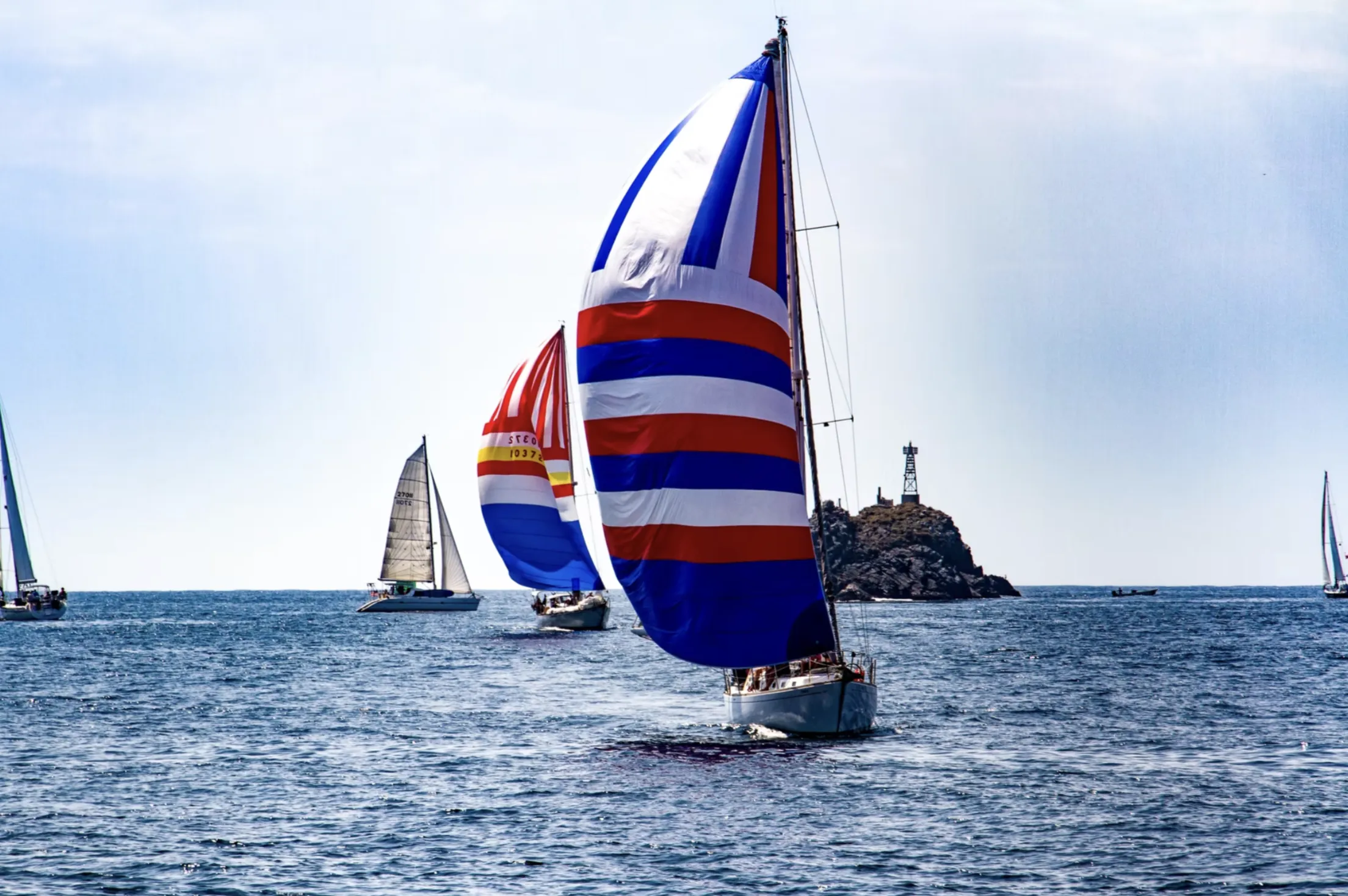
Sailfest activities set the community abuzz in February, and I feel privileged to have witnessed the development. Since its inception in 2005, over 6,000 children have been educated—who would otherwise never see the inside of a school—145 school structures have been built, and now 80 percent of our high school graduates are attending university. Our very first doctor just graduated!
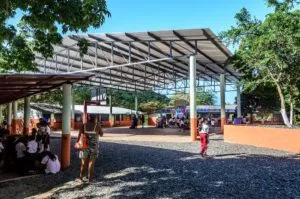
It takes a village of over 145 volunteers on land and water to host the multitude of Sailfest activities including: cocktail and music cruises aboard our boats, sail parade, chili cook off, concerts, and so much more. Last year we raised a whopping $252,000 USD (including matching grants and donations) versus my first year in 2008 when we raised $2,000 USD.
Guitar Fest
Guitar Fest attracts some of the best guitarists in the world and is a week-long festival of outstanding musical events in the local restaurants and throughout the community. The proceeds provide musical instruments for the needy children in the schools, which has contributed to making Zihuatanejo a musical talent hub.
Cruising and Community Volunteering
Importantly, my participation in local charities both in Zihuatanejo and El Salvador not only makes the community a better place, but also, it provides a wonderful purpose for my privileged cruising lifestyle. I’ve learned that the more I contribute to the communities that I sail into, the greater the depth of local friendships and understanding of local culture. It’s a win, win.
The coastline south of Zihuatanejo boasts of a picturesque, forgiving continuum of white sandy beaches and villages, with a great number of beautiful bays for anchoring and snorkeling. We have not sailed overnight on that route for many years—if ever.
Acapulco: Fascinating History and Culture
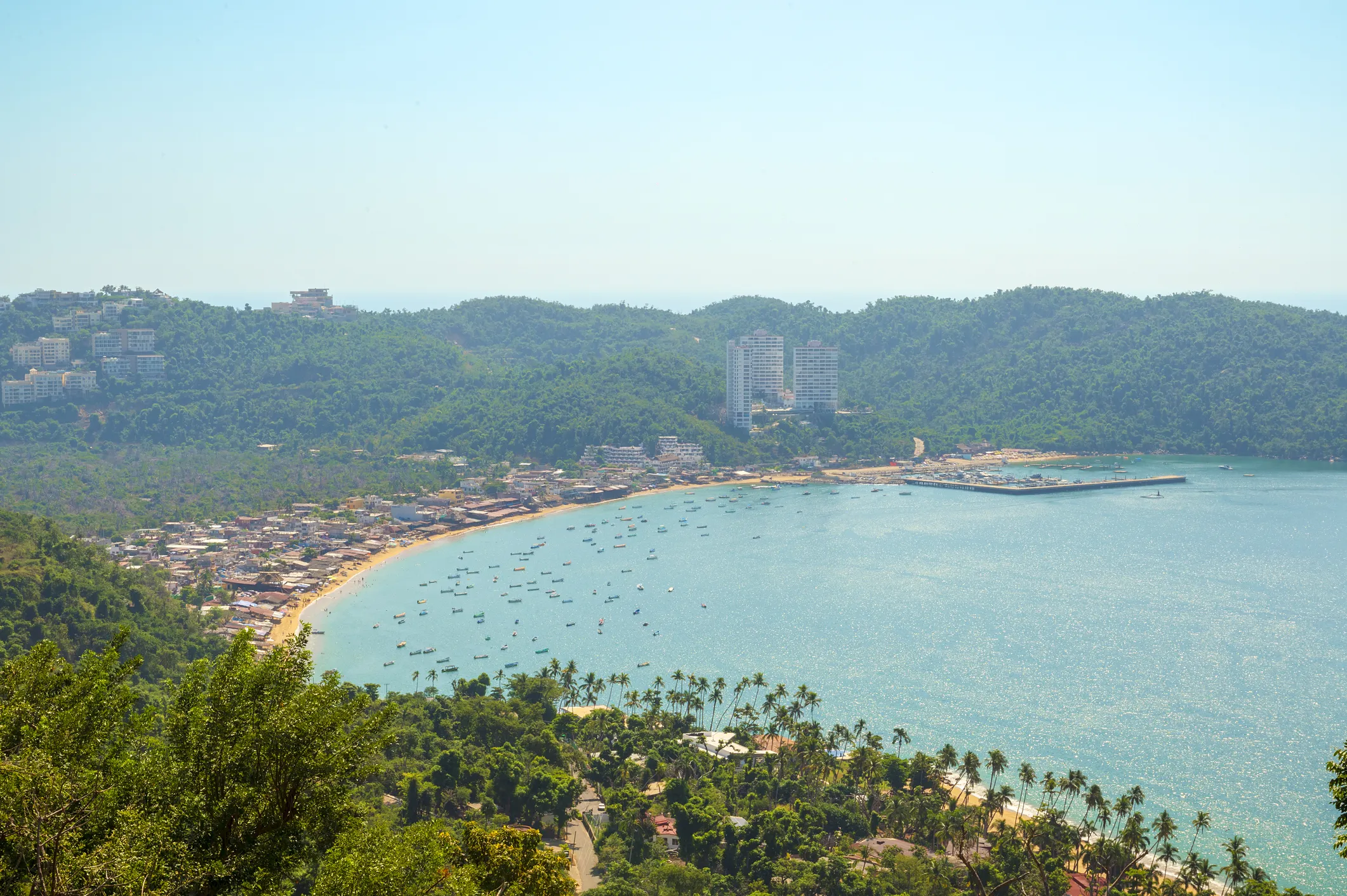
Acapulco is our first major stop to the south of Zihuatanejo. Our wonderful local friend Vincente will greet you in his panga and tie your boat to one of his five mooring buoys which are located directly in front of the Port Captain on the north side of the main bay. I recommend that you stay for at least three nights to see the spectacular Cliff Divers, as well as the Fort/Mask and Maritime Museums which are all walking distance from the anchorage. All these attractions are outstanding. I’m not a museum person but these are exceptional.
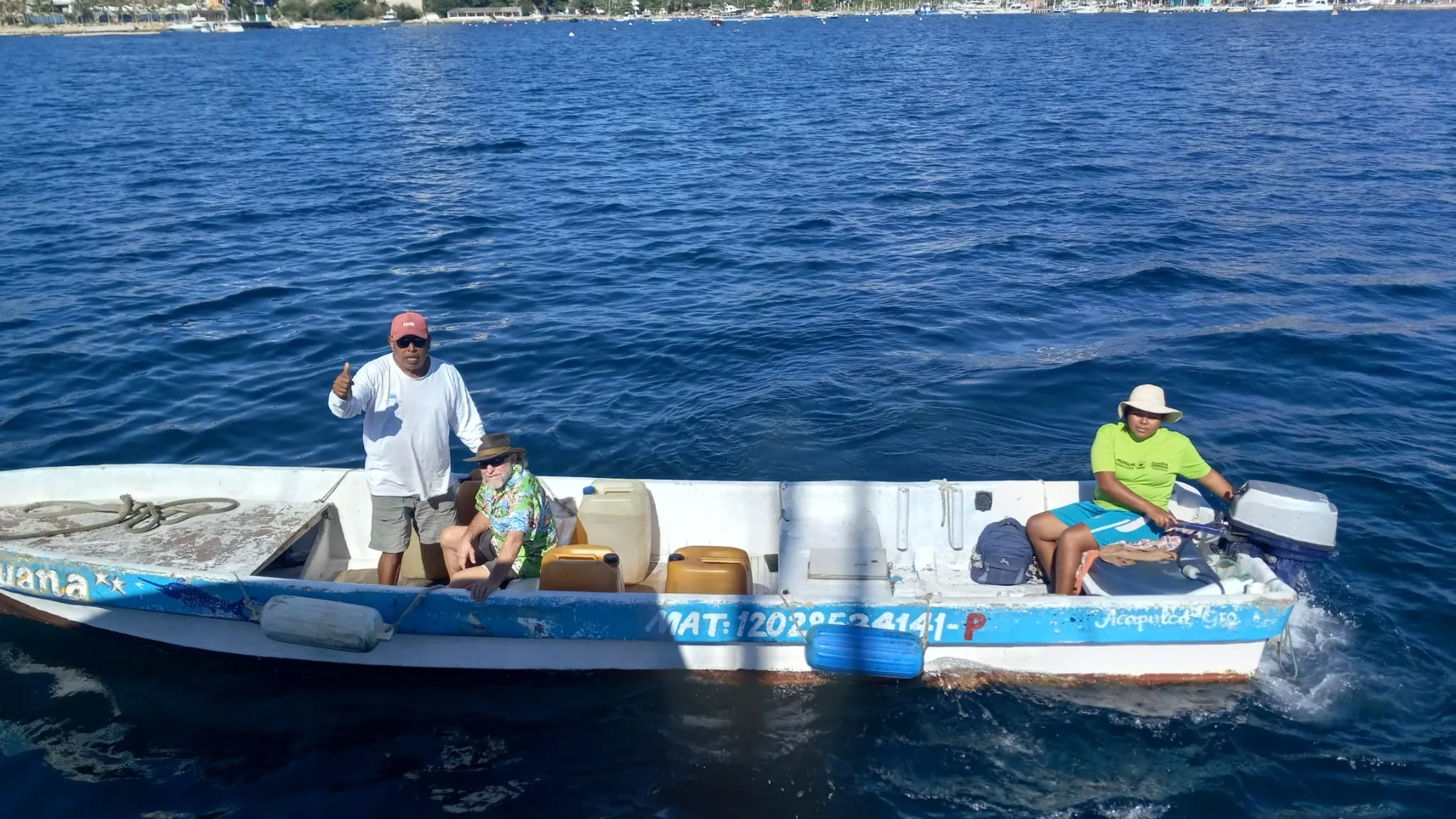
Acapulco suffered a horrific hurricane Otis in October 2023. We were the first boat into the bay following the hurricane and there are no adjectives to describe the devastation. Tragically, our friend Vincente’s boat was swept out to sea during the night in horrific winds and 70-foot seas. His boat sank and his young 10-year-old son sadly perished. Vincente endured swimming over a mile to shore during the night in hurricane-force conditions and was rescued at 7:30 a.m.by the Navy. We do everything we can to support Vincente and his business as he strives to overcome his tragic loss.
Post-Hurricane Reconstruction
Every boat in Acapulco Bay sank during the hurricane and all marina facilities were destroyed. Knowing that a lot of debris is still on the ocean floor, I highly recommend NOT anchoring anywhere in the vicinity of Acapulco. Miraculously, Mexicans are incredibly proud and resourceful. We have returned to Acapulco many times since the hurricane and all of the marinas have been rebuilt. Most of the construction surrounding the Bay is now completed. If we didn’t know otherwise, we would never have known they endured such a horrific catastrophe.
Pre-Arrival Tips
It’s best to call Vincente several days ahead of your arrival (mention my name), and he’ll ask you to call a few hours prior to your entrance into the Bay. He will happily assist you with fuel, boat cleaning, any other needs. Vincente’s phone number is: +52-7444398184.
Huatulco
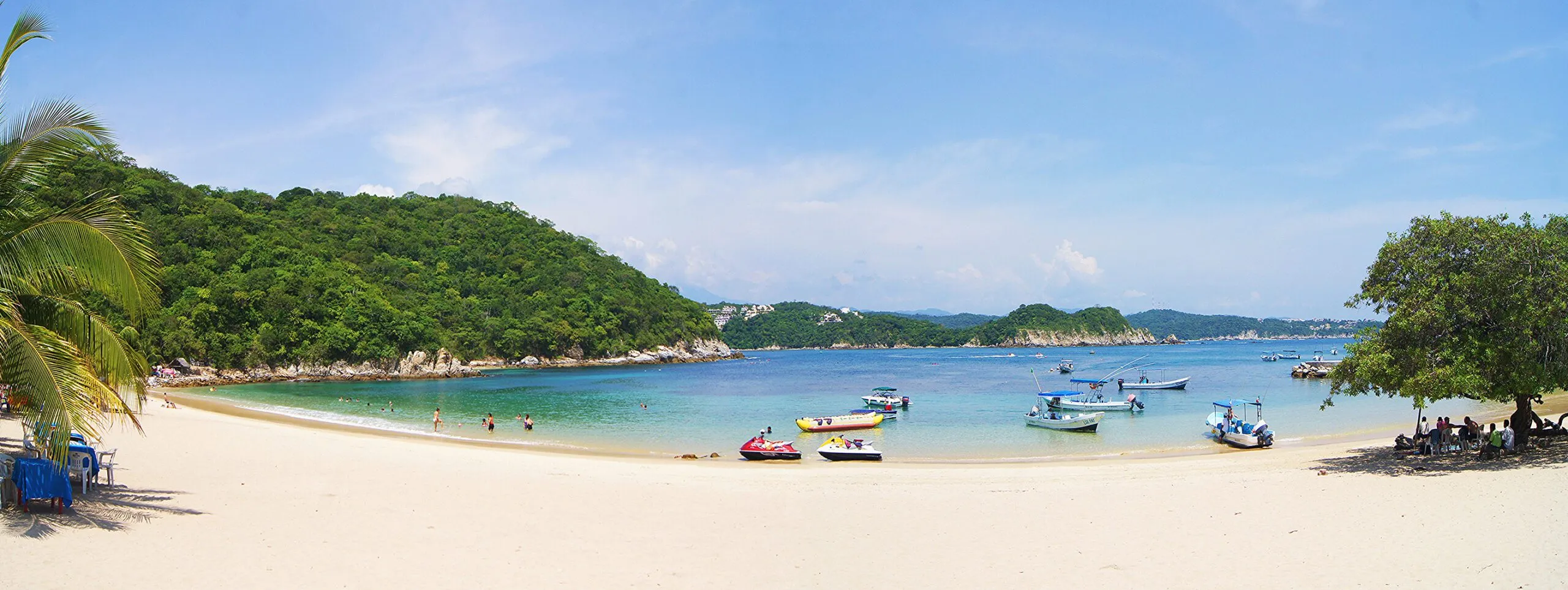
Huatulco is the next major stop and boasts of eight beautiful bays along the coastline within Huatulco National Park before arrival in Santa Cruz, which is the main port of Huatulco. Be sure to take time to enjoy these anchorages. My favorites are Organo Bay and Chachacual Bay and both are accessible to the main highway and Centro (La Crucecita) via taxi. St. Augustine is the only bay that I don’t recommend insofar as it’s incredibly busy with boat toys, and the anchorage is tenuous.
Port Captain
The Huatulco Port Captain is located right at the entrance to Santa Cruz harbor. You can dinghy into Santa Cruz harbor and use the local dock, but it’s important to discuss your intentions with the security people because a lot of local tourist boats are coming and going.
Fuel Tips
Fuel should be Jerry canned by dinghy at the PEMEX Station across from the Port Captain. Avoid taking your main boat to fuel as the wall for tying up is crude.
Marina Chahue
At the time of writing, the Marina Chahue is under construction and the entrance has not been dredged. We recently took our catamaran into the marina due to engine repair, but I only recommend it in an emergency.
La Crucecita
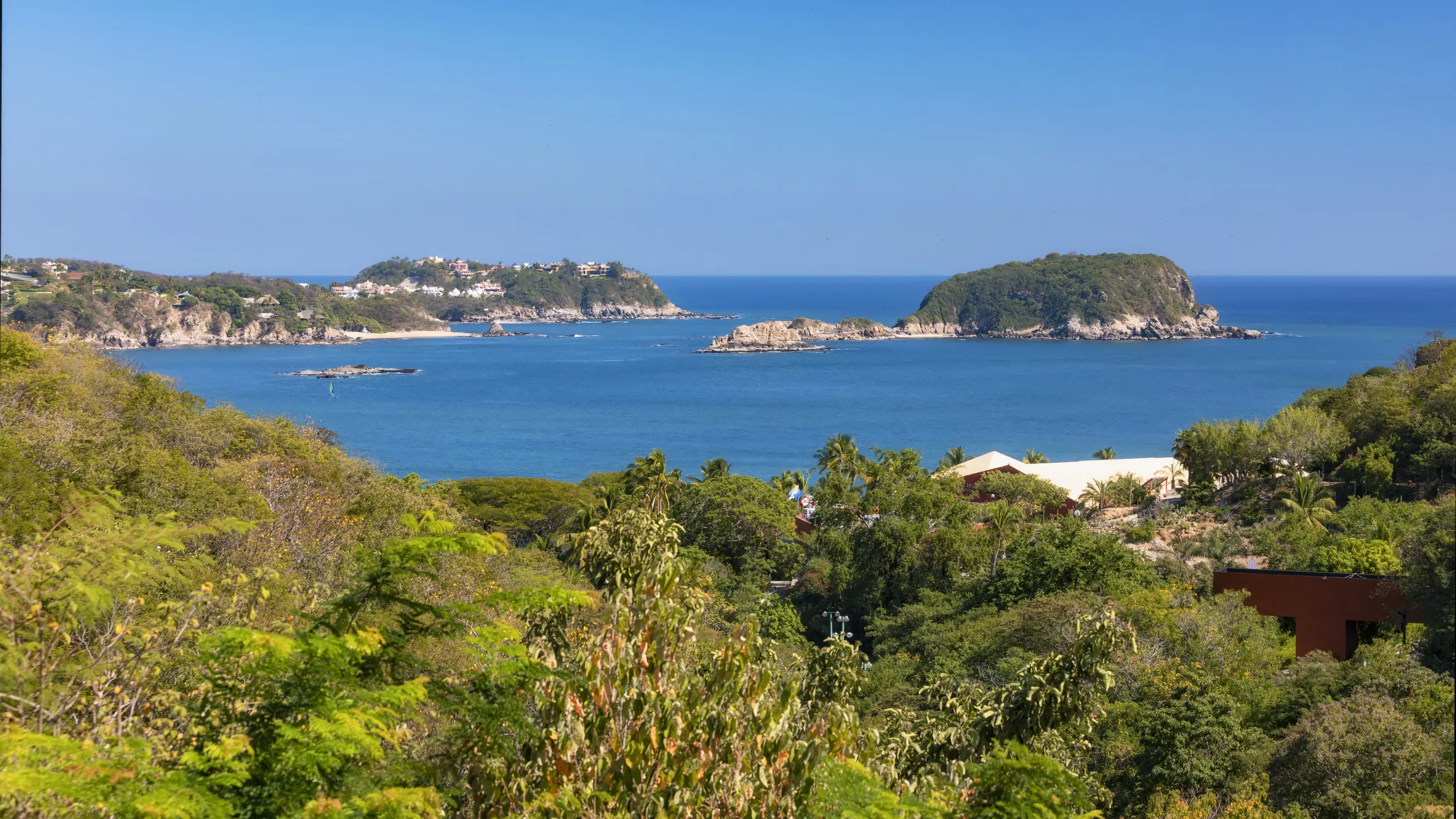
The main town of La Crucecita, offers a host of beautiful restaurants, stores, bars and excellent pickle ball facilities. Enjoy a fabulous day tour to a spectacular waterfall facility and rent a car to the historic City of Oaxaca (the new road shortens the trip to three hours).
We love Huatulco. In fact, we were anchored in Entrega Bay for three months during Covid quarantine in 2020 (March to June) and enjoyed the huge coral reef all to ourselves. We named all the turtles: Flash, Dash, Pokey and Lokey and still enjoy visiting them with every opportunity. Gustavo, our local tour guide, is a terrific character and will happily take you to the waterfalls, beaches, and any other attractions. Gustavo’s phone number is +52 9581088900.
Tangolunda Bay to the east of Santa Cruz is a popular departure point to cross the infamous Tehuantepec after checking out with the Port Captain. You can beach your dinghy safely behind the breakwater and walk about 15 minutes to the main road to town and taxis, and the small village of Tangolunda.
At this point you’ll discover that the sun rises and sets east and west! You’re now heading east.
The Infamous Gulf of Tehuantepec
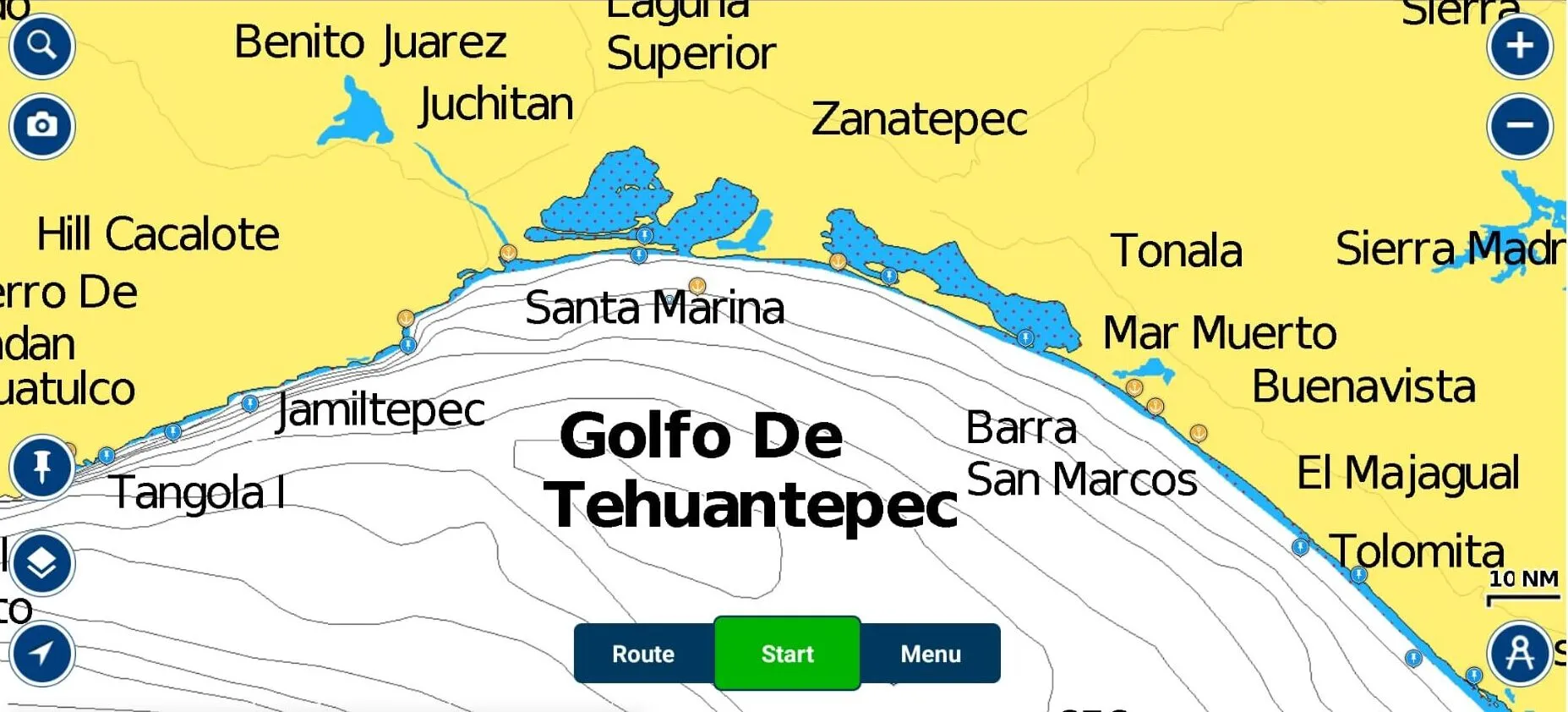
The 235-mile Gulf of Tehuantepec (aka T-Pec) crossing from Huatulco to Chiapas, Mexico deserves a lot of respect. Do not mess with the T-Pec and cross in unfavorable conditions. I have crossed this Gulf at least 50 times and have never had an issue; however, I take tremendous care in weather forecasting in advance.
You can take the “beach” route which adds another 30 miles, or cross directly from Huatulco to Chiapas. We prefer the beach route and anchor every night. The enormous sand dunes created by the intense T-Pec winds on the west side are stunning at sunset. I always fantasize that I could hire a helicopter to drop me at the top and I could float down the dunes on a toboggan.
Weather
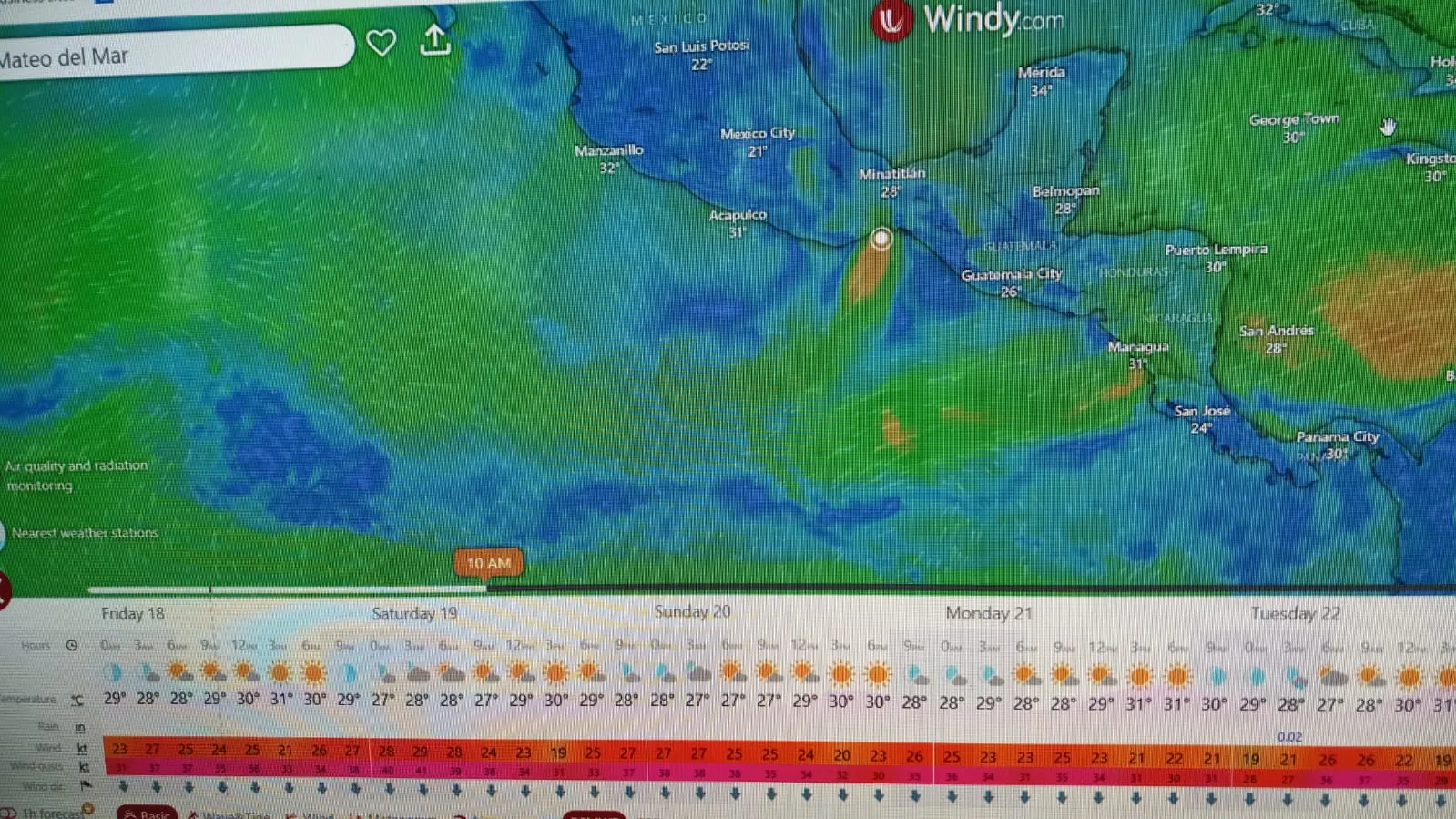
It’s wise to practice studying the T-Pec weather systems long before your passage. The trick is to watch the weather systems in the Caribbean Sea to the north of Central America. Strong weather systems build in the Caribbean Sea and are channeled southbound through there narrow regions of Central America: Tehuantepec, Nicaragua (known as the Papagayos as they build crossing Lake Nicaragua and release south of Nicaragua), and Panama. As the winds funnel through these gaps, they gain strength and intensity resulting in potentially deadly hurricane-force winds. Once they blow through the region, they suck all the wind with them and that’s when it’s time to cross.
Allow for a three-day weather window, especially if you’re taking the beach route to ensure that you have a cushion in case something untoward happens to your boat. You don’t want to get caught in the T-Pec with some type of boat adversity. I use “wind gusts” as my reference to the wind speed in planning, and refer to Predict Wind, Buoy Weather and Windy weather sources which all tend to be based on the same models. Note that the commercial port of Salina Cruz is not cruiser friendly and has a lot of tanker traffic in the vicinity.
Prepare to have pangas approach you from the villages if you take the beach route. You are a novelty to these villagers, and they’ll likely want a photo with you. I store boxes of granola bars and treats to hand out to approaching pangas and fishermen.
Chiapas: A Novel Sanctuary in the Middle of Nowhere
Puerto Madero is your final port in Mexico and has the lovely, secure Marina Chiapas. We used to anchor in the open port, but it’s no longer allowed. Call the Port Captain on channel 16 as you approach the entrance channel. It’s very likely your call will be heard by the welcoming Chiapas Marina staff who will be ready to dock you 24/7. Pay close attention to the channel markers upon entering the marina. First-timers may want to navigate the channel during daylight.
The Port Captain, Immigration and Customs officials will board your boat immediately upon arrival along with their adorable, not-so-well-trained German shepherd. Have your paperwork ready as well as a skipper’s certification of an accredited marine boating course. During Marina office hours Manager Rolf will process your paperwork. I suggest that you contact Rolf a day or so in advance of your arrival. Rolf’s phone number is +52 962 210 4558.
The Marina is a long way from anywhere; however, it has a lovely pool where cruisers congregate, and the excellent BAO restaurant on the property. They also have a huge boat yard and haul-out facility, as well as a selection of trained tradespeople.
Culture and History
Chiapas has a tremendous amount of Mayan history and culture. I attended the spiritual traditional ceremony in December 2012 when the Mayan calendar, which was over 5,000 years old and located near Chiapas, came to an end. I strongly suggest that visitors spend time exploring the area.
Our outstanding tour guide and driver Tony will be happy to take you on a tour or simply drive to the nearby town Tapachula for groceries and supplies. Tony is Belgian, speaks five languages and is a wealth of local information. Tony’s number is +52 962 131 8164.
Pre-Departure To-Dos
As you prepare to leave Chiapas bound for El Salvador, be sure to send Bill Yergen in Bahia del Sol, El Salvador an email to advise him that you’re on your way and find out the suitable dates and times to cross the bar into the estuary. Boats can only cross the bar into Bahia del Sol once a day at slack high tide and you’ll require a pilot which Bill will coordinate. Bill is reachable by email: [email protected]. You can find the Bahia del Sol, El Salvador Cruisers Guide here.
Pacific Guatemala is not recommended by boat. They charge commercial rates for private boats, and boaters who have visited reported that it’s not cruiser friendly.
El Salvador: A Hidden Treasure
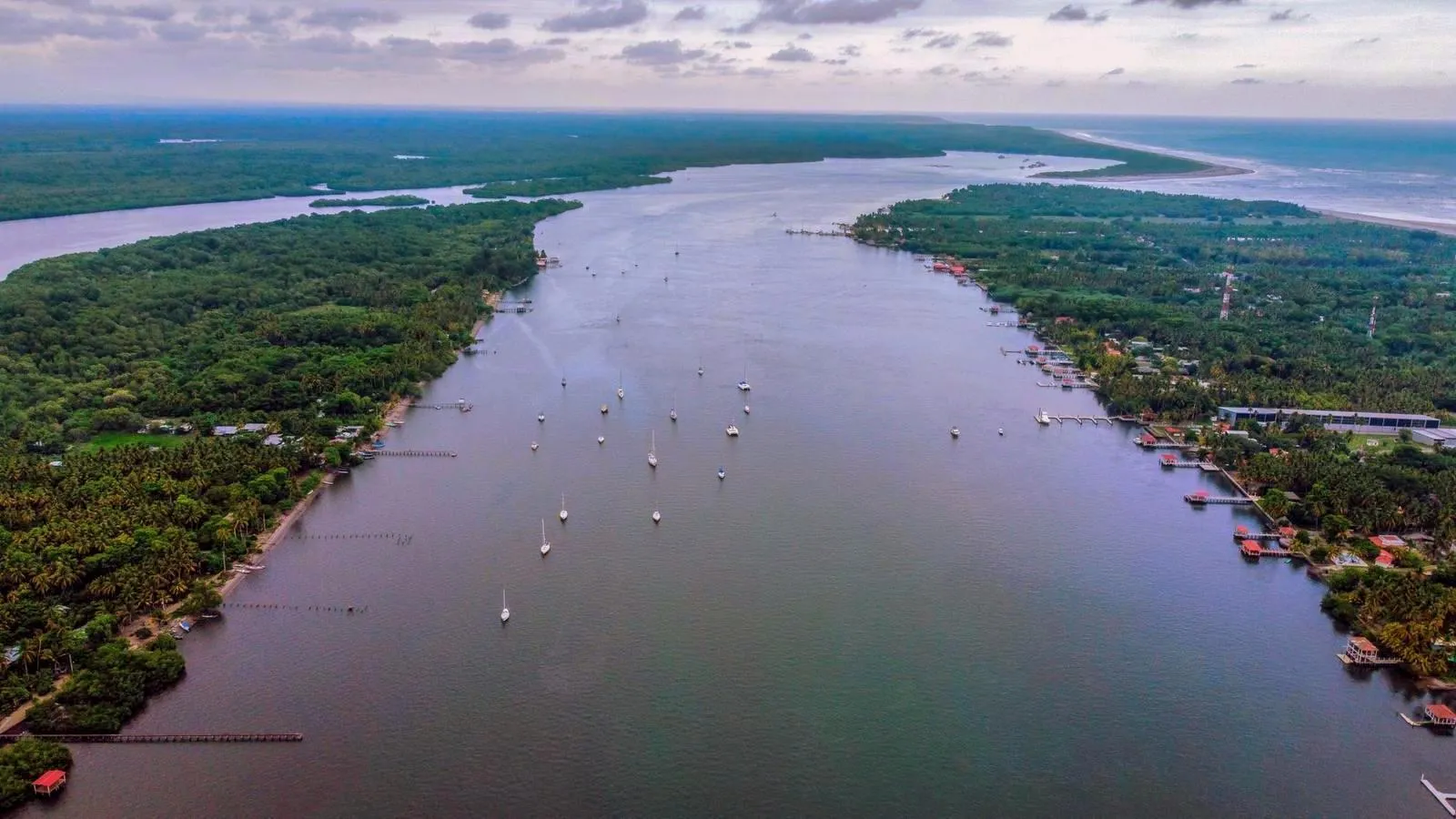
It was love at first sight! I not only fell in love with El Salvador; but that’s also where Henry and I fell in love in 2011. After meeting intermittently as solo sailors throughout Mexico, Henry’s boat Rapscullion was anchored in Bahia del Sol when I arrived aboard my boat Precious Metal from Peru in 2011. The rest is history.
Henry and I independently first met Bill Yergen and Jean Strain in La Paz and La Cruz, Mexico many years ago aboard Mita Kuulu when they were cruisers. Bill was a renowned musician in their cruising years. In 2010, Bill and Jean settled in El Salvador and initiated the Annual El Salvador Rally. Henry and I both attended the Rally on separate boats and fell in love with the country. Essentially, it feels like Mexico of 50 years ago: undeveloped, authentic, scenic, and incredibly hospitable. I always judge a country by its people and the Salvadorians are truly wonderful and with the biggest smiles!
Moorings
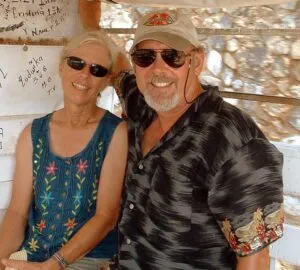
Bill and Jean settled on a small island of Cordoncillo across from the main Bahia del Sol Marina and Hotel and created a mooring business whereby boaters can leave their vessels for extended periods and have qualified trades people upgrade their boats during their absence. The price is right: Moorings are $170/month, which includes twice monthly boat system inspection. Bahia del Sol Marina is about $.50/ft for sailboats.
There is so much inland travel to explore, miles of unpopulated spectacular beaches, world class surfing, and we now have the first pickle ball court in E Salvador. We hosted the first Salvadorian tournament last November, and the locals are improving at a terrific pace.
Customs
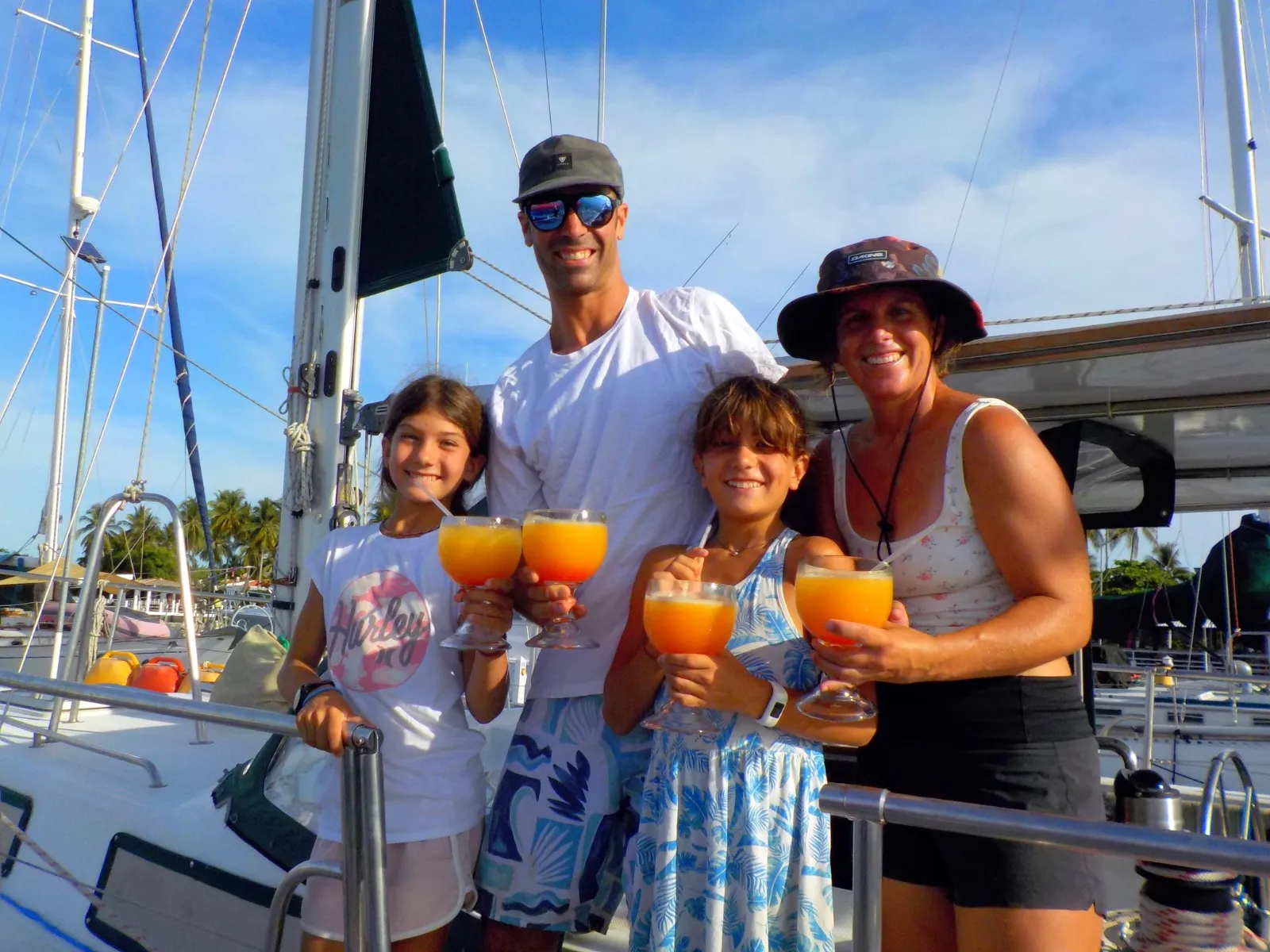
One of the greatest testaments to El Salvador’s kind and generous hospitality takes place upon arrival in Bahia del Sol. Whereas most ports are notorious for onerous logistics and paperwork imposed on visiting boats; in Bahia, the Port Captain, Customs, and Immigration officials come to the dock to greet visitors and graciously hand each visitor a welcome beverage.
This initial hospitality sets the stage for the wonderful community spirit that Bill and Jean have established in El Salvador. Boaters who venture into Bahia del Sol and stay for extended periods become a family. We enjoy Pupusa Night every Saturday at Bill and Jean’s as well as many amazing celebrations over Christmas, New Year, and every major holiday.
Next Steps
Many cruisers use El Salvador as a base throughout hurricane season. You’ll become a part of a family for the next cruising season together. People also use this opportunity to leave their boats and travel home as well as inland throughout El Salvador and Central America. If you decide to continue through Central America by boat, you have several choices for extended stays on the Pacific side including: Nicaragua, Costa Rica and Panama. Each of these countries have their own costs and protocol which tend to change periodically.
Contact References:
Acapulco – Vincente: +52-7444398184
Huatulco Tour Guide Gustavo: +52 9581088900
Chiapas – Rolf: +52 962 210 4558.
Chiapas Driver Tony: +52 962 131 8164
El Salvador – Bill’s Email: [email protected]



Well written very interesting read! Thank you for the tips and contacts!