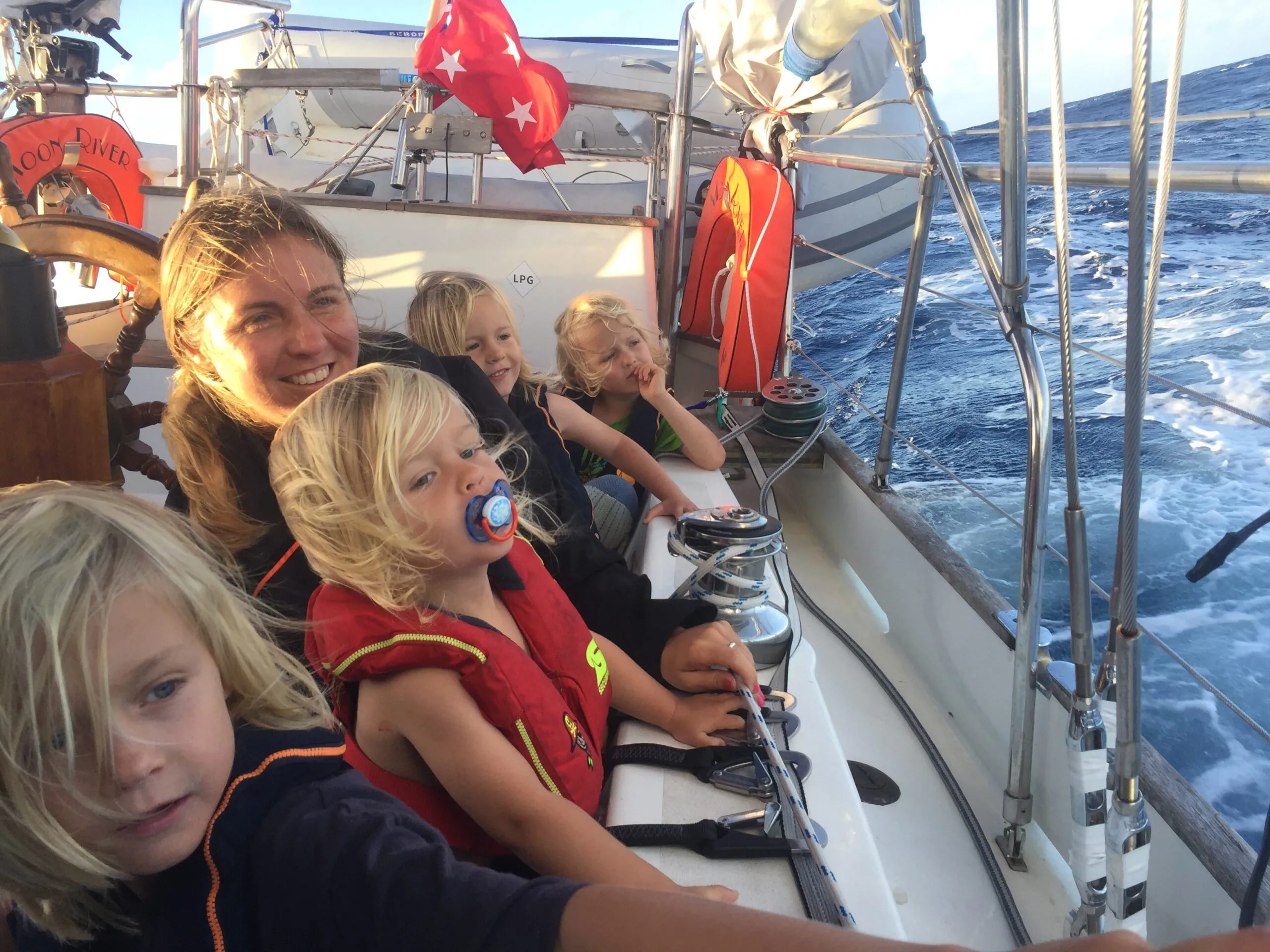
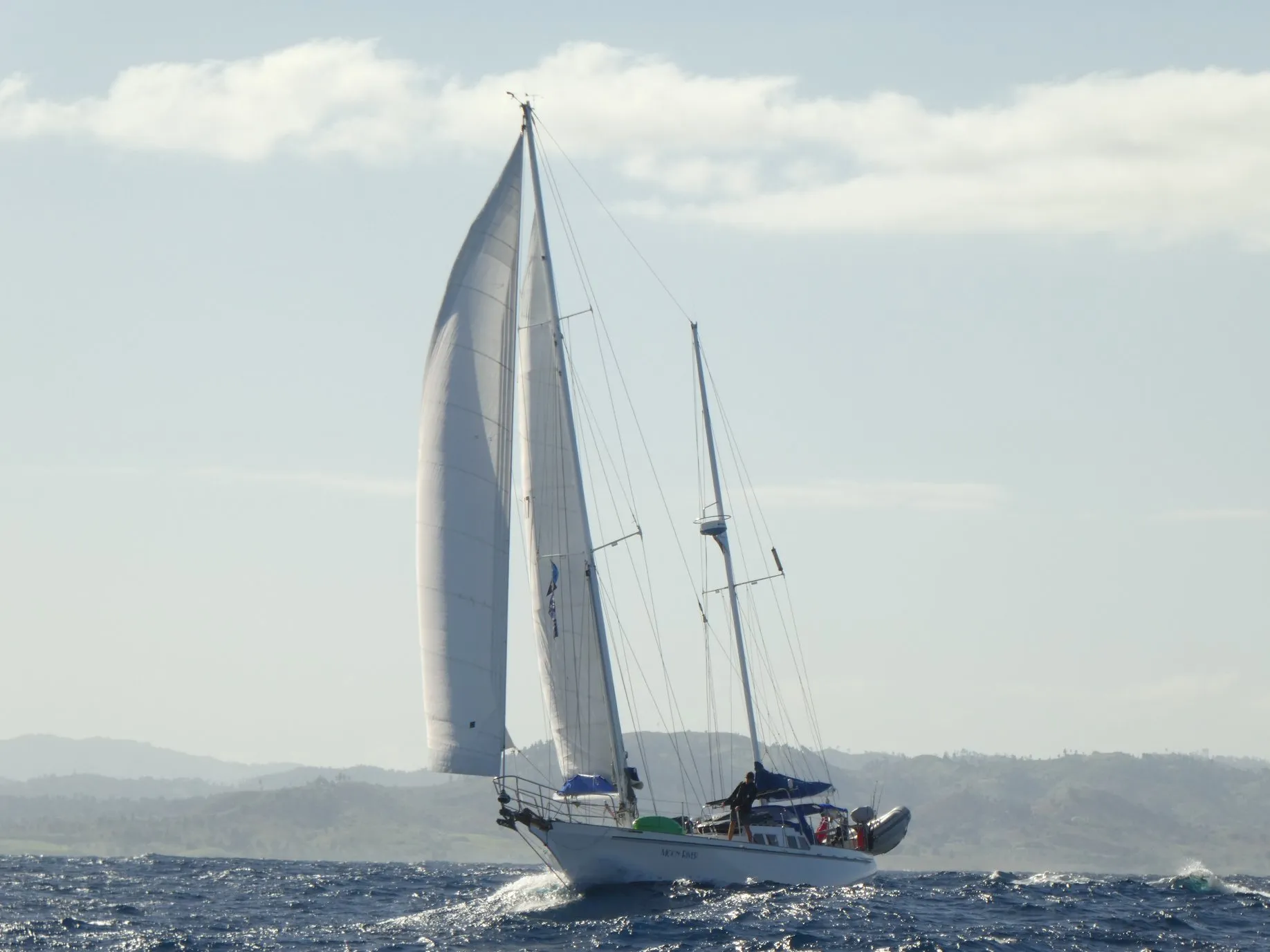
Sailing with four young boys aboard a 40-year-old ketch across oceans might sound like madness, but for us and many other sailing families it’s an exciting way of life that is growing in popularity. It gifts us time with our children, a life of adventure and freedom, the opportunity to explore remote places, and be immersed in culture. For us, this dream only became a reality after meticulous preparations, countless lessons learned and unwavering trust in each other and Moon River, a 1978 Herreshoff Mobjack ketch (see “Herreshoff Mobjack: A Family’s Love Affair with a Traditional Ketch”).
Moon River was built to sail the formidable 1,100 nm passage between New Zealand and Fiji, a route renowned for its challenging conditions. Launched in 1979, Moon River had been sailed to and from Fiji each season, and then sailed to South East Asia where she explored extensively, so she was very capable and knew her way. Our job was to make sure all systems on board were well maintained with redundancies in place, and that we were prepared to handle anything Tangaroa (Māori god of the sea) threw at us.
Preparing Moon River
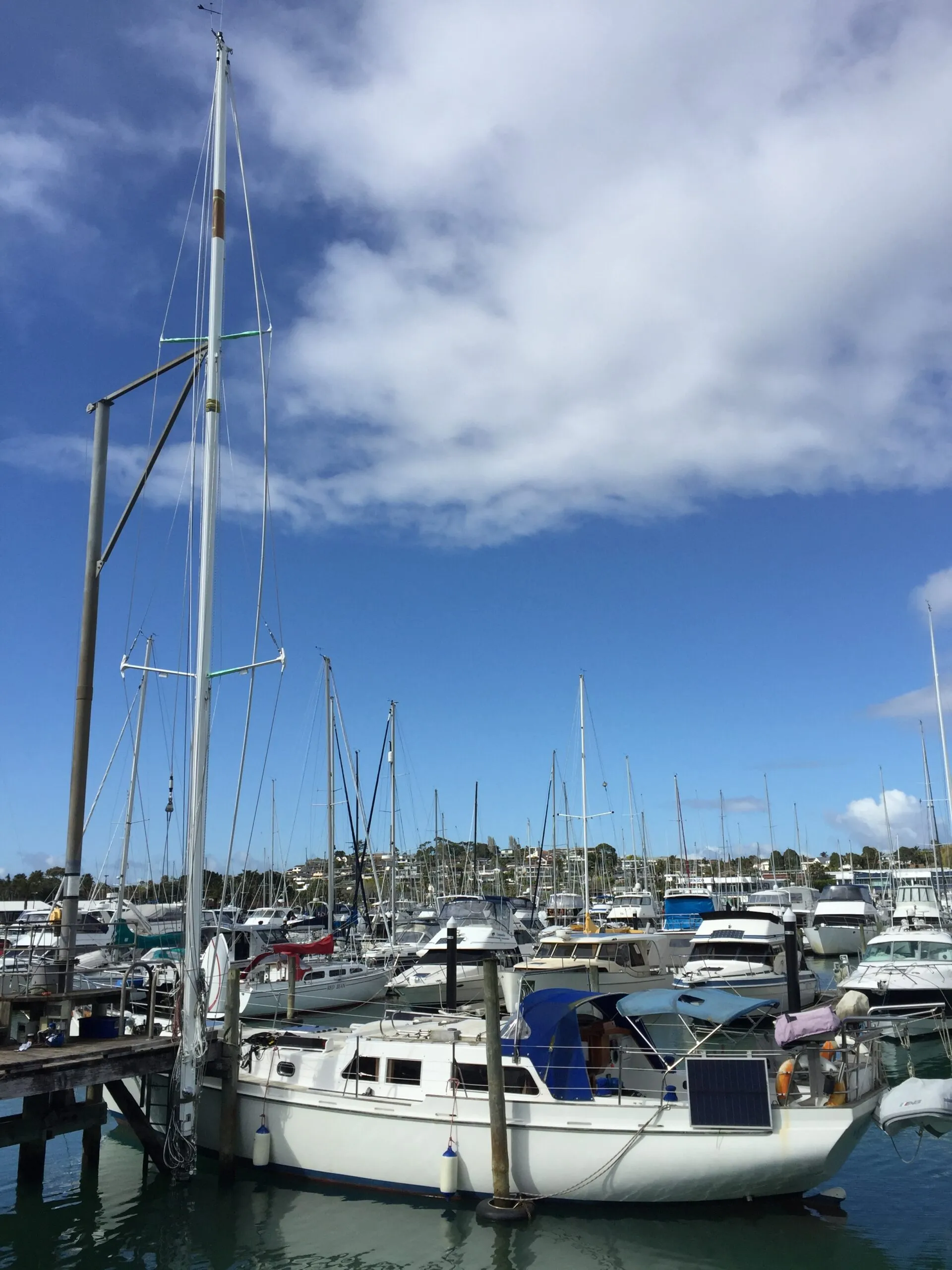
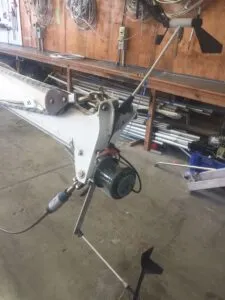
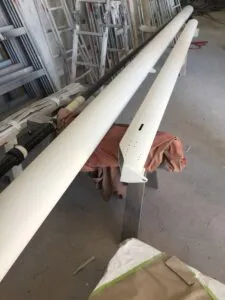
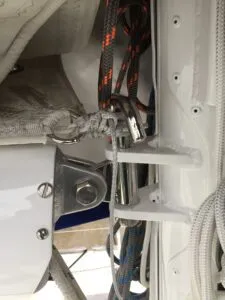
Readying Moon River for the voyage was a steep learning curve. While she had been well cared for and had a relatively new 110 hp Yanmar 4JH4-HTE turbo diesel engine, the standing rigging was nearing the end of its life and needed to be replaced for both insurance purposes and our safety. Moon River is a ketch and she is heavily rigged, which gives us huge peace of mind but this also meant a full replacement was a significant job. Along with the running and standing rigging, we refurbished the masts and booms, they were all taken apart, sand blasted, faired and repainted. Every fitting was removed and where necessary, repaired or replaced.
Lights
Sadly, the beautiful original brass lights were removed and given a new lease of life off the ocean. A new LED tricolor masthead navigation and anchor light, steaming light and wind instruments were installed along with LED spreader lights for working on deck at night. We also installed a NAIS-500 AIS transponder with dedicated VHF aerial on the mizzen mast.
Mast
Our CAT1 inspector had identified goosenecks as possible catastrophic failure points on any yacht, so we used this opportunity to have ours re-engineered and rebuilt. We had noticed some hairline cracks in the deck plates so while the mast was down we had all of these replaced and increased the plate thickness from 6 mm to 8 mm. Reflecting on the job now, we realize there are a few details we could have improved. For example, running the electrical cabling through a conduit in each mast, and including mouse lines for future rigging work, but all in all this extensive above deck refit has been a huge success.
Bilge Outlet Fix
As many sailors will attest, the best way to learn what your yacht truly needs is to sail her—extensively. One of our first “disasters” on Moon River was the discovery of a large volume of water in our bilges off the coast of NZ in rolly seas. We undertake regular bilge checks while underway, so it was a great catch before it got to a level that would cause any damage to electrics.
After sending the children into their “safe spots,” we confirmed the water was salty and started checking our through hulls. We discovered the ingress was via the bilge outlet letting in some water each roll. We closed the valve, took a deep breath, emptied the bilge with a roaming manual bilge pump on plywood backing, and got back underway with plans to raise the anti-siphon loop higher above the water line to stop this ingress, and to install a bilge alarm.
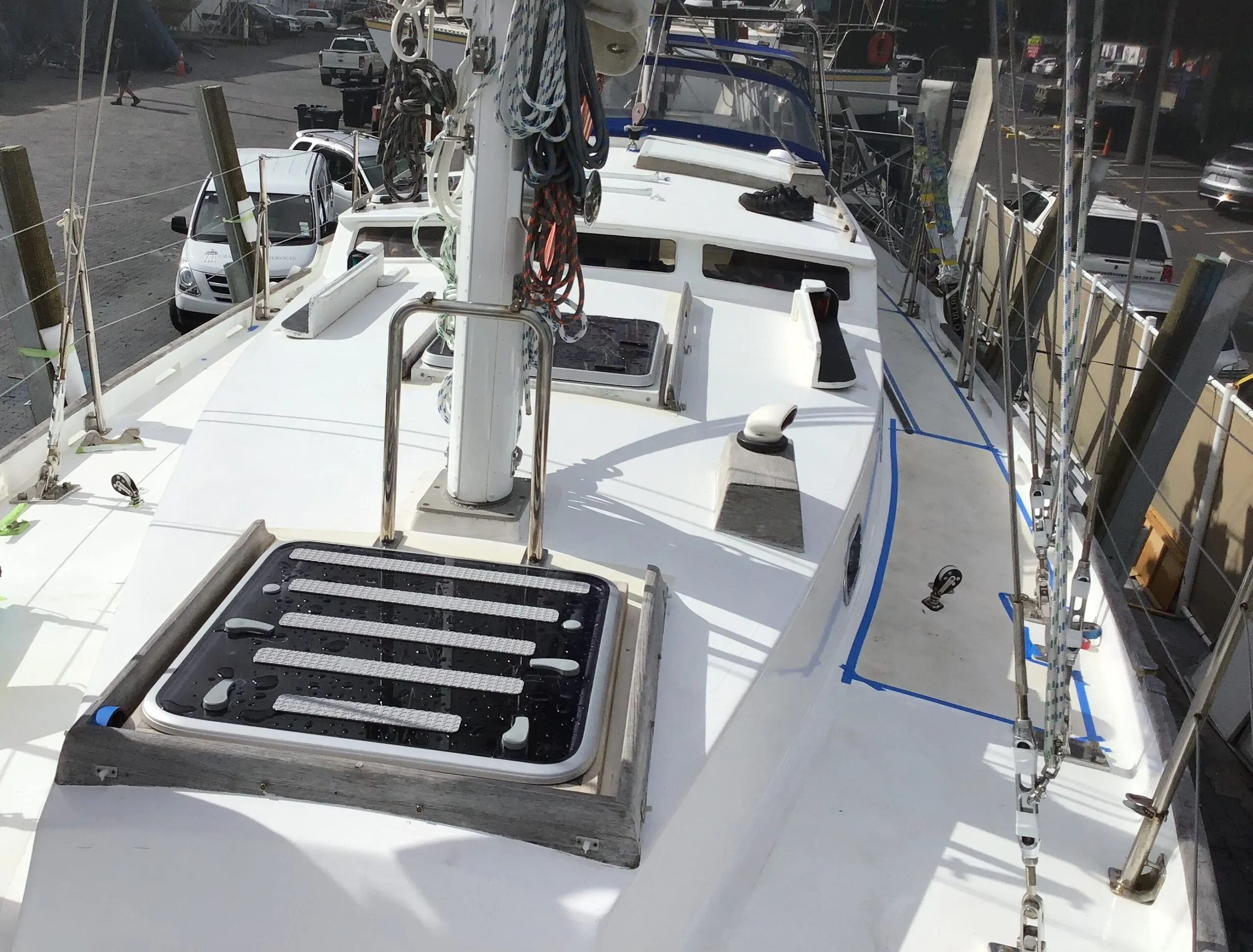
Replace Dangerous Wood Hatch with Aluminum
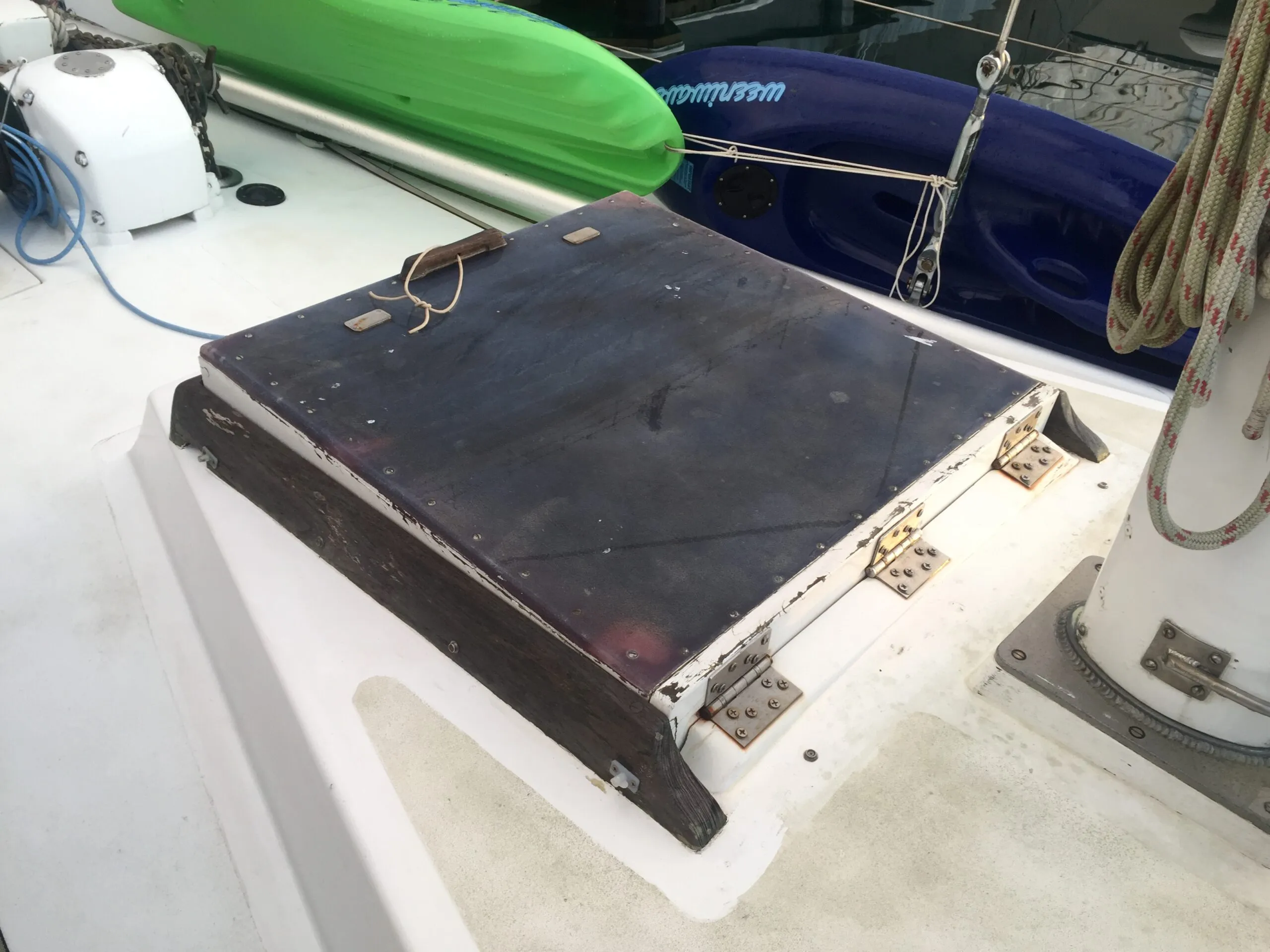
Another job we decided to undertake was to replace the original wooden forward hatch, which was extremely heavy and had crazed Perspex. In general we prefer to restore where possible, but the weight of this hatch was a hazard, especially given Jackson and Tasman were sharing the forward cabin. We found a great local boat builder to install a custom large aluminum hatch in the same space so we could keep the wooden surrounds. We are happy to say it works wonderfully, doesn’t leak and no fingers have been lost, though a few have been heavily bruised, so it was a good call!
System Upgrades and Learning From Each Install
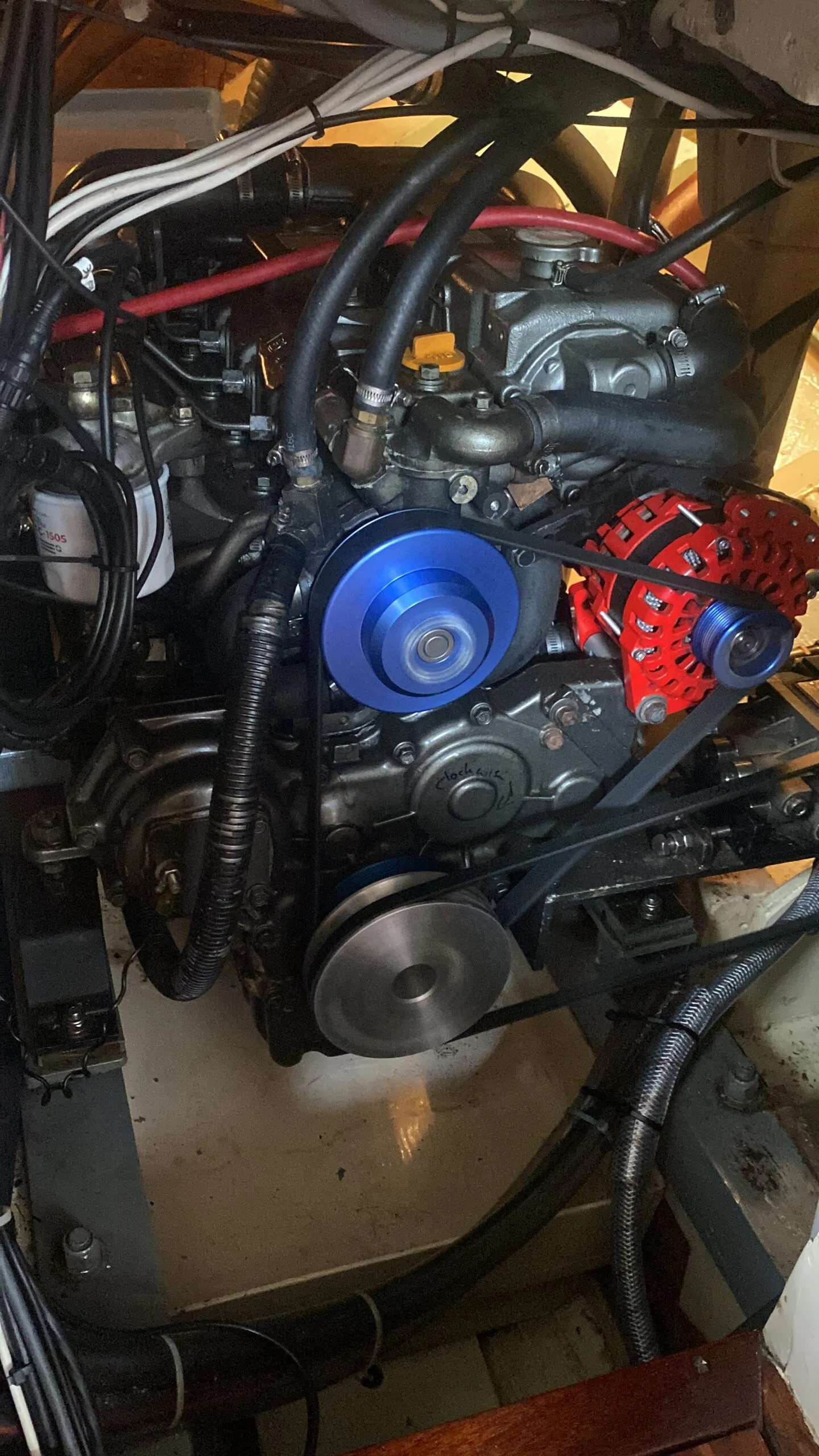
Richie undertook the apprentice role whenever the mechanic serviced Moon River and completed a diesel engine maintenance course and a VHF and SSB radio course. He oversaw or undertook other upgrades including:
- A new Sarca Excel primary anchor, after testing our options to fit with our bowsprit and roller location.
- New 100 m of 10 mm chain.
- New top sides anti-slip painting.
- 380 w solar panel and regulator.
- New 4 x 130 Ah house batteries and battery monitor.
- Interior lights all replaced with LEDs.
- Deck wash-down hose.
- Freezer compressor.
- New six-person life raft and safety equipment.
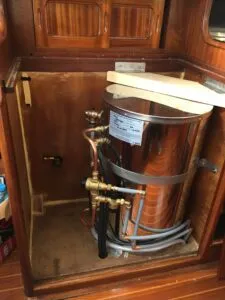
- Hot water cylinder to replace an interior gas califont that could not be certified.
- Gas certification for the remainder of the appliances.
- Servicing the autopilot, hydraulic steering, alternator, anchor winch etc.
We included a few nice-to-haves like a hot outdoor shower, new Bimini cover and a custom bed mattress.
At this point we felt like Moon River was ready to carry our young family across an ocean and onwards to explore the remote atolls, reefs and villages of Tonga, Fiji and New Caledonia.
Preparing our Motley, and Tiny, Crew
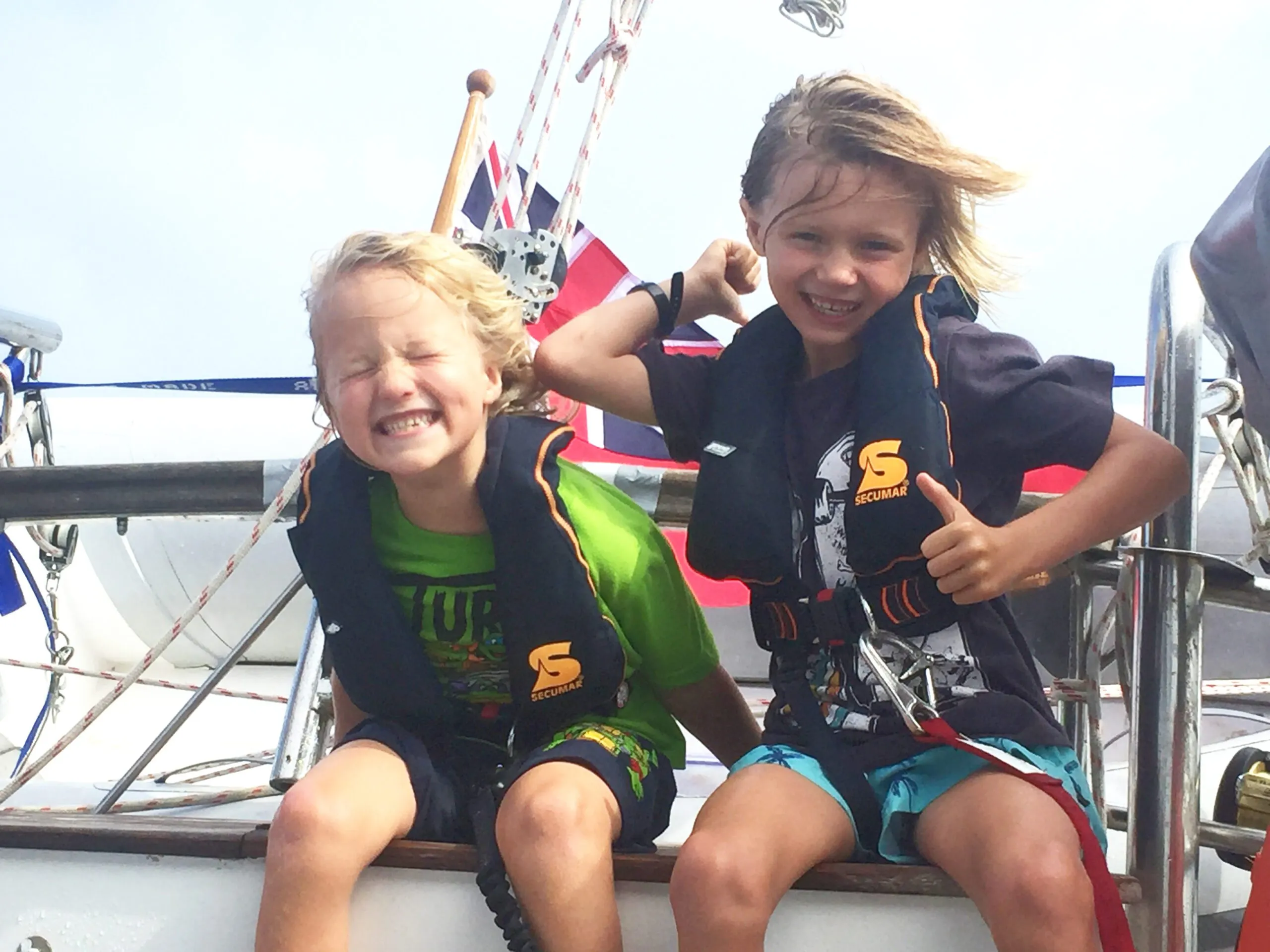
Famous cruiser Larry Pardey once said, “There is no better tool or equipment you can have on board than a well-trained crew.” Conversely, on Moon River, a poorly trained crew would be our biggest liability. Sailing with four children aged between two and eight years old could be a recipe for disaster, and crew may not have been quite the right word for them. Richie and I had to be well prepared, learn as much as we could before casting off and have procedures in place to keep the boys safe during hectic moments on board.
Sailing Experience
Sailing Moon River was quickly becoming one of the easier parts of yacht ownership. I had grown up sailing, my parents had a beautiful Herreshoff Mobjack Regal built from a single large kauri tree—I loved days spent exploring the Hauraki Gulf. Richie had also grown up on the water, wakeboarding behind power boats, windsurfing and taking the Hobie Cat out. None of this really prepares you to co-captain your own yacht, especially offshore.
To gain some keel boat sailing experience, Richie joined a winter racing series out of Ponsonby Cruising Club, where he honed his skills in competitive sailing. The fast-paced and pressured environment of racing provided invaluable lessons in boat handling, decision-making and teamwork—skills that would be essential during our long voyage. Racing in winter also exposed him to different sailing conditions, from light winds to heavier weather, to help prepare for some of what the open ocean might throw our way.
NZ registered yachts can’t just cast off into the sunset—both vessel and crew are assessed to achieve a safety standard (previously called CAT1 and now International Voyage Certificate— IVC). As a minimum the skipper must have done at least one offshore passage, and there is also a requirement for a proportion of the crew to have undertaken an offshore survival and offshore medical course. We had set our sights on a 2019 departure, and so we needed to do some formal training.
Medical Training
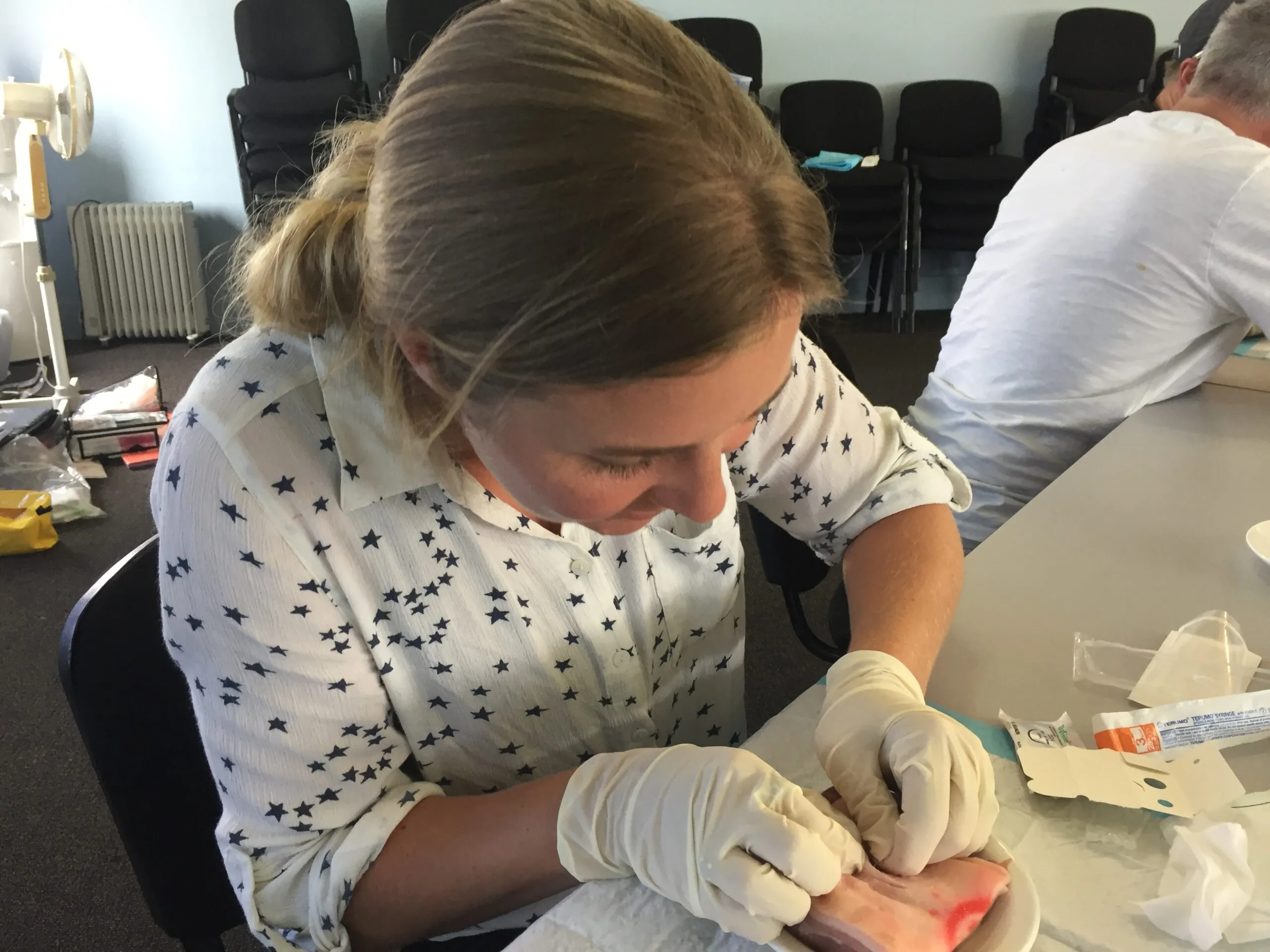
The offshore medic course was a revelation, it took me a few days to recover from the shock of all the horrific stories and I was second guessing our plans. There was a lot to learn and take away from the course, the focus was on keeping someone alive for an extended period of time after an injury at sea, dealing with various illnesses in places with substandard/non-existent health care, and the more local hazards e.g. coral wounds, poisonous sea creatures etc.
Practical Application
The first aid kit that accompanied the course is an exceptional resource. We have had many opportunities to use the kit for the wounds and illnesses that come with being the parents of four active young boys. Staff at an Auckland Hospital were very impressed when I arrived at the emergency department with Jackson who had two broken arm bones in a moldable splint and sling. I used surgical glue to mend a deep cut on Tasman’s head after a swimming pool fall in Raja Ampat, Indonesia. While there was a medical facility nearby, we heard first-hand reports that it was mosquito ridden, and had lots of patients being treated for malaria.
We have also lent a hand on occasion in remote villages with limited medical facilities, by gifting spare antibiotic and antifungal creams—I even got asked to suture or staple an Aussie surfer up after an unfortunate incident on a reef at the treacherous Napalm break near Java—thankfully the surgical glue sufficed.
Offshore Sea Survival Training
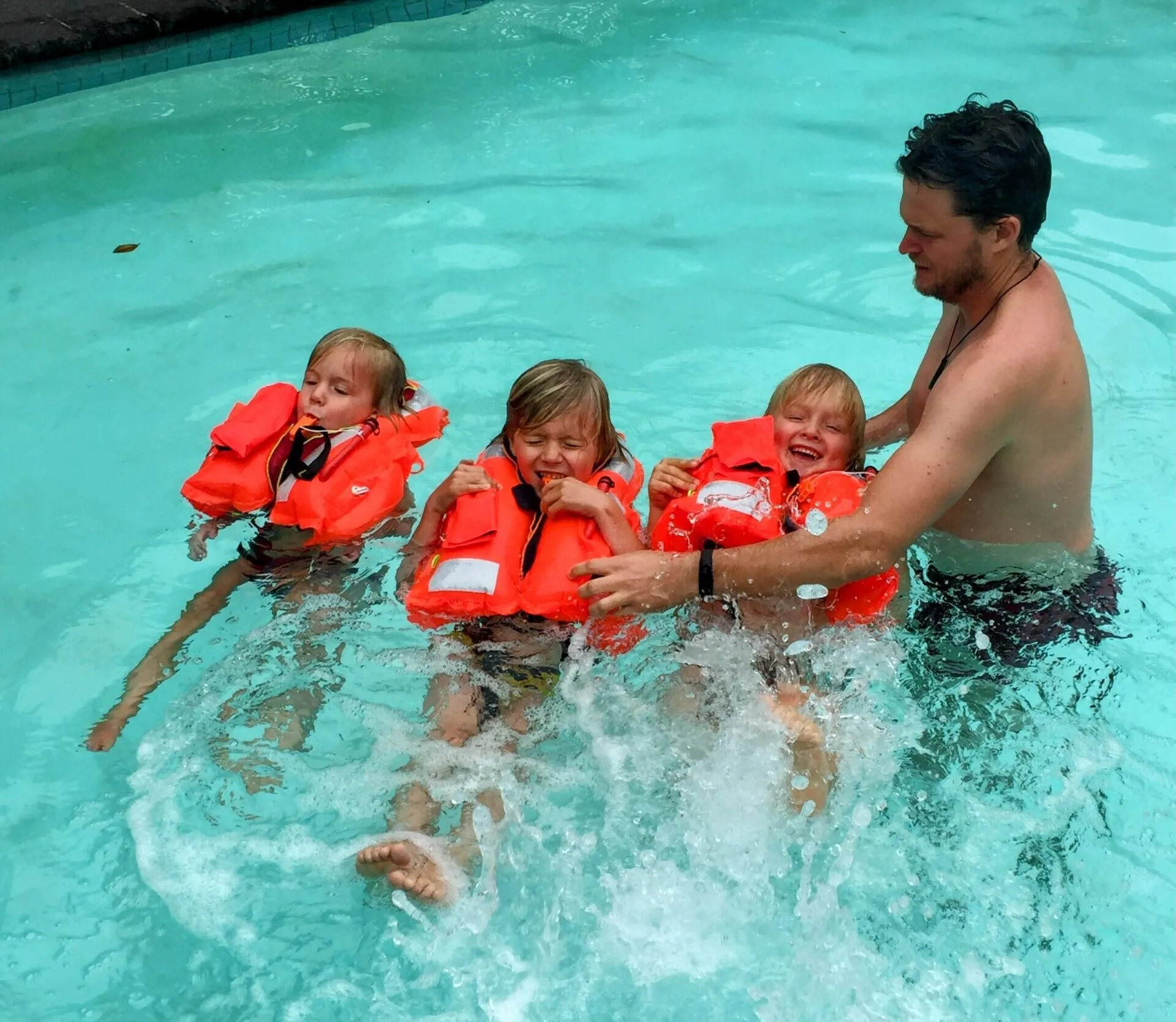
The offshore sea survival course gave us insights into how to handle worst-case scenarios, such as abandoning ship, retrieving a person-overboard or dealing with severe weather. This training was particularly valuable as it provided practical experience in using safety equipment, like life rafts, personal AIS, and EPIRBs, and reinforced the importance of maintaining a calm and focused mindset in crisis situations.
Our instructor had vast sailing experience, and plenty of anecdotes. He was also involved in the assessment of boating accidents for Maritime NZ, so he hammered home the responsibilities of the skipper and also had some great ideas for preparing ourselves for going offshore, shorthanded with children on board. We regretted not taking the boys on the course with us, but after experiencing inflatable life jackets in action we decided to throw the boys in a swimming pool, show them all the features of their life jackets and teach them to swim together, huddle for warmth and float in the HELP position.
Practice, Practice, Practice
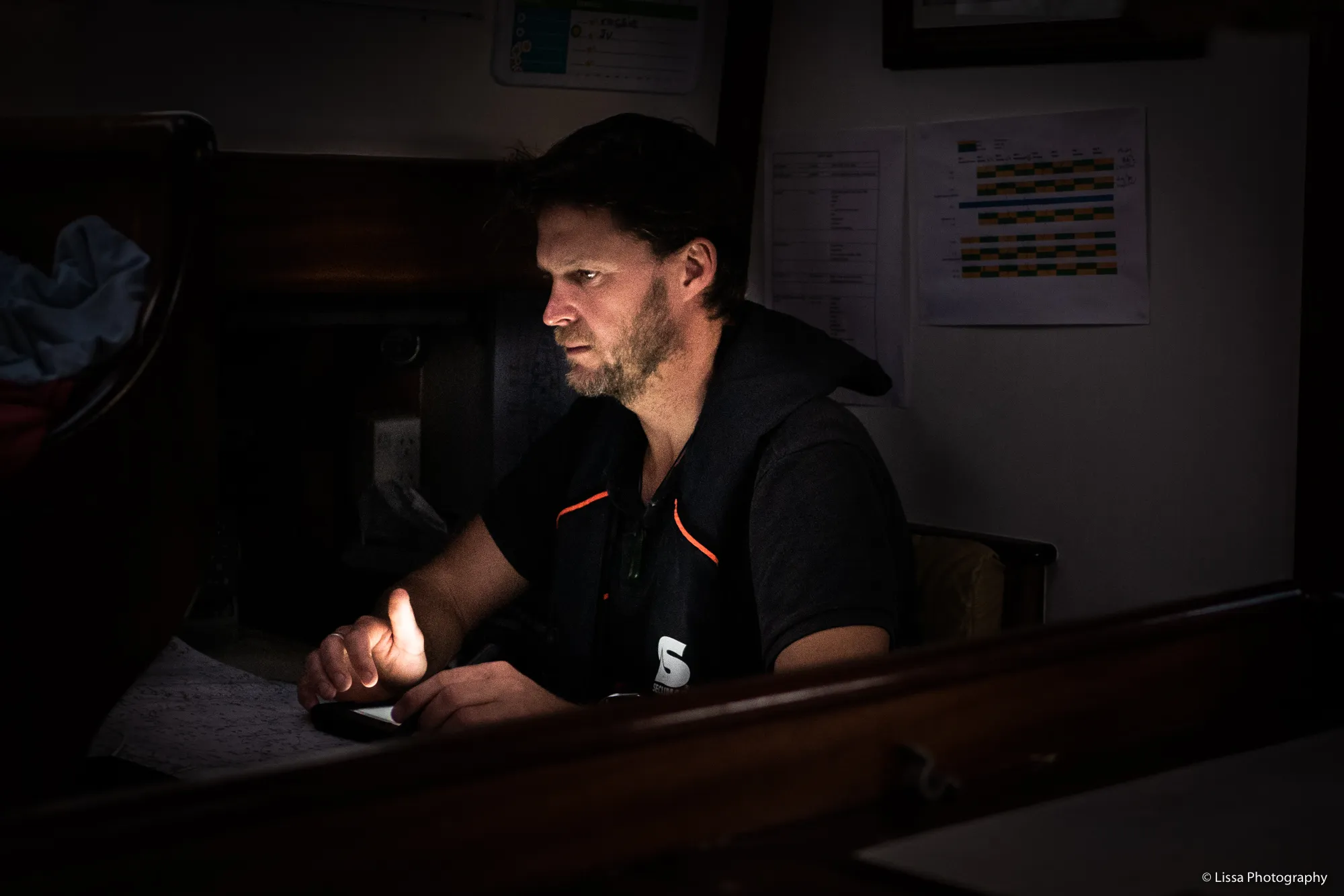
As often as possible we headed out onto the water, practicing maneuvers such as laying a hull, reefing the main and hoving to, and learning the intricacies of handling our ketch, trialing the huge number of available sail combinations. The CAT1 certificate requires the preparation of Standard Operating Procedures for how to run the main systems on board the yacht, along with the rules for a range of “situations.” An example of this is nighttime sailing—our operating procedure outlines personal safety gear requirements, maximum watch times, course constraints, log book entry requirements, when to wake the skipper and much more.
Safety Drills
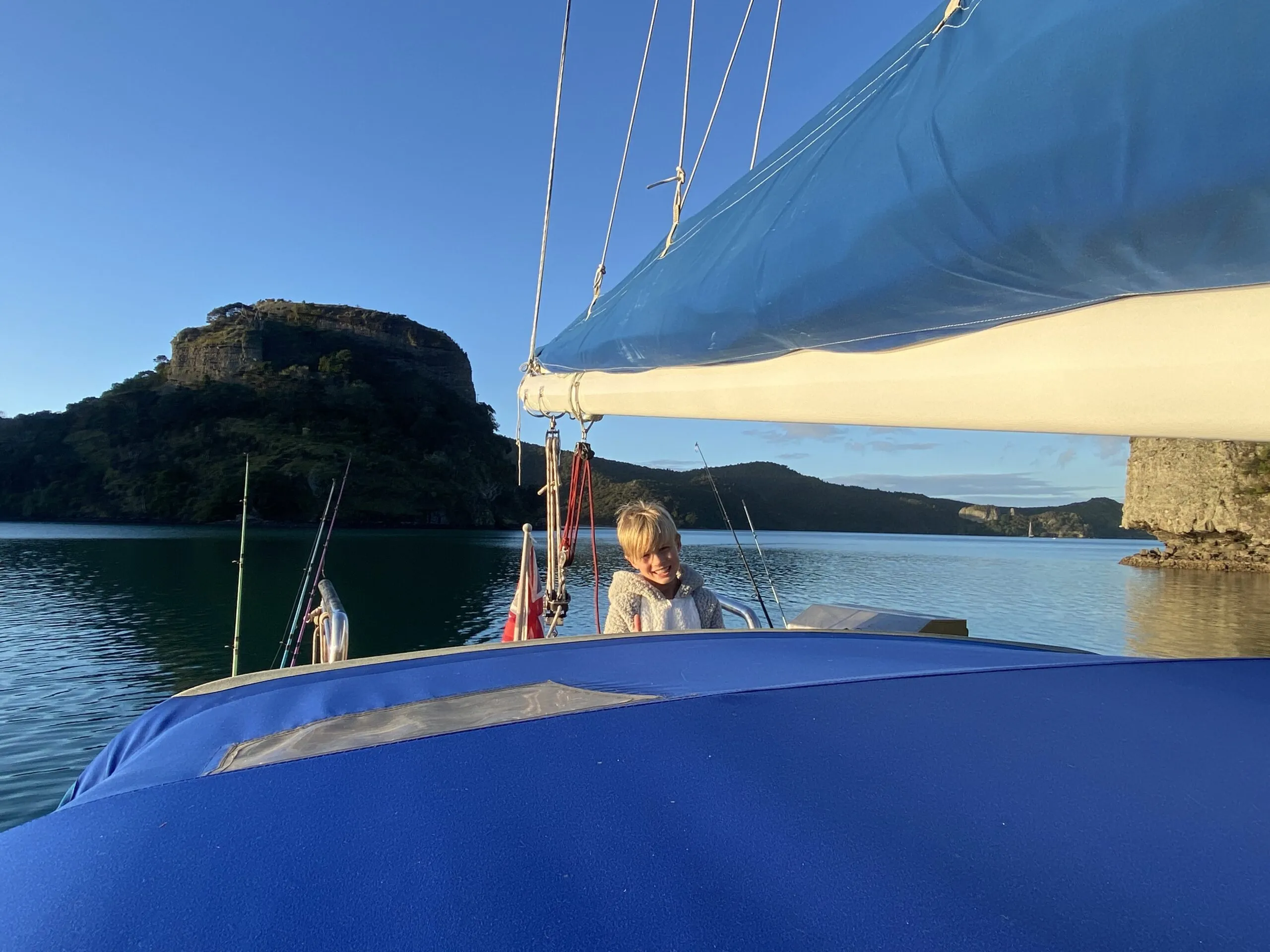
We conduct regular safety drills, usually based on fire, flood and person overboard. On a very calm day out the back of Waiheke Island, we gave our four boys (at the time aged 2, 4, 6 and 8) control of Moon River under motor and threw a fender overboard to see how they would go picking up a “person” overboard.
We were so proud, they discussed who would do what, and it went pretty smoothly. Hawken (2) and McKinley (4) were tethered and pointing at the floating fenders, someone yelled “Man over board,” they pretended to radio for assistance, and Jackson (8) took the helm while Tasman (6) yelled course directions from midships with a boat hook in hand. Richie did need to lend a hand with retrieval, but boat positioning was spot on.
We are happy to report our MO of staying on board has served us well to date. We have strict rules regarding the use of tethers, lifejackets and movements around the deck, cabin and cockpit for varying conditions. It has become second nature and is top of mind when we are underway especially in rough conditions and at night. We have had one child overboard scenario. In glassy calm conditions, the boys were on deck while we were slowly underway with dolphins riding our bow. I was supervising, but decided to pop back to the cockpit to grab my camera. In these few minutes McKinley (3) climbed the pulpit, ignoring the “both feet on deck” rule and flipped over the railing. Our training kicked in and Tasman yelled, “Mack Overboard,” the engine was instantly in neutral and we found him dangling from his harness, toes only in the water, but unfortunately he had hit his face on his way down. As with most unfortunate “disasters” on the water, it is a series of mistakes which leads to the holes in the Swiss cheese lining up to cause an issue. Thankfully the rules that had been followed, tethers and life jackets, stemmed the flow of events and led to a quick retrieval.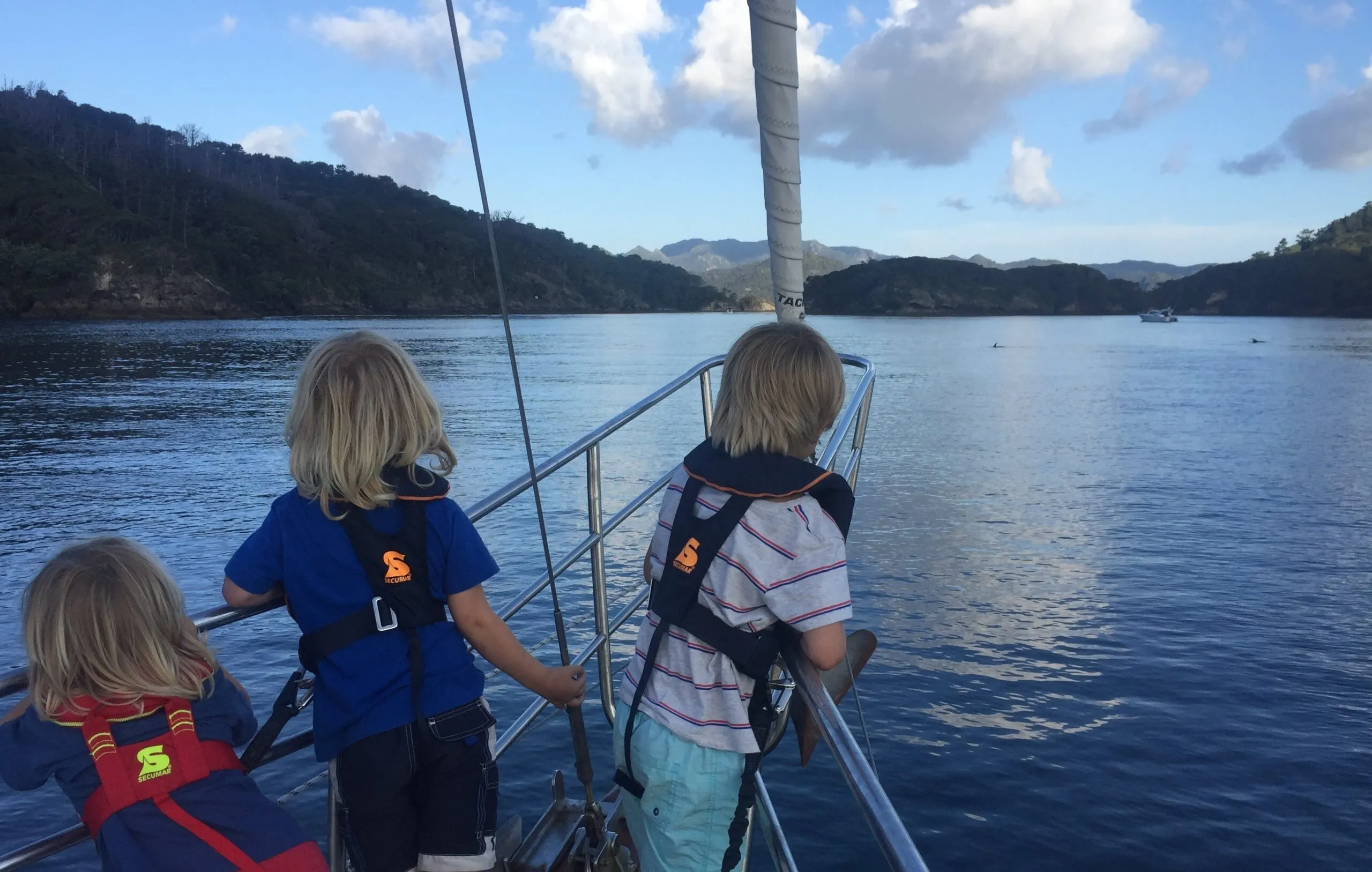
Practice Passagemaking as Crew for Others
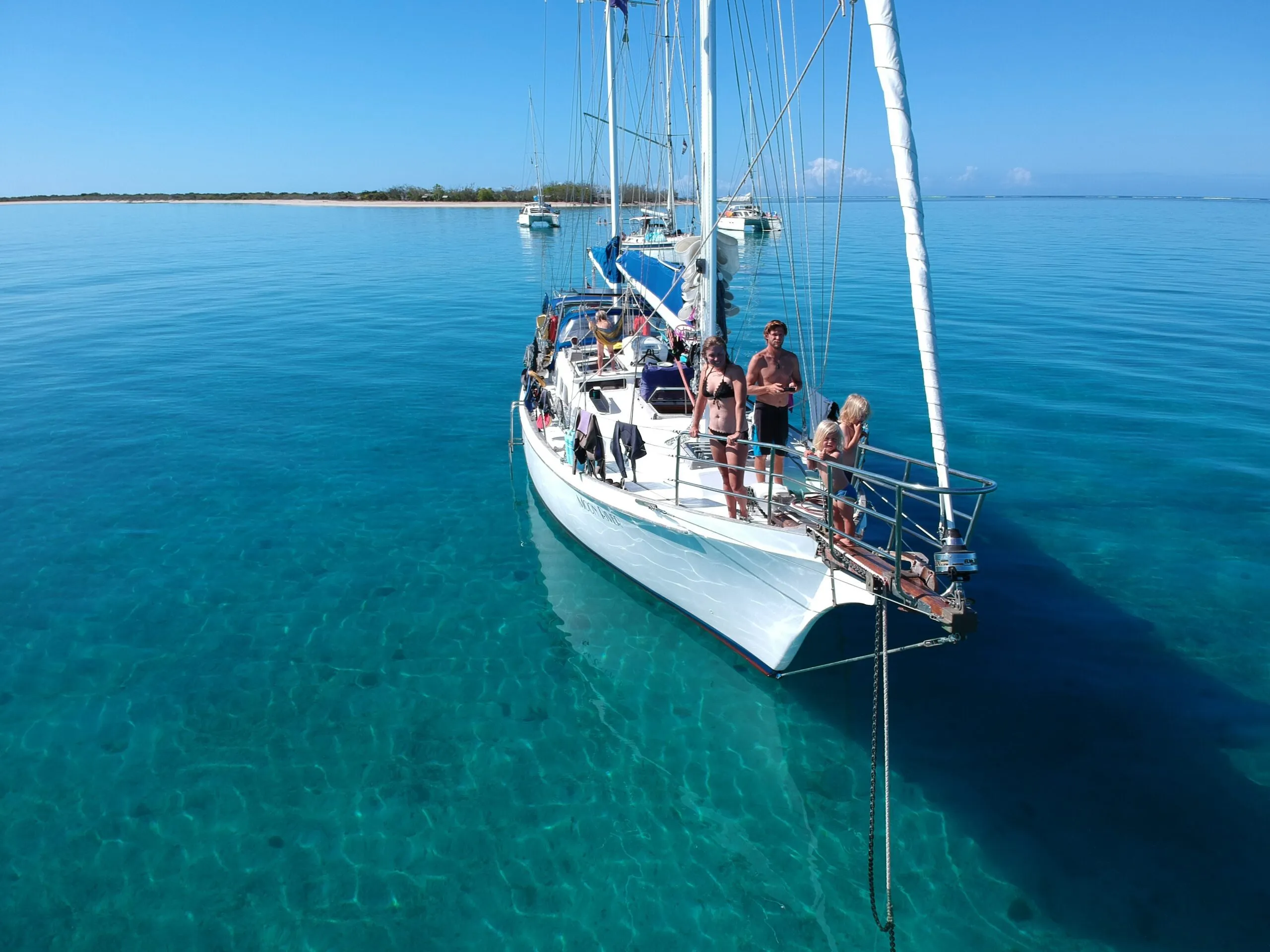
In early 2019 as our departure date drew closer, Richie met a Frenchman from New Caledonia who had been cruising in the Bay of Islands with his family on their Dufour 455 and was looking for crew to help sail the yacht home, they departed in early February (still cyclone season) with a good eye on the forecast which predicted light winds from behind the beam, increasing throughout their voyage to Nouméa.
Motoring away from Opua with an escort of dolphins was a comfortable start. Spinnaker sailing for the first day went well until it blew out, but was easily retrieved and secured using the chute. An alternative spinnaker was set the next day and during a daytime rest Richie was awoken by Max asking for help. The spinnaker had hourglass wrapped itself around the forestay and jib. After trying a few things, Richie sat at the bow while the boat was turned in circles to unwrap the hourglass one turn at a time. Luckily the fishing line that had been left trailing hadn’t caught itself around the keel during the four to five rotations!
The remainder of the passage was relatively fast with moderate downwind sailing and medium seas where he practiced radar use, discussed boat handling and watch setups and even learned some basic French. Emmanuel is a proud supporter of our adventures on Moon River and we’ve kept in touch for passage planning, weather routing, equipment advice and we’ve even met up again in both New Caledonia and back in Auckland for more sailing together.
The First Passage Goes Awry
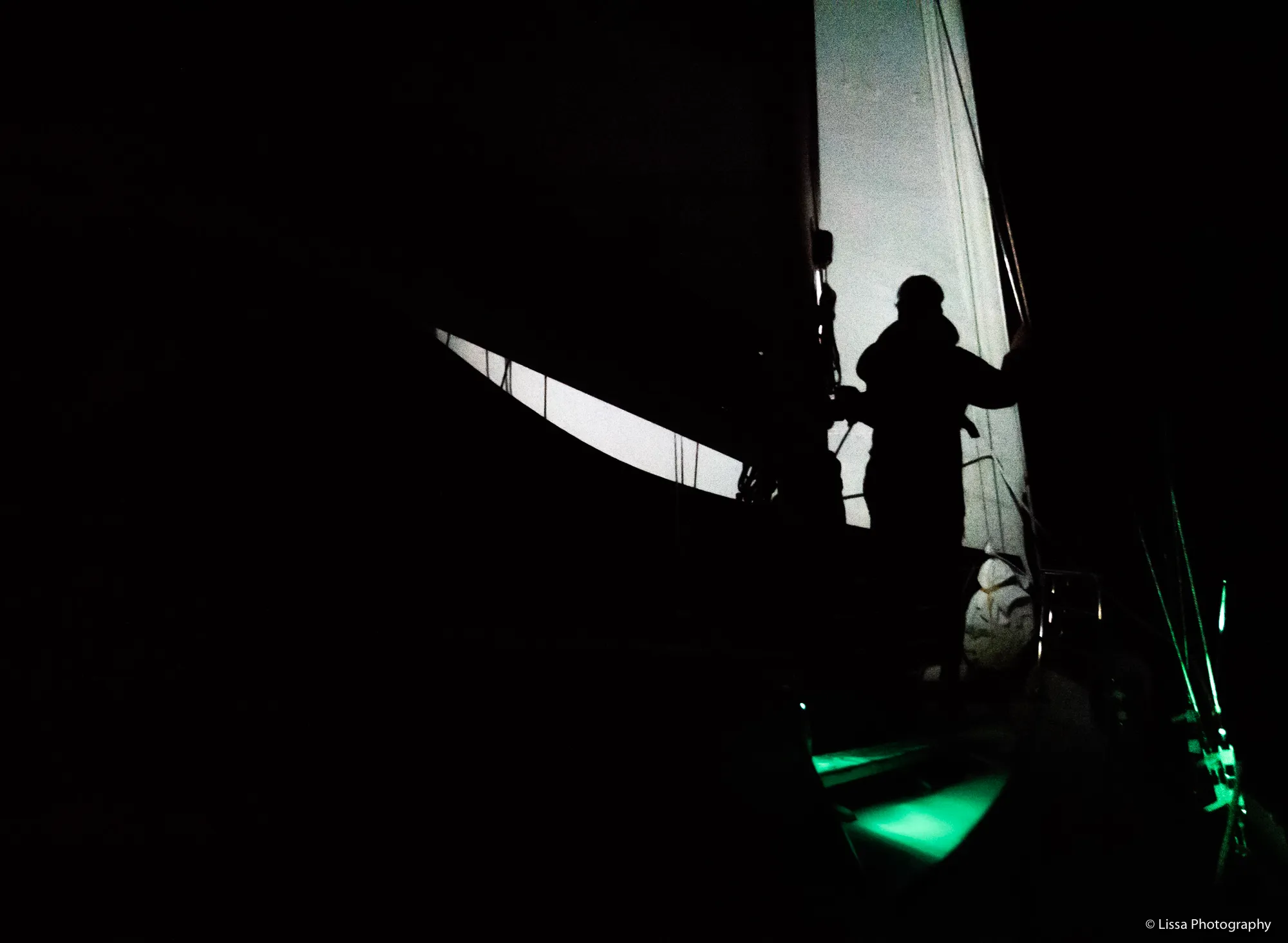
Richie had an opportunity to put some of the theories to practice on the first night of his first passage as skipper, after departing Opua for Tonga. Leaving NZ is typically best done on the back of a low as the wind backs to the southwest, you get flat seas and following winds to start the voyage. After a two week wait for a weather window, much of the 2019 Island Cruising Rally left perhaps a few hours early on departure and headed out from the Bay of Islands into over 35 knot gusts and a messy sea state.
Losing Steering
Richie had three adult crew members on board and was letting them get a good feel for Moon River, hand steering and sail trimming while he was stowing a few loose items. The ride was fairly comfortable, however when he settled himself into the cockpit he noticed that the fleet heading to Tonga was to starboard and Moon River appeared to be rounding up to port. Despite leaving the harbor smoothly, as the wind and waves had built, Moon River was not turning to starboard. Richie took the helm and confirmed that the rudder was not responding to starboard, and he could hear a “pressure release” noise from the rear locker where the hydraulic steering cylinders are located.
Assessing the Problem
Without responsive steering we were potentially in a dangerous situation, Moon River was very comfortable and well balanced on its current heading with sail trimmed to suit 60 degrees apparent and no obstructions ahead. After emptying the contents of the rear locker, Richie dived in, and investigated the noise, upside down and headfirst with water spray entering from his shoes and exiting out his neck!
It became obvious that the hydraulic cylinder was malfunctioning and in between trips to the toilet to be sick, connecting the emergency tiller, and calls to myself and the engineer, it was decided that a repair could not be carried out at sea and returning to Opua was the best course of action.
Richie issued a Pan Pan and was in contact with Maritime NZ to discuss returning to port and arranging for check-in formalities upon arrival.
Practice Pays Off
We were both pretty heartbroken, and also embarrassed, it felt like a failure in our preparation. I was at the same time immensely proud of Richie for the way he responded, and on reflection, our drills of installing the emergency tiller had been put into practice and everyone was home safe preparing to depart on the next window.