
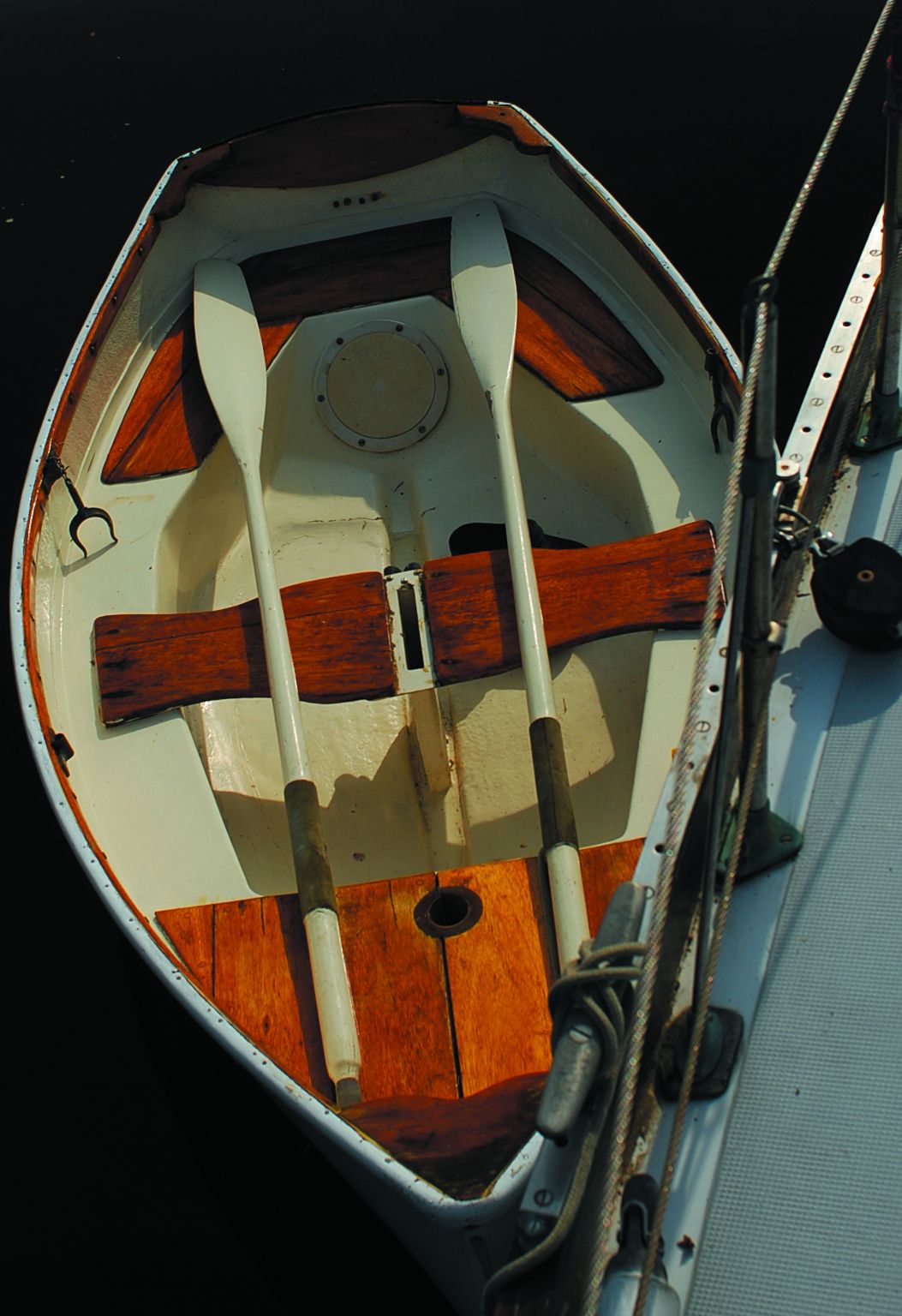
Row your way to success with the right hardware and a good boat.
As the old cruising joke goes, what can go wrong will go wrong, and at the worst possible time. Cruisers often laugh about the inevitability of gear failures, when in fact these failures are usually avoidable.
Matching the right equipment for the job, making routine inspections and taking a zealous approach to maintenance and replacement schedules can keep even the most demanding cruises trouble free—but it all begins with knowing your boat.
Oars and Oar Locks
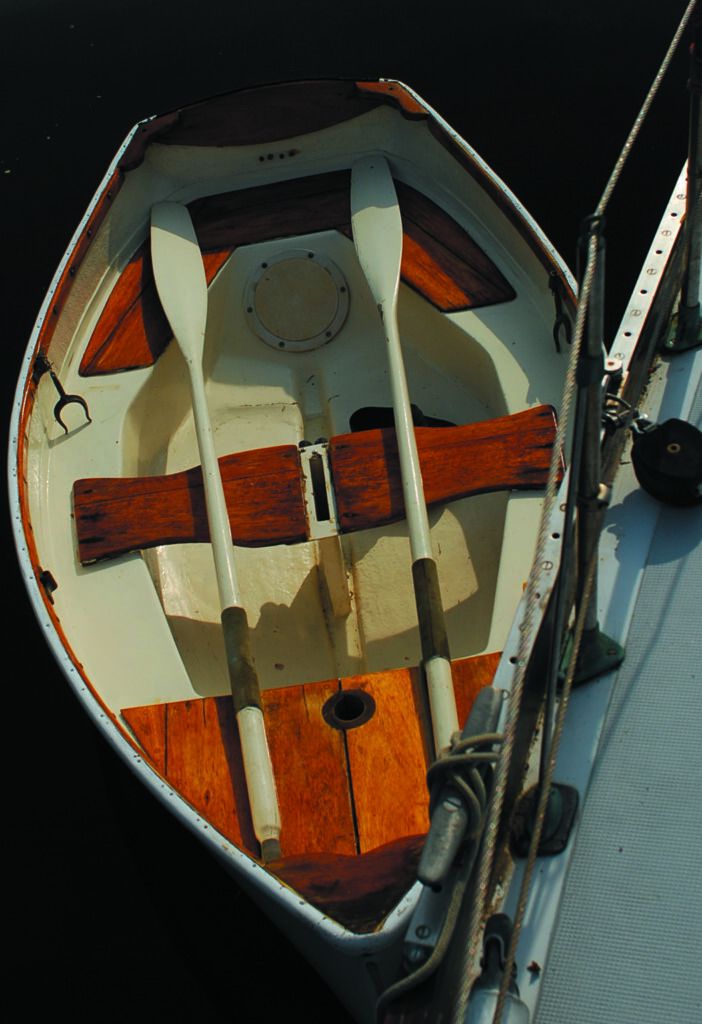
The machinery involved in rowing delivers epic reliability and requires very little maintenance. Oars range from 9.5-foot-long, feather weight, asymmetric shaped blade, carbon fiber elegance to stubby, five footers that often seem made of ironwood. Spruce is the right choice for the oars of most sailboat tenders and it pays to shop for them in person.
There are still a few oar makers supplying the waterfront. Some continue to machine-sculpt oars from slabs of spruce while others laminate their blades and looms.
- Shaw and Tenney, premiere oar makers, create a wide range of spoon and flat blade, high quality, spruce oars.
- Fancy Oars, run by Mr. Van Fancy, keeps the family tradition alive.
- Sawyer, Smoker, and other brands also offer a wide range of tender and work boat oars and paddles. Their rough water, rocky shoreline favorites are made of ash or fir that’s strong, stiff and rugged enough for fending off rocky bottoms. The use of high modulus epoxy laminates and composite blades also adds durability, especially for those traveling fast running rivers.
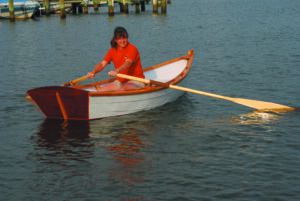
Oar Anatomy
The anatomy of an oar starts at the handle and runs to the tip of the blade (handle-loomneck-blade-tip). The button and leather are placed over the loom right where it makes contact with the oarlock. The feel of an oar varies from person to person. It begins with how the handle diameter and shape fit the grip of the rower. The flex of the loom and way the blade catches the water also play an important role.
Oarlock Anatomy
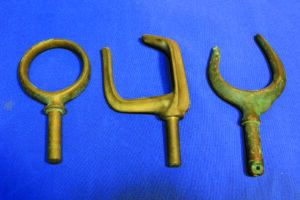
Oarlocks are the fulcrum in this wood grained, lever system called rowing or sculling. The hardware evolved from simple notches or holes in the rail of the boat into thole pins—wooden dowels upon which the loom of the oar presses during each stroke. In some instances, double thole pins were used per oar and in other cases lines or leather strops kept the oar snug against a single pin or wooden fitting.
The advent of iron and the more elegant alloy, cast bronze, improved the machinery. Sockets were attached to the rail at just the right height and distance from the person rowing. Oarlocks provided a bushing surface that rotated with the alignment of the oar.
Great debates arose over whether horn-type oarlocks were superior to ring-type oarlocks. One oarlock variation that has a large following on inland waters is the pintle type oarlock design that incorporates a U-shaped body fastened to round or square shaped oar looms. When inserted in the socket, the oar is pinned in place and cannot slide out of the oarlock. Used on Adirondack Guide boats and on wherries across the country, the design does not permit the rower to feather oars during the recovery phase of the stroke. Over the years, I’ve come to favor traditional bronze horn or ring type oarlocks. Adding retaining chains to the former helps prevent an oarlock from inadvertently being launched over the side.
Oar and Oarlock Sources
When it comes to top quality in wooden oars and paddles, and a budget that will support the investment, Shaw and Tenney of Orono, Maine gets the nod. A pair of their spruce flat blade 7-ft. oars, with leathers sewn in place, runs about $513.
Throw in a set of Perko bronze oarlocks for about $50 and have some fun on the water. But those looking for higher quality sandcast bronze oarlocks may want to join the search for a set of asymmetrical, halfmoon shaped oarlocks from UK-based Davey and Company. Closer to home, Port Townsend Foundry has an array of oarlocks made in USA.