

The sailing season is here again and everyone is doing their spring checks. Something that is often overlooked are the alarms that may one day save your boat and possibly your life. Every boat should have three working sensors and they need to be checked at the start of each season.
Flooding
Flooding is a significant means of losing your boat and most often it happens at the dock. A simple setup can save the boat.
Mount a float switch in the bilge above the level where the bilge pumps are set. This is so that the alarm only sounds if the bilge pumps fail or cannot keep up with the water coming in. Connect it to a red navigation light and a loud alarm somewhere on deck. The ideal place is inside a fixed dodger. It needs to be out of the worst of the weather if possible, but somewhere that is clearly visible from outside the boat. Tell the marina and any neighbors that you have fitted it.
This will alert others to a problem when at the dock but also alert when sailing—a below deck alarm may not be heard in the cockpit in bad weather.
High-Volume Pump
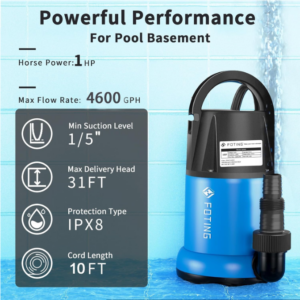
I also keep a mains-powered, high-volume pump on board as a backup. Tell the marina if you have one and where it is stored, and give them written permission to enter the boat and use it if the alarm sounds.
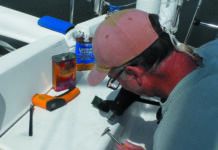
The pump pictured here is the kind I recommend.
They are available from Amazon or most hardware stores for about $50 USD and will work either from the boat’s mains power or plugged into the dockside receptacle. They have a higher output than most boat bilge pumps and will run long term. They normally come with their own float switch. I have also found this the best way to empty a flooded dinghy.
Spray Nozzle Modification
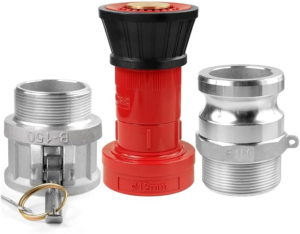
I also added a spray nozzle that converts it into a fire hose. This creates a great device for sluicing down the deck, but may also save a boat one day. Keep a line attached then simply lower it over the side and you get about 40 gallons per min which will knock down a significant fire or clean the deck in a couple of minutes. A hand extinguisher generally runs for 8 to 20 seconds for dry powder, or about 2.5 gallons per minute, over about 75 seconds for the water ones. This is fine for putting out a waste paper basket but not for any established fire.
Carbon Monoxide
Carbon monoxide is a silent and deadly killer. You cannot detect it because it has no smell, taste, or color—if it builds up at night you probably won’t even wake up. Anything that burns fuel with a flame can leak carbon monoxide, like your heater, galley stove and engine.
Many people have simple CO sensors fitted but these only sound if there are high levels of CO present. The standard alarm will not sound until there is more than 70 ppm present for 1–4 hours. That will save your life most of the time because if a heater fails and leaks exhaust fumes the levels will get high, fast. However, what it won’t do is tell you that you have a small leak.
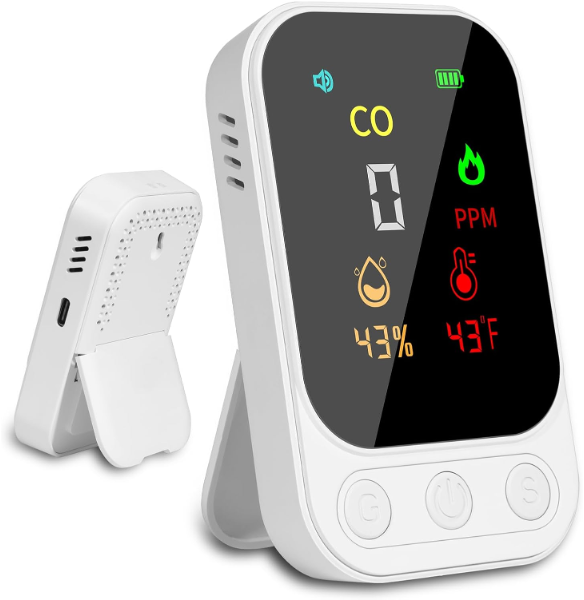
A cracked manifold in a heater can result in levels of 50-70 ppm, which won’t kill you but can make you sick if you are breathing them for a long time. The solution is to upgrade to a sensor with a visual display. Put it next to the battery monitor where you will notice if it goes up, and it will give you an early warning to check your systems.
This example, pictured at the top of the article, is under $30 USD on Amazon.
Fire
Everyone dreads fire on board and if the watch is awake it will probably get detected early enough to tackle with a fire extinguisher. The real danger is in harbor or at anchor when everyone is asleep. Check your extinguishers. If possible, do a practice session with the fire department so that you have actually used one “in danger.”
Where you put extinguishers is also important. Often people think it is best to place them where a fire is likely to start such as in the galley and engine room. While having a fire blanket next to the galley stove makes sense, it may not be the best place for the extinguisher. You may not be able to reach it safely once a fire starts.
The best protection against fire is a door. If you are asleep on board and a fire starts in the main cabin by the time you realize there is a problem, the main cabin and companionway could well be impassible. Every sleeping cabin should have an emergency escape route that the occupants can use. (Can your smallest crew member get out through the fore-hatch?). That is the best place to put a fire extinguisher. If you can get back into the main cabin, you already have an extinguisher in your hand and you won’t be tempted to enter a blazing cabin just to get at an extinguisher.
Fire Sensors

Smoke alarms are not the best device for a boat. In such a small space and anywhere near the galley they tend to go off every time someone is cooking and then someone takes the battery out. A better device is a heat sensor. These alarms trigger either at about 190 C (374 F) or with a rapid temperature rise. In the confines of a boat this will happen very quickly if there is a fire, but not if you just burn the toast. Battery powered ones, especially from the chandleries can cost a lot, but I found this one on AliExpress for under $30 USD.
Bottom Line
The difference between an emergency and an incident comes down to preparation and training. Having the right gear, knowing where it is and practicing using it makes all the difference. Reviewing your gear and testing it, then practicing drills with your crew should be part of your early-season preparations—MOB, fire, flooding and abandon ship are the key ones.








Also propane, if applicable.